WHO (Finally) Declares COVID Pandemic “Global Health Emergency” Over
The World Health Organization declared the COVD-19 emergency is over, ending a three-year designation it first adopted in January 2020.
The health body began using the word “pandemic” in March 2020 to alert the world to the perils of the virus, though the term bears no legal meaning.
Speaking to reporters on Friday, WHO director-general Tedros Adhanom Ghebreyesus said:
“For more than a year the pandemic has been on a downward trend.
“Yesterday the emergency committee meet for the fifteenth time and recommended to me that I declare an end to the public health emergency of international concern. I have accepted that advice.”
“It’s therefore with great hope that I declare Covid-19 over as a global health emergency,” he added.
As The Wall Street Journal reports, the move doesn’t trigger changes in government funding or services, according to Lawrence Gostin, faculty director of the O’Neill Institute for National and Global Health Law at Georgetown University, who has advised the WHO.
“The global public and political leaders have long moved on…” Gostin said.
Watch the briefing below:
According to WHO-compiled figures, the pandemic has (been associated with) the deaths of nearly 7 million people and infected 765 million.
Still, Tedros Adhanom Ghebreyesus could not leave the fearmongery alone, warning that: “That does not mean Covid-19 is over as a global health threat.”
So be afraid still America, and wear that mask in your car when you’re alone…
It’s Not All Speculators As Real Stress Lingers In US Banks
Authored by Simon White, Bloomberg macro strategist,
Even though short sellers are targeting the stocks of weaker US regional banks, the fed funds market shows that there remains fundamental underlying weakness among some lenders.
Banks use the fed funds market to borrow and lend bank reserves to help with their settlement balances. Larger banks, such as JPMorgan, have more reserves than they want (hence their reluctance to raise deposit rates), but many smaller banks often do not, and must borrow in the fed funds market to obtain them.
We know some stress in the banking sector remains as there are still banks who are paying above the top of Fed’s range for fed funds, i.e. 5.25%, to borrow reserves. Discount window (DW) usage has fallen, but this has simply been transferred to the new BTFP facility, which has better terms than the DW. It is thus evident some smaller lenders continue to face fundamental problems.
Nonetheless, recent consolidation in the sector through rescues and mergers should have steadied the boat for the sector as a whole. The fact that it has not is because short sellers are trying to pick off what they see as the weakest links among smaller banks. Even lenders whose deposit outflows have stabilized, such as PacWest and Western Alliance, have found their stocks under attack.
Illiquid and underperforming commercial real estate (CRE) loans and large, underwater hold-to-maturity (HTM) portfolios are two of the most obvious risks for smaller banks in the US. That seems to be a pretty good rule of thumb for gauging how a bank’s stock has performed, and probably one for speculators in choosing who to go after.
The chart below shows a clear relationship between banks’ total of CRE loans and HTM portfolios as a percentage of total assets versus drawdown in their share price from 52-week high. A similar chart showing net income with 52-week share drawdown does not show any relationship.
Banks with greater exposure to CRE + HTM have fared worse, and vice-versa. PB is the most obvious outlier in the above chart, with the bank recently merging with First Bancshares of Texas, explaining why its share price is not lower than the relationship would anticipate.
Paradoxically, a weaker economy might help banks’ plight. Worse than expected jobs data today, for instance, might be enough to precipitate a short squeeze, taking many speculators out. Stranger things have happened.
JPMorgan Chase & Co. CEO Jamie Dimon is expected to visit mainland China this month for the first time in four years, Reuters said, citing sources familiar with travel plans.
Dimon is set to visit China, as JPMorgan will be organizing three conferences in Shanghai’s financial center later this month, according to another source. This marks the banker’s first visit to the country since the onset of the virus pandemic in early 2020.
The three conferences, the Morgan Tech Exchange Conference, the China New Economy Forum, and the Global China Summit, will occur over three days. Dimon will attend all conferences and conduct internal and external meetings, an indication Western bankers still have some willingness to invest in China.
JPMorgan has a business presence in China. Its wholly-owned securities venture conducts securities underwriting and advisory services. Reuters noted, “The Wall Street bank acquired 100% ownership of its funds management joint venture in January.”
In 2021, Dimon regretted joking that his bank would probably outlast China’s Communist Party.
“I regret and should not have made that comment.
“I was trying to emphasize the strength and longevity of our company,” Dimon said in a statement.
After the conferences, Dimon plans to visit Hong Kong in early June, the sources added.
Dimon joins a list of elite bankers who have visited China this year. In March, Goldman Sachs CEO David Solomon, HSBC CEO Noel Quinn, and Standard Chartered boss Bill Winters met with Chinese officials and regulators.
Despite calls from Washington lawmakers for a decoupling between the US and China, Wall Street bankers continue with expansion plans in the world’s second-largest economy.
The one thing about the financial world that never ceases to amaze me is how far behind the curve mainstream economists always seem to be. Not long ago we had both Janet Yellen and Paul Krugman, economists supposedly at the front of the pack, both proving to be utterly ignorant (or strategically dishonest) on the effects of central bank stimulus measures and the threat of inflation. In fact, they both consistently denied such a threat existed until they were crushed by the evidence.
This tends to be the modus operandi of top establishment analysts, and the majority of economists out there simply follow the lead of these gatekeepers – Maybe because they’re vying for a limited number of cushy positions in the field, or perhaps because they’re afraid that if they present a contradictory theory they’ll be ostracized. Economics is often absurdist in nature because Ivy League “experts” can be wrong time and time again and yet still keep their jobs and rise up through the ranks. It’s a bit like Hollywood in that way; they fail upwards.
In the meantime, alternative economists keep hitting the target with our observations and predictions, but we’ll never get job offers from establishment publications because they’re not looking for people who are right, they’re looking for people that toe the line.
And so it goes. I look forward to the fast approaching day when all of these guys (and girls) proclaim frantically that “no one saw this crisis coming.” After things get even worse, they’ll all come out and say they actually “saw the crisis coming and tried to warn us.”
The hope is not so much to get credit where credit is due (because that’s not going to happen), but to wake up as many people who will listen as possible to the dangers ahead, and maybe save a few lives or inspire a few rebels in the process. In the case of establishment yes-men, the hope is that they eventually get that left hook to the face from reality and lose credibility in the eyes of the public. They deserve to go down with the ship – Either they are disinformation agents or they’re too ignorant to see the writing on the wall and should not have the jobs they have.
The latest US bank failures seem to be ringing their bell the past couple of months, that’s for sure. In a survey managed by the World Economic Forum, over 80% of chief economists now say that central banks “face a trade-off between managing inflation and maintaining financial sector stability.” They now warn that price pressures look likely to remain higher for longer and they predict a prolonged period of higher interest rates that will expose further frailties in the banking sector, potentially compromising the capacity of central banks to rein in inflation. This is a HUGE reversal from their original message of a magical soft landing.
Imagine that. The very thing alternative economists including myself have been “ranting” about for years, the very thing they used to say was “conspiracy theory” or Chicken Little doom mongering, is now accepted as fact by a majority of surveyed economists.
But where does this leave us? After acceptance usually comes panic.
The credit crunch is just beginning and the absorbing of the insolvent First Republic Bank into JP Morgan is a median step to a larger crash. The expectation is that the Federal Reserve will step in to dump more stimulus into the system to keep it afloat, but it’s too late. My position has always been that the central banks would deliberately initiate a liquidity crisis through steady interest rate hikes. This has now happened.
The Catch-22 scenario has been accomplished. Just like the lead up to the 2008 credit crisis, all the Fed needed to do was raise rates to around 5% to 6% and suddenly all systemic debt becomes untenable. Now it’s happening again and they KNEW it would happen again. Except this time, we have an extra $20 trillion in national debt, a banking network completely addicted to cheap fiat stimulus and an exponential stagflation problem.
If the Fed cuts rates prices will skyrocket even more. If they keep rates at current levels or raise them, more banks will implode. Most mainstream analysts will expect the Fed to go back to near-zero rates and QE in response, but even if they do (and I’m doubtful that they will) the outcome will not be what the “experts” expect. Some are realizing that QE is an impractical expectation and that inflation will annihilate the system just as fast as a credit crisis, but they are few and far between.
The World Economic Forum report for May outlines this dynamic to a point, but what it doesn’t mention is that there are extensive benefits attached to the coming crisis for the elites. For example, major banks like JP Morgan will be able to snatch up smaller failing banks for pennies on the dollar, just like they did during the Great Depression. And, globalist institutions like the WEF will get their “Great Reset,” which they hope will frighten the public into adopting even more financial centralization, social controls, digital currencies and a cashless society.
For the average concerned citizen out there, this narrative change matters because it’s a signal that things are about to get much worse. When the establishment itself is openly acknowledging that gravity exists and that we are falling instead of flying, it’s time to get ready and take cover. They never admit the truth unless the worst case scenario is right around the corner.
Apple and Google on Tuesday proposed creating alerts amid reports of stalking via Apple’s AirTag and similar tools, according to a release issued Tuesday.
The new proposed industry standard will allow the Big Tech companies to “allow Bluetooth location-tracking devices to be compatible with unauthorized tracking detection and alerts across iOS and Android platform,” the joint release said, adding that “best practices and instructions” will be included for such devices.
“Today, Apple and Google jointly submitted a proposed industry specification to help combat the misuse of Bluetooth location-tracking devices for unwanted tracking,” the release said.
“Samsung, Tile, Chipolo, eufy Security, and Pebblebee have expressed support for the draft specification, which offers best practices and instructions for manufacturers, should they choose to build these capabilities into their products,” it added.
Dave Burke, Google’s vice president of engineering for Android, claimed Tuesday that stopping unwanted Bluetooth device-based tracking will be adopted across the tech sector. According to a proposal, tech firms are aiming to perform “unwanted tracking detection” on such devices that “can both detect and alert individuals that a location tracker separated from the owner’s device is traveling with them,” and it would also “provide means to find and disable the tracker.”
“Bluetooth trackers have created tremendous user benefits, but they also bring the potential of unwanted tracking, which requires industrywide action to solve,” Burke said in the release.
“Android has an unwavering commitment to protecting users, and will continue to develop strong safeguards and collaborate with the industry to help combat the misuse of Bluetooth tracking devices.”
Erica Olsen, senior director of the Safety Net Project at the National Network to End Domestic Violence, told news outlets that AirTags and similar products are being used by domestic abusers. “It’s imperative for advocates and technology companies to work together on solutions to minimize the opportunities for misuse,” Olsen said of Bluetooth trackers.
An AirTag is a quarter-sized tracking device that sends out a Bluetooth signal to tell the owner of its location. It and other Bluetooth location-tracking devices and tools allow people to find lost luggage, keys, and other items, but there have been increasing reports of people misusing them to stalk, spy on, or track the whereabouts of people.
Security Threat
AirTags were rolled out in 2021, but it wasn’t until early 2022 that Apple acknowledged the devices pose a security issue.
“AirTag was designed to help people locate their personal belongings, not to track people or another person’s property, and we condemn in the strongest possible terms any malicious use of our products. Unwanted tracking has long been a societal problem, and we took this concern seriously in the design of AirTag,” it said.
“It’s why the Find My network is built with privacy in mind, uses end-to-end encryption, and why we innovated with the first-ever proactive system to alert you of unwanted tracking. We hope this starts an industry trend for others to also provide these sorts of proactive warnings in their products.”
In late 2022, Apple was sued by two women who alleged that their previous partners used AirTag devices to surveil and track their whereabouts, potentially putting them in harm’s way.
In June 2022, an Indiana woman also allegedly used the device to murder her boyfriend due to an alleged affair, it was reported, while there have been some reports of such devices being used to steal vehicles and other items.
The New York City Police Department, meanwhile, is giving away 500 AirTags this week to prevent car thefts across the city, announced Mayor Eric Adams earlier this week.
“As soon as we’re notified about a grand larceny auto—and even if it’s days later—we can still track the car and find the person who’s driving and put a brake on what we are experiencing in this city with grand larceny autos,” Adams, a Democrat, said at a news conference on Sunday.
“Hopefully, we recover your car undamaged, we take a bad guy off the street, and you get your car back to conduct your business, and it doesn’t impose on your life,” stated John M. Chell, the NYPD’s chief of patrol.
Data released by the NYPD shows that there has been a year-over-year increase in car thefts so far in 2023.
Twitter owner Elon Musk has lauded the Community Notes feature on the platform, saying that the fact checking system is proving successful in “ending censorship in guise of virtue.”
Musk responded to a tweet by The Babylon Bee’s Seth Dillon stating “Twitter used to be a place where false narratives were protected and promoted. Now it’s a place where they’re challenged and corrected.”
Musk responded, “Ending censorship in guise of virtue, handing control of the narrative to the people and actually accurate fact-checking are essential goals.”
“Naturally, those who used to control the narrative and censored views they disliked are less than thrilled,” Musk further asserted, adding “How tragic.”
Ending censorship in guise of virtue, handing control of the narrative to the people and actually accurate fact-checking are essential goals.
Naturally, those who used to control the narrative and censored views they disliked are less than thrilled.
The Community Notes feature works by allowing all Twitter users to collaboratively add ‘context’ to posts. “If enough contributors from different points of view rate that note as helpful, the note will be publicly shown on a Tweet,” the platform states.
In a further post Wednesday, Musk again highlighted the Community notes feature when the so fact checkers Politifact were fact checked themselves over a post denying Teacher’s Union President Randi Weingarten’s previous staunch opposition to reopening schools after the pandemic.
Musk posted a pants emoji and and ‘on fire’ emoji:
Musk also responded to another post adding much needed context to a story about a video of a man who was killed while “suffering a mental health crisis”:
Jordan Neely loved to dance and perform.
On Tuesday, while suffering a mental health crisis, he was choked to death while people watched and cheered.
Jordan needed care. Instead, he was brutally murdered. This is not who we are as New Yorkers. pic.twitter.com/F4TmtlDEQW
The Twitter Community Notes feature is now adding true context to tweets, including those by Democrats and Joe Biden, who continue to make false claims:
“Going To Be Bumpy”: World’s Largest Container Shipper Warns Of Downturn
World’s Largest Container ShipperThe world has a handful of shipping companies, and one of the ones we follow is A.P. Moller-Maersk A/S, which warned of a “radically changed business environment” as profits declined in the first quarter due to slumping transport volumes and sliding freight rates, Financial Times reported.
Maersk, which transports close to one-fifth of the world’s containers, beat analyst expectations in the first quarter but outlined earnings for the remainder of the year would be weaker. It said the first three months of 2023 “will be the best quarter of the financial year.”
“Guidance for 2023 continues to be based on the expectation of a muted 2023 global GDP growth and that volume declines will stabilise by the end of H1, leading to a more balanced demand environment. In this normalization path, Q1 is expected to be the best quarter of the financial year.”
Chief executive Vincent Clerc told the FT about a large influx of new vessels about to hit the world’s top shipping lanes ordered during the last several years. He expects those ships to be delivered in 2024.
“It’s clearly going to be bumpy because there are quite a few coming this year and quite a few coming next year, too. The volumes are coming back after, but it’s not like the macroeconomic backdrop points to a lot of growth to take care of this,” he added.
During the first quarter, Maersk reported a 56% plunge in EBITDA, amounting to $3.97 billion, compared to analysts’ median estimate of $3.55 billion. The quarter saw a 9.4% reduction in volumes and a 37% drop in freight rates, which now hover near the break-even point.
In a separate interview, Clerc told Bloomberg there’s still a lot of uncertainty ahead as global business activity slows and companies race to reduce inventories at warehouses due to overstocking during the pandemic years. In return, demand for container ships has sunk on major shipping lanes from Asia to Europe and the US. The downturn in shipping began in late 2021 when container rates topped out.
And the days of overconsumption of goods, brought on primarily by fiscal stimulus, are over, and one of the main reasons global shipping lanes are slowing. When Maersk speaks, it’s worth a listen as economic storm clouds are gathering.
Kiev appears frustrated with the White House over the leaks of highly classified documents. Ukrainian President Volodymyr Zelensky said he learned of the leak through the media and has not yet spoken with President Joe Biden regarding the trove of documents.
“I did not receive information from the White House or the Pentagon beforehand,” Zelensky said. “We did not have that information. I personally did not. It’s definitely a bad story.” The Washington Post reports the highest-level conversation about the leaks to date was between Secretary of State Antony Blinken and his Ukrainian counterpart Dmytro Kuleba.
The documents, allegedly leaked by Massachusetts Air National Guardsman Jack Tiexiera, paint a bleak picture for the Ukrainian war effort. The documents show the expected counteroffensive may not succeed. Among other key revelations, the documents exposed that Russian forces were disabling American-made smart bombs, Kiev is running out of air defenses and the White House is spying on the Zelensky administration.
The Ukrainian leader said he was not free to speak his mind about the documents making their way into the public eye. “I cannot risk our state.” Zelensky continued, “Where I can speak frankly, I do it. But there are high risks… I would tell everyone what I think of them. But here the story is a little different. We are all responsible.”
However, Zelensky was willing to express some complaints during his one-hour private interview with Washington Post reporters. “It is unprofitable for us… It is not beneficial to the reputation of the White House, and I believe it is not beneficial to the reputation of the United States,” he said.
The leaks have created some fractures between Washington and Kiev. The Post spoke with unnamed Ukrainian officials who believe “Washington’s inability to protect sensitive information could lead to Kyiv sharing less intelligence with the United States.”
Zelensky refused to confirm the documents’ authenticity but claimed the leak benefited Russia. “For us, anything that informs our enemy in advance in one way or another is definitely a minus for us. I don’t see any advantages here,” Zelensky said.
Air-Launched Hydra 70 Rockets Approved For 1st Time In $300M Ukraine Package
The White House unveiled a new $300 million arms package for Ukraine this week, which uses the Presidential Drawdown Authority, meaning yet more Pentagon stockpiles will be depleted.
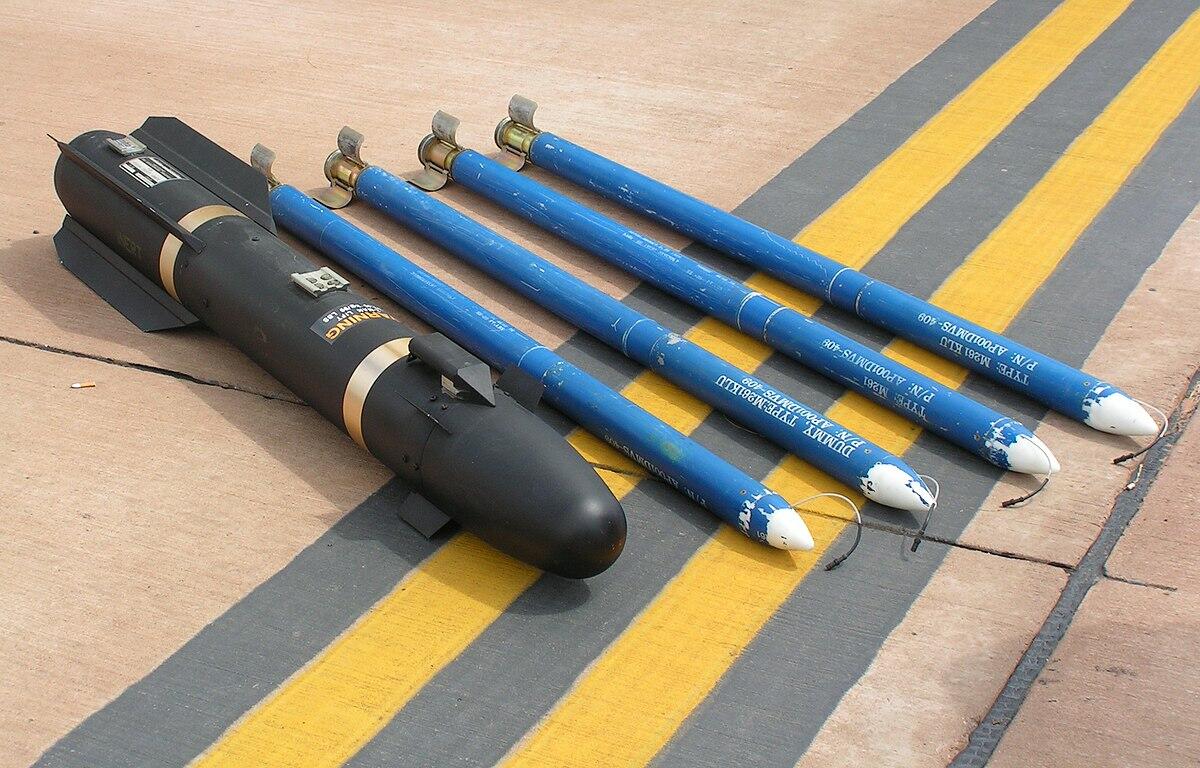
The funds continue to be drawn from the $45 billion aid package Congress authorized in December, but a key new item in this particular package is the Hydra-70 rocket. It marks the first time that the unguided missile which is usually fired from aircraft as an air-to-ground missile has been authorized.
Additionally, more howitzers, artillery rounds, and projectiles for HIMARS rockets systems will be included in the new package which was announced Wednesday.
Hydra-70 rocket systems are a range of 2.75-inch, or 70 mm, unguided air-to-surface rockets, described by defense manufacturer General Dynamics as “a lethal and lightweight weapon system with multi-mission capability.”
The system can use nine different warheads, providing what General Dynamics called a “tailor-made solution” to the operator’s needs. They are an “affordable” way of zeroing in on “lower-value targets on the battlefield,” the defense contractor said.
They are fired from aircraft, and are compatible with the likes of the Apache helicopter and the F-16 fighter jet, General Dynamics said. It is the world’s most commonly used helicopter-launched weapon system, according to the military website Army Technology.
In Ukraine’s case, Hydra-70 rockets will likely be launched from helicopters, but the F-16 continues to be debated among Western allies as a possible future aircraft for Ukraine’s air force, but is not yet approved, also given the training process would be lengthy.
Testing and diagnostic equipment to support vehicle maintenance and repair
Spare parts and other field equipment
In the meantime, further escalation is in the air given Ukraine has grown more brazen in launching drone attacks inside Russian territory, including this week’s drone attack on the Kremlin, which the Russian government denounced as a “terrorist assassination attempt” against President Putin.
In another sign of changing attitudes to pandemic policy, infectious disease specialists writing in the Annals of Internal Medicine this month argued against the continuation of universal masking policies for doctors, nurses, and other health care workers.
In the article, the eight authors, who are infectious disease specialists associated with Harvard and Washington University medical schools among others, offer a timeline of the evolving responses to the pandemic. The timeline leaves out the Centers for Disease Control and Prevention’s (CDC) initially confusing advice on masking but acknowledges that factors like the development of immunity, the evolution of the virus, and development of pharmaceutical “countermeasures” have fundamentally reshaped the landscape of the pandemic.
“The burden of SARS-CoV-2 has been mitigated over time,” the authors state, “through access to testing, substantial population-level immunity providing durable protection against severe disease, a series of less virulent variants, and widespread availability of medical countermeasures, which in combination have resulted in decreasing infection mortality rates.”
They conclude that “SARS-CoV-2 has transitioned to a more stable phase, during which the choice and intensity of mitigation efforts must be commensurate with the risk and align with management strategies” for other endemic, transmissible diseases.
“Recognizing these changes,” the authors state, “many pandemic interventions have been deimplemented,” but, “Masking requirements and other restrictions remain notable exceptions.”
Some in the medical field, such as Dr. Kalu Ibukunoluwa and co-authors writing in the journal Infection Control and Hospital Epidemiology in January, argue for making universal masking requirements in health care settings permanent, stating that such “universal source control masking … should become the ‘new normal’ for all healthcare institutions.”
However, Dr. Erica Shenoy, an infectious diseases physician at Massachusetts General Hospital, lead author of the study and her co-authors disagree.