According to OSHA records, inspectors cited the company’s store at 53 Carl W. Kephart Blvd. for a willful and serious violation ofmaintenance, safeguards and operational features for exit routes. Inspectors said a blocked emergency exit near the store’s cleaning products section exposed employees working in the back half of the store to a fire hazard on or about Nov. 14.
Regulators also said employees were exposed to a fire hazard due to a blocked electrical panel on or about the same date. That issue, which OSHA characterized as a repeat serious violation, was corrected during the inspection, records show.
“Exposing employees to these hazards can be dangerous, especially in an emergency,” Wilkes-Barre, Pennsylvania-based OSHA Area Director Mary Reynolds said in a statement. “Dollar General Corp. has a substantial history of the same violations and hazards found at stores all around the U.S. They must end their repeated failures to correct these violations before an emergency turns tragic.”
Tennessee-based Dollar General, one of America’s largest retailers, hasa “long history of federal workplace safety violations,” according to OSHA.
“As a growing retailer serving thousands of communities across the country, Dollar General is committed to providing a safe work environment for its associates and shopping experience for its customers,” the company said in a statement to Retail Dive. “We regularly review and refine our safety programs, and reinforce them through training, ongoing communication, recognition and accountability. When we learn of situations where we have failed to live up to this commitment, we work to timely address the issue and ensure that the company’s expectations regarding safety are clearly communicated, understood and implemented.”
OSHA said in January that it found dozens of blocked exit violations at 19 stores in Alabama, Florida and Georgia. The agency noted that in addition to creating a fire hazard, improperly stored merchandise may fall, resulting in injuries.
“Dollar General’s growing record of disregard for safety measures makes it abundantly clear that the company puts profit before people,” Atlanta OSHA Regional Administrator Kurt Petermeyer said in a January statement. “These violations are preventable, and failing to prevent them shows a blatant disregard for the workers on whom they depend to keep their stores operating. OSHA continues to make every effort to hold Dollar General accountable for its failures.”
Dollar General’s 19,000th store opened in January. The company employs about 170,000 people. In a March earnings call, CEO Jeff Owen said the company plans to spend $100 million in store-level investments to fund more staffing in an effort to improve its in-store experience for customers.
Subway Sale Auction Draws Little Attention And Lower Valuation Than Expected
Here’s one surefire, time-tested economic indicator that assures an incoming recession: a planned auction of Subway sandwich shops, announced to be up for sale several weeks ago, isn’t drawing in the bids that the chain expected.
The chain is now being valued at just $7 billion, far below the $10 billion it was originally looking for from the auction, according to the NY Post.
The company never set a deadline for a second round of bidding after a first round in February passed, the report says. Offer deadlines are being pushed back until later this month in order to “give suitors more time to conduct due diligence, according to sources close to the process”, the report reads.
In other words, it appears that no one is interested.
And the large brands that would have normally been expected to participate in the offering – including names like Yum Brands, owner of Taco Bell and KFC; and Burger King owner Restaurant Brands International – aren’t even participating in the sale, the report says.
Instead, PE firms like Bain Capital, Clayton, Dubilier & Rice and TPG Capital are showing interest. Roark Capital, which owns Arby’s, Buffalo Wild Wings, Dunkin’ Brands, Sonic and Jimmy Johns, is also “in the mix”, the report says.
The company has prevented firms from partnering on an acquisition, the Post writes. This has the effect of keeping the auction competitive, but also dampering potential bids that could come in.
“They want to prevent everyone teaming up and driving the price down,” one source said.
Meanwhile, the company’s numbers have been in decline, despite recent ad campaigns that have featured Tom Brady, Derek Jeter and Steph Curry. The company currently does roughly $700 million in EBITDA, the Post reported.
The company has 20,562 stores, down from its more than 27,000 stores it had during its 2015 peak. In the last 12 months, Subway has lost 555 restaurants, marking a 2.6% decrease. Jersey Mike’s, a competitor, has seen it stores add 359 locations over the same time period.
Iconic kitchen brand Tupperware could wind up operations anytime as the company tries to resolve a liquidity crunch, sending shares crashing.
Tupperware has determined that “a violation of its credit agreement covenants is probable to occur as a result of forecasted non-compliance with financial covenants and the company’s delay in filing its Form 10-K, as well as cash constraints caused by higher interest costs and timing of re-engineering actions,” according to an April 3 regulatory filing with the U.S. Securities and Exchange Commission (SEC).
“Further, due to the challenging internal and external business economics causing volatility in the company’s earnings, coupled with the increased levels and cost of borrowings under its credit agreement, the company currently forecasts that it may not have adequate liquidity in the near term.”
“The company has therefore concluded that there is substantial doubt about its ability to continue as a going concern,” it said.
Shares of Tupperware crashed following the revelation. On April 6, Tupperware closed at $2.42, with a volume above 718,000. On April 10, share prices fell to $1.24, a decline of nearly 50 percent, with volume exceeding 19 million.
The company’s director board has engaged with financial advisors to secure supplemental investors so as to improve its liquidity situation. It is also talking with potential investors or financing partners.
“The company is doing everything in its power to mitigate the impacts of recent events, and we are taking immediate action to seek additional financing and address our financial position,” said Miguel Fernandez, chief executive of Tupperware Brands, according to a press release on April 7.
Resolving Liquidity Issues
To resolve its liquidity position, the company is mulling various plans. It could issue equity securities through the sale of the company’s common stock.
If this were to happen, “it is highly likely that existing stockholders will be diluted,” Tupperware said in the filing. Any issued equity shares may also offer rights, privileges, and preferences that give such holders seniority to the holders of common stock.
In case the company raises funds through the issue of additional debt securities, these securities “will likely” have rights, preferences, and privileges over stockholders.
Tupperware is also reviewing its portfolio of real estate for “potential dispositions or sale-leaseback transactions.”
The company is exploring right-sizing, cash management, fixed-asset monetization, as well as marketing and channel optimization in a bid to deliver additional liquidity this calendar year. However, Tupperware admitted that there is “no assurance of the timing or outcome of these actions.”
“If the company is unable to obtain adequate capital resources or amendments to its credit agreement, management anticipates that it will have inadequate liquidity to fund its operations and satisfy its obligations as currently anticipated in the near term pursuant to its current business plan,” the filing said.
NYSE Delisting
Tupperware has around three million independent sales members in almost 70 countries. Unlike the 1950s when the brand was first introduced, people now have far more options in food storage, which puts the company’s prospects in a tough spot.
On April 3, the NYSE sent a notice to Tupperware, warning that it is non-compliant with the exchange’s rules due to its failure to file Form 10-K on time.
The exchange has six months to regain compliance by filing Form 10-K with the SEC, failing which the NYSE might initiate delisting proceedings.
“The company currently expects to file its Form 10-K with the SEC within the next 30 days; however, there can be no assurance that the Form 10-K will be filed at such time,” said the press release.
Walmart Abandons Unprofitable Chicago Stores After Investing “Hundreds Of Millions” In City
After two decades of losses and “hundreds of millions of dollars” invested in Chicago, Walmart is shuttering four unprofitable stores in the metropolitan area, reducing its store footprint by half in the crime-ridden city.
“The simplest explanation is that collectively our Chicago stores have not been profitable since we opened the first one nearly 17 years ago – these stores lose tens of millions of dollars a year, and their annual losses nearly doubled in just the last five years,” Walmart wrote in a press release.
Indeed, Walmart has soured on Chicago – the Democratic stronghold that went from a once beautiful metro area into an absolute hellhole. According to Walmart, the decision came after considerable investment in the town.
“Over the years, we have tried many different strategies to improve the business performance of these locations, including building smaller stores, localizing product assortment and offering services beyond traditional retail. We have invested hundreds of millions of dollars in the city, including $70 million in the last couple years to upgrade our stores and build two new Walmart Health facilities and a Walmart Academy training center.”
That said, the company hasn’t lost all faith in the city but is willing to take a loss with the four remaining stores:
“The remaining four Chicago stores continue to face the same business difficulties, but we think this decision gives us the best chance to help keep them open and serving the community.”
It sure wouldn’t be good PR if Walmart left the metro area entirely.
Earlier this year, former Chicago Mayor Lori Lightfoot (D) lost her bid for re-election because of her inability to address the out-of-control crime wave.
Although Walmart didn’t explicitly state why its stores were unprofitable, one can only assume that the city’s ‘soft-on-crime’ policies were a contributing factor, as professional shoplifting rings count Chicago as a top-10 city to hit.
In a separate report, Whole Foods in San Francisco closed its flagship store on Tuesday morning because of soaring thefts.
Walmart and other retailers closing stores not just in Chicago but other big cities is a warning sign for Democratic mayors who can’t get crime under control will face an exodus of businesses.
Hours before the announcement, Democrats picked Chicago to host the 2024 Democratic National Convention.
Walmart said it will close four of its eight stores in Chicago as annual losses have nearly doubled in the past five years to “tens of millions” of dollars per year.
the DNC can rent out one of the empty stores, and also offer discounts on politicians.
Watch: Body Cam Video From Officers Responding to Louisville Rampage
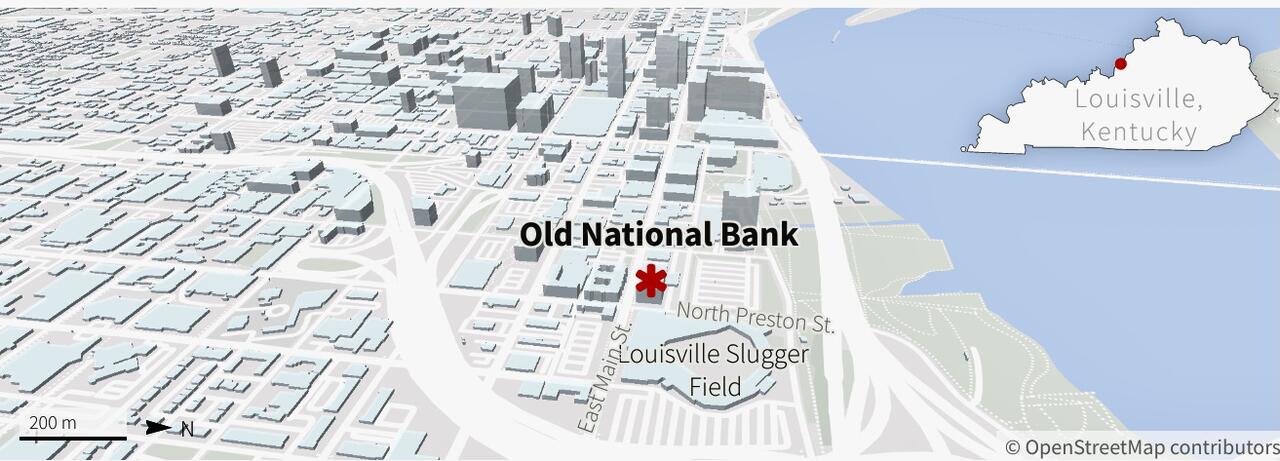
Update (1925ET): Louisville police have released footage captured by body cameras worn by two police officers responding to Monday’s mass shooting at an Old National Bank office in the city’s downtown. Both were wounded by gunfire, one of them — Nickolas Wilt — critically, as he was shot in the head and has undergone brain surgery.
In the press conference that accompanied the initial release of the video, Deputy Chief Paul Humphrey noted that these first responding officers were hampered by a lack of visibility due to the difference between the bright outdoors and the darkened interior lobby where killer Connor Sturgeon had been waiting to ambush them.
Glare from the floor-to-ceiling windows also made it difficult to pinpoint the threat. After Sturgeon’s shots at subsequent responding officers shattered the glass, Officer Cory Galloway was able to engage and kill him.
* * *
The 25-year-old employee of Old National Bank who killed five people and wounded nine more in Louisville, Kentucky on Monday morning livestreamed his rampage on Instagram. A city official has related specifics of the stream to CNN, while many new details about the attack and its perpetrator have emerged.
Connor Sturgeon, whose LinkedIn profile says he was a “syndications associate and portfolio banker,” wrote to his parents and a friend of his intent to shoot up the bank, but it’s not clear yet whether that communication was physical or electronic, or whether the recipients received them before he opened fire with an AR-15 rifle around 8:30 am.
Video from a witness shows a chaotic scene at Old National Bank in downtown Louisville.
“Active shooter at the bank” an officer screams as multiple gunshots are fired on the background.
While there’s no official confirmation of it so far, Louisville’s WDRB reported that the last three posts on Sturgeon’s apparent Instagram account on Monday morning were:
A meme of Star Wars character Kylo Ren saying “I know what I have to do, but I don’t know if I have the strength to do it.”
Accompanied by the label “MONDAY VIBES,” a meme of a character from the movie Office Space saying “I could burn this whole place down.”
Sturgeon’s apparent own words: “THEY WON’T LISTEN TO WORDS OR PROTESTS. LET’S SEE IF THEY HEAR THIS.”
Citing a police source, CNN reported that the shooter had learned that he was going to be fired after working at Old National for two years and previously interning there for three summers.
His attack began before the bank’s operating hours, and he livestreamed it on Instagram. The platform has since taken the video offline, but police have a copy.
A Louisville official tells CNN the stream begins with a view of his AR-15. A woman greets the shooter with a “good morning,” and he replies “you need to get out of here.” Sturgeon attempts to shoot her but the weapon on is on safe and doesn’t have round chambered. He corrects those issues and shoots her in the back.
He then proceeds to shoot many other employees who try to outrun him, before sitting down in the lobby and seemingly waiting for police. That wait lasts about 90 seconds, and the then is hit and killed in the gun battle.
An employee meeting had been underway, with some attending in person and others via video. Manager Rebecca Buchheit-Sims told CNN she attended remotely, and saw her coworkers being gunned down on her computer screen: “I witnessed people being murdered. I don’t know how else to say that…I’m just as much in shock and disbelief and was in disbelief as I watched it unravel.”
Employee Tammy Madigan told the Daily Beast of her rush to find shelter: “The bathrooms on our floor have keycode entry, so it was probably the safest place we could think of to hide. So the six of us went into the men’s room, turned off all the sound on our phones, tried to be as quiet as we could.” Others hid in a vault.
The first cops arrived on the scene within three minutes of being dispatched. Dispatchers told officers to look for a 6′ 4″ white male in dark pants, adding that he’d left a voicemail for a friend declaring his intent to “kill everyone at the bank,” reports Heavy.
Seven employees and two officers were wounded. The five dead are Joshua Barrick (40), Thomas Elliot (63), Juliana Farmer (45), James Tutt (64) and Deana Eckert (57).
🚨 #EXCLUSIVE: The scene of the Louisville shooting, as seen from the front of the entrance of the Old National Bank Building
Police officer Nickolas Wilt, a 26-year-old rookie who graduated just 10 days before the shooting, was critically wounded with a gunshot to the head and underwent brain surgery. The other wounded officer has not been identified.
As with every mass shooting, people raced to discern the shooter’s political orientation. Some of his social media posts reflected support for the Black Lives Matters protests and criticism of police and Donald Trump. Trying to reach conclusions about his sexuality, others highlighted the fact that the shooter’s LinkedIn profile said he uses “he/him” pronouns.
A 2020 University of Alabama graduate with a masters in finance, Sturgeon is described as astar multi-sport athlete in high school. Amid the shock of learning what Sturgeon did, a former classmate told Daily Beast:
“The big thing I keep going back to is that in the first year of high school, we played football together in eighth grade, he was out most of the year because he had multiple concussions. Then he had a couple more in high school. I’m not saying it’s the cause but I always think back to that… There were times I’d wonder, will this catch up with him? But never in this way. He’s the last person I’d expect would do this.”
An autopsy would be needed to determine if Sturgeon had Chronic Traumatic Encephalopathy (CTE). The degenerative brain disease caused by multiple episodes of head trauma, CTE leaves people prone to aggression, mood swings, depression and paranoia. Murderous New England Patriot Aaron Hernandez is perhaps the most infamous example.
High school friends described Sturgeon as smart and popular. However, in an introspective 2018 essay at the the University of Alabama, Sturgeon wrote,
“My self-esteem has long been a problem for me. As a late bloomer in middle and high school, I struggled to a certain extent to fit in, and this has given me a somewhat negative self-image that persists today. Making friends has never been especially easy, so I have more experience than most in operating alone.”
#BREAKING
A heavily-armed convoy just arrived in the 1500 Blk. of Taylor Avenue and is about to breach a house. ATF says this is in relation to the mass shooting downtown. @WHAS11#Louisvillepic.twitter.com/jHgRtSCtJZ
Jim Ryan, CEO of Chicago- and Evansville-based Old National Bank, immediately traveled to Louisville along with other senior executives. “As we await more details, we are deploying employee assistance support and keeping everyone affected by this tragedy in our thoughts and prayers,” said Ryan.
At a Tuesday morning press conference, Louisville’s police chief said Sturgeon acquired his rifle legally from a local dealer on April 4.
On Monday, President Biden issued a statement calling for gun control measures that seemingly have no relevance whatsoever to Monday’s shooting:
“How many more Americans must die before Republicans in Congress will act to protect our communities? It’s long past time that we require safe storage of firearms. Require background checks for all gun sales.Eliminate gun manufacturers’ immunity from liability.”
Not letting a crisis go to waste, Team Biden also threw in a thinly-veiled opportunistic shot at potential 2024 presidential opponent Ron DeSantis, as the statement condemned Republican officials “from Florida to North Carolina to the U.S. House of Representatives, [who’ve] double[d] down on dangerous bills that make our schools, places of worship, and communities less safe.”
Presumably that statement refers to laws enabling law-abiding citizens to carry firearms into those places. Does the White House really think the people at Louisville’s Old National Bank would have been worse off if some of the bankers were carrying pistols?
Sadly, they were prohibited to do so — by CEO Ryan and Old National Bank — without “proper authorization.” Per page 49 of the bank’s employee handbook:
“Firearms, weapons, and other dangerous or hazardous devices or substances are prohibited from the premises of Old National without proper authorization. Firearms may be kept in parking areas in accordance with state law where recognizing such possession is required by state law.”
“An ineffective rocket attack targeted coalition forces, at Mission Support Site Conoco, northeast Syria, today at 10:51 AM Eastern Standard Time (approximately 5:51 PM local time in Syria). One rocket struck the vicinity of the coalition outpost, and an additional rocket was found at the attack’s point of origin,” US Central Command (CENTCOM) said in a statement.
“The attack resulted in no injuries or damage to the base or coalition property,” CENTCOM added.
However, sources told Al-Mayadeen news that the attack was “carried out with several rockets” and that “no information is available on the size of the losses inside” the base.
Around the same time as the attack, US forces shot down a drone believed to be Iranian, which fell in Al-Tabiyah village in Deir Ezzor’s eastern countryside, the Syrian Observatory for Human Rights (SOHR) reported.
This comes as part of a recent surge in attacks against US bases in Syria, which are attributed to groups affiliated with Iran’s Islamic Revolutionary Guard Corps (IRGC).
On March 23, a drone strike targeted the US occupation base in northeastern Hasakah’s Kharab al-Jir military airport, killing a US contractor and injuring several other US servicemen. That evening, US warplanes struck Deir Ezzor, targeting the Syrian military and Iranian advisors.
On March 24, the US strikes were responded to with yet another attack, targeting Washington’s base in the Al-Omar oilfield. Later that night, the Al-Omar base and another base were heavily targeted simultaneously in a daring and unexpected operation that resulted in further casualties among US troops.
These attacks have been on the rise and are increasing in frequency and intensity as a result of the continued illegal presence of US troops in the country – which consistently loot the country’s natural resources under the pretext of deterring ISIS.
Later CENTCOM confirmed it responded with attacks of its own:
Coalition Forces responded to a rocket attack in Dier ez-Zor, Syria at approximately 5:51 p.m., April 10, 2023.
“These attacks are reckless and needlessly endanger the people of northeast Syria,” said Maj. Gen. Matthew McFarlane, CJTFOIR Commander. 👇https://t.co/t5EGY08Wlk
According to a report released by Lebanese newspaper Al-Akhbar on 25 March, the attacks represent a coordinated Russian-Iranian decision to pressure Washington into withdrawing its military presence from the country.
As a result, Washington is bracing itself for further strikes against its forces in Syria. SOHR reported on 10 April that US troops in northeastern Hasakah have been reinforcing their bases with military and logistical supplies. At the end of last month, a US military official vowed ‘harsh’ attacks against the IRGC in Syria.
There has been extensive discussion in the past couple of years within alternative media circles about the dangers of Central Bank Digital Currencies (CBDCs); a currency framework very similar to blockchain based products like Bitcoin but directly controlled by central bankers. It’s a threat that some analysts including myself have been writing about for more than a decade, so it’s good to finally see the issue being addressed more in the mainstream.
The Orwellian nature of CBDCs cannot be overstated. In a cashless society most people would be dependent on digital products for exchanging goods and labor, and this would of course mean the end of all privacy in trade. Everything you buy or sell or work for in your life would be recorded, and this lack of anonymity could be used to stifle your freedoms in the future.
For example, say you like to eat steak regularly, but the increasingly authoritarian government decides to list red meat as a health risk and a “climate change risk” due to carbon emissions from cows. They determine by your purchase history (which they have full access to) that you have contributed more carbon pollution than most people by eating red meat often. They declare that you must pay a retroactive carbon tax on your past purchases of red meat. Not only that, but your insurance company sends you a letter indicating that you are a medical risk and they cut off your health coverage.
Products you consume and services you use can be tracked to create a psychological profile on you, which could then become a factor in determining your social credit score, just as CCP authorities do in China today. Maybe you refuse to purchase an annual mRNA booster shot, and the tracking algorithm makes a note of this. Now you are under suspicion for being “anti-vax” and your social credit score plummets, cutting you off from various public venues. Maybe you are even fired from your job.
In the worst case scenario, though, economic access is the greatest oppressive tool. With CBDCs in place and no physical cash in existence, your savings will never be truly yours and you’ll never be able to hold your purchasing power in your hands. The means of exchange would be bottle-necked by the banks, and governments would have the option to freeze your ability to transact. If one day you get angry about a particular government policy and openly call the system corrupt on social media, they can simply shut off your option to transfer your digital money to others until you submit, or die.
CBDCs give establishment officials the leverage to starve their political opponents with algorithmic precision. It would be a new world of technocratic oppression.
It’s important to understand that central bankers are moving at breakneck speed to develop and introduce digital currencies. It’s not a matter of experimentation, they already have these systems ready to implement. The Federal Reserve’s instant transfer program “FedNow” is set to debut this July, which is not a CBDC but it is an intermediary step towards instituting CBDCs in the near term.
In my investigations of various CBDC programs and how quickly they are progressing I came across an interesting program called “Project Icebreaker” being run by the Bank for International Settlements (BIS). For those not aware, the BIS is a globalist institution with a clandestine past known as the “central bank of central banks.” It is the policy making hub for most of the central banks in the world. If you ever wondered how it was possible for so many national central banks to operate in tandem with each other instead of acting in the interests of the countries they reside in, the BIS is the answer. In other words, organizations like the Federal Reserve are not necessarily loyal to Americans or to American officials, they are loyal to the dictates of the BIS.
The BIS is at the forefront of the movement towards the adoption of CBDCs. They have been funding a vast array of projects to test and refine CBDC technology and as of this year they estimate that at least 81 central banks around the world are in the midst of introducing digital currency systems.
Project Icebreaker in particular grabbed my attention for a number of reasons. The BIS describes the project as a foreign exchange clearing house for Retail CBDCs (retail CBDCs are digital currencies used by the regular public and businesses), enabling the currencies to be traded from country to country quickly and efficiently. This is accomplished using the “Icebreaker Hub”, a BIS controlled mechanism which facilitates data transfers for an array of transactions while connecting banks to other banks.
Investigating further I realized that the Icebreaker Hub in theory functions almost exactly like the SWIFT payment system used currently by governments and international banks. More than 10,000 financial institutions in 212 different countries use the SWIFT network to transfer funds overseas for their clients; it is an incredible centralization bottleneck that gives its shareholders considerable power.
As a point of reference, after the start of the war between Ukraine and Russia, the expulsion of Russia from the SWIFT network was used as a weapon in an attempt to crash the Russian economy. Russia has found ways around using SWIFT because of their trade relationships with major economies like China and India, but some damage has still been done to their financial structure.
Consider this, however – What if all monetary transactions were centralized through CBDCs and the BIS controlled the hub in which all retail CBDCs are exchanged globally? This is what Icebreaker is.
Now imagine that you operate a business that relies on overseas transactions; say you need to pay manufacturers in Vietnam or Taiwan to produce your products. With CBDCs in place you will most likely be completely dependent on a system similar to the Icebreaker Hub to move than digital money to Vietnamese banks and into the accounts of your manufacturers. Say officials at the BIS, for whatever reason, decide they don’t like you and they initiate Russian-style sanctions denying your access to the hub. Your business is now dead.
What if you had to meet certain standards in order to be allowed use of the hub, and the BIS dictates the standards? What if the BIS decides that your company needs to meet woke ESG related categories before you can get permission for Icebreaker transactions? Now the BIS has the ability to manipulate social and cultural trends using your business and millions of other businesses as forced messengers.
For the average consumer that does most of their transactions within their home country this might not sound like a big deal. But, for the business world, a SWIFT-like hub for retail CBDCs could be used to dominate all international trade. Running any kind of larger organization or company would mean bowing to the whims of the BIS.
It gets worse, though…
Part of the process of the “spoke and wheel” exchange method used by the Icebreaker Hub includes the exploitation of a “bridge currency” to fill gaps in exchange rates and liquidity. On the surface this seems like a clever way to speed up transactions by avoiding cross-currency shortages at banks. That said, I want readers to think about the long term path that this kind of “bridging” sets in motion in the realm of CBDCs.
Let’s say there is a global scale economic crisis event which causes many currencies to fluctuate wildly. Lets say, for example, that the US dollar loses its world reserve status and petro-status and this sends FX (foreign exchange) markets into a panic. Price inflation becomes rampant and banking institutions falter under liquidity pressures. Lets say that central bankers introduce CBDCs as a solution to the problem, and the BIS Icebreaker Hub as the intermediary for international trade. The populace is so frightened by the economic crash that they then embrace the digital framework. Now let’s say that the BIS claims they still can’t find a currency they consider stable enough to act as a means to bridge most global transactions. What happens then?
Well, “luckily” for all of us the BIS and IMF have been working on their own GLOBAL CBDC. In the case of the IMF, this one-world currency would be based around the Special Drawing Rights basket system they have been using for decades to broker currency transfers between national governments. The BIS then uses this one world currency product as the bridge in Ice Breaker going forward.
Eventually the BIS, IMF and various central banks will ask the public the inevitable question: “Why are we bothering with these national currency exchanges when we have a perfectly good bridge currency in the form of this one-world CBDC? Why don’t we just get rid of all these superfluous national CBDCs and have one currency for everyone?”
Thus, total global financial centralization would be achieved. And once you have a one-world currency, a completely centralized and micro-managed global economy and the most vital trade systems in the world controlled by a tiny handful of faceless unelected bureaucracies, why then have nations at all? Global government would be the next and final step.
I can see the nightmare play out when I look at projects like Icebreaker. They are seemingly innocuous, but they act as the DNA by which economic tyranny is given birth.
You may not know it if you rely solely on American media, but there is a growing revolt across much of Europe against Net Zero mandates in general and electric vehicle mandates in particular.
It seems that, led by luxury carmakers, the future may be bright for the venerable internal combustion engine if new synthetic fuels technologies can produce an affordable replacement for gasoline and diesel fuels.
The revolt had been brewing ever since Europe got a wakeup call with Russia’s invasion of Ukraine that upset the Net Zero applecart and led even Germany to reopen coal-fired power plants. Still, the EU last November had struck a provisional deal on a new vehicle emissions law that would have banned the sale of internal combustion engine (ICE) vehicles by 2035.
Two months later, though, the new Meloni government in Italy began to raise objections. The forced transition to EVs has already hit the Italian auto industry with job cuts, leading Transport Minister Matteo Salvini to argue that it makes no sense to put thousands of jobs at risk when there are plenty of reasons to keep ICE vehicles on the road with a carbon-neutral fuel.
Italy’s balking opened the door for German Finance Minister Christian Lindner to switch his government’s position to demand an exception for hydrogen-derived, carbon-neutral synthetic e-fuels (produced by electrolysis with added carbon) that can power ICE vehicles. Porsche, which has invested $75 million in a pilot plant to make e-fuels, and Ferrari could preserve their rich heritage and iconic models and still comply with zero-emissions requirements with e-fuels.
German Transport Minister Volker Wissing agreed, stating that, “We need e-fuels as there is no alternative if we want to operate our vehicle fleet in a climate-neutral way. Whoever is serious about climate-neutral mobility must keep all technological options open and also use them. I don’t understand this fight against the car and why people want to ban some technologies.”
Polish Prime Minister Mateusz Morawiecki has long objected to the EU ban and had pledged to do “anything” to stop the “pseudo-green idea by rich countries and bureaucrats from Brussels” to ban gasoline and diesel engines. Polish families, he contended, cannot afford these expensive vehicles, and an ICE ban would cause Polish firms producing car components for well-known global brands to suffer irreparable harm.
As by simply abstaining from a final vote on the hard ICE vehicle ban, Germany could have killed the proposed EU legislation, the European Commission agreed to draft a compromise to allow the sale of ICE vehicles capable of running on e-fuels after 2035. Environmental groups objected, claiming that – because gasoline and diesel will still be available to power older vehicles – owners of e-fuel capable vehicles will cheat and fill up with gasoline.
Alex Keynes, clean fuels manager for the NGO Transport & Environment, claimed that e-fuels are too expensive to be given a seat at the table. He cited a T&E study that concluded that e-fuels would be 47 percent more expensive than petrol in France in 2030. [What he did not say was whether even that fuel cost differential would make e-fueled ICE vehicles more expensive to own and drive than lithium-battery EVs.]
Ferrari’s Benedetto Vigna scoffed at the T&E rhetoric. He expects the price of e-fuels to fall as they become more popular and that these fuels would allow carmakers to focus on producing lower cost e-fuels instead of expensive battery-powered cars that have their own limitations. Besides, suggested car industry veteran Andrew Graves, e-fuels may also be the answer for keeping older model vehicles on the road while further reducing emissions.
In the United Kingdom (no longer in the EU), former Prime Minister Boris Johnson, in a move to one-up the EU, decreed a ban on new ICE vehicles by 2030 and on new hybrid vehicles by 2035.The adoption of this modified ban by the EU is putting pressure on the British government to follow suit.
Former Tory cabinet minister Sir John Redwood urged the Sunak government to consider the fact that, “Britain is in a desperate struggle to keep its car industry, and if we insist on phasing petrol and diesel out well before anyone else, we will find it harder to attract investment. The fewer bans there are,” he added, “the better to promote growth.” Like their Italian and German counterparts, British carmakers Aston Martin and McLaren are both investigating e-fuels for their future models.
There are other reasons that these bans on ICE vehicles are impractical. Graves says there is already a risk that there will not be enough EV charging stations or battery-making plants to satisfy demand in such a short timeframe. The still-fledgling industry remains beset with performance and safety concerns – as well as concerns over the environmental and societal damage done from the mining of critical metals used in EV batteries.
Another concern is cost, and thus popularity. EV sales have fallen across Europe with the lifting of subsidies. EV sales in Germany fell by a third from January 2022 to January 2023, and the market share fell from 55 percent of all car sales in December 2022 to just 15 percent in January 2023. The EV market share in the United Kingdom and the Netherlands fell by 50 percent month-to-month.
Automakers are still losing money in their quest to build all-EV fleets. Ford reported that its U.S. EV business had losses totaling $2.1 billion, a figure expected to rise to $3 billion in 2023. Ford finance chief John Lawler said it was normal for a startup to rack up losses, but if people have alternatives, not even the Inflation Reduction Act subsidies may be sufficient to turn car loving Americans into passive drivers of vehicles they cannot repair.
Finally, Europeans may be waking up to the realities of Chinese domination of the EV market and their attempted takeover of the European [and American] auto industry as well. The largest British auto dealership, Pendragon, has agreed with Chinese EV manufacturer BYD to sell its cars in the United Kingdom.
According to Ben Marlow, the Telegraph’s chief city commentator, the Chinese plan is to flood Europe with their own cheaper EV models to undercut European automakers and increase their market share. Not only does China control the market for many EV components, the Beijing government has thrown billions of dollars in subsidies to its EV industry.
And as Italy’s Matteo Salvini so eloquently put it, EU countries need to avoid “giving China entire industries and hundreds of thousands of jobs.”
NOTE: The concern over Chinese dominance of the EV market has reached the Colonies! Just days after Interior Secretary admitted that the Biden Administration’s push for EVs will deepen U.S. reliance on China, Chase Bank CEO Jamie Dimon, in his annual letter to shareholders, warned that China’s dominance of the green energy supply chain, coupled with the Biden EV policy, will imperil U.S. national security. Yet the juggernaut rolls on unimpeded.
Duggan Flanakin is a senior policy analyst for the Committee for a Constructive Tomorrow and a frequent writer on public policy issues.
Politicians from Australia and the UK, from all political leanings, have asked U.S. Attorney-General Merrick Garland to end all extradition attempts for WikiLeaks founder Julian Assange.
In an open letter, 48 Australian parliamentarians from the government, opposition, and crossbench said extradition would set a “dangerous precedent” for freedom of the press and be “needlessly damaging” for the United States as a world leader in freedom of expression.
“If the extradition request is approved, Australians will witness the deportation of one of our citizens from one AUKUS partner to another—our closest strategic ally—with Mr Assange facing the prospect of spending the rest of his life in prison,” the letter reads.
The MPs and senators noted that Assange has been “effectively incarcerated” for over a decade, while the person who leaked the classified information, Chelsea Manning, has “been able to participate in American society since 2017.”
“A clear majority of Australians consider that this matter has gone on for far too long and must be brought to a close,” the letter says.
“We implore you to drop the extradition proceedings and allow Mr Assange to return home.”
Assange’s father, John Shipton, previously said that his son’s incarceration was “excoriating and scarring” for him and his family.
“After 14 years, you no longer use the term hope,” he said in March.
But he was heartened at the growing support for his release from across the political spectrum.
“The incoming tide is now turning into a tsunami of support,” he said.
“You don’t need to be a weatherman to see which way the wind’s blowing.”
Similarly, 35 UK MPs and Lords from six parties have written to Garland requesting that the attorney general uphold the First Amendment of the U.S. Constitution and drop the extradition proceedings to allow Assange to return to Australia.
“This April 11 marks the fourth anniversary of Mr Assange, an award-winning journalist and publisher, being detained in His Majesty’s Prison Belmarsh in London, where he awaits a decision on extradition to the United States of America,” the letter says.
The parliamentarians said extradition to the United States would have a “chilling impact” on journalism and set a dangerous precedent for other journalists and media organisations.
Assange, an Australian citizen, is wanted by the United States on 18 criminal charges of breaking an espionage law and conspiring to hack government computers after WikiLeaks published a U.S. military video in 2010 showing a 2007 attack by Apache helicopters in Baghdad that killed multiple civilians, including two Reuters news staff. He faces up to 175 years behind bars if convicted.
Dragged On For Too Long
Greg Barns, the spokesperson for the Australian Assange Campaign, told the AAP that legislators from around the world were eager for the case’s conclusion.
It was especially critical for Washington to understand the level of support for Assange among Australian MPs for the extradition proceedings to an end.
“There has been bipartisan support for a long period of time, but what this letter says in print is the extent of that diversity,” Barns said.
“That is a reflection of the Australian community [because] a lot of people think no matter what Assange has done, enough is enough.”
He noted that he was unaware of anyone else subject to “inhumane” conditions while yet to be formally charged with a criminal offence.
Foreign Affairs Minister Penny Wong said Assange’s release was not an issue the Australian government could resolve.
“We have, at the prime minister’s level and at foreign minister level, been very clear in our views that this matter has dragged on too long and it should be brought to a close,” she told the Senate on March 30.
“But I again make the point that there is a legal process that is in accordance with the tradition of the separation of powers, which I regard as an important part of democracy.
“We are doing what we can between government and government, but there are limits to what that diplomacy can achieve.”
In 2022, Prime Minister Anthony Albanese told Parliament that it was “time that this matter be brought to a close.”
“The government will continue to act in a diplomatic way, but can I assure [you] that I have raised this personally with representatives of the United States government,” he said.
“I don’t have sympathy for Mr Assange’s actions, on a whole range of matters. But, having said that, you have to reach a point whereby what is the point of this continuing, this legal action, which could be caught up now for many years into the future?
“So I will continue to advocate, as I did recently in meetings that I have held.”
Top Swedish Pension Fund Fires CEO After Big Losses On US Banks
Sweden’s largest pension fund fired its Chief Executive Officer on Tuesday after a bad bet on US banks led to billions of dollars in losses, reported Bloomberg.
Alecta, which has $115 billion of assets under management and oversees the savings of 2.6 million Swedes, published a statement on Tuesday that the board decided CEO Magnus Billing would leave immediately to “restore trust” after his investment strategy “seriously damaged confidence.”
Deputy CEO Katarina Thorslund has been appointed acting CEO, and the Swedish fund has started the process of finding a new leader.
The firing of Billing comes as the pension had “investments in three American niche banks led to large losses,” the fund said. It had large positions in Silicon Valley Bank parent SVB Financial Group, Signature Bank, and First Republic Bank. As a result of the bank failures, it lost SKr19.6bn ($1.9bn), or about 2% of its capital.
“No other pension fund had bet on the three niche US banks to the extent that Alecta had,” Bloomberg pointed out.
Last week, the fund’s head of equity portfolio management, Liselott Ledin, was placed on leave. Alecta said it would reduce stakes in companies “far away from home.”
Chairman Ingrid Bonde called Ledin’s overseas investment strategies “unusually inept.” Sweden’s financial regulator is looking into the losses.
Billing has admitted the investment in the US banks was a “big failure,” but he’s responded to critics by saying the losses were only 2% of the fund’s capital. However, the Swedish National Pensioners’ Organization wasn’t happy with his comments, saying the money is “people’s wages,” implying that every loss ought to be treated with seriousness.