

78.6 F
Chicago
Tuesday, August 11, 2026
Home Blog Page 3813

Why Hasn’t The GOP Yet Walked The Walk On Its Mayorkas Impeachment Talk?

Why Hasn’t The GOP Yet Walked The Walk On Its Mayorkas Impeachment Talk?

Authored by James Varney via RealClear Wire,

It’s almost an understatement to say that Republican candidates campaigned hawkishly on border control in the runup to the 2022 midterms: As they decried the flow of illegal immigrants and drugs from Mexico, many vowed to impeach the man they largely blamed for the mess, Homeland Security Secretary Alejandro Mayorkas. 
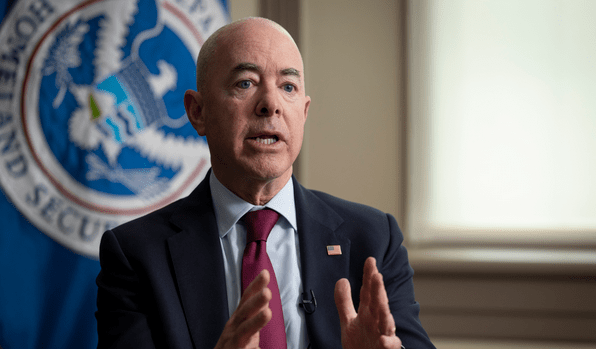
Republicans have continued hammering Mayorkas since taking control of the House. Judiciary Committee Chairman Jim Jordan, who called the flooding of more than 5 million illegal immigrants across the southern border since President Biden took office an “intentional” policy, has made several visits to the U.S.-Mexico border with other Republicans, and the House has held multiple hearings on immigration. 

But as winter has turned to spring, the GOP has taken little action to remove Mayorkas. Republicans Andy Biggs of Arizona and Pat Fallon of Texas  have each filed bills, but the House Judiciary Committee, from which any impeachment move must come, has not taken up either resolution. 

Conservative groups focused on the southern border told RealClearInvestigations that impeachment did not come up during recent meetings in Washington. 

“I just came from the Hill and a bunch of meetings with staffers and they’re reporting the same thing; one said the conference is split, with a lot of GOP ‘George W. Bush types’ who love the cheap labor for American industry and agriculture,” said Todd Bensman of the conservative Center for Immigration Studies and author of “Overrun: How Joe Biden Unleashed the Greatest Border Crisis in U.S. History.”  

Bensman calls it an “old story,” but cheap labor is only part of it. Republicans aren’t united on this issue because some fear that following through on impeachment talk will alienate the moderate swing voters that the GOP needs to remain in control of the House.  

Even Republicans who have publicly attacked Mayorkas are now reticent about discussing impeachment. RCI reached out to 16 GOP House members for comment. Neither Biggs nor Fallon responded. Virginia Rep. Bob Good, a member of the Freedom Caucus who is co-sponsor of both resolutions, declined to comment on the record. Other outspoken administration critics such as Dan Crenshaw of Texas, Tom McClintock of California, and Matt Gaetz of Florida did not respond. 

Only two of the 16 Republican House members agreed to speak on the record.

“I have repeatedly called for his impeachment and am confident that Chairman Jordan will hold true to his word of impeaching Mayorkas for overseeing an unprecedented surge of illegal activity at our southern border,” Rep. Paul Gosar of Arizona said.  

Rep. Scott Perry of Pennsylvania said Biden administration officials have lied about what they have done at the border but was more circumspect on impeachment, suggesting a wait-and-see attitude may be behind the aggressive rhetoric. 

“I’m not on the Judiciary Committee and it would have to come from there,” he said. “My hope is that at least some information will come from hearings because some members legitimately have some questions.” 

Perry and others said they would like to see the Judiciary Committee make the case for impeachment, a process Jordan appears to be favoring. For the moment, however, the only concrete step Republicans have taken is a symbolic gesture by Rep. Chip Roy of Texas to try to cut Mayorkas’ salary from the DHS budget. 

The bills filed by Reps. Biggs and Fallon contend that Mayorkas’s conduct meets the constitutional threshold for impeachment, “high crimes and misdemeanors.” Fallon’s bill, H. Res. 8, alleges that the secretary has violated the oath all cabinet members take to “faithfully uphold” the laws of the United States by failing to enforce: 

  • The Secure the Fence Act of 2006 that requires the DHS secretary to “maintain operational control over the entire international land and maritime borders of the United States.”

  • The Immigration and Nationality Act that requires the DHS secretary to “detain inadmissible aliens arriving in the United States or aliens who are present in the United States without inspection until processed.” Instead, it claims, Mayorkas’ “catch and release” approach has allowed more than “1,000,000 illegal aliens” into the country. 

While referencing those two laws, the Biggs resolution, H. Res. 582, also accuses Mayorkas of violating the Public Health Services Act by failing to protect U.S. citizens from “risk and exposure to and contracting Covid-19 by refusing to take necessary steps to prevent contagious illegal aliens from entering the United States.”  

In sum, the Biggs resolution concludes Mayorkas should be impeached because “his actions have subverted the will of Congress and the core tenets of the Constitution.” 

RCI reached out repeatedly to a dozen Democratic members of the House Judiciary Committee seeking comment on a possible impeachment of Mayorkas and their reaction. None of them responded.

Mayorkas has stated repeatedly he has no intention of resigning, a suggestion Republican Sen. Ted Cruz of Texas made again Tuesday when Mayorkas appeared at a Senate committee hearing. “If you had any integrity you would resign,” Cruz said.

The volley came after the two got into a verbal spat over how truthful the administration has been about the border. Cruz cited comments by White House Press Secretary Karine Jean-Pierre that people are “not walking across the border” along with photographs of people doing just that. “You claim you care, Mr. Secretary –– that is a lie,” Cruz said. 

Cruz again accused Mayorkas of dissembling after the DHS chief would not answer a question about whether Jean-Pierre lied. Mayorkas called Cruz’s accusation “revolting.”

Nevertheless, the department is bracing for a possible impeachment and taking steps for Mayorkas’ defense. A government contract was signed with the law firm Debevoise & Plimpton to provide legal assistance to the secretary; that contract would kick in only if the Judiciary Committee moved an impeachment motion to the House floor.

Debevoise & Plimpton did not respond to a request for comment about the arrangement. Biden administration officials familiar with it said it was necessary because the impeachment of a cabinet secretary is so rare none of its legal staff has any relevant experience.

The terms of the contract were not disclosed, although officials pointed to examples in the past where House Republicans hired outside legal counsel to assist it on legislation that proved legally fraught.

A DHS spokesperson said the contract was necessary to “ensure the Department’s vital mission is not interrupted by the unprecedented, unjustified and partisan impeachment efforts of some members of Congress, who have already taken steps to initiate proceedings.”

History shows the House can move swiftly on impeachment if members choose to. The Democratic majority, along with a handful of Republicans, voted to impeach departing President Trump just one week after the post-election riot at the Capitol on Jan. 6, 2021.  

Defenders of the government’s current border policies say that the conservatives’ argument is flawed. The Biden administration’s approach is basically a relaxation of the Trump administration’s more stringent strategy. As such, they amount to policy differences between the two major political parties and fall far short of any “crimes and misdemeanors” that would justify impeachment.  

But, as RCI has previously reported, President Biden’s policies have marked a sharp break from his predecessor’s, since Biden’s first day in office, when he signed seven executive orders on immigration that, among other things,  suspended deportations. 

Hans von Spakovsky, a senior fellow at the conservative Heritage Foundation who co-authored the February report, “The Case for Impeachment of Alejandro Nicholas Mayorkas Secretary of Homeland Security,” defended the impeachment argument from liberals who deride it as purely political. 

It inaccurately and incorrectly asserts that we are confusing the requirements of the Immigration and Naturalization Act with the Trump administration policies,” he said. “Our analysis is based not on disagreeing with the policies implemented by Mayorkas, but with his violation of federal immigration law.” 

“I think we have laid out in our paper what we think the basis is for impeachment,” von Spakovsky told RCI. They include the claims that Mayorkas:  

  • “deliberately defied and contravened the laws he is charged with faithfully executing.” 

  • “repeatedly abused the authority of his office, including by, among other conduct, enticing a flood of aliens to cross the U.S. southern border with his policies and Statements.” 

  • “betrayed the trust of the people by lying to Congress and withholding information and misleading the public in an effort to hide and suppress the nature and consequence of his abominable policies.” 

Von Spakovsky added that “the misguided priorities of Mayorkas have resulted in a huge backlog in the adjudication system that unfairly hurts the many thousands of U.S. citizens and lawful applicants whose immigration matters are delayed many months.” 

Although von Spakovsky and others argue impeachment is warranted “consistent with U.S. history and constitutional traditions,” it would also be a highly unusual move. Only one cabinet member has ever been impeached, President Ulysses S. Grant’s War Secretary William Belknap in 1876, but he resigned the same day the House voted unanimously against him.  

Attorney General Harry Daugherty in 1922 and Treasury Secretary Andrew Mellon in 1932 also faced possible impeachment proceedings by the House, but the former resigned in 1924 and the latter left the cabinet and became U.S. ambassador to England. 

Impeachment supporters also point to the dangers the Biden administration’s porous border have created. In addition to the humanitarian issues of hundreds of thousands of people migrating through Mexico to the U.S., and the money they have paid to Mexican cartels to facilitate their passage, the southern border has become the main conduit for deadly illicit fentanyl.  

Scott Perry said his constituents would like to see the Republicans do more than simply talk about the border crisis, though he noted that Mayorkas is the agent who carries out policies set by President Biden. 

It’s chaos down there with the fentanyl and the cartels making millions of dollars,” he said. 

“Most of our constituents are distraught about that and want it fixed, and many would like accountability for how it occurred. Ultimately, the president is responsible so why not impeach him?” 

But as to what might actually happen with Mayorkas, Perry acknowledged he wasn’t sure. 

“My sense is that with the Judicial Committee holding hearings we are working toward those kind of things,” he said. “That will go to the fact-finding we need to have to convince some of our skeptical members.” 

Tyler Durden
Sat, 04/01/2023 – 12:30

Sliding Confidence: Majority Of Americans Question The Value Of College

Sliding Confidence: Majority Of Americans Question The Value Of College

A new Wall Street Journal-NORC poll reveals that a majority of Americans believe a college degree isn’t worth the cost and time. Sliding confidence in the higher education system indicates that the American Dream can be achieved without a college degree. This is an ominous sign for liberal professors teaching meaningless programs, particularly in the humanities.

The poll, conducted with NORC at the University of Chicago, found that 56% of Americans believe a four-year degree is a poor investment, while 42% still have confidence in colleges.

Source: WSJ

The majority of this skepticism is found among individuals aged 18-34, and those with degrees are among the groups whose views have soured about college. And why is that?

Source: WSJ

Well, over 43 million individuals have federal student loans totaling $1.6 trillion. Many of these individuals were assured that obtaining a degree would secure them a high-paying job. Yet, in the current job market, where artificial intelligence is automating vast parts of the economy, some folks with tens of thousands of dollars in student debt are working two and even three low-paying, low-skilled jobs. 

For some context of just how quickly the belief in higher education has slumped, in 2013, 53% of Americans had a favorable view of college, while 40% did not. By 2017, the percentage of Americans who believed a four-year degree would result in good jobs fell to 49%, with 47% holding the opposite opinion. Much of the sentiment shift occurred after the 2007–2008 financial crisis. 

“These findings are indeed sobering for all of us in higher education, and in some ways, a wake-up call,” said Ted Mitchell, the president of the American Council on Education, which has more than 1,700 institutions of higher education as members. 

What bothers us is Mitchell’s next comment:

“We need to do a better job at storytelling, but we need to improve our practice, that seems to me to be the only recipe I know of regaining public confidence.”

Maybe the “better job at storytelling” could come if meaningless programs, particularly in the humanities, were removed from the curriculum. Universities need to stop catering to a few radical liberals and teach skills and critical thinking that will translate into a lifetime of success for the student. The current higher education model has failed, and the college grads working as bartenders and or 2-3 jobs are the result of a failed system. 

And if universities don’t change their tune and public opinion continues to slide. The bust in the higher education bubble will broaden:

Young people realize that a college degree is not always necessary to succeed in today’s economy. Some individuals earn over $100k per year in specialized trades, such as electricians, plumbers, and or welders — many of them have very little debt. 

Tyler Durden
Sat, 04/01/2023 – 12:00

There’s No Reason To Trust Banks And, Thanks To Bitcoin, We Don’t Have To

There’s No Reason To Trust Banks And, Thanks To Bitcoin, We Don’t Have To

Authored by Julian Liniger via BitcoinMagazine.com,

Trust in central and commercial banks is eroding quickly. The internet and social media are oil in the fire and Bitcoin is the extinguisher…

‘TRUST US, BRO’ AS THE ONLY TOOL LEFT

Banking only works when there is trust. It’s fundamentally based on the belief that the banking system is strong and resilient enough to protect your money. But this trust-based system has shown that the rich and powerful benefit from this protection. As we saw in 2008 and since, the regular taxpayer is paying the bill.

It’s ironic that Credit Suisse, which emerged as one of the winners of the 2008 financial crisis, is among the first banks to bite the dust in this current crisis. Between 2008 and 2023, we’ve seen many scandals, constant litigation, terrible risk management,and never-ending drama, slowly eroding trust in a once prestigious institution.

So, who has to pay the price for this? You guessed right: Everyone in Switzerland does! The Credit Suisse bailout (though no one officially calls it a “bailout”) is estimated to cost Swiss taxpayers a staggering 109 billion Swiss francs ($13,500 for every man, woman and child in the country).

Like those of commercial banks, central banks’ decisions and actions are only effective when people trust them. The Federal Reserve and the European Central Bank (ECB) (among many other central banks worldwide) have made bold claims, only to be proven wrong. Officials like Janet Yellen, Jerome Powell and Christine Lagarde have consistently underestimated inflation. They even ridiculed anyone warning of the consequences of years-long ultra-low interest rates and unhinged balance sheet expansions during COVID-19.

Now, the claims meant to calm us are back to haunt them. Yellen famously said in 2017 that we would “never see a financial crisis again.” Lagarde was reluctant to explain how to tackle inflation in a talk show and just said that inflation will come down in “due time,” only to now freak out because of the “monster” that is inflation.

It is becoming increasingly evident that, while politicians and central bank officials like to tell the masses that they have many tools at their disposal, the only means left is a constant “Trust us, bro.”

THE ‘CONFIDENCE SCHEME’ DOESN’T WORK IN THE AGE OF SOCIAL MEDIA

As confidence in the banking system and possibly the financial system at large wanes, and bold words of reassurance are proven to be nothing more than hollow phrases, it’s no surprise that the fragility of it all just increases. Given this fact, it should also not be surprising that (among other things, like a constant deterioration of reputation) Tweets and WhatsApp messages triggered the Credit Suisse bank run. Similar to how the run on the Silicon Valley Bank (SVB) was set in motion by public warnings from influential people within the startup scene, like Peter Thiel.

What may sound like an unlucky coincidence is a symptom of a broader crisis in trust. Establishing a joint narrative, a common belief and direction is a lot harder in 2023 than it was, say, in the 1970s. Instead of newspapers and weekly magazines, we now have news spread within seconds. And expert opinions and contrarian views go viral on Twitter, Reddit and elsewhere within minutes.

We can see that bank runs in the digital age are different. Frightened people don’t need to walk to a branch and ask for their money. They can do that from their homes. What makes it worse for banks in the fractional reserve era is that tens of thousands of people can do that simultaneously.

Will this lead to a domino effect of centralization of banks because the trust in banks, especially smaller ones, is quickly eroding? The message Yellen sent after the collapse of SVB was loud and clear: We decide case by case if it’s worth saving smaller banks. Go to large banks like JPMorgan Chase to be safe because we’ll not let those banks die. The trend of smaller banks getting absorbed by the big fish is accelerating like never before.

This shows that not only is our money not fit for the internet age, but also that the institutions and the Powells, Yellens and Lagardes of the world are not able to keep up with the pace and complexity of their surroundings.

More central planning and constantly intervening in markets can’t be the answer. Assuming that the people who brought us here can show us the way out is naive.

MONEY PRINTER WILL GO BRR AGAIN… AND THEN?

Despite (unofficial) government bailouts like the one we’ve seen with Credit Suisse, politicians and central bankers worldwide are stuck between a rock and a hard place. They face a tricky balancing act between raising interest rates to tame inflation and maintaining liquidity in the banking system.

On the one hand, they have to raise interest rates. They need to tame inflation somehow and pop the “everything bubble” that pushed the price of everything from stocks, real estate and luxury watches to NFTs and thousands of “crypto” projects up over the last few years.

On the other hand, they need to ensure enough liquidity in the banking system, so the wheel can keep running. While no official spokesperson wants to use the term “bailout” after 2008 anymore, what is happening in the U.S. and Switzerland with Credit Suisse is precisely this. It all boils down to what enraged people in 2008: Banks know they can take risky bets, so they do it. And when shit hits the fan, they get saved by taxpayer money.

The money printer will roll again, casting even more doubt on the promises of central bankers and politicians. The reason is simple: There is no other solution in central bankers’ toolkits in the era of unlimited fiat money backed by nothing more than promises and grand speeches.

The question is not whether our money will be devalued, but only how quickly. In any case, the current speed is unbelievable even in the richest countries in the world, such as Germany. With price inflation currently at 8.7%, it will take eight years (!) for the value of money to be halved in the Federal Republic of Germany. In the U.K. and Austria, we are currently seeing inflation rates beyond 10%, not to mention countries like Argentina or Turkey, where hyperinflation (price inflation of over 50%) is the order of the day.

OPT OUT WITH BITCOIN, EXIT COUNTERPARTY RISK

Tidjane Thiam, who became Credit Suisse’s chief executive officer in 2015 and held the position until 2020, famously called bitcoin a bubble in November 2017: “From what we can identify, the only reason today to buy or sell bitcoin is to make money, which is the very definition of speculation and the very definition of a bubble.”

Back then, the bitcoin price was around $7,000. The rest is history and irony.
 

Thiam didn’t seem to or didn’t want to understand why people buy an asset like bitcoin: They want to opt out of the confidence scheme described above. They are looking for ways to place a contrarian financial bet and exit the financial system altogether. It’s ironic and sad that we need events like the downfall of formerly-prestigious institutions like Credit Suisse to clarify a case for Bitcoin for skeptics like Thiam.

Now, more and more people are waking up to why Bitcoin exists and what it can do for them: hold their wealth in an asset that no one can debase — no government, no CEO. An asset that no one can censor, that is hard to confiscate and that can’t just vanish in the turmoil of a crisis.

Political movements like Occupy Wall Street made headlines during the 2008 financial crisis. Fifteen years later, we know that it went nowhere. On the other hand, Bitcoin is healthier than ever as both a movement and a technological solution. Bitcoin is not just a theory in the heads of academics and activists. It can be used 24/7 by anyone around the globe, no matter if you have access to a bank account, live in an authoritarian country experiencing hyperinflation or just want to store wealth for the long term.

After a decade of wild speculation and thousands of stupid cash grab experiments in the “crypto” space, people realize that Bitcoin has fixed counterparty risk.

While price fluctuations in euros or U.S. dollars grab headlines, the actual value of Bitcoin lies in its ability to transact and store value outside of the financial system. It’s digital gold with extra features, a beacon of hope in an uncertain economic landscape.

In conclusion, as trust in central and commercial banks continues to erode, Bitcoin is a viable alternative for those seeking financial sovereignty. It’s digital gold with extra features. The challenges posed by the internet, potential geopolitical seismic shifts and the social media age call for a solution that can withstand these pressures — Bitcoin and the principles of sound money it represents could be part of that solution.

Tyler Durden
Sat, 04/01/2023 – 11:30

At Least 9 Dead, Dozens Injured As Tornados Wreak Havoc Across America’s Heartland

At Least 9 Dead, Dozens Injured As Tornados Wreak Havoc Across America’s Heartland

Powerful storms swept across America’s heartland Friday into early Saturday, resulting in at least nine deaths, injuring dozens, and causing significant damage to homes, businesses, and critical infrastructure, reported CNN. 

There were 60 preliminary tornado reports in seven states, with Arkansas being hit hard as it experienced at least five deaths, four in the eastern Arkansas town of Wynne and one in North Little Rock. 

A storm in Indiana claimed the lives of three people and caused damage to homes and a volunteer fire station near Sullivan, a city approximately 95 miles southwest of Indianapolis. 

In Madison County, Alabama, authorities reported one fatality and five injuries during an overnight storm.

Officials in Arkansas’ Pulaski County said at least 50 people were rushed to local hospitals after a “large and destructive tornado” roared through the area. 

On Saturday morning, Mayor Frank Scott told CNN that storm damage in Little Rock is “devastating.” 

More than 250,000 customers in Indiana, Minnesota, Arkansas, Illinois, and Wisconsin are without power, according to PowerOutage.us, with Indiana and Minnesota reporting the most outages.

More severe weather is expected today, as “scattered strong-severe thunderstorms are expected across parts of the Ohio Valley and Northeast and over the Southeastern US. Wind, hail, and a few tornadoes are possible,” the National Weather Service’s Storm Prediction Center warned. 


Tyler Durden
Sat, 04/01/2023 – 09:55

NATO Holds War Games Miles From Ukraine’s Border

NATO Holds War Games Miles From Ukraine’s Border

Via The Libertarian Institute, 

The US and its NATO partners are conducting military drills in a region of Romania that borders Ukraine. Thousands of soldiers will gather to simulate repelling an invasion on the Black Sea coastline.

Dubbed “Sea Shield 23,” the war games kicked off on March 20 and will run until April 2. The US and 11 other NATO countries are participating in the Romanian-led military exercises. Nearly 3,500 soldiers, 30 naval ships, 14 aircraft and 15 other “fast intervention” boats are participating in the live-fire operations, which will occur in the Black Sea and Romania’s Danube Delta. Troops taking part in the Sea Shield drills will come within 20 miles of the Ukrainian border.

“The multinational exercise ‘Sea Shield 2023’ is the most complex training event, planned and conducted by the Romanian Naval Forces, through the Naval Component Command, in the 2023 training year,” the Romanian Navy said in a press release.

Since the Russian invasion of Ukraine, the US has conducted several rounds of war games in Eastern Europe to simulate a similar conflict and develop strategies for Kiev.

Investigative journalist Seymour Hersh reported that last summer, the Joe Biden administration used the cover of war games in the Baltic Sea to plant explosives on the Nord Stream pipelines.

In September, those explosives were detonated destroying the natural gas pipelines linking Russia and Germany.

Over the past year, the North Atlantic alliance has increased its force posture in what it regards as its “eastern flank,” which is made up of eight countries that stretch from the Baltics to the Black Sea, including Romania.

NATO is concurrently conducting the “Crystal Arrow 23” war games in Latvia, which will see Danish soldiers train Riga’s Mechanized Infantry Brigade.

Tyler Durden
Sat, 04/01/2023 – 09:20

Belgium Remains The Cocaine Capital Of Europe

Belgium Remains The Cocaine Capital Of Europe

Rosalinda González Valencia, the wife of the drug kingpin in charge of the Jalisco New Generation Cartel, Nemesio Oseguera Cervantes, was arrested by the Mexican military near Guadalajara this Tuesday.

According to the country’s ministry of defense cited by Reuters, this is seen as “a significant blow to the financial structure of organized crime in the state of Jalisco”.

The infamous cartel is seen as second only to the Sinaloa organization in terms of influence and volume of drugs trafficked, dealing mostly in cocaine and amphetamines.

Its trade of the former is not limited to continental operations but is also carried out in Europe via allied gangs in South America.

As Statista’s Florian Zandt details in the chart below, the trafficking of the illegal stimulant is primarily a problem of Central Europe.

Infographic: The Cocaine Capitals of Europe | Statista

You will find more infographics at Statista

In Belgium alone, authorities confiscated about 65 tons of cocaine in 2019 according to data by the European Monitoring Centre for Drugs and Drug Addiction (EMCDDA), followed by the Netherlands with 43 tons. This, of course, doesn’t mean that the drug is primarily consumed in these countries, rather than the nations mentioned serve as its biggest trading centers.

Still, the Netherlands and Belgium appear in the top 8 of the countries with the highest prevalence of problem drug use in 2019, placing second and eighth, respectively, encompassing injecting drug use or regular use of opioids, cocaine or amphetamines.

While the EMCDDA categorizes cocaine as the second-most prevalent illicit drug concerning recent and lifetime usage in its latest European Drug Report, it’s still only consumed by a fraction of the people surveyed by participating countries: 4.8 percent of survey participants said they have tried the drug at least once, 1.2 percent claimed they recently consumed cocaine.

Tyler Durden
Sat, 04/01/2023 – 08:45

Billionaires Brin, Pritzker, Zuckerman And Ovitz Issued Subpoenas In Epstein Lawsuit

Billionaires Brin, Pritzker, Zuckerman And Ovitz Issued Subpoenas In Epstein Lawsuit

Billionaires Sergey Brin, Thomas Pritzker, Mortimer Zuckerman and Michael Ovitz were issued subpoenas this week by the US Virgin Islands as part of its lawsuit against JPMorgan over the bank’s relationship with now-deceased pedophile Jeffrey Epstein, according to the Wall Street Journal, citing people familiar with the matter.

The subpoenas seek any communications or documents related to JPMorgan and Epstein.

The four men are some of the wealthiest people in the U.S., and it couldn’t be determined why they were being asked for the communications and documents. In civil cases, lawyers can use subpoenas during the discovery process to get information from people who aren’t a party to a lawsuit but could provide evidence related to the case. -WSJ

JPMorgan is being sued by the US Virgin Islands along with several Epstein accusers in a combined case over Epstein’s sex trafficking operation. The plaintiffs claim that the bank facilitated abuse by allowing Epstein to remain a client while helping send money to his victims. The lawsuit also alleges that JPMorgan turned a blind eye to Epstein’s activities after receiving referrals for high-value business opportunities.

Hyatt Hotels Corp.’s Executive Chairman Thomas Pritzker and Google co-founder Sergey Brin.Photo: Franck Robichon/European Pressphoto Agency, Fabrice Coffrini/AFP/Getty Images

Brin is a co-founder of Google and sits on the board of parent company Alphabet. Pritzker is executive chairman of Hyatt Hotels. Ovitz is a venture capitalist and co-founder of the Creative Artists Agency (CAA), and Zuckerman is a real-estate billionaire and owns US News & World Report.

Michael Ovitz, venture capitalist and former Hollywood agent, and Mort Zuckerman, real-estate investor. Photo: Brendan McDermid/Reuters, Victor J. Blue/Bloomberg News

As we noted on Tuesday, JPMorgan CEO Jamie Dimon is expected to be deposed under oath regarding the bank’s relationship with Epstein – who banked with JPMorgan for 15 years until it eventually cut ties with the convicted sex offender in 2013.

“Jamie Dimon knew in 2008 that his billionaire client was a sex trafficker,” argued US Virgin Islands attorney Mimi Liu during a March hearing in front of Manhattan US District Judge Jed Rakoff, referring to the year Epstein was first criminally charged with sex crimes, CNBC reported earlier this month.

Lawyers have questioned several JPMorgan employees so far in this case and another filed by an unnamed woman who accused Epstein of sexual abuse. The cases are running together in Manhattan federal court.

JPMorgan has sought to have the lawsuits dismissed. The bank has denied that it aided Epstein and has sought to blame any relationship on former executive Jes Staley, whom the bank has sued. Mr. Staley has maintained he was friendly with Epstein but never knew about his alleged crimes. -WSJ

“If Staley is a rogue employee, why isn’t Jamie Dimon?” Liu said during the hearing to discuss the bank’s efforts to have the USVI lawsuit against the bank dismissed, referring to former JPMorgan executive Jes Staley, who is not named in the current litigation.

“Staley knew, Dimon knew, JPMorgan Chase knew,” Liu continued, noting that there were several cash transfers and wire transfers made by the prolific pedophile (Epstein), including several hundreds of thousands of dollars paid to several women which should have been flagged as suspicious.

Tyler Durden
Sat, 04/01/2023 – 08:40

Body Blow To Activists: Whopping 82% Of Berlin’s Voters Refused To Support Net Zero 2030 As Referendum Fails

Body Blow To Activists: Whopping 82% Of Berlin’s Voters Refused To Support Net Zero 2030 As Referendum Fails

Authored by Paul Gosselin via NoTricksZone.com,

The results of Berlin’s Climate Neutrality By 2030 referendum tell us that FFF and Last Generation are fringe movements, remote of even Berlin’s mainstream.

It’ll take a longtime for the radical climate activists to recover from this major setback

The movement’s leaders reacted in disbelief and sourly to the defeat, as Twitter account holder Georg tweeted:

Crushing defeat

Last Sunday’s “Berlin Climate Neutrality By 2030” referendum failed resoundingly despite the more than a million euros spent in a massive run-up campaign that included plastering the city with posters, concerts by famous performers, huge support and propaganda by the media and hefty donations coming from left wing activists from the east and west coasts of USA.

Once the dust of the referendum had settled, it emerged that the “yes” side fell way short of the quorum 608,000 votes needed to pass the measure. Only 442,210 cast a vote in favor, which represents only 18% of Berlin’s eligible voters. The activists expected a far greater turnout. 82% refused to lend any support.

Berlin’s rejection of the climate neutrality by 2030 mandate is a massive body blow to the the radical Fridays for Future and Last Generation movement in Germany, and it will take months for the radicals to recover, it ever, from this setback.

The Berlin initiative to make the city climate neutral by 2030 was led by rich, upper class youths like Luisa “Longhaul” Neubauer. But Berliners, having been harassed for months by activists gluing themselves to the streets and blocking traffic, saw the folly of the initiative and the high costs it would entail politically and financially. They decided resoundingly they’d wanted no part of it.

Lashing out at the majority

The agony of referendum defeat was palpable as some of its leaders reacted by lashing out and insulting those who refused to vote “yes”, In a video, movement co-leader Luisa Neubauer sank into cynical accusations against the majority, even calling the uncooperative Berliners “fossil cynics” and “climate destroyers”.

Neubauer added:

“There are forces in this city that are doing everything to get the last spark of climate destruction out.”

In Neubauer’s view these forces include the vast 82% of Berliners who refused to vote “yes”. So troublesome democracy can be.

“Bubble has finally burst”

Germany’s Pleiteticker here commented on the Berlin referendum:

Social Democrat Dario Schramm wept on Twitter at the gloating that would now come from the other side. But he and other supporters of the green ban politics need not be surprised. For years they have been spreading their ideas of good politics for years in a self-righteous, arrogant and sometimes aggressive manner.

They, mostly members of the upper middle class, have declared war on the lower and lower middle class with their destructive climate measures. Outside the Berlin political bubble and the other urban feel-good oases of Germany, the Neubauers of this world never possessed much support. And now the bubble has finally burst. In the Marzahn, Köpenick and Lichtenberg districts, the majority of voters voted against the referendum. The normal working population of Berlin decided against the journalistic and political elite.”

But don’t expect the climate radicals to go away. They’ll be back at it soon enough.

Tyler Durden
Sat, 04/01/2023 – 08:10

“Wind Power Fails On Every Count”: Oxford Scientist Explains The Math

“Wind Power Fails On Every Count”: Oxford Scientist Explains The Math

Authored by Naveen Athrappully via The Epoch Times (emphasis ours),

Wind power has been historically and scientifically unreliable, claims an Oxford University mathematician and physicist, with his calculations revealing the government to be pursuing a “bluster of windfarm politics” while discarding numerical evidence.

A wind farm outside of Palm Springs, Calif., on May 26, 2018. (John Fredricks/The Epoch Times)

After the decision to cut down on fossil fuels was made at the 2015 United Nations Climate Change Conference in Paris, the “instinctive reaction” around the world was to embrace renewables, Professor Emeritus Wade Allison, who is also a researcher at CERN, said in a 2023 paper (pdf).

Allison noted that because solar power is “extremely weak,” it was inadequate to “sustain even a small global population with an acceptable standard of living” before the Industrial Revolution.

“Today, modern technology is deployed to harvest these weak sources of energy. Vast ‘farms’ that monopolise the natural environment are built, to the detriment of other creatures. Developments are made regardless of the damage wrought. Hydro-electric schemes, enormous turbines and square miles of solar panels are constructed, despite being unreliable and ineffective; even unnecessary,” Allison said in the report, published by the Global Warming Policy Foundation.

In particular, the generation of electricity by wind tells a disappointing story. The political enthusiasm and the investor hype are not supported by the evidence, even for offshore wind, which can be deployed out of sight of the infamous My Back Yard,” he wrote. “What does such evidence actually say?”

According to the U.S. Department of Energy, wind power generated more than 9 percent of the net total of the country’s energy in 2021 and is the largest source of renewable power in the country. Over 70,000 turbines generate enough power to serve the equivalent of 43 million American homes, the department says.

There are 120,000 jobs related to wind energy in the United States, the Energy Department says, and it’s one of the fastest-growing jobs in the country.

The Evidence

Allison explained that wind energy is measured based on the amount of moving air and the speed of the air as it reaches the area swept by the turbine blades.

The scientist calculated that, at 100 percent efficiency, if the wind blows at 10 meters per second (about 22 mph), the power is 600 watts per square meter. Hence, to deliver 3,200 million watts, the same output as Hinkley Point C—a planned zero-carbon nuclear power station in England—there would need to be 5.5 million square meters of turbine swept area.

That should be quite unacceptable to those who care about birds and to other environmentalists,” Allison wrote.

The actual performance of the technology is much worse than the calculations made based on 100 percent efficiency, he said.

“Because the power carried by the wind depends on the third power of the wind speed, if the wind drops to half speed, the power available drops by a factor of 8,” he said. “Almost worse, if the wind speed doubles, the power delivered goes up 8 times, and as a result the turbine has to be turned off for its own protection.”

Read more here…

Tyler Durden
Sat, 04/01/2023 – 07:00

The Energy Transition Is A Delusion Indeed

The Energy Transition Is A Delusion Indeed

Authored by Benjamin Zycher via RealClear Wire,

The “energy transition” continues to receive thunderous applause from all the usual Beltway suspects, an exercise in groupthink fantasy amazing to behold. For those with actual lives to live and thus uninterested in silliness: The “energy transition” is a massive shift, wholly artificial and politicized, from conventional energy inexpensive (Table 1b and here), reliable, and very clean given the proper policy environment, toward such unconventional energy technologies as wind and solar power. They are expensive, unreliable, and deeply problematic environmentally in terms of toxic metal pollution, wildlife destruction, land use massive and unsightly, emissions of conventional pollutants, and in a larger context large and inexorable reductions in aggregate wealth and thus the social willingness to invest in environmental protection.

But the Beltway being what it is, the fantasists are impervious to reality, until the massive costs and dislocations and absurdities become impossible to ignore. (Witness, for example, California.) Even as they backtrack on their confident assertions that a modern economy can be powered with the energy equivalent of pixie dust, they argue that the emerging problems are little more than growing pains attendant upon short run rigidities, and all will be well given some more time, more subsidies, and more magical thinking.

Uh, no. The obstacles confronting the “energy transition” are fundamental — they are caused by the very nature of unconventional energy — driven by massive costs, technical and engineering realities, severe constraints in terms of needed physical inputs, and at a political level growing local opposition to the unconventional energy facilities central to the “transition.”

These realities — there’s that word again — are discussed in detail in a major recent paper by Mark P. Mills of the Manhattan Institute. This brief discussion cannot do it justice, but let us first quote Mills directly:

In these circumstances, policymakers are beginning to grasp the enormous difficulty of replacing even a mere 10% share of global hydrocarbons—the share supplied by Russia—never mind the impossibility of trying to replace all of society’s use of hydrocarbons with solar, wind, and battery (SWB) technologies. Two decades of aspirational policies and trillions of dollars in spending, most of it on SWB tech, have not yielded an “energy transition” that eliminates hydrocarbons. Regardless of climate-inspired motivations, it is a dangerous delusion to believe that spending yet more, and more quickly, will do so. The lessons of the recent decade make it clear that SWB technologies cannot be surged in times of need, are neither inherently “clean” nor even independent of hydrocarbons, and are not cheap.

Mills makes a number of hard realities clear, among which are the following:

  • The realities of the physics, engineering, and economics of energy systems are independent of any beliefs about climate change.

  • Europe, the U.S. and Canada, Australia and the other regions that have pursued power grids with a higher share of wind and solar electricity uniformly have experienced large increases in electricity costs, and even that effect hides the costs of the massive subsidies borne by taxpayers.

  • It costs at least $30 to store the energy equivalent of one barrel of oil using lithium batteries, which explains why batteries cannot compensate for the unreliable nature of wind and solar power even for days, let alone weeks. “There is no physics, never mind engineering or economies of scale” that would overcome this cost disadvantage.

  • The time cost alone of recharging an electric vehicle makes such vehicles uncompetitive, even apart from the costs of the batteries and other problems.

  • The International Energy Agency estimates that only a partial energy transition would require increases in the supplies of lithium, graphite, nickel, and rare earths by 4,200%, 2,500%, 1,900%, and 700%, respectively, by 2040. This staggering problem of materials is “inherent in the nature of SWB technologies,” which means that the cost of unconventional energy will rise even more.

Nonetheless, the delusions continue. Mr. Amos Hochstein, an official at the Department of State, testified before a Senate committee recently that “The imperative [is] to diversify away from Russian energy dependence while accelerating the clean energy transition,” and that “The most effective way to reduce demand for Russian fossil fuels is to reduce dependence on all fossil fuels.”

Got that? Were the Europeans to reduce their dependence upon unreliable deliveries of Russian natural gas, and increase their dependence upon unconventional energy even more unreliable, there will result an increase in European “energy security.” Wow.

This is utter delusion, as Mills demonstrates incontrovertibly. But the Beltway continues in its imitation of George Orwell’s world, in which “War Is Peace, Freedom Is Slavery, and Ignorance Is Strength.” The “energy transition” translation: “Expensive Energy Is Cheap, Environmentally Destructive Energy Is Clean, and Central Planning Will Yield Utopia.” Only fools can believe such things. Much of the Beltway believes them. 

Benjamin Zycher is a senior fellow at the American Enterprise Institute. 

Tyler Durden
Fri, 03/31/2023 – 23:40
