83 F
Chicago
Wednesday, August 5, 2026
Home Blog Page 3929

Futures Slide, Yields Jump On Higher For Longer Concerns

0
Futures Slide, Yields Jump On Higher For Longer Concerns

US stock futures fell for the second day amid deepening geopolitical tensions, and as investors awaited data this week that may show stickier core inflation, prompting expectations for more rate hikes by the Federal Reserve. Futures contracts on the S&P 500 dropped 0.7%, while those on the Nasdaq 100 were down 0.9% as of 7:45 a.m. in New York, after the cash market was closed on Monday for a public holiday. Treasury yields jumped, with the 10Y rising as high as 3.89%, while the Bloomberg Dollar Spot Index retreated from the day’s highs, and the pound led gains among Group-of-10 currencies after UK companies reported surprise growth in output.

In premarket trading, Manchester United shares rose as bid interest in the English Premier League club intensified over the weekend. Sigma Lithium jumped after Bloomberg News reported that Tesla has been weighing a takeover of the battery-metals miner. Walmart tumbled after the retailing giant’s profit forecast for this year fell short of analyst estimates, signaling a cautious outlook for the world’s largest retailer after a 2022 performance that was marred by an inventory surge. Bank stocks are lower in premarket trading Tuesday as the US market is set to reopen following a holiday. Here are some other notable premarket movers:

  • JD.com leads a decline in Chinese internet stocks in US premarket trading, after a South China Morning Post report that the e-commerce firm is launching a subsidy campaign to compete with PDD Holdings in a low-price product offering.
  • Sigma Lithium (SGML US) rises as much as 27% after Bloomberg News reported that Tesla (TSLA US) has been weighing a takeover of the battery-metals miner. Tesla declines 0.9%.
  • Manchester United (MANU US) shares jump 8.2% before paring gains as bid interest in the English Premier League club intensified over the weekend, with British billionaire Jim Ratcliffe submitting a bid, while Elliott Investment Management offered a proposal to provide financing.
  • MarineMax (HZO US) shares rise 1.9% after B. Riley upgrades the boat retailer to buy from neutral, with the broker highlighting the company’s diversification push and opportunities arising from its real estate portfolio.
  • Keep an eye on Generac Holdings (GNRC US) stock as its rating was cut to hold from buy at Truist Securities, which says high interest rates and product prices will pose a “meaningful risk” to the generator maker’s 2023 financials.
  • Watch Caleres (CAL US) stock as it was raised to overweight from neutral at Piper Sandler after the footwear company’s preliminary 2022 results indicated structural earnings gains.
  • BioMarin Pharmaceutical (BMRN US) is started with a neutral recommendation at Citi, which in a note says that recent developments and expected progress for 2023 are already priced into the stock.

After the underlying S&P benchmark fell last week, US stocks are likely to remain under pressure amid concerns that the Fed could keep rates higher for longer. Investors will be closely watching the US purchasing managers index, due on Tuesday, and Friday’s personal consumption expenditures data for an indication of the likely path of monetary policy.

A start-of-the-year rally in global stocks has fizzled, and the dollar resumed gains, after central bankers reaffirmed their will to combat inflation. That, and a stubborn trend in prices, have pushed traders to factor in another 75 basis points of rate hikes by the Federal Reserve by July. They also pruned their bets for the first US rate cut: swaps now expect a 20 basis-point reduction by year-end, compared with a 50 basis-point move seen earlier this month.

“The tone after the long weekend is more biased to the downside as investors adjust to a more hawkish path from central banks that’s coming into play,” said Karim Chedid, head of investment strategy for iShares EMEA at BlackRock Inc. “In the past week we started to see equity sentiment respond to that, and we expect that to continue this week.”

Expensive US equities are flashing a warning sign that could see the S&P 500 sliding as much as 26% in the first half of this year, according to the latest weekly doom and gloom sermon by Morgan Stanley’s Mike Wilson. The year-to-date rally in equities is “pure FOMO” — fear of missing out — at best, and the excitement is misplaced, they said.

“The Fed are not signaling they will do anything different from what they have always said — but earlier, markets did not believe them,” said Fahad Kamal, chief investors officer at SG Kleinwort Hambros Bank. “The market was far too complacent at start of the year thinking there’ll be a pivot. Now the data has come in stronger, and the Fed hasn’t changed what they said. So we got a big rally earlier and then a bit of reversal.”

European stocks drifted lower as Bank of America to JPMorgan predicted an end to their 2023 rally. European stocks were in the red although off their worst levels with the Stoxx 600 down 0.3% in wake of the morning’s strong EZ PMI metrics which potentially give the ECB cover to tighten more aggressively.

  • Euro Area Composite PMI (Feb, Flash): 52.3, consensus 50.7, last 50.3.
    • Euro Area Manufacturing PMI (Feb, Flash): 48.5, consensus 49.3, last 48.8.
    • Euro Area Services PMI (Feb, Flash): 53.0, consensus 51.0, last 50.8.
  • France Composite PMI (Feb, Flash): 51.6, consensus 49.8, last 49.1.
  • Germany Composite PMI (Feb, Flash): 51.1, consensus 50.3, last 49.9.
  • UK Composite PMI (Feb, Flash): 53.0, consensus 49.0, last 48.5.

And some Goldman commentary on the PMIs:

The Euro area composite flash PMI increased by 2.0pt to 52.3 in February, well above consensus expectations. The increase in the composite index was broad-based across sectors, with manufacturing output surpassing the 50 threshold for the first time since May last year. Across countries, the improvement was led by France and the periphery, followed by Germany. In the UK, the composite flash PMI improved by 4.6pt to 53.0, also well above consensus expectations. We see three main takeaways from today’s data. First, even though the composite manufacturing index weakened, this decline was driven by an improvement in supply constraints as suppliers’ delivery times—which are included in the composite calculation with an inverse sign—recorded the largest monthly improvement outside the pandemic period and inventory stocks declined. Resilient demand in the services sector and easing supply constraints point to positive growth momentum in both the services and manufacturing sector, consistent with our above-consensus view on the Euro area growth outlook. Second, price pressures are moderating but services inflation remains sticky. Third, today’s notable upside surprise in the UK points to upside risk to our Q1 growth forecast but increases the likelihood of another 25bp hike at the upcoming MPC meeting, as we continue to expect.

Tech, autos and miners are the worst performing sectors. Credit Suisse shares tumbled as much as 6.4% after Reuters reported that Switzerland’s financial regulator is reviewing comments from Chairman Axel Lehmann on outlows from the company having stabilized. Here are some of the notable European movers:

  • SIG Group shares fall as much as 5%, the most since November, as Kepler Cheuvreux cuts the packaging firm to hold from buy, saying the stock now looks fairly valued
  • ALSO shares fall as much as 6%, the most since August 2022, as analysts said the Swiss computer hardware and software wholesaler’s 2023 guidance is cautious and below expectations
  • GB Group plunges as much as 13% after after projecting full-year profit that misses estimates with the fraud prevention company seeing longer sales cycles and challenging conditions
  • InterContinental Hotels shares drop as much as 2.9% in London after the hotel operator’s full-year results, with Citi seeing the performance as slightly negative overall
  • Worldline shares slip as much as 4.5%, erasing earlier gains, as Citi notes that the payment firm’s FY23 profitability was slightly weaker than consensus forecasts
  • Straumann falls as much as 3.3%, erasing earlier gains, after its latest earnings slightly beat estimates, with analysts calling 2023 guidance from the dental implants-maker encouraging
  • HSBC shares erase early losses, rising as much as 2.6%, after fourth-quarter results that showed profit that beat expectations but higher-than-expected costs
  • ElringKlinger gains as much as 3.3% after the German car- parts maker posted what Warburg calls strong preliminary results
  • Rovi gains as much as 7.4%, the most since Sept. 2021, after the specialty pharmaceuticals company released results which beat on strong contract manufacturing organization revenue

The Stoxx 600 will end the year 2% lower than Friday’s close, according to the average target in a Bloomberg survey of forecasters. Bank of America strategist Milla Savova said a temporary boost to the region’s economy will fade as the full impact of monetary tightening materializes, while earnings forecasts will get downgraded.

Earlier in the session, Asian stocks also fell as investors awaited earnings from China’s major tech companies and minutes from the US Federal Reserve later this week.  The MSCI Asia Pacific Index slid as much as 0.9%, with China’s tech shares among the biggest laggards. JD.com led declines following a report that the e-commerce firm is planning a subsidy campaign as it ratchets up a price war against rivals. While China’s benchmark recovered from intraday losses, the Hang Seng Index continued its slide toward a technical correction, down more than 9% since peaking late last month. Investors are looking ahead to reports from tech behemoths Alibaba and Baidu later this week. MSCI’s Asia index has broken below its 50-day moving average for the first time since August amid concerns the Federal Reserve will keep raising rates to quell inflation. Fed minutes are scheduled to be released Wednesday.

“If we’re seeing higher implied volatility in interest rates – as options trader’s price higher degrees of movement -then that should spill over into higher volatility in the USD and equity markets too,” Chris Weston, head of research at Pepperstone Group, wrote in a note. “This is the biggest risk to the markets we’re facing now.”

Japanese stocks ended lower as investors await for clues on the next moves by the Bank of Japan and Federal Reserve. The Topix Index fell 0.1% to 1,997.46 as of market close Tokyo time, while the Nikkei declined 0.2% to 27,473.10. Mitsubishi UFJ Financial Group Inc. contributed the most to the Topix Index decline, decreasing 1.5%. Out of 2,163 stocks in the index, 1,185 rose and 867 fell, while 111 were unchanged. “It’s difficult for domestic investors to move, ahead of the hearing of Mr. Ueda, who was nominated as the BOJ governor,” said Ryuta Otsuka, a strategist at Toyo Securities.

Australian stocks also declined: the S&P/ASX 200 index fell 0.2% to close at 7,336.30, dragged by losses in banks and real estate names.  Stocks around Asia declined as investors mulled the prospect of central banks tightening policy more than previously expected to tame inflation. In New Zealand, the S&P/NZX 50 index fell 0.8% to 11,801.49

In FX, the Bloomberg Dollar Spot Index rose as much as 0.4% before paring, though it remained within recent days’ ranges. The greenback traded higher against all of its Group-of-10 peers apart from the pound and the Swedish krona. The pound rallied after data showed UK private-sector business activity expanded in February, defying forecasts for another month of contraction. Here are some notable moves:

  • The euro fell a second day to a low of 1.0643, before paring. The currency shrugged off German ZEW expectations, which rose to 28.1 in February, versus estimate 23.0. Other data showed euro-area business activity rose at the fastest rate in nine months in February. The euro’s volatility term structure versus the dollar has been inverted since January 2022 and hedge funds are betting that normalization is due for a return
  • The pound flipped to gains against the dollar and gilt yields surged as markets added to pricing of future BOE hikes after British companies unexpectedly reported the first growth in seven months in PMI data. Earlier, public finance figures showed borrowing since the fiscal year that began in April is running £22 billion below the level forecast by the Office for Budget Responsibility
  • The Swedish krona rose versus the euro and the dollar, outperforming Group-of-10 peers, after Riksbank Deputy Governor Martin Floden described underlying inflation in January as worrying. Separately, Swedish long-term inflation expectations fell in the latest Prospera survey, signaling that money market participants are strengthening in their belief that the Riksbank will succeed in bringing soaring price increases down closer to its target
  • Japan’s benchmark yield briefly rose above the central bank’s ceiling for the first time since its January meeting as traders continued to bet on further policy tweaks.
  • The Australian dollar gave up an advance and sovereign bonds pared declines. Bonds earlier fell after the Reserve Bank’s meeting minutes showed that the central bank also considered a 50 basis-point hike to the 25 basis-point one it delivered

In rates, Treasuries slid across the curve and were under pressure as US trading resumes after long weekend, trailing steeper declines for gilts sparked by stronger-than-forecast UK PMI gauges for February. Treasury yields are higher by 4bp-7bp across the curve, still inside Friday’s ranges which included YTD highs for all tenors except 20Y.  Treasury auction cycle begins with $42b 2-year note sale at 1pm that’s poised to draw the highest yield since 2007. WI 2-year yield 4.64%; current issue traded as high as 4.713% Friday, within 9bp of last year’s multiyear high, as traders fully priced in a Fed rate hike in May to follow expected increase in March

In commodities, oil futures witnessed a choppy session as investors weighed the possibility of further monetary tightening against signs of improving demand from China. A gain in West Texas Intermediate futures reflected catch-up trades as there had been no settlement on Monday. WTI rose 0.9% to trade near $77.10 while Brent drops 0.3% to trade around $83.80. Spot gold falls roughly 0.4% to $1,833.

In crypto, bitcoin held around the $25k handle within fairly narrow parameters awaiting the re-entry of US participants after Monday’s market holiday.

Looking to the day ahead, we have a number of data releases today, but the main highlight will be the global flash PMIs for February. In other data releases, we will have the US February Philadelphia Fed non-manufacturing activity release, January existing house sales, UK January public finances, the Germany and Eurozone February ZEW survey, France January retail sales, EU27 January new car registrations and in Canada, the January CPI and December retail sales. Finally, earnings releases include Walmart, Home Depot, Medtronic and Palo Alto Networks.

Market Snapshot

  • S&P 500 futures down 0.7% to 4,058.50
  • STOXX Europe 600 down 0.3% to 463.44
  • MXAP down 0.8% to 162.43
  • MXAPJ down 0.9% to 528.89
  • Nikkei down 0.2% to 27,473.10
  • Topix down 0.1% to 1,997.46
  • Hang Seng Index down 1.7% to 20,529.49
  • Shanghai Composite up 0.5% to 3,306.52
  • Sensex little changed at 60,678.01
  • Australia S&P/ASX 200 down 0.2% to 7,336.30
  • Kospi up 0.2% to 2,458.96
  • German 10Y yield little changed at 2.47%
  • Euro down 0.2% to $1.0664
  • Brent Futures down 1.2% to $83.02/bbl
  • Gold spot down 0.4% to $1,834.74
  • U.S. Dollar Index up 0.15% to 104.02

Top Overnight News

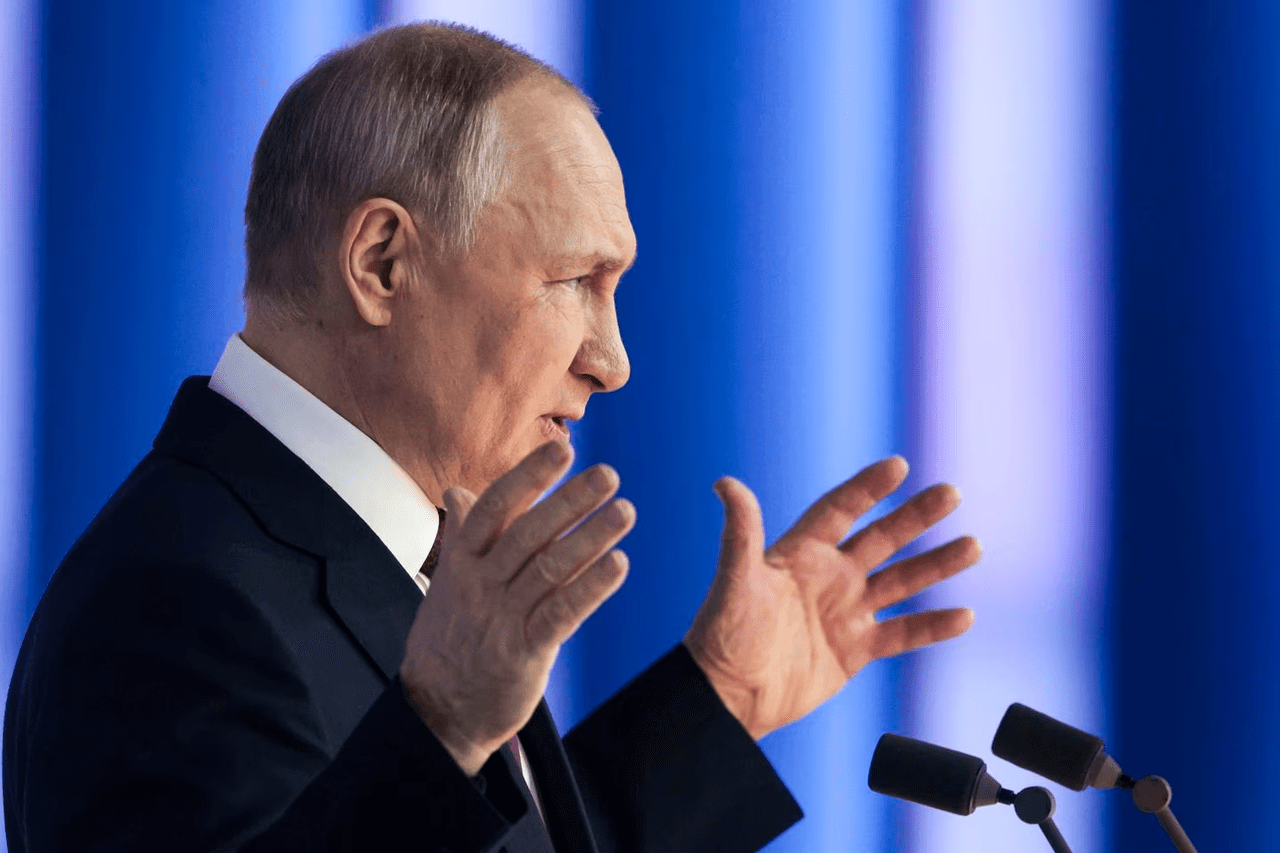
  1. President Vladimir Putin issued a defiant message on his war in Ukraine, vowing to continue the faltering invasion until Russia has achieved its goals: BBG
  2. “Frustrating,” “very annoying” and “left in the dark.” These and similar expressions have been used to describe the near month-long blackout on key global investor positioning reports that cover bets on everything from Treasuries to soybean futures — the casualty of a ransomware attack on financial firm ION Trading UK: BBG
  3. China tech leaders from firms such as Tencent, NetEast, Bidu, Didi, and others, met with senior officials from China’s Ministry of Industry and Information Technology (MIIT) to discuss ways to advance the interests of the tech industry. SCMP
  4. China is no longer viable as the world’s factory according to the head of Kyocera, a critical Japanese tech firm, due to Western restrictions on Beijing’s access to advanced technology (“the business model of producing in China and exporting abroad is no longer viable”). FT
  5. China is increasingly concerned that Russia, which it considers a key partner in Beijing’s quest to contain and counter the US, is being permanently weakened by Putin’s misguided war in Ukraine, and so is pushing for a ceasefire in the conflict. WSJ
  6. Europe’s flash PMIs for February were net positive, with encouraging growth details (especially in services) and an inflation slowdown (inflation notably cooled in manufacturing); UK flash PMIs for Feb were bullish, with solid upside on growth (the composite reading came in at 52, up from 48.5 in Jan and above the St’s 49 consensus) and cooling inflation (“Feb data pointed to the slowest overall increase in average cost burdens since April 2021”). S&P
  7. Iran – UN nuclear inspectors have detected uranium in Iran enriched to near weapons-grade (84% purity vs. the 90% required for weapons), a potential major escalatory step in the country’s nuclear program. WSJ
  8. Credit Suisse shares slump in Europe on reports that Swiss financial regulators are looking into reassuring remarks made by chairman Axel Lehmann about outflows at the company stabilizing. RTRS
  9. US fiscal stimulus to fade further – one of the last fiscal stimulus programs related to COVID, enhanced food stamps, is about to come to an end, creating headwinds for Walmart, Kroger, Dollar General, Dollar Tree, etc. (and the expiration of this program could have a dampening effect on food inflation too). WSJ
  10. Google’s $168 billion online ad business will be in focus when arguments are heard today on whether internet companies are liable for the content their algos recommend to users. The Supreme Court case may affect automated ads that hand Facebook and Google the bulk of their revenue. BBG
  11. Home Depot’s US comp sales fell less than expected but overall like-for-likes missed. It forecast profit will fall in the mid-single digits as it spends $1 billion to increase wages for sales staff. Shares slipped. Coming up, Walmart’s same-store sales growth may exceed its 3% guidance after a strong holiday season and a rise in cost-conscious shopping. Inventory-clearing markdowns and higher input costs may weigh on margin recovery. BBG

A more detailed look at global markets courtesy of Newsquawk

APAC stocks were subdued with trade mostly kept rangebound in the absence of a lead from Wall Street.  ASX 200 traded lower amid a deluge of earnings releases including a decline in BHP’s profits. Nikkei 225 was contained after mixed PMI data in which Manufacturing PMI declined by the fastest pace in two and a half years although Services PMI showed a firmer expansion. Hang Seng and Shanghai Comp. were mixed with Hong Kong dragged lower by tech losses, while the mainland was just kept afloat amid strength in developers after China launched an investment pilot for the property sector.

Top Asian News

  • UK Foreign Secretary Cleverly said he spoke with Chinese Foreign Minister Qin Gang and raised human rights abuses in Xinjiang and the need for peace in the Taiwan Strait during the call, according to Reuters.
  • RBA Minutes from the February meeting noted that the board considered a hike of 25bps or 50bps and that a pause was not an option. RBA said there were arguments in favour of both options but it concluded that the case to increase the Cash Rate by 25bps was the stronger one and the Board also agreed further increases would be needed over the months ahead. Furthermore, the RBA noted that monthly meetings allowed for frequent adjustments and that rates have already risen substantially, while it stated the Board will do what is needed to return inflation to the target and that data suggested more breadth and persistence in inflation than expected.
  • China’s Politburo discussed reforms to party and state organisations, according to state media.
  • Iron Ore Piles Up at South African Mines on Rail Bottlenecks
  • Gold Declines as Traders Await Fed Minutes for Rate Clues
  • China Leaders Pledge Stronger Growth as Recovery Takes Hold

European bourses, Euro Stoxx 50 -0.7%, & US futures, ES -0.7%, remain negative but have lifted from the sessions’ trough that printed in wake of the morning’s EZ PMI metrics which potentially give the ECB cover to tighten more aggressively. The FTSE 100 was dragged lower in tandem though remained somewhat resilient to the strong UK PMIs, which sparked a hawkish re-pricing for 25bp in March from the BoE, with a yield-induced turnaround in HSBC (+2.0%) now proving supportive after initial post-guidance pressure.
Stateside, futures are lower with the above drivers factoring after Monday’s holiday and ahead of the week’s key events via FOMC Minutes and PCE; modest further pressure seen post-HD earnings, though futures remain off earlier lows. Home Depot Inc (HD) Q4 2022 (USD): EPS 3.21 (exp. 3.28), Revenue 35.719bln (exp. 35.97bln); boosts dividend 10%. -2.8% in pre-market trade

Top European News

  • BoE Deputy Governor Woods said he will consult on changes to UK insurance capital rules in June and September, while he added that insurers will have a very good sense of what the changes to capital rules will be by year-end, according to Reuters.
  • UK PM Sunak was warned not to undermine Northern Ireland and that an N.I. deal could trigger resignations, according to The Times.
  • Germany’s tax revenues rose 0.8% Y/Y, which was driven by higher sales taxes and wages taxes, according to the Finance Ministry.
  • Hungary’s EU funds negotiator said access to the grants and cheap loans could be delayed until the summer (vs prior April guidance) to resolve remaining issues with Brussels over democratic reforms.
  • Enagas Sees 2023 Net Income EU310M to EU320M
  • UK Companies Unexpectedly Show First Output Growth in Six Months; UK Feb. Flash Services PMI 53.3; Est 49.2
  • Iron Ore Piles Up at South African Mines on Rail Bottlenecks
  • Manchester United Shares Advance as Bid Interest Intensifies
  • Putin Defiant as Struggling Ukraine Invasion Nears Second Year

FX

  • DXY has derived support from upside in US yields, risk aversion and a loss of momentum in some FX peers, with the index holding around 104.00 despite being pressured to a 103.86 trough post UK PMI data.
  • A release which sent GBP/USD to a 1.2113 peak from circa. 1.2000 before hand in a marked hawkish move which also allowed peers, ex-EUR, to trim some downside vs the USD, though this dynamic has since eased.
  • For the EUR, despite hitting a 1.0688 peak following the French PMIs the single currency has failed to hold onto this upside with EUR/GBP action weighing.
  • JPY is the incremental laggard given unfavourable yield dynamics for JGBs vs USTs/EGBS while antipodeans have faded amid domestic data for the NZD and despite hawkish RBA minutes for the AUD; currently, around 134.65, 0.623 & 0.688 respectively.
  • SEK continues to lift amid further hawkish rhetoric and continuing emphasis on the currency from officials, with EUR/SEK briefly moving below 11.00.
  • PBoC set USD/CNY mid-point at 6.8557 vs exp. 6.8550 (prev. 6.8643)

Fixed Income

  • Core benchmarks are ultimately pressured despite initial gyrations around geopolitics and PMIs; Bunds at 134.60 within 134,32-134.97 boundaries.
  • Gilts are the stand-out laggard following UK Flash PMIs which saw a hawkish re-pricing of market expectations for a 25bp BoE hike in March increase to over 95% from the low-80s before hand; UK supply due.
  • Stateside, USTs are softer in tandem with the above narrative with yields elevated and the move fairly broad-based across the curve ahead of Biden and supply.

Commodities

  • WTI and Brent April futures have experienced a choppy Tuesday session thus far and are currently modestly firmer as broader sentiment eases and Putin concludes his speech, despite being initially pressured below USD 76.00/bbl and USD 83/bbl respectively.
  • Iran set March Iranian light crude price to Asia at Oman/Dubai +USD 2.00/bbl, according to a Reuters source.
  • Russian Deputy PM Novak says oil output reductions in March will be from January levels, according to Interfax; Oil output reduction decision was only made for March. Expects discount on Urals to decrease. Novak has previously said that Russian crude production for January was between 9.8-9.9mln BPD.
  • Caspian pipeline consortium is reportedly to suspend crude shipments due to poor weather, via Reuters citing sources.
  • Iraq’s oil minister says new licensing deals will produce 250k BPD of crude, according to the State News Agency.
  • NatGas benchmarks are softer on both sides of the pond, though the magnitude of downside is fairly modest, with broader sentiment dictating price action.
  • Spot gold is weighed on by the USD, though the downside is minimal in nature given its traditional haven allure while base metals are mixed overall.

Geopolitics

  • Russian President Putin says we will decide on the tasks of the special military operation step-by-step, the West is seeking to change local conflict into a global one. The next steps to strengthen the army and navy should take into account the experience of the special military operation. Expects to enhance cooperation with India, Iran and Pakistan. Adds, if the US conducts nuclear tests then Russia will do the same.
  • Ukrainian President Zelensky said he sees resolve from the US and President Biden to end Russian aggression this year and also stated that a world order based on rules, humanity and predictability depends on what happens now in Ukraine, according to Reuters.
  • EU’s Borrell said he is confident EU members will approve the next Russian sanctions package within the next hours or days and said the sanctions agreement should be reached before the end of the week.
  • US Deputy Treasury Secretary Adeyemo says the US and allies are planning new sanctions this week to continue to isolate Russia over the war in Ukraine; additionally, 12 EU nations say Russia is transitioning into a full-on military economy, with a view to sustaining its war efforts, via Reuters citing a document.
  • Belarus sees direct threats to its military security, according to Tass citing the Defence Ministry; adds, a significant grouping of the Ukrainian army is massed near its border. Will take adequate measures to respond to military provocations, intends to hold over 150 joint exercises with Russia in 2023.
  • Ukrainian Presidential Aide says Ukrainian forces have the situation along the northern border under “special control”.
  • Japanese PM Kishida said they plan to pledge another USD 5.5bln in aid to Ukraine and announced that they will host a G7 summit meeting this Friday in which Ukrainian President Zelensky will be invited to join. Japanese Finance Minister Suzuki separately announced to hold the G7 financial leaders meeting on February 23rd and will reaffirm a stern stance against Russia at the G7 meeting, while he added they will continue to closely coordinate with other countries on sanctions to achieve the ultimate goal of Russia’s withdrawal from Ukraine, as well as noted that measures against Russia and support for Ukraine will be the main topics on the G7 agenda.
  • China seeks to broker Russia-Ukraine peace and urged the world to stop saying Taiwan is next after Ukraine, according to Bloomberg.
  • Senior aides of Israeli PM Netanyahu and Palestinian President Abbas have been conducting secret talks for almost two months in an effort to de-escalate rising tensions in the occupied West Bank, according to Axios sources.

US Event Calendar

  • 08:30: Feb. Philadelphia Fed Non-Manufactu, prior -6.5
  • 09:45: Feb. S&P Global US Manufacturing PM, est. 47.4, prior 46.9
  • 09:45: Feb. S&P Global US Services PMI, est. 47.3, prior 46.8
  • 09:45: Feb. S&P Global US Composite PMI, est. 47.5, prior 46.8
  • 10:00: Jan. Existing Home Sales MoM, est. 2.0%, prior -1.5%

Central Bank Speakers

  • Nothing on the calendar

DB’s Jim Reid concludes the overnight wrap

If you interacted with me yesterday please disregard it (unless the advice proves correct) as I was a total zombie all day having been up all night the previous one with a sick dog (Brontë). My wife was up the previous night. Thankfully Brontë seems better and I slept from 830pm-445am last night. So I feel as fresh as a daisy this morning… albeit one that managed to dodge the lawn mower all summer and has just felt the first frost of the year at the end of September.

Thankfully for me, markets had a quiet start to the week yesterday, with US markets closed, whilst in Europe, markets fluctuated between gains and losses over the day, with the STOXX 600 (-0.04%) modestly retreating, and 10yr bund yields (+1.9bps) advancing at the close after being lower most of the day. The quiet start to the week will break with the Eurozone, UK, Germany, France and US publishing their flash February PMIs over the course of today. The data momentum has been positive of late but it’s going to be hard for the next few months to assess where we should be at this stage of the cycle. There has no doubt been big improvements from gas price falls and loosening of financial conditions but we’re yet to see anything close to the full lag of monetary policy filter through to the US and Europe. If the war in Ukraine hadn’t happened and if financial conditions hadn’t collapsed for the first 9 months of last year due to the rates shock, then growth may still be quite strong at this point before the lag of a huge and rapid hiking cycle could kick in. So we have to be careful not to over interpret an improvement back to where we might normally be at this stage of a cycle and not confuse it with a sustainable soft landing.

Japan has kicked off the PMI round with mixed readings. The nation’s manufacturing activity shrank for the fourth consecutive month, falling to a level of 47.4 from last month’s 48.9 – its largest decline since August 2020. On the otherside, the au Jibun Bank flash services PMI rose to an eight-month-high of 53.6 from 52.3 last month.

Asian equity markets are mostly trading lower this morning as the prospect of the US Fed staying hawkish over policy tightening continues to weight on sentiment. As I type, the Hang Seng (-0.99%) is leading losses, dragged lower mostly by tech stocks with the Nikkei (-0.12%) also losing ground while the Chinese stocks are mixed with the CSI (-0.02%) trading just below flat and the Shanghai Composite (+0.10%) eking out minor gains in early trade. Meanwhile, the KOSPI (+0.22%) is bucking the trend.

Outside of Asia, US stock futures are indicating a negative start with contracts tied to the S&P 500 (-0.44%) and NASDAQ 100 (-0.37%) edging lower. Meanwhile, yields on 10yr USTs (+3.5bps) have moved higher, trading at 3.85% after resuming trading following the President’s Day holiday. Meanwhile, the terminal rate (July) and Dec 23 are being priced at around 5.30% and 5.09%, as we go to print, just a little higher than Friday’s close.

Elsewhere, minutes from the RBA’s latest meeting indicated that additional rate hikes are likely needed over the months ahead to bring down inflation from overheated levels. The minutes further highlighted that currently a pause in its hikes – as was the case in December is not an option mainly because of “incoming prices and wages data exceeding expectations”

Yesterday, with US markets closed, the main news story was President Biden’s unannounced visit to Kyiv to meet with President Zelensky. Bloomberg reported that the US intends to support the Ukraine with new military aid package worth $500 million, the full details of which are to be clarified today. Biden also announced that the package will include ammunition for HIMARS rocket launchers, a weapon previously proven highly effective against Russian forces.

In Europe, markets struggled for direction after fluctuating between gains and losses before finishing in the red. Yesterday, we heard from ECB’s Rehn in an interview with Börsen-Zeitung. Although historically dovish, Rehn instead added to the hawkish drumbeat coming from the central bank stating that rates must be raised further after the March meeting and that they should stay restrictive as long as core inflation is still rising. Rehn also highlighted that the ECB will likely arrive at its terminal rate over the course of the coming summer. Off the back of this, Eurozone overnight index swaps moved to price in 121bps of rate hikes by the September meeting, up +1.2bps yesterday.

Against this backdrop, the STOXX 600 was mildly positive during intraday trading, before posting a small loss at the close, down -0.04%. A strong outperforming was the materials sector which gained +1.27%, with utilities (+0.19%) and health care (+0.13%) also posting modest gains. On the other end, information technology relatively underperformed, down -0.65%. In fixed income markets, 10yr bund yields posted a modest rise, up +1.9bps to 2.45%, while the interest-rate sensitive 2yr bund yield closed up +2.5bps to 2.88%. 10yr gilts outperformed yesterday, with yields falling back -4.2bps to 3.47%.

In other news, we had a material upside surprise in Swedish CPI yesterday. Core was significantly higher than expected by both the market and the Riksbank, up +0.4% month-on-month (vs -0.2%), bringing core inflation to 8.7% year-on-year (vs 8.2% expected). The minutes from the meeting were released soon after the print and demonstrated a strong hawkish consensus that speaks to further rate hikes before the summer. Following the print, Swedish 10yr government yields hit their highest level since September 2013, closing up +12.8bps.

Finally, ahead of today’s PMI releases, we had the Eurozone’s February consumer confidence index, which printed at -19.0 as expected, an improvement from -20.9 in January. We also had the print for Eurozone construction output for December, with the month-on-month printing at -2.5%, and the year-on-year down to -1.3%.

To the day ahead, we have a number of data releases today, but the main highlight will be the global flash PMIs for February. In other data releases, we will have the US February Philadelphia Fed non-manufacturing activity release, January existing house sales, UK January public finances, the Germany and Eurozone February ZEW survey, France January retail sales, EU27 January new car registrations and in Canada, the January CPI and December retail sales. Finally, earnings releases include Walmart, Home Depot, Medtronic and Palo Alto Networks.

Tyler Durden
Tue, 02/21/2023 – 08:10

What ChatGPT And DeepMind Tell Us About AI

0
What ChatGPT And DeepMind Tell Us About AI

Authored by Charles Hugh Smith via OfTwoMinds blog,

What’s interesting is the really hard problem AI has not been applied to is how to manage these technologies in our socio-economic-cultural system.

The world is agog at the apparent power of ChatGPT and similar programs to compose human-level narratives and generate images from simple commands. Many are succumbing to the temptation to extrapolate these powers to near-infinity, i.e. the Singularity in which AI reaches super-intelligence Nirvana.

All the excitement is fun but it’s more sensible to start by placing ChatGPT in the context of AI history and our socio-economic system.

I became interested in AI in the early 1980s, and read numerous books by the leading AI researchers of the time.

AI began in the 1960s with the dream of a Universal General Intelligence, a computational machine that matched humanity’s ability to apply a generalized intelligence to any problem.

This quickly led to the daunting realization that human intelligence wasn’t just logic or reason; it was an immensely complex system that depended on sight, heuristics (rules of thumb), feedback and many other subsystems.

AI famously goes through cycles of excitement about advances that are followed by deflating troughs of realizing the limits of the advances.

The increase in computing power and software programming in the 1980s led to advances in these sub-fields: machine vision, algorithms that embodied heuristics, and so on.

At the same time, philosophers like Hubert Dreyfus and John Searle were exploring what we mean by knowing and understanding, and questioning whether computers could ever achieve what we call “understanding.”

This paper (among many) summarizes the critique of AI being able to duplicate human understanding: Intentionality and Background: Searle and Dreyfus against Classical AI Theory.

Simply put, was running a script / algorithm actually “understanding” the problem as humans understand the problem?

The answer is of course no. The Turing Test–programming a computer to mimic human language and responses–can be scripted / programmed, but that doesn’t mean the computer has human understanding. It’s just distilling human responses into heuristics that mimic human responses.

One result of this discussion of consciousness and understanding was for AI to move away from the dream of General Intelligence to the specifics of machine learning.

In other words, never mind trying to make AI mimic human understanding, let’s just enable it to solve complex problems.

The basic idea in machine learning is to distill the constraints and rules of a system into algorithms, and then enable the program to apply these tools to real-world examples.

Given enough real-world examples, the system develops heuristics (rules of thumb) about what works and what doesn’t which are not necessarily visible to the human researchers.

In effect, the machine-learning program becomes a “black box” in which its advances are opaque to those who programmed its tools and digitized real-world examples into forms the program could work with.

It’s important to differentiate this machine learning from statistical analysis using statistical algorithms.

For example, if a program has been designed to look for patterns and statistically relevant correlations, it sorts through millions of social-media profiles and purchasing histories and finds that Republican surfers who live in (say) Delaware are likely to be fans of Chipotle.

This statistical analysis is called “big data” and while it has obvious applications for marketing everything from candidates to burritos, it doesn’t qualify as machine learning.

In a similar way, algorithms like ChatGPT that generate natural-language narratives from databases and heuristics do not qualify as machine learning unless they fashion advances within a “black box” in which the input (the request) is known and the output is known, but the process is unknown.

Google has an AI team called DeepMind that tackled the immensely complex task of figuring out how proteins constructed of thousands of amino acid sequences fold up into compact shapes within nanoseconds.

The problem of computing all the possible folds in 200 million different proteins cannot be solved by mere brute-force calculation of all permutations, and so it required breaking down each step of the process into algorithms.

The eventual product, AlphaFold, has 32 component algorithms, each of which encapsulates different knowledge bases from the relevant disciplines (biochemistry, physics, etc.).

DeepMind’s AI Makes Gigantic Leap in Solving Protein Structures.

This is how project leader Demis Hassabis describes the “black box” capabilities:

“It’s clear that AlphaFold 2 is learning something implicit about the structure of chemistry and physics. It sort of knows what things might be plausible.

I think AlphaFold has captured something quite deep about the physics and the chemistry of molecules… it’s almost learning about it in an intuitive sense.”

But there are limits on what AlphaFold can do and what it’s good at: 

“I think we’ll have more and more researchers looking at protein areas that AlphaFold is not good at predicting.”

In other words, AlphaFold can’t be said to “understand” the entirety of protein folding. It’s good at limiting the possible folds to a subset and presenting those possibilities in a form that can be compared to actual protein structures identified by lab processes. It can also assign a confidence level to each of its predictions.

This is useful but far from “understanding,” and it is a disservice to claim otherwise.

What’s interesting is the really hard problem AI has not been applied to is how to manage these technologies in our socio-economic-cultural system.

*  *  *

This essay was first published as a weekly Musings Report sent exclusively to subscribers and patrons at the $5/month ($50/year) and higher level. Thank you, patrons and subscribers, for supporting my work and free website.

My new book is now available at a 10% discount ($8.95 ebook, $18 print): Self-Reliance in the 21st Century. Read the first chapter for free (PDF)

Become a $1/month patron of my work via patreon.com.

Tyler Durden
Tue, 02/21/2023 – 07:20

Putin Suspends New START Nuclear Treaty, Puts Missiles On Combat Readiness

0
Putin Suspends New START Nuclear Treaty, Puts Missiles On Combat Readiness

In a much anticipated speech on Tuesday, President Vladimir Putin said he is suspending Russia’s participation in the New START nuclear treaty with the United States. 

“President Vladimir Putin on Tuesday suspended Russian participation in the last remaining nuclear arms control treaty with the United States, warning Washington that Russia had put new ground-based strategic nuclear weapons on combat duty,” Reuters reports of the new declaration.

Via AP

It comes over a year after Moscow signed onto a five year extension, and after in August the US accused Russia of violating the treaty in disallowing US on-site inspections under its stipulations. In response, Washington halted Russian inspectors’ ability to do the same on American soil.

Russia had at the time complained that it was actually the US side which “deprive the Russian Federation of the right to conduct inspections on American territory.”

“No one should be under the illusion that global strategic parity can be violated,” Putin said of New START in the Tuesday remarks delivered in Moscow.

In March 2021 the two sides renewed New START for a period of five years, and it will expire in February 2026 if it’s not continued – an increasing possibility given US-Russia relations have deteriorated so fast over the Ukraine war they are near complete breaking point. But this new Putin declaration appears to be the final death knell after the treaty’s fate was already extremely uncertain.

The treaty is intended to limit and reduce nuclear arms on either side, setting a limit of no more than 1,550 deployed warheads and 700 missiles. START I began in 1991, with New START signed under the Obama and Medvedev administrations in 2010 as a successor agreement.

Putin’s speech, which most commentators saw little that was new in, came just after President Biden showed up in Kiev for a surprise visit…

Much of Tuesday’s speech was about reaffirming Russia’s resolve in Ukraine at a moment NATO powers seem more deeply involved than ever. “Step by step, we will carefully and systematically achieve the aims that face us,” Putin said in the speech which came just ahead of the anniversary of the invasion on Feb. 24, which will be Friday.

He also rearticulated Russia’s reasons for going to war. “Russia did its best to solve the problem in Ukraine peacefully, but the statements of Western leaders turned out to be fraudulent and untrue,” Putin said, calling Ukraine part of the “historical Russian land.”

Tyler Durden
Tue, 02/21/2023 – 07:15

Global Life Expectancy: Closing The Gap

0
Global Life Expectancy: Closing The Gap

Aside from declining fertility rates and the trend towards smaller families, a global increase in life expectancies is the main driver behind the ongoing transition towards older societies.

As Statista’s Felix Richter reports, thanks to global progress in ensuring access to health care, sanitation, education and the ongoing fight against hunger, life expectancy is not only increasing around the world, but the gap between highly-developed regions and the rest of the world is gradually closing.

Infographic: Global Life Expectancy: Closing the Gap | Statista

You will find more infographics at Statista

According to the United Nations Population Division, global life expectancy at birth for both sexes has improved from 46.5 years in 1950 to 71.7 years in 2022 and is expected to rise to 77.3 by 2050.

Perhaps more importantly though, the global life expectancy gap is closing, with Asia in particular making rapid progress in catching up with Europe and North America.

Between 1950 and 2000, life expectancy in Asia increased by more than 25 years, cutting the gap towards North America and Europe from more than 20 years to less than 10 years.

By 2050, Asia is expected to have almost caught up with the Western world with its life expectancy reaching almost 80 years.

Despite rapid improvements, Africa is the only region expected to lag behind the rest of the world in life expectancy by 2050.

Tyler Durden
Tue, 02/21/2023 – 05:45

Pfizer Knowingly Allowed Dangerous Components In Its Vaccines

0
Pfizer Knowingly Allowed Dangerous Components In Its Vaccines

Authored by Yuhong Dong M.D., Ph.D and Qinyang Jiang via The Epoch Times,

Pfizer’s COVID-19 vaccine contains mRNA fragments called “truncated mRNA.” This is a serious issue on top of the vaccine’s life-threatening safety events. Stunningly, Pfizer submitted falsified mRNA analytical reports to multiple health authorities.

The issue of truncated mRNA led the European Medicines Agency (EMA) to raise a “major objection” before its December 2020 conditional approval of the vaccine. What has happened? How have these issues been considered resolved? This two-part series article will address the matter in depth and examine its potential consequences for human health.

The exterior of the European Medicines Agency is seen in Amsterdam, Netherlands, on Dec. 18, 2020. (Reuters/Piroschka van de Wouw)

Summary of Key Facts

  • Pfizer’s COVID-19 vaccine contains truncated mRNA, which the EMA flagged as a reason for its “major objection,” indicating a preclusion of their approval.

  • Pfizer has not investigated the detrimental outcomes of truncated mRNA in its vaccines.

  • Pfizer submitted Western blot figures to the Food and Drug Administration (FDA) and the EMA that were digitally generated—not from actual experiments.

  • There has been an alarming lack of action taken by health authorities on this issue.

  • Truncated mRNA potentially contributes to multiple vaccine-related injuries, including misfolded spike protein-induced fibrous blood clots, autoimmune disorders, and cancer.

  • These problems with the Pfizer vaccine could have resulted in drastic product quality variations from batch to batch. This could explain the difference in adverse events experienced by vaccine recipients.

  • The root cause of such irresponsible conduct by pharma and health authorities is a lack of ethics.

When you go to a supermarket and want to buy 10 bottles of whole milk for your children, you usually assume the chemicals and concentrations in these 10 bottles are the same or similar. No one would expect five of the bottles to be filled with watered-down milk while the other five were filled with yogurt.

Most store-bought foods meet our expectations because of regulations and quality control. The same criteria also exist in the pharma industry, including vaccine products.

We expect consistent physical and chemical parameters of key ingredients across different batches of drug or vaccine products. Consistency is the foundation that allows patients and consumers to have confidence in the safety and effectiveness of medications.

The CMC process—short for chemistry, manufacturing, and controls—involves defining manufacturing practices and product specifications that must be followed to ensure product safety and consistency between batches. This is a mandatory criterion for global health authorities to approve a drug or vaccine.

Controlling the quality of a traditional chemical product is relatively straightforward, but for a biological product, like an mRNA, things become more complicated.

What Is Truncated mRNA? Why Does it Matter?

Our DNA contains gene codes composed of nucleotides. DNA makes proteins consisting of amino acids. Between the gene code and protein, there is a bridge molecule, a “translator”—called messenger RNA (mRNA).

The full-length mRNA sequence of the Pfizer vaccine coding for the spike protein is 4,284 nucleotides in length.

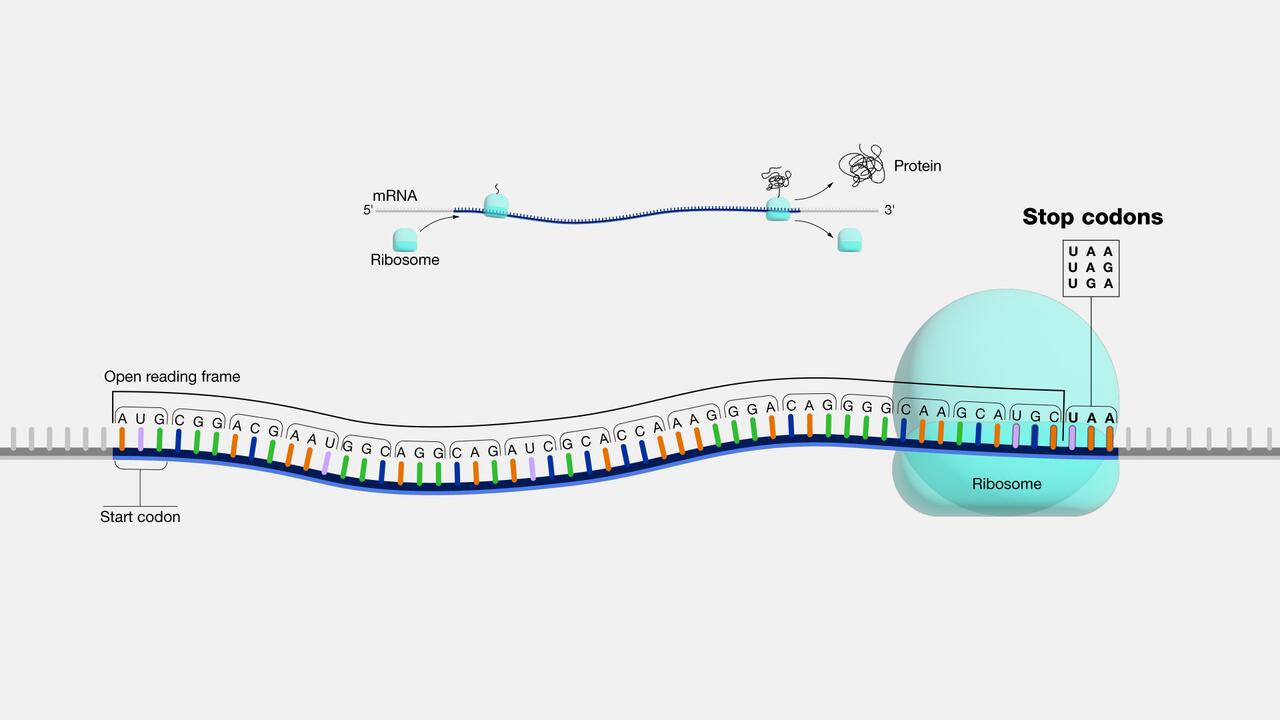
It consists of a 5′ CAP structure to prime its translation into a spike protein. It works like an ignition box of a car. At the end of the translatable region, the open reading frame, there is a stop codon, which is like a car’s brakes. If a truncated mRNA does not contain a stop codon, it fails to give a “brake” signal. The protein translation process will continue endlessly.

An mRNA translation into a protein and the role of the stop codon. (Courtesy: National Human Genome Research Institute)

Truncated mRNA’s missing stop codon is highly detrimental to humans. It can lead to the production of toxic protein products.

Pfizer’s COVID-19 Vaccine Contains Truncated mRNA

The EMA is responsible for approving all medicinal products for human use in Europe, including drugs and vaccines. The Committee for Medicinal Products for Human Use (CHMP) is the EMA’s committee responsible for interpreting the agency’s opinions.

In an EMA assessment report coded EMA/CHMP/448917/2021, the EMA requested that Pfizer address the impurities of its vaccine product, which the EMA report described as “truncated and modified mRNA.”

Pfizer’s report to the EMA clearly showed that Pfizer’s vaccine contained impurities, as indicated by “Peak 1” in the graph below, based on a screenshot from page 14 of the EMA’s August 2021 report.

Read more here…

Tyler Durden
Tue, 02/21/2023 – 05:00

How China Became Saudi Arabia’s Largest Trading Partner

0
How China Became Saudi Arabia’s Largest Trading Partner

Over the past two decades, the economic presence of China has been growing significantly around the world.

The country has already surpassed the U.S. as the largest trading partner of developed nations such as Japan and the European Union.

But the world’s second largest economy is making significant inroads in the Middle East as well. As Visual Capitalist’s Freny Fernandes details below, this graphic by Ehsan Soltani uses data from the World Trade Organization (WTO) to chart Saudi Arabia’s trading history with the EU, the U.S, and China.

Evolving Trade Relations

With China’s imports from and exports to Saudi Arabia now exceeding the major oil-producing country’s combined trade with the U.S. and the EU, China has become Saudi Arabia’s dominant trading partner.

Saudi Arabia Net Trade by Year With China ($B) With U.S. ($B) With EU-27 ($B)
2021 $87.3B $25.1B $53.1B
2020 $67.2B $20.6B $43.8B
2019 $78.1B $28.3B $57.4B
2018 $63.5B $38.2B $62.7B
2017 $50.1B $36.0B $52.6B
2016 $42.9B $36.0B $49.1B
2015 $51.8B $43.2B $56.9B
2014 $69.1B $67.1B $73.0B
2013 $72.2B $72.1B $75.2B
2012 $73.3B $75.3B $74.3B
2011 $64.3B $62.7B $70.0B
2010 $43.2B $44.1B $47.4B
2009 $32.6B $34.0B $38.2B
2008 $41.8B $69.5B $58.4B
2007 $25.4B $47.6B $47.3B
2006 $20.1B $40.9B $46.2B
2005 $16.1B $35.7B $39.9B
2004 $10.3B $27.8B $30.5B
2003 $7.3B $24.1B $24.4B
2002 $5.1B $18.7B $20.5B
2001 $4.1B $19.2B $19.6B

Back in 2001, Saudi Arabia’s trade with China was a mere fraction—just one-tenth—of its combined trade with the EU and United States. While the total value of trade was modest at this time, it’s been increasing consistently almost every year since.

By the year 2011, China had surpassed the U.S. for the first time in bilateral trade value with Saudi Arabia. Then by 2018, trade between China and Saudi Arabia surpassed the Middle-Eastern country’s trade with the entire EU.

Fast forward to today, and China has emerged as a larger trading partner with Saudi Arabia than the rest of the West combined.

The Perfect Match?

China’s status as Saudi Arabia’s biggest trading partner makes sense considering its recent economic growth and focus.

China is the largest buyer of crude oil in the world, and it buys more from the Saudi Arabia than anywhere else. Almost half of the $87.3 billion bilateral trade between the two nations in 2021 was comprised of China’s crude oil imports. This accounted for 77% of China’s total imports from Saudi Arabia, which also included goods like plastic—a petroleum product.

Saudi Arabia, meanwhile, imported over $30 billion worth of goods including technological equipment, telephones, and light fixtures.

To see what other countries China has become the largest trading partner of, check out How China Overtook the U.S. as the World’s Major Trading Partner.

Tyler Durden
Tue, 02/21/2023 – 04:15

The Newswashing Of ISIS Bride Shamima Begum

0
The Newswashing Of ISIS Bride Shamima Begum

Authored by Uzay Bulut via The Gatestone Institute,

While around 3,000 Yazidi children and women are still being held captive at the hands of the Islamic State (ISIS) terrorist organization, many in the Western media are portraying a former “ISIS bride” not only as a victim but as a celebrity.

The ISIS bride in question Shamima Begum, a British citizen who left the UK to join ISIS in Syria in 2015, and was later stripped of her British citizenship. Begum was chosen by The Times Magazine in the UK to lionize on February 4, both on its cover and in an eight-page feature. She is now part of a glamorized “newswashing” campaign to help get her British citizenship back.

The UK’s Special Immigration Appeals Tribunal is scheduled to rule this week on Begum’s appeal against being stripped of her citizenship.

ISIS brides were complicit in ISIS’s genocide and crimes against humanity. Never mind that hostages were hung upside down and then burned alive, or locked in cages then lowered into water to drown, or crucified for hours “like Jesus;” or that children were crucified or sold as sex slaves; or that countless others were tortured, raped or lined up to have their throats slit. Never mind the beheadings of journalists such as James Foley or Steven Sotloff, or the Syrian scholar Khaled al-Asaad, 82, who was tortured for a month, then beheaded because he refused to turn over Palmyra’s priceless antiquities to ISIS. The list goes on….

The Free Yezidi Foundation recently wrote of ISIS and Begum:

“Not only terror death cult, but mass-rape genocidal organization. The decision to join was hers. Her actions contributed to unspeakable acts of brutality, which she would have continued had ISIS, Daesh not been militarily defeated.”

At its height, ISIS held about a third of Syria’s territory and 40% of Iraq’s. On June 29, 2014, ISIS leader Abu Bakr al Baghdadi announced the formation of a caliphate stretching from Aleppo in Syria to Diyala in Iraq. Wherever ISIS invaded, they brought unspeakable death and destruction, especially to non-Muslim communities, including Yazidis and Christians.

ISIS murdered thousands, and forcibly displaced hundreds of thousands. ISIS also systematically committed crimes such as forced conversionshostage takingrapes of children and women, sexual slaverytheftdestructionsmugglingdisappearances and recruitment of boys as child soldiers. Their methods of violence not only included beheadings and crucifixions, but also mutilationsdismemberment, stoning and forcing hostages to kneel on explosives. Countless people became refugees and remain displaced due to the ISIS genocide.

By December 2017, ISIS had lost 95% of its territory, including its two biggest centers: Mosul, Iraq’s second-largest city, and the Syrian city of Raqqa, its nominal capital.

Since March 2019, when ISIS was ousted from the last of the territory it had seized and since the fall of their caliphate, many ISIS terrorists (some of whom are citizens of Western nations) have been trying to return to their home countries.

The European Network for Investigation and Prosecution of Genocide, Crimes Against Humanity and War Crimes (the “Genocide Network”) noted in a 2020 report:

“ISIS, which has been classified as a terrorist organization, perpetrated horrific acts of violence in armed conflicts in Northern Iraq and Syria. The issue of investigating and prosecuting its members and foreign terrorist fighters returning to their countries of origin led most EU Member States to focus on preventing and punishing terrorism-related offenses. However, ISIS should not only be considered as a terrorist organization. ISIS has fulfilled criteria according to International Humanitarian Law as a party to a non-international armed conflict in Iraq and Syria acting as an organized non-state armed group. Therefore, its members and foreign terrorist fighters could be responsible for committing war crimes and other core international crimes.” [Emphasis added.]

The BBC is another media outlet that seems to have an obsessive fascination for Begum, producing both a film and podcast series regarding the former ISIS member’s so-called journey to Syria. The broadcaster announced on July 11, 2022:

“The BBC has today announced a landmark documentary for BBC Two and BBC iPlayer and a 10-part audio series for Radio 5 Live and BBC Sounds, on the story of Shamima Begum. The podcast comes from the team behind the multi award-winning I’m Not A Monster, the BBC’s most awarded podcast series.”

Instead of focusing on the genocidal crimes ISIS committed against its victims and interviewing the victims directly, the BBC’s series and documentary largely deal with a glossy portrait of why and how Begum joined ISIS and her subsequent life there.

BBC viewers forthrightly responded, according to The Daily Mail on February 8:

“‘Why are the BBC giving Shamima Begum more airtime?’: ‘Sickened’ viewers slam broadcaster for airing 90-minute documentary that ‘parades ISIS bride as a celebrity’ just weeks after it launched 10-part podcast ‘retracing her steps’.

“Viewers have vowed to cancel their television licenses as they slammed last night’s ‘sickening’ 90-minute Shamima Begum documentary on the BBC.”

The Free Yezidi Foundation reported in 2019:

“Female members of the Islamic State (IS, ISIS, ISIL, Daesh) have actively engaged in terrorist activity and gross human rights violations, and in many cases seek to manipulate lack of evidence, lack of independent verification, or other means to plead for sympathy in the court of law and the court of public opinion to avoid accountability. Most importantly, individuals who joined the terrorist and genocidal organization must not be allowed to reshape the narrative in an effort to downplay or avoid their own agency and responsibility for the horrors they have inflicted or facilitated.

“Female members of ISIS are often perceived as being passive, naïve, or even as victims. This is a dangerous and wildly inaccurate characterization. The Netherlands Ministry of the Interior publication, ‘Jihadist women, a threat not to be underestimated,’ states:

“‘The role that these jihadist women play within the jihadist movement should not be underestimated. In many cases, jihadist women are at least as dedicated to jihadism as men. They pose a threat to the Netherlands by recruiting others, producing and disseminating propaganda, and raising funds. Moreover, they indoctrinate their children with jihadist ideology. Women form an essential part of the jihadist movement, both in the Netherlands and in the conflict area in Syria and Iraq.’

“The behavior and actions of female ISIS members has been a subject of legitimate legal and policy debate as well as morbid fascination. This has been seen in the cases of the United Kingdom’s Shamima Begum, the American Hoda Mothana, and other such cases. When citizens of foreign countries joined ISIS and have either surrendered or fled from ISIS, serious debate over international law has arisen. The fact that the alleged crimes occurred abroad do present genuine challenges for security and justice officials in terms of the collection of evidence and the construction of solid, prosecutable cases. For the Yezidi community, it is important that the crimes committed by ISIS, including those allegedly committed by ISIS women, must not be forgotten…

“Ms. Begum, for example, claimed that she was only a housewife and did not participate in any heinous crimes or violation of human rights as an ISIS member. Some portrayed her as an innocent schoolgirl who was brainwashed, uninformed, and simply wanted to return home to Britain. Some human rights proponents, politicians, and other commentators challenged the comparison of Ms. Begum to ISIS fighters. However, evidence now suggests that she was in fact a member of the ISIS ‘morality police, a group of ISIS women which was an integral part of ISIS’ terror and atrocity apparatus, and was armed with an automatic weapon on her patrols. The crimes allegedly committed by the morality police include major human rights offenses, including support to ISIS’ slave trade of Yezidis.

“Two essential points: first, reports from Yezidi survivors suggest that female members of ISIS were accepting of ISIS enslavement and abuse towards Yezidis; and second, ISIS women were more complicit in the commission of mass rape, human trafficking, crimes against humanity and genocide than they claim, and with greater agency.”

On February 5, one day after The Times Magazine released its issue featuring Begum, news came out that two Yazidi children, aged two and four, were reportedly killed after a fire swept through a camp for “internally displaced persons” (IDP) in the Kurdistan Region of Iraq. The reason Yazidis are still living in IDP camps is because Begum’s organization, ISIS, largely destroyed the Yazidi homeland of Sinjar in Iraq.

When ISIS invaded Sinjar in 2014, they murdered or kidnapped around 10,000 Yazidis, according to the book The Last Yezidi Genocide by Amy L Beam. More than 83 Yazidi mass graves have since been discovered in Sinjar. Hundreds of thousands of Yazidis had to flee and become IDPs or refugees. Almost nine years later, much of Sinjar remains in rubble, making it difficult for Yazidis to return. As a result, approximately 180,000 Yazidis remain internally displaced, mostly spread across 15 IDP camps in the Kurdistan Region of Iraq.

According to the Free Yezidi Foundation, ISIS abducted, raped and enslaved 6,417 Yazidi women and children. Today, more than 2,693 Yazidis remain missing. In 2021, a UN team investigating ISIS atrocities in Iraq established “clear and convincing evidence” of genocide against the Yazidi people. Germany’s lower house of parliament, the Bundestag, on January 19, 2023 recognized the 2014 massacre of Yazidis by ISIS in Iraq as a “genocide,” and called for measures to assist the persecuted minority.

An activist for Yazidi rights who lives in Iraq shared his opinions with Gatestone on the condition of anonymity for fear of retaliation. He said he was in Sinjar during the ISIS invasion in 2014:

“What we Yazidis expect from the international community is support and solidarity, not digging into our wounds. ISIS criminals must face justice for what they have done and practiced. We expect the West to hold ISIS accountable in court rather than putting them on the cover of their magazine. Such stories are particularly difficult for us as Yazidis because these ISIS women tortured and abused Yazidi women while they were in ISIS’s captivity.”

ISIS also devastated Christian communities in Iraq and Syria. At a 2015 hearing before the Committee on Foreign Affairs of the US House of Representatives, Sister Diana Momeka, of the Dominican Sisters of Saint Catherine of Siena, in Mosul, Iraq, described ISIS’s war on religious minorities:

“On June 10th, 2014, the so-called Islamic State in Iraq and Syria, or ISIS, invaded the Nineveh Plain which is where Qaraqosh is located. Starting with the city of Mosul, ISIS overran one city and town after another giving the Christians of the region three choices: Convert to Islam; pay a tribute, a jizya, to ISIS; leave their city, cities like Mosul, with nothing more than the clothes on their back. As this horror spread throughout the Nineveh Plain, by August 6, 2014, Nineveh was empty of Christians, and sadly, for the first time since the seventh century A.D., no church bells rang for mass in the Nineveh Plain.

“From June 2014 forward, more than 120,000 people found themselves displaced and homeless in the Kurdistan region of Iraq leaving behind their heritage and all they had worked for over the centuries. This uprooting, this theft of everything that the Christians owned, displaced them body and soul, stripping away their humanity and dignity.”

The violence of ISIS was not limited to Iraq and Syria. ISIS expanded into a global network, which has carried out attacks beyond the borders of its now-destroyed caliphate. On November 13, 2015, for instance, 130 people were murdered and more than 300 injured in a series of coordinated attacks in Paris, France. And in June 2016, a terrorist who pledged allegiance to ISIS murdered 49 people at a gay nightclub in Orlando, Florida.

The question is: Why are some big Western media corporations obviously siding with a genocidal terror group and not with its innocent victims?

Other advocates for survivors of Islamist terrorism have also denounced the manner some Western media portray ISIS members. Juliana Taimoorazy, the founding president of the Iraqi Christian Relief Council, has been helping survivors of Islamist terrorism, including ISIS, since 2007. She told Gatestone:

“I think this is a slap in the face of all those who suffered in the hands of terrorism, not just ISIS but other death cults such as Boko Haram. This is a spit in the face of all those whose loved ones were murdered, and I do not mean only Yazidis, Assyrians or Nigerians, but all the innocent Westerners who perished to Islamic terrorism such as in France, the UK, the US and elsewhere. Media has utterly lost its moral values. What is sadder, to me is that we, as a society, have become desensitized to things that were once outrageous. We are beat to accept and not speak up or take serious action against what is unjust.”

Tyler Durden
Tue, 02/21/2023 – 03:30

In Reversal, Finland Declares Readiness To Join NATO Without Sweden

0
In Reversal, Finland Declares Readiness To Join NATO Without Sweden

Finland over the weekend declared a reversal of policy regarding its NATO membership applications, now saying it’s ready to join the military alliance without Sweden, at a moment Turkey continues blocking Stockholm’s bid.

Finnish Defense Minister Mikko Savola told The Associated Press at the Munich Security conference on Saturday that Finland still prefers to enter jointly alongside Sweden, but has now confirmed it won’t delay if Turkey only approves Helsinki’s membership.

Helsinki file image

“No, no. Then we will join,” Savola said in response to questions on delaying NATO membership to wait for Sweden. While stressing that Finland and Sweden cooperate closely, he acknowledged the issue remains in “Turkey’s hands now.”

The day prior, on Friday, Finnish President Sauli Niinisto similarly said for the first time very clearly, “If Turkey approves Finland’s NATO application before Sweden’s, Finland cannot do anything about it.”

Finland’s earlier stance going back to summer was to emphasize the joint bid nature of its NATO accession, but has since wavered in the wake of the Quran burning incidents in Sweden.

Turkey-Sweden relations last month hit a fresh low point after an incident where a copy of the Quran was burned in front of the Turkish embassy. “We condemn in the strongest possible terms the vile attack on our holy book,” a Turkish Foreign Ministry statement said in response to the stunt by far-right activist Rasmus Paludan in late January.

It came after months of Turkish pressure on Stockholm to crack down on Kurdish groups and anti-Erdogan protests. But Ankara has accused Sweden of providing police protection to allow anti-Erdogan protesters to burn the Quran, which initially happened in front of the Turkish embassy in Stockholm, with follow-up incidents in the weeks after.

Tyler Durden
Tue, 02/21/2023 – 02:45

Polish PM: “We Want Permanent US Military Bases”

0
Polish PM: “We Want Permanent US Military Bases”

Authored by Grzegorz Adamczyk via Remix News,

During an interview with the CBS program “Face the Nation,” Polish Prime Minister Mateusz Morawiecki said he hoped that U.S. President Joe Biden would confirm his determination to see Russia beaten in the war with Ukraine.

Morawiecki disagreed with those European leaders such as French President Emmanuel Macron and German Chancellor Olaf Scholz who are saying that Russia “cannot win this war and Ukraine cannot be defeated.”

“We have to change that paradigm and we have to say, Ukraine must win and Russia must be defeated,” said Morawiecki.

The reason for this is that “the very nature of Russia is to conquer other countries.”

Asked whether Poland ruled out any negotiations while Putin stays in power, Morawiecki said that he had just returned from the Munich Security Conference and noted that the city was the site of another conference back in 1938 at which European leaders felt they had negotiated peace.

“This time around, there was no room for such naivety, and it was up to the Ukrainians to define what would be negotiated with Russia and when,” said Morawiecki.

The Polish prime minister was also asked whether Poland was expecting any breakthrough in increasing the number of U.S. troops stationed in the country.

Morawiecki confirmed that Poland was in discussions with the Biden administration over making the U.S. presence in Poland “more permanent” and larger than the current 11,000 troops.

He recalled the words of the U.S. president in Warsaw last year when he said that every inch or square inch of NATO’s territory will be defended.

But he warned that “if we fail to integrate Ukraine into NATO and the European Union, Ukraine will always be a buffer zone,” which will mean it and the region are not secure. 

Asked whether Poland would supply fighter planes to Ukraine, Morawiecki said that a year ago, no one imagined that tanks and the Patriot systems would be made available to Ukraine.

However, he added that fighter jets could only be supplied “in combination with other NATO allies, and in particular, under the leadership of the United States.”

Tyler Durden
Tue, 02/21/2023 – 02:00

Victor Davis Hanson: The Toxic Racialist Obsessions Of Joe Biden

0
Victor Davis Hanson: The Toxic Racialist Obsessions Of Joe Biden

Authored by Victor Davis Hanson via AmGreatness.com,

Joe Biden ran on “unity,” which is critical in a multiracial America. He vowed to heal the divisions supposedly sown by Donald Trump. Instead, he is proving to be the most polarizing president in modern memory. Often his racialist rhetoric and condescension have proven demeaning to both blacks and whites. In a volatile multiracial democracy that demands tolerance and restraint, a highly unpopular Biden, for cheap political advantage, continually proves incendiary and reckless. 

Last week Joe Biden snarked after watching a White House screening of Till:

Lynched for simply being black, nothing more. With white crowds, white families gathered to celebrate the spectacle, taking pictures of the bodies and mailing them as postcards. Hard to believe, but that’s what was done. And some people still want to do that. 

Exactly who are these “some people”? Who fits Biden’s innuendos of contemporary “some people” who, he alleges in 2023, still wish, as “white crowds, white families” of the past, to mail celebratory postcards after they lynch black people? The Ultra-MAGA villains of his recent Phantom of the Opera speech? Have his current targets ever echoed anything like Biden’s own racist past warning that busing would force people to “grow up in a racial jungle”?

What current data might support Biden’s absurd charges? Is Biden referring to federal interracial crime and hate crime statistics charting violent white propensities against blacks? None exist. In fact, they continually reveal that so-called whites are underrepresented as perpetrators in both categories, while overrepresented as victims in interracial crimes—dramatically so in the case of black-on-white violent crime.

In our sensationalist YouTube world, are we suffering an epidemic of Internet-fed, white-on-black incendiary crimes that might have prompted the president’s demagogic accusations? Not at all. Most of the most recent publicized interracial violence—a woman in a gym fighting off a would-be rapist, a bicyclist doctor stabbed to death in an intersection as his attacker spewed racial hatred, a 26-year-old mother lethally shot in the back in front of her children in a parking lot over a minor argument, a young boy violently choked on a bus, a small girl on a bus beaten repeatedly by two teenage boys—have involved black perpetrators and apparent white victims. So, what contemporary evidence or widely publicized anecdotes prompt Biden’s recent charges of “white rage”-fueled violence?

Yet simultaneously with Biden’s blanket and unsupported charges of racism, no president since Woodrow Wilson has offloaded more racialist verbiage than Joe Biden himself. In an eerie example of psychological projection, never has a president accused others of racism more, while freely revealing himself either to be a racist or non compos mentis, or both.

Stranger still, Biden’s latest accusation comes from a president who once eulogized the former racist, Exalted Cyclops, and segregationist Senator. Robert Byrd (D-W.Va.) as “one of my mentors” and lamented that “the Senate is a lesser place for his going.” That was no isolated fluke.

During his campaign for the presidency, Biden in 2019 praised segregationist Senator James O. Eastland for not labeling a younger Biden with the derogatory term “boy”: “I was in a caucus with James O. Eastland. He never called me ‘boy,’ he always called me ‘son.’” 

How odd, then, that Biden, as president no less, has used just that derogatory insult “boy” for distinguished blacks. Indeed, the very day before Biden leveled his “some people” slur, he was back at it with his racist “boy” reference to the black governor of Maryland: “You got a hell of a new governor in Wes Moore, I tell ya,” Biden told an audience of union workers on Wednesday. “He’s the real deal, and the boy looked like he could still play. He got some guns on him.” 

Such condescension was consistent with Biden’s past usage of “Negro” and his earlier August 2021 similar “boy” trope of referring to one of own top aides: “I’m here with my senior adviser and boy who knows Louisiana very, very well and New Orleans, Cedric Richmond.” 

In Biden world, blacks seem to be a collective to whom he can pander in stereotypical terms, as opposed to Latinos, whom Biden feels can think for themselves. Or so he said on the campaign trail in 2020, “Unlike the African American community, with notable exceptions, the Latino community is an incredibly diverse community with incredibly different attitudes about different things.”

These were “gaffes” only if one believes Biden’s frequent racialist smears and slurs are more the symptoms of senility than bias. Again, as a 2020 candidate, Biden gave us his absurd racist “Corn Pop” fables. In these concocted, He-Man sagas, Biden stood down purported ghetto gangster with his own custom-cut chain, while often showing his tanned legs’ golden hairs to curious inner-city black youth.

Biden also smeared two black journalists who had the temerity to ask him a few tough questions, one with the now infamous slang ad hominem, “You ain’t black” and the other with the personal dismissal “junkie.”

A consistent trope in these insults is his lifelong condescension of accomplished black Americans, such as his long-ago infamous talk-down to Supreme Court Justice Clarence Thomas during Biden’s travesty of conducting his 1991 Senate confirmation hearings. In that context we also remember Biden’s idiotic warning, replete with his accustomed affected black patois, to black professionals in 2012 that Mitt Romney would “put y’all back in chains.”

Like Bill Clinton, who reportedly uttered of supposed 2008 upstart Barack Obama, “A few years ago, this guy would have been getting us coffee,” Biden was especially bewildered by Barack Obama. He apparently seemed, in Biden’s racialist view, an aberration from Biden’s own usual stereotyped views of blacks of limited ability: “I mean, you got the first mainstream African American who is articulate and bright and clean and a nice-looking guy. I mean, that’s a storybook, man.” That assessment came from a candidate, who, even predementia, could never string together more than a few coherent sentences. 

Biden, remember, explained top-performing states in education as attributable to fewer minorities: “There’s less than 1 percent of the population in Iowa that is African American. There is probably less than 4 or 5 percent that are minorities. What is in Washington? So, look, it goes back to what you start off with, what you’re dealing with.”

In a world of law schools turning out record numbers of black lawyers, and billionaire entrepreneurs like Bob Johnson, Jay-Z, Kanye West, Oprah Winfrey, or Michael Jordan, Biden opines, “The data shows young black entrepreneurs are just as capable of succeeding given the chance as white entrepreneurs are. But they don’t have lawyers. They don’t have, they don’t have accountants, but they have great ideas.”   

The reason we do not associate Biden with characteristic racist stereotyping and tropes, other than with raw political demagoguery, is the same reason we give passes to liberals who say overtly racist things, which might otherwise suggest that their loud progressive rhetoric serves as some sort of psychological mechanism to square the circle of their own discomfort with the proverbial other.

Do we remember the late Justice Ruth Bader Ginsburg’s quickly hushed up and contextualized confession that abortion was targeting the proper people.

(“Frankly I had thought that at the time Roe was decided, there was concern about population growth and particularly growth in populations that we don’t want to have too many of.”)? 

Do we recall liberal icon and former Senate Majority Harry Reid, who eerily dovetailed Biden with similarly racist assessment of Obama (“a ‘light-skinned’ African American with no Negro dialect, unless he wanted to have one”)? 

Somehow Biden has transferred his own checkered history of racial disparagement onto the white working class. Fact checkers assure us that when Joe Biden libeled Trump supporters as “chumps” and “dregs” he really meant the Ku Klux Klan or white nationalists who gravitate to Trump. But most took his blanket smears as they were intended. And they fit the larger patterns of his more recent “semi-fascism” smears, and indeed, the genre of tired leftwing demagoguery that earlier gave us Obama’s “clingers,” Hillary Clinton’s “deplorables” and “irredeemables,” or the smelly who stink up Walmart in the Peter Strzok-Lisa Page joint text trove: “Just went to a Southern Virginia Walmart. I could SMELL the Trump support.”

In occasional opportunistic moments, Biden transforms into “ol’ Joe Biden from Scranton” to accentuate his middle-class roots. But he has a repugnant propensity for using racial terms of condescension and disparagement and for projecting his own unease onto a supposedly racist white middle class and poor even as he seeks to win support from the very minority communities he has so often crudely characterized. 

What is the concrete result of this now common Bidenesque schizophrenia?

Consider the toxic plume that has polluted the skies over East Palestine, Ohio, a working-class small town that is 98 percent white, with a median income of $26,000, and sits amid the Pennsylvania borderland. That very region once rejected in its 2008 primary Barack Obama—and in turn was blasted in stereotyped fashion by him: “And it’s not surprising then that they get bitter, they cling to guns or religion or antipathy to people who aren’t like them or anti-immigrant sentiment or anti-trade sentiment as a way to explain their frustrations.” 

Ol’ Joe Biden from Scranton resonates that same contempt for the convenient target of the white poor and lower middle class. Rather than send in FEMA on day one of the toxic release with tents, mobile kitchens, and supplies and medical personnel to care for the evacuated, the federal government waited two weeks and then acted only when even the liberal media was confused by Biden’s deliberate neglect. 

Amid the disaster, Transportation Secretary Pete Buttigieg, in his now tired boilerplate, was on record instead railing against supposed white hardhats who supposedly do not look like the communities in which they work. For a Biden or Buttigieg, the fish and animals dying from toxic air or water were insignificant artifacts, as were the complaints of burning lungs and allergic reactions to the black chemical cloud.

One wonders what would have been the immediate reaction of Biden and the federal government had a corporation decided to vent the contents of wrecked rail cars full of vinyl chloride and butyl acrylate and then to light up the escaping gas, birthing a toxic black plume over Martha’s Vineyard or Malibu, as opposed to East Palestine or, say,  South-Central L.A. or Ferguson, Missouri. 

Biden would have sent legions of aid workers in to ensure social justice for the marginalized and performance-art reassurance to his donor class.

Whether Biden spouts racial bombast to curry favor with his Democratic base or to project onto others his own habitual racist put downs is not quite clear. But Biden’s utter contempt for white poor and lower middle classes, who are were deemed not worthy of the prompt federal attention customarily accorded to others in times of disaster, is self-evident.

Otherwise, Biden would have sent help immediately rather than smear “some people” as 21st-century lynchers.

Tyler Durden
Tue, 02/21/2023 – 00:00