50.9 F
Chicago
Saturday, April 25, 2026
Home Blog Page 42

Navy Abandons USS Boise Overhaul After 11 Years And $800 Million Spent

Navy Abandons USS Boise Overhaul After 11 Years And $800 Million Spent

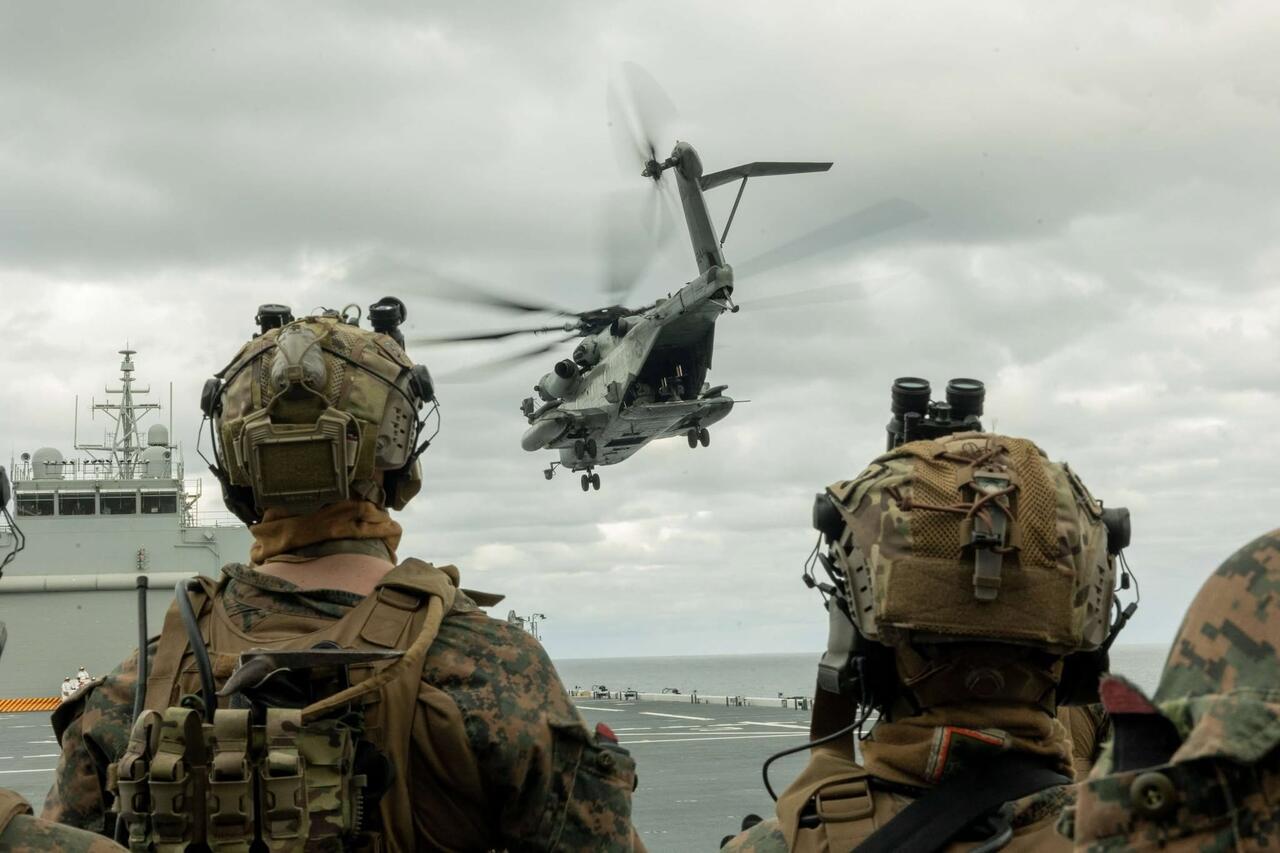
The U.S. Navy has finally thrown in the towel on the Los Angeles-class attack submarine USS Boise (SSN-764). After more than eleven years pierside and roughly $800 million poured into a repair effort that never really started, the service announced that the 34-year-old boat will be inactivated rather than returned to the fleet.

The decision comes as the Navy shifts focus to Virginia- and Columbia-class construction, yet one has to wonder why those same priorities could not have been acted on years earlier while Boise gathered dust and the rest of the submarine force picked up the slack.

Boise last deployed in January 2015. Its regular overhaul was supposed to begin in fiscal year 2016 at Norfolk Naval Shipyard. Instead, the boat sat idle, lost its dive certification in 2017, and was towed back and forth between public and private yards. A $1.2 billion contract finally went to Huntington Ingalls Industries Newport News in 2024, but costs had already climbed and the work barely progressed. 

The submarine has spent the better part of a decade contributing nothing to deterrence or operations while other attack boats endured extended deployments and accelerated redeployments to cover the shortfall.

Roughly one-third of the Navy’s nuclear attack submarines have routinely sat in maintenance or idle status in recent years, well above the service’s own 20% target, forcing the available boats into higher operational tempo and longer patrols. The backlog creates a vicious cycle with fewer submarines at sea. This means more wear on those still deployed, which in turn means more maintenance down the road.

The episode also underscores just how far American shipyards have fallen. Contrast today’s performance with the Pearl Harbor Navy Yard immediately after the December 7, 1941, attack. With the yard working around the clock with Navy crews, civilians, and divers logging more than 20,000 hours underwater, battleships like Nevada, California, and West Virginia were refloated and patched in a matter of weeks.

The carrier Yorktown, battered at Coral Sea and estimated to need three months of repairs, received emergency work in roughly seventy-two hours and sailed in time to help win the Battle of Midway. The industrial base then could absorb catastrophic damage and surge back into the fight. Today, the US can’t overhaul one submarine in more than a decade without the price tag exploding and the project collapsing.

From our previous coverage on the topic, we have to wonder if this decision to inactivate the Boise has anything to do with the $448 million Palantir contract for utilizing their AI to improve submarine maintenance and construction. The Navy partnered with Palantir to tackle precisely these bottlenecks in new construction and maintenance.

The Navy now insists the Boise decision frees skilled labor and dollars for higher priorities. Yet after eleven years of inaction, millions spent, and a force stretched thin, the move feels less like strategic wisdom and more like an admission that the system has been broken for far too long.

Tyler Durden
Sun, 04/12/2026 – 12:15

John Cleese Blasts BBC Over ‘Whiteness’ Claims; Pushes Back Against Islamist Tide In Britain

John Cleese Blasts BBC Over ‘Whiteness’ Claims; Pushes Back Against Islamist Tide In Britain

Authored by Steve Watson via Modernity.news,

John Cleese has fired off a fresh round of unfiltered truth bombs, exposing the cultural erosion underway in the UK as mass immigration and Islamist influence accelerate.

The Monty Python star is zeroing in on the BBC’s latest woke assault and the realities of Islamist culture that open borders have imported.

Responding to a BBC claim that the UK education system “wasn’t built for black children” and was instead designed for “whiteness,” Cleese cut through the nonsense with characteristic clarity:

Cleese hit back: “It was built for British children, because it was in Britain. At that time most British children were white. To claim that was some kind of racist conspiracy is insane.”

He added, “The BBC has a hidden agenda which is against the beliefs of the majority of British people.”

No pandering to identity politics. Just facts about a nation educating its own people—before decades of mass immigration turned basic institutions into battlegrounds for grievance narratives.

Cleese’s comments come fresh off demanding a new election over the epidemic of crimes against churches—more than 10 every single day—continues his stand against the forces dismantling British identity.

Cleese slammed Prime Minister Keir Starmer for becoming “so dependent on Muslim votes that he now does not even pretend to be evenhanded,” highlighting how unchecked migration has left historic Christian sites vulnerable while authorities prioritize other communities.

Cleese didn’t stop there in his latest tirade. He highlighted a video of an Islamic figure blaming victims for failing to control the emotions of the faithful, posting “This sage is proposing that as his followers are incapable of controlling their emotions, their victims should be the ones blamed and punished.”

“Much of Islamic teaching consists of the glorification of the male ego, and the encouragement of its worst manifestations,” he continued.

This comes as Britain grapples with grooming scandals, parallel societies, and demands that native women and girls alter their behavior to accommodate imported cultural norms—while authorities look the other way.

No hedging. No virtue-signaling. Just acknowledgment that importing millions who reject British values creates the exact fractures politicians now pretend to solve with more surveillance and speech codes.

Cleese also dismantled London Mayor Sadiq Khan’s warning about a “dark blizzard of disinformation” online. ():

The sarcasm lands because the pattern is unmistakable: mass Islamic immigration brings incompatible ideologies that refuse integration, then critics of the resulting chaos are labeled the problem. Khan and the establishment deflect blame onto social media while churches burn and British streets fill with calls for Sharia.

Britain’s historic identity—rooted in Christian values, free speech, and majority rule—is under sustained pressure from open borders policies and the cultural Marxism that cheers it on.

The BBC, Khan, and the Labour government aren’t protecting Britain. They’re managing its transformation, all while criminalizing dissent. The likes of Cleese, who has commented on British society for decades, see where this is heading and are refusing to play along, reminding the public that reality doesn’t bend to slogans about diversity or disinformation.

In an age of elite denial, his willingness to state the obvious stands out. Britain’s survival as a cohesive nation depends on rejecting the Islamist cultural takeover and the woke enablers who imported it—before the division Cleese warns of becomes irreversible. As he stresses, the ballot box, secure borders, and unapologetic defense of British heritage remain the only path back.

Your support is crucial in helping us defeat mass censorship. Please consider donating via Locals or check out our unique merch. Follow us on X @ModernityNews.

Tyler Durden
Sun, 04/12/2026 – 09:55

Trump Begins Blockade Of Hormuz Strait, Says Iran “Will Not Be Allowed To Profit From Extortion”

Trump Begins Blockade Of Hormuz Strait, Says Iran “Will Not Be Allowed To Profit From Extortion”

Summary

  • President Trump begins blockading Strait of Hormuz, warns US military will “finish up the little that is left of Iran”

  • 2 Supertankers U-turn after peace deal talks fail

  • UAE Oil Chief warns Iran blocking Hormuz is “a direct threat to the energy, food and health security of every nation”

The odds of a peace deal by the end of the ceasefire period has collapsed…

President Trump Begins Blockading Strait Of Hormuz

President Trump said the US would blockade the Strait of Hormuz following the collapse of peace talks with Iran in Islamabad this weekend.

“Effective immediately, the United States Navy, the Finest in the World, will begin the process of BLOCKADING any and all Ships trying to enter, or leave, the Strait of Hormuz,” Trump said in a social media post.

Trump noted that talks went well… until they didn’t…

“So, there you have it, the meeting went well, most points were agreed to, but the only point that really mattered, NUCLEAR, was not.

The US president is hopeful…

At some point, we will reach an “ALL BEING ALLOWED TO GO IN, ALL BEING ALLOWED TO GO OUT” basis, but Iran has not allowed that to happen by merely saying, “There may be a mine out there somewhere,” that nobody knows about but them.

But then came the threats, with Trump apparently widening his purview to international waters:

THIS IS WORLD EXTORTION, and Leaders of Countries, especially the United States of America, will never be extorted.

I have also instructed our Navy to seek and interdict every vessel in International Waters that has paid a toll to Iran.

No one who pays an illegal toll will have safe passage on the high seas.

We will also begin destroying the mines the Iranians laid in the Straits.

Any Iranian who fires at us, or at peaceful vessels, will be BLOWN TO HELL!

And the art of the deal… Escalate to De-Escalate… how long can Iran last with no oil revenues at all?

Iran knows, better than anyone, how to END this situation which has already devastated their Country.

Their Navy is gone, their Air Force is gone, their Anti Aircraft and Radar are useless, Khomeini, and most of their “Leaders,” are dead, all because of their Nuclear ambition.

The Blockade will begin shortly. Other Countries will be involved with this Blockade. Iran will not be allowed to profit off this Illegal Act of EXTORTION.

They want money and, more importantly, they want Nuclear.

Additionally and, at an appropriate moment, we are fully “LOCKED AND LOADED,” and our Military will finish up the little that is left of Iran!

Iran’s semi-official media cited “excessive” US demands, while the foreign ministry said it was natural that differences wouldn’t be resolved in a single round of talks, leaving the door open for more discussions.

A month ago we wondered…

…and now we have an answer. 

The question is – how will the UAE oil chief deal with a US closure versus an Iranian closure?

China will certainly be pissed off as their tankers were flowing relatively freely until now.

Is the US endgame to take control of another chokepoint too…

2 Supertankers U-Turn In Strait After Peace Talks End Without A Deal

The marathon peace talks this weekend in Islamabad between Iranian negotiator Mohammad Bagher Ghalibaf, Vice President JD Vance, and other officials ended without a deal. Still, the top Iranian negotiator signaled that the door remains open for future talks. Polymarket odds of a peace deal being signed this month collapsed late Saturday.

US x Iran permanent peace deal by April 30, 2026?
Yes 16% · No 85%
View full market & trade on Polymarket

Ahead of the weekend peace talks, three fully loaded supertankers carrying Iraqi and Saudi crude safely transited the Strait of Hormuz. But after U.S.-Iran negotiations ended without a deal late Saturday, two separate empty supertankers abruptly turned around at the mouth of the chokepoint rather than enter the Persian Gulf.

The exact reason for the U-turns of the two supertankers remains unclear, especially since Iraq and Pakistan had reportedly received Iranian transit approvals. However, the reversals clearly coincide with the breakdown in negotiations, highlighting just how quickly conditions on the strait can change.

UAE Oil Chief Warns “Illegal, Dangerous, & Unacceptable” For Iran To Close Strait

On Sunday morning, as vessel traffic through the Strait of Hormuz remained muted, Sultan Ahmed Al Jaber, ADNOC’s managing director and group CEO and one of the most influential people in global energy markets, wrote on X: “The Strait of Hormuz has never been Iran’s to close or restrict.”

Al Jaber continued, “Any attempt to do so is not a regional issue; it is the disruption of a global economic lifeline and a direct threat to the energy, food and health security of every nation.”

“Setting such a precedent is illegal, dangerous, and unacceptable. The world simply cannot afford it and must not allow it,” he concluded in the X post.

On Saturday, the U.S. Department of War confirmed that two U.S. warships transited the waterway to begin marine mine-clearing operations. Only a handful of ships have transited the strait this weekend.

Polymarket odds for vessel traffic returning to “normal” by the end of April plunged this weekend from 30% to 17%.

Strait of Hormuz traffic returns to normal by end of April?
Yes 17% · No 83%
View full market & trade on Polymarket

US Becomes World’s ‘Gas Station Of Last Resort’

Disruptions at Gulf energy facilities and the continued paralysis across the Hormuz chokepoint led us early in the U.S.-Iran conflict to conclude that global energy flows were being rewired, whether temporarily or over the medium term, with energy exporters in the Gulf of America emerging as a potential net beneficiary.

In fact, the latest vessel-tracking data transmitted via the Automatic Identification System, supplied by Bloomberg, show that it is quite possible that America has become the world’s emergency gas station.

What appears increasingly clear after this weekend’s Islamabad talks is that Tehran refused to surrender any leverage around the Hormuz chokepoint. That posture only suggests to us that Tehran understands the chokepoint remains one of the last leverage points. 

Tyler Durden
Sun, 04/12/2026 – 09:20

London Mayor Sadiq Khan Calls For A Government Social Media ‘Disinformation’ Unit

London Mayor Sadiq Khan Calls For A Government Social Media ‘Disinformation’ Unit

Authored by Steve Watson via Modernity.news,

Sadiq Khan is pushing hard for a new state-backed disinformation unit to silence online criticism of London. The Mayor claims a “dark blizzard of disinformation” is undermining the city, linking it directly to offline harm, and wants government tools to force Big Tech to act – or else.

In a post on X (replies closed of course), Khan declared: “We can’t ignore the link between online disinformation and offline harm. At the Cambridge Disinformation Summit, I spoke about how the ‘outrage economy’ is eating away at the basic bonds of trust that hold our societies together – and why we need urgent action.”

He doubled down in remarks to the media, insisting: “We’re right to expect big tech to do better, but we should not rely on it. If platforms fail to act, the state must have the tools to make them. That’s why I’ll continue lobbying the government publicly and privately to take a much tougher approach.”

Khan called for “a new central body with the agility and authority to protect our democracy from disinformation, and deal with the scale and speed of this crisis. And we need more aggressive enforcement of the rules we already have. Because unless regulators like Ofcom have the power to hit companies where it hurts, they’ll keep on getting away with it.”

He added: “The outrage economy is eating away at the basic bonds of trust that hold our societies together. It isn’t just a challenge for progressives like me. It’s a challenge for anyone who believes in democracy – wherever they are.”

Khan further suggested that “The same people attacking the capital have already started targeting other cities around the world. And, in a few years’ time, I think we’ll look back on London as the canary in the coal mine. But I hope we’ll also see it as the place where the fightback began.”

Civil liberties group Big Brother Watch sounded the alarm on X:

As we recently highlighted, Khan is running a campaign to dismiss the chaotic reality on London’s streets as foreign propaganda or American disinformation:

While Khan obsesses over online narratives, the actual data from his own city tells a different story.

Every hour in London a rape is reported, and every half hour or thereabouts knife crime is reported. Yet Sadiq khan claims it is the safest city in the world and everything negative you hear is “disinformation.”

Big Brother Watch’s warning is spot on. When officials label uncomfortable truths about crime, migration and failing multiculturalism as “disinformation,” the real agenda becomes clear: protect the narrative, not the public.

This is classic surveillance-state creep dressed up as protecting democracy. Instead of fixing the streets, Khan wants to police the tweets. Free speech isn’t the problem – unchecked crime and open-borders policies that imported it are.

The fightback isn’t a new government censorship body. It’s citizens refusing to be gaslit while their city crumbles. Londoners deserve safe streets, not speech police.

Your support is crucial in helping us defeat mass censorship. Please consider donating via Locals or check out our unique merch. Follow us on X @ModernityNews.

Tyler Durden
Sun, 04/12/2026 – 07:00

‘I Have A Dream’…

‘I Have A Dream’…

Authored by ‘no01’ via Gold and Geopolitics substack,

I have a dream where politicians live next door to you…

Not metaphorically.

Literally…

The man who voted to rezone your street works three doors down. His kids go to the same school as yours. When he raises the local tax rate and the potholes don’t get fixed, he drives over those same potholes every morning. And when the community has had enough, they let him know. Loudly. Personally. The way humans have held each other accountable for most of history, before we invented the beautiful abstraction of “institutional distance”.

I know. It sounds naive.

Let me explain why I don’t think it is…

We live in an era that treats political monopoly as completely normal while losing its mind over market monopolies. Regulators drag Google into congressional hearings for owning search. They fine Microsoft for bundling browsers. They write entire legislative frameworks to prevent one company from becoming too dominant in any given market because we all understand, instinctively, what monopoly does: it kills accountability, it kills innovation, it raises prices, and it entrenches mediocrity. The monopolist has no reason to improve because you have nowhere else to go.

And then we hand the same monopoly structure to the people who control our laws, our taxes, our foreign policy, our money supply, and we call it “democracy”.

The irony is immaculate.

The European Union is the cleanest example of what happens when you take this logic to its conclusion. The European Commission – the body that actually initiates legislation – is not elected. The Parliament, which is elected, cannot propose laws. It can only approve or reject what the Commission puts in front of it. The commissioners are appointed by national governments, serve five-year terms, and answer to a structure so opaque that most Europeans couldn’t name a single one of them without Googling.

This isn’t a flaw in the design.

It IS the design.

Unaccountable by architecture.

And Brussels is just the most visible layer. NATO, the UN, the WEF, the IMF – the whole ecosystem of supranational governance operates on the same principle: decisions made by people you didn’t elect, cannot remove, and will never meet. Corruption doesn’t require evil people. It requires structures where there are no consequences for failure and no competition for alternatives. Give anyone a monopoly with no accountability and you don’t need to assume malice. Incentives do the rest.

Though, to be fair, the incentives also attract a specific type of person.

Friedrich Hayek made this point in “The Road to Serfdom”: in any large bureaucratic structure, it is not the best people who rise to the top. It is the people most willing to compromise, most comfortable with ambiguity about means versus ends, most talented at political manoeuvring.

Power selects for a particular psychology. Always has. And once you centralise enough of it into structures that nobody can vote out, you’ve created the perfect habitat for exactly the people you least want running things.

Hans-Hermann Hoppe pushed this further in “Democracy: The God That Failed”, making an argument that sounds monstrous until you actually think about it: monarchs, counterintuitively, have better incentives than democratic politicians. A king owns the country. He passes it to his heirs. His time horizon is generational – he has every reason to keep the thing functional long-term. A democratic politician has a four-year window. He doesn’t own anything. He’s a temporary caretaker with a short lease and no liability for what he leaves behind. So he extracts. He borrows against the future. He promises what cannot be delivered because he won’t be around when the bill arrives. You don’t have to agree with Hoppe’s conclusions to recognise that the time-horizon problem is real and unsolved.

The answer though in my opinion isn’t ‘monarchy’.

The answer is competition.

Hayek had a second insight (this one from “The Use of Knowledge in Society”, his 1945 essay in the American Economic Review), and it’s the one that made him famous: “The Knowledge Problem”.

Central planners fail not because they’re stupid, but because the knowledge they need is dispersed, local, contextual, and impossible to aggregate centrally. The price of tomatoes in a village market contains information no ministry of agriculture could replicate. When you centralise decisions, you lose the signal.

The same is true in politics. A bureaucrat in Brussels setting housing policy for Tallinn, Seville, and Ghent simultaneously is not making informed decisions. He’s making averaged guesses applied uniformly to situations that are not uniform. The knowledge that actually matters – what this or that neighbourhood needs, what these people value, what tradeoffs they’re willing to make – exists locally. It always has.

The economist Charles Tiebout formalised this in 1956, though the intuition is much older: municipalities that compete for residents are forced to govern well. If your city raises taxes and delivers nothing, people leave. The tax base shrinks.

The city either improves or it hollows out. Residents “vote with their feet” – a form of continuous democratic feedback that no election cycle can match, because it happens in real time and has immediate financial consequences for the state. Tiebout called it “fiscal federalism”. I’d call it capitalism applied to governance. Same principle. You have options, so the provider has to perform.

Liechtenstein wrote this into its constitution directly: any village has the right to secede from the principality by referendum. It has never happened. It doesn’t need to. The right to leave is enough to enforce good behaviour. Switzerland has 26 cantons, each with its own tax rate, its own laws, its own character. Zurich and Appenzell Innerrhoden are barely recognisable as the same country. And Switzerland, despite being landlocked, multilingual, and geographically inconvenient, consistently ranks among the most prosperous and stable places on earth. Coincidence is not the explanation.

Now add the OTHER half of the dream.

No professional politician class.

This isn’t even a new idea. The Romans had the cursus honorum – a structured series of civic roles that citizens were expected to fill as a duty, not as a career.

The Athenians used sortition, selecting officials by lottery from eligible citizens, on the logic that any competent adult could govern and that elections primarily select for rhetoric and ambition rather than competence. Switzerland still operates a militia democracy at the cantonal level – officials who hold day jobs and govern part-time. The professional politician is a modern aberration, roughly a century old, and the results speak for themselves.

The requirement I’d add: you cannot spend more than 50% of your time on political duties. The other half you work. Not consulting, not board membership, not “advising” – you do something that produces a tangible output. You build something, fix something, teach something, grow something. You stay in contact with the reality that your decisions affect.

A transport minister who commutes by train. A housing regulator who rents. A labour minister who has been hired and fired. The skin-in-the-game principle that Nassim Taleb has been banging on about for decades: those who make decisions must bear the consequences of those decisions. The current system is precisely inverted – politicians make decisions whose consequences fall entirely on others, often long after the politician in question has retired comfortably on a parliamentary pension.

And pay them accordingly. Prestige, not salary. The Romans understood this. The Swiss still understand it. When you make politics lucrative, you attract people who are primarily motivated by the lucrative. When you make it a duty, you get different candidates. Not perfect candidates – nothing produces those – but structurally different ones.

The accountability piece is the last thread, and maybe the most important.

Human scale. That’s what’s missing from every layer of modern governance above the local. When the city councillor who approved the bad zoning decision is someone you recognise at the market, something changes. Not because everyone will tar and feather him (though the option is clarifying). But because social accountability is the oldest and most effective enforcement mechanism we have. It predates courts, predates elections, predates states. You live in a community. You face the people affected by your choices. That feedback loop, compressed into institutional distance, is exactly what supranational governance destroys. Nobody in Brussels faces any community. Nobody at the IMF shops at the same supermarket as the Greeks they were advising in 2010.

The counterarguments are real and worth taking seriously for thirty seconds.

  • Defence: small states are vulnerable. True – but there’s a difference between voluntary defensive alliances and permanent supranational governments. NATO started as one and became the other. You can coordinate on specific shared threats without surrendering legislative sovereignty. Switzerland manages it fine.

  • Race to the bottom on standards: if states compete, won’t they all rush to the lowest tax, weakest regulation, most exploitable environment? Sometimes. Singapore didn’t. Switzerland didn’t. Liechtenstein didn’t. Competition also produces race to the top – the record is mixed, and the assumption that centralisation produces good standards is contradicted by every agricultural subsidy regime in EU history.

  • Not everyone can move: valid, and the most serious objection. Foot-voting privileges the mobile. But the competitive pressure benefits even those who stay, because the government that loses mobile residents to better-governed neighbours has immediate incentive to improve. You don’t have to leave for the dynamic to work. You just have to be able to leave.

  • Global problems need global solutions: pandemics, climate, nuclear proliferation. Coordination on specific, defined problems with voluntary treaty structures is not the same thing as permanent supranational government with legislative power and no democratic accountability. We managed to coordinate on nuclear non-proliferation without building a world government. The argument proves too much.

My dream ain’t a utopia.

My dream is incentives that work instead of incentives that reliably produce what we currently have.

I have a dream where the man who raised your taxes has to look you in the eye at the weekend.

Tyler Durden
Sat, 04/11/2026 – 23:20

‘No Deal’: Vance Leaves Islamabad As Iran Talks Stall Over Nukes; US Starts Mine-Clearing Hormuz

‘No Deal’: Vance Leaves Islamabad As Iran Talks Stall Over Nukes; US Starts Mine-Clearing Hormuz

Summary: 

  • US-Iran peace talks have broken down over Iran’s commitment to no nuclear weapons, Vance said “it’s bad news for Iran, much more than for the US.

  • CENTCOM confirms two mine-sweepers are clearing the Strait, Iran claims it turned the warships back.

  • President Trump announces start of “clearing out the Strait” as a favor to the rest of the world.

  • Peace talks in Pakistan begin in indirect format, led by Vance and on Iran side – Ghalibaf, Arachchi – expected to continue tomorrow

  • Saturday sees more Israeli strikes on Lebanon, with Hezbollah supporting Pakistan talks but rejecting ‘separate deal’ directly with Israel.

  • Trump on talks and potential bigger future attacks on Iran: “You don’t need a backup plan” as Iran’s “military is defeated”.

Will the U.S. invade Iran before 2027?
Yes 31% · No 70%
View full market & trade on Polymarket

*  *  *

VP Vance Departs Pakistan After Failing To Read Deal With Iran

Talks between the United States and Iran ended early Sunday without a peace agreement after Tehran refused to accept key US demands, including commitments on its nuclear program, US officials said.

US Vice President JD Vance said the 21-hour negotiations concluded without a breakthrough, despite good-faith efforts by Washington.

 “We have not reached an agreement, and I think it’s bad news for Iran, much more than for the US,” Vance said

“But the simple fact is that we need to see an affirmative commitment that they will not seek a nuclear weapon,” Vance said, adding that the proposal presented was the administration’s “final and best offer.”

The talks marked the third round of direct, face-to-face negotiations between the two sides, taking place days after a fragile two-week ceasefire was announced in the conflict that has entered its seventh week.

Iran has no plans for a new round of talks with the US, Fars news agency reports, citing a source close to the negotiating team.

“The American team was looking for an excuse to leave the negotiating table,” it adds. 

The only market showing any notable impact is crypto with BTC retracing some of the post-ceasefire gains…

The odds of a peace deal by the end of the two-week ceasefire just plunged…

Talks Continue, Hormuz Remains Key Point of Contention

Iranian media are striking a cautiously optimistic tone on the progress of the talks.

They say there was progress on implementation of the ceasefire in Lebanon, technical negotiations that went beyond generalities and now an exchange of texts that would put any progress in writing. 

To be sure, the US side has been much quieter, and sticking points may come into focus once they’re in black and white.

Teams of experts joined the main negotiators after about an hour, Iran’s semi-official Tasnim news agency reported.

Those technical discussions in Islamabad focused on the Strait of Hormuz, a potential ceasefire extension and phased sanctions relief. Iran’s semi-official Tasnim news agency says, citing its reporter at the venue.

“The issue of the Strait of Hormuz is one of the points facing serious disagreement”, adding that the US delegation “hindered progress” during the text-exchange stage with “its usual excessive demands”

Talks have reportedly mostly avoided the core issues that the Trump administration said drove it to war, according to a US official and a Pakistani official familiar with the matter.

Those issues include Iran’s support for armed proxies, and the nuclear and missile programs that were at the heart of Trump’s stated reasons for attacking Iran beginning Feb. 28.

“We have goodwill, but we do not have trust,” Ghalibaf told reporters after arriving in Islamabad, according to Iran’s semi-official Fars news agency.

“In the upcoming negotiations, if the American side is prepared for a genuine agreement and to grant the rights of the Iranian nation, they will see readiness for an agreement from us as well.”

Tasnim said that Tehran’s 71-member delegation also included the Islamic Republic’s central bank governor Abdolnaser Hemmati.

Also on the agenda will be the fate of Iran’s uranium stockpile and missile production, as well as US sanctions against the Islamic Republic and broader military presence in the Middle East. Many of those issues were the same ones the two sides failed to resolve in February negotiations before the war began.

Iran’s deputy Foreign Minister Kazem Gharibabadi says Tehran has entered negotiations from a position of strength, arguing that the war on Iran had failed to deliver decisive strategic gains for the US.

Trump – as we detailed below – made it clear he sees Iran ‘holding no cards’.

US Starts Clearing Mines In Strait of Hormuz

Seemingly confirming President Trump’s earlier comments on “clearing out the Strait”, U.S. Central Command (CENTCOM) confirmed that two U.S. missile destroyers started clearing mines in the Strait of Hormuz on April 11 as peace talks kicked off between Washington and the Iranian regime

“Today, we began the process of establishing a new passage and we will share this safe pathway with the maritime industry soon to encourage the free flow of commerce,” CENTCOM Commander Adm. Brad Cooper said in a statement Saturday.

The American ships included the USS Frank E. Peterson (DDG 121) and USS Michael Murphy (DDG 112).

CENTCOM revealed that the mission on Saturday is part of a broader goal to make the crucial waterway, located on the southwest coast of Iran, clear of sea mines laid by Iran’s Islamic Revolutionary Guard Corps.

Saturday’s confirmation about the mine clearing came hours after a United States government vessel was spotted entering the Strait of Hormuz, according to the ship-tracking intelligence platform Marinetraffic.com.

It’s not clear if this was related to CENTCOM’s mine-clearing mission.

Trump Announces Start Of “Clearing Out” The Strait As A “Favor” To RoW

Earlier reports appears to have been confirmed as three US officials have stated to The Wall Street Journal that two U.S. Navy guided-missile destroyers passed through the Strait of Hormuz on Saturday, marking the first transit of American warships through the waterway since the war began six weeks ago.

President Trump took to social media to explain what was going on. But first, he clarified a few things to the ‘fake news media’…

The Fake News Media has lost total credibility, not that they had any to begin with. Because of their massive Trump Derangement Syndrome (Sometimes referred to as TDS!), they love saying that Iran is “winning” when, in fact, everyone knows that they are LOSING, and LOSING BIG!

Their Navy is gone, their Air Force is gone, their Anti Aircraft apparatus is nonexistent, Radar is dead, their Missile and Drone Factories have been largely obliterated along with the Missiles and Drones themselves and, most importantly, their longtime “Leaders” are no longer with us, praise be to Allah!

The only thing they have going is the threat that a ship may “bunk” into one of their sea mines which, by the way, all 28 of their mine dropper boats are also lying at the bottom of the sea.

Having got all that off his chest, he then confirmed the operation to open the Strait:

We’re now starting the process of clearing out the Strait of Hormuz as a favor to Countries all over the World, including China, Japan, South Korea, France, Germany, and many others.

Incredibly, they don’t have the Courage or Will to do this work themselves.

Very interestingly, however, empty Oil carrying ships from many Nations are all heading to the United States of America to LOAD UP with Oil.

Thank you for your attention to this matter! President DONALD J. TRUMP

But he wasn’t done with that. A few minutes later he followed with a shorter pithier version of the same narrative:

The Fake News Media is CRAZY, or just plain CORRUPT!

The United States has completely destroyed Iran’s Military, including their entire Navy and Air Force, and everything else. Their Leadership is DEAD!

The Strait of Hormuz will soon be open, and the empty ships are rushing to the United States to “load up.”

But, if you listen to the Fake News, we’re losing!

Iran explicitly informed the Pakistani mediator during talks that if the vessel continued its movement it would be targeted within 30 minutes and the Iran-US negotiations would be damaged.

However, no issues were reported during the ships transit of the Strait, and the move was described as a freedom-of-navigation mission.

The (successful) timing of this action – as talks begin in Islamabad – is certainly a show of strength amid the delicate negotiations.

Several US Warships Cross Hormuz Strait: Axios

Just as indirect talks kick off in Islamabad, a shocking and surprise development is being reported by Axios’ Barak Ravid, though this is not confirmed:

If accurate, are we witnessing Trump suddenly pile on more leverage before negotiations even get off the ground? It seems like the Iranians would have noticed several US Navy warships passing. Either they held off attack for the sake of pursuing peace, or this was truly done ‘stealthily’ and Iranian capabilities are degraded to the point they may have ‘missed’ it. Or is this an attempt to muddy the negotiations? Sabotage? Ravid after all has long stood accused of pushing an Israeli agenda in his reporting.

Talks Begin with Indirect Format Mediated by Pakistanis

By Saturday afternoon (local), the highest-level US-Iran-related talks since the 1979 Islamic Revolution have kicked off in Islamabad. Vice President JD Vance met Pakistan’s Shehbaz Sharif just ahead of the negotiations, and also senior Iranian officials were greeted by Sharif and other Pakistani leaders. Iran’s delegation is led by Parliament Speaker Mohammad Bagher Ghalibaf and Foreign Minister Abbas Araghchi. The engagement by each side has begun indirectly.

Pakistan has made clear it is working to facilitate direct negotiations between the US and Iran to fully bring to an end the six-week war in the Middle East. Sharif hailed both sides’ commitment to engaging constructively, and “expressed the hope that these talks would serve as a stepping stone toward durable peace in the region,” his office stated in a news release.

“Vance was joined for the bilateral meeting by special envoy Steve Witkoff and President Donald Trump’s son-in-law, Jared Kushner,” CNN reviews. “Sharif was joined by Deputy Prime Minister and Foreign Minister Sen. Mohammad Ishaq Dar, along with Interior Minister Sen. Syed Mohsin Raza Naqvi, according to a news release from the Pakistani prime minister’s office. There was no press coverage of the meeting.”

CNN also has this interesting detail on just how many officials have traveled with the Iranian side: “Iran’s delegation in Islamabad is made up of 71 people, including negotiators, experts, media representatives and security, Tasnim reported.” According to some of the latest:

Tehran reportedly set 2 main conditions. The issue of frozen funds being already accepted by Washington. Despite no strikes on Beirut, attacks in southern Lebanon are ongoing and are now part of the negotiations.

Below: Ghalibaf (Speaker of Parliament) – Araghchi (Foreign Minister) – Ahmadian (Secretary of the Defense Council) – Hemmati (Central Bank Governor)

Lebanon Fighting Has Not Stopped But Rare Diplomatic Contact Made

Fighting has not fully stopped in Lebanon, raising the possibility of derailing the Pakistan talks, after Tehran had earlier in the week threatened that it could pull out if Israel keeps ups its attacks. On Saturday, Lebanon’s Health Ministry raised the death toll from the Israeli surprise Wednesday strikes to 357, and suggested the figure could rise amid several days of search and recovery operations.

But one rare bright spot in terms of diplomatic contact, as international reports say the Lebanese and Israeli ambassadors to the United States held a phone call in the first direct contact reported between the two countries, ahead of ceasefire talks scheduled in Washington for next week.

Meanwhile, Iran confirmed it is coordinating with Lebanon to ensure ceasefire commitments are upheld across all fronts, a foreign ministry spokesperson said on state TV from Islamabad, where senior US and Iranian officials are holding talks to end the six-week war. At the same time, Lebanese officials close to Hezbollah told Reuters the group supports the Pakistan dialogue and considers it the appropriate path, rejecting a separate round of talks planned in Washington next week.

Iranian delegation in Pakistan seeks to present ‘unity’ of government/military leadership and coordination:

Israeli airstrikes have continued on a sporadic basis: “Lebanon’s National News Agency (NNA) reports that an Israeli air attack on the town of Kfar Sir in the Nabatieh district has killed four people, including a paramedic, and injured four,” writes Al Jazeera Saturday. “Another Israeli attack on the town of Zefta, also in the Nabatieh district, killed three people, including a member of the Lebanese Civil Defense, and wounded two.” There’s been an additional third attack on Toul and Nabatieh, killing three and injuring several more.

Trump: ‘No Backup Plan’ Needed Since Iran’s Military ‘Defeated’

“You don’t need a backup plan,” Trump told reporters Friday when asked about possible next steps of Pakistan talks fail, according to a report by The Hill as he departed Washington en route to Florida. “The military is defeated.”

“Their military is gone. We’ve degraded just about everything,” Trump added. These words suggest he sees the Pakistan peace process as a serious offramp. However, as we and others have reported, there’s an ongoing Pentagon build-up in the region. This has kicked off speculation that a bigger US attack could be around the corner, at that the Islamabad summit is cover for ongoing military preparations.

And yet, the reality is that Iran remains in control of the Strait of Hormuz, with only a tiny trickle of ‘vetted and approved’ vessels making it through, and reportedly paying hefty toll fees to Tehran, which Trump has warned against. Iran in Pakistan is asking for sanctions to be lifted. If the US grants this, Iran will be in a better position than went the war started, which will be tantamount to gains made through the fight.

Tyler Durden
Sat, 04/11/2026 – 23:00

New Iran Leadership More Extreme, Israeli Intelligence Concludes

New Iran Leadership More Extreme, Israeli Intelligence Concludes

In what should not at all be a surprise to anyone who has been awake and observant over the past 20+ years of America’s military interventions in the Middle East, the Israeli Army and intelligence officials have concluded that Iran’s news leadership is more extreme than the previous one.

The IDF delivered a closed-door intelligence briefing to the Knesset Foreign Affairs and Defense Committee on Thursday, which involved presenting this finding, according to The Times of Israel.

via Majlis

Iran’s new leadership consists of members of the elite Islamic Revolutionary Guard Corps (IRGC) which are now frequently described as far more ideologically rigid than the former political leadership – a development which was entirely predictable.

The slain Ayatollah Ali Khamenei’s son Mojtaba has not been seen in public since the US-Israeli attacks began, but he is also said to be hardline than his father. And of course, this current crop of leaders have either lost family or been wounded in the strikes – giving them more incentive to take a rigid stance against Washington.

Still, NeoCon warmongers have been at times repeating old Iraq war, Bush era talking points of “they will greet us as liberators”

This certainly didn’t happen in either Iraq or Afghanistan, and in the latter country the Taliban is now in complete control despite a more than two-decade long US coalition occupation and quagmire. America’s ‘nation-building’ only produced a failed state followed by greater Taliban ascendancy and control.

In many cases, the very same officials advocating for regime change in Iran were on board with all the foreign policy failures of the past, also including Syrian and Libya.

The Trump administration itself in the opening days of the bombing campaign acted as if suddenly masses of people would rise up and overthrow the Islamic Republic and its long-standing institutions.

Yet the government has not fallen, and still President Trump has lately claimed that Iran’s losses of dozens of senior civilian and military leaders is tantamount to “regime change”. This has not changed facts on the ground.

Vice President JD Vance traveled Friday to Pakistan for high-level talks with Iranian officials, and reports say that some 70 Iranians are traveling with the Tehran team to present a ‘unified front’. Talks are expected into Sunday, and they entered with contrasting demands which appear very far apart.

Tyler Durden
Sat, 04/11/2026 – 22:45

Pakistani Warplanes Land In Saudi Arabia For Start Of Mutual Defense Pact

Pakistani Warplanes Land In Saudi Arabia For Start Of Mutual Defense Pact

Via The Cradle

A Pakistani military force arrived at Saudi Arabia’s King Abdulaziz Air Base on Saturday, as part of a strategic defense pact between the two countries, the kingdom’s defense ministry has announced.

The Pakistani force includes air force fighter jets and support aircraft. It was sent to Saudi Arabia to “enhance joint military cooperation, raise operational readiness, and support security and stability in the region,” the ministry’s statement said.

Pakistan Air Force image

The military deployment arrived following five weeks of US-Israeli attacks on Iran, and as ceasefire talks take place in Islamabad.

Saudi Arabia and Pakistan signed a strategic defense agreement last year involving joint deployments, intelligence sharing, and coordinated responses to regional threats.

The pact commits both states to treat any attack on one as an attack on both, allowing the Gulf kingdom to benefit from the protection afforded by Pakistan’s nuclear weapons arsenal.

In January, Pakistani F-16 fighter aircraft participated in a multinational air combat exercise in Saudi Arabia. The Spears of Victory-2026 exercise also involved military forces from France, Italy, Greece, Qatar, Bahrain, Jordan, the UK, and the US.

Riyadh and Islamabad have a history of close military cooperation dating back to the 1960’s. During the 1991 Gulf War, Pakistan sent troops to defend the Saudi kingdom from a possible Iraqi invasion. In return, Pakistan has benefited from Saudi financial and military support.

On Saturday, Turkish media reported that Saudi Arabia and Qatar will provide Pakistan with $5 billion in financial assistance to help shore up Islamabad’s dwindling foreign currency reserves, which currently stand at about $16.4 billion.

The development comes as the UAE is requiring Pakistan to repay a $3.5 billion debt by the end of the month. Pakistan’s reserves have come under additional pressure recently, thanks to rising costs for imported fuel resulting from the US-Israeli war on Iran.

The $5 billion payment was announced following a meeting between Saudi Finance Minister Mohammed bin Abdullah al-Jadaan and Pakistan Prime Minister Shehbaz Sharif on Friday night in Islamabad.

Tyler Durden
Sat, 04/11/2026 – 22:10

Does Altman Molotov Attack Portend Pitchforks Over AI?

Does Altman Molotov Attack Portend Pitchforks Over AI?

Things might be going kinetic in the backlash against data centers and AI. 

On Friday, a 20-year-old suspect set on burning down OpenAI headquarters was charged and arrested following a predawn Molotov cocktail attack on OpenAI CEO Sam Altman’s house in the Russian Hill neighborhood of San Francisco.

OpenAI CEO Sam Altman’s home on Russian Hill in San Francisco, whose driveway is shown Friday, was the target of an incendiary device, police said.
Lea Suzuki/S.F. Chronicle

Daniel Alejandro Moreno-Gama, 20, from Texas, was arrested and booked into County Jail hours after the incident. He faces multiple felony charges including attempted murder, arson, making criminal threats, and two counts each of possession or manufacture of an incendiary device and possession of a destructive device. He is being held without bail.

“Thankfully it bounced off the house and no one got hurt,” Altman wrote in a blog post. 

According to police and OpenAI, the attack unfolded around 3:40–3:45 a.m. on April 10 when Moreno-Gama allegedly hurled a flaming bottle at the metal gate of Altman’s home at 855 Chestnut Street in the Russian Hill neighborhood. The device ignited a small fire that was quickly extinguished by on-site security, causing only minor damage and no injuries; it reportedly bounced off the house. The suspect then fled to OpenAI’s Mission Bay headquarters, where he allegedly threatened to burn down the building. Officers recognized him from surveillance footage of the residence attack and took him into custody without further incident.

OpenAI issued a brief statement confirming the events and thanking SFPD for the rapid response, noting that security had been stepped up at company offices.

Hours later, Altman published a strikingly personal blog post that has generated almost as much discussion as the attack itself. Read Altman’s full post here. In it, he shared a rare family photo with his husband Oliver Mulherin and their child, writing: “Here is a photo of my family. I love them more than anything. Images have power, I hope… Normally we try to be pretty private, but in this case I am sharing a photo in the hopes that it might dissuade the next person from throwing a Molotov cocktail at our house.”

Altman described himself as “awake in the middle of the night and pissed,” admitted he had underestimated “the power of words and narratives,” and linked the moment to broader anxiety about AI, including a recent critical profile. The post mixes personal apologies and reflections on past conflicts (including the Elon Musk trial and OpenAI board drama), a dramatic Lord of the Rings “ring of power” metaphor for the AGI race, and a call to “de-escalate the rhetoric and tactics and try to have fewer explosions in fewer homes, figuratively and literally.” 

The timing and tone of Altman’s response appear to underscore a deeper reality now playing out across the country: financially strained American households are increasingly pushing back against the infrastructure demands of the AI industry. New data this week shows residential electricity prices surging in key regions, driven in large part by the explosive growth of data centers needed to train and run large language models. Communities from Virginia to Georgia to the Midwest have mounted growing resistance – through zoning fights, moratoriums, and public hearings – over electricity costs, water consumption, land use, and limited local economic benefits, marking what one analysis described as a sharp escalation in Americans starting to revolt against data centers.

In response to the pressure, Amazon, Google, Meta, Microsoft, OpenAI, Oracle, and xAI this week signed a Trump-administration-brokered “Ratepayer Protection Pledge” committing the companies to fully fund their own new power generation, transmission upgrades, and grid improvements so that ordinary ratepayers are not left footing the bill. The move follows an emergency intervention directing the nation’s largest grid operator to hold a special auction shifting billions in costs away from households.

This backlash is fueled not only by soaring electricity costs but also by deep-seated fears that AI and large language models will trigger widespread job displacement. Many Americans, particularly recent graduates and white-collar workers, worry that rapid automation of cognitive and knowledge-based work will leave large segments of the labor force behind. Are we on the cusp of a new luddite revolution?

Wanna read something scary? Stanford software engineering grads aren’t finding work

“Stanford computer science graduates are struggling to find entry-level jobs” with the most prominent tech brands, according to the university’s Jan Liphardt, an associate professor in bioengineering.

While the rapidly advancing coding capabilities of generative AI have made experienced engineers more productive, they have also hobbled the job prospects of early-career software engineers.

Stanford students describe a suddenly skewed job market, where just a small slice of graduates — those considered “cracked engineers” who already have thick resumes building products and doing research — are getting the few good jobs, leaving everyone else to fight for scraps.

There’s definitely a very dreary mood on campus,” said a recent computer science graduate who asked not to be named so they could speak freely. “People [who are] job hunting are very stressed out, and it’s very hard for them to actually secure jobs.”

The shake-up is being felt across California colleges, including UC Berkeley, USC and others. The job search has been even tougher for those with less prestigious degrees. –LA Times 

While the vast majority of this pushback remains peaceful and policy-focused, the Molotov incident may be the first kinetic action in the luddite revolution. Altman himself seemed to nod to that anxiety in his post, acknowledging that “the fear and anxiety about AI is justified” and calling for societal resilience, economic transition support, and democratization so that “power cannot be too concentrated.”

Tyler Durden
Sat, 04/11/2026 – 21:35

China’s BYD Introduces 3.9-Second 0-60 Electric SUV With Massive Range

China’s BYD Introduces 3.9-Second 0-60 Electric SUV With Massive Range

Authored by Bojan Stojkovski via Interesting Engineering,

The BYD Great Tang full-size SUV is now reaching dealerships across China ahead of its planned April presale debut at the Beijing Auto Show. Early dealer data shows at least four configurations are being prepared for the market, spanning rear-wheel-drive and all-wheel-drive setups with varying performance and range ratings. 

BYD Great Tang SUV set to challenge established plug-in hybrid rivals.

In its most capable form, the SUV is expected to deliver up to around 590 miles of driving range, positioning it as a long-distance option in the segment. As the production version of the Dynasty-D concept, the Great Tang sits at the top of BYD’s SUV lineup, both in size and technology. [ZH: The range claim comes from the Chinese CLTC test cycle, which tends to be a bit optimistic]

It measures more than 17.4 feet in length and rides on a 123-inch wheelbase, making it the brand’s largest crossover to date. The model is designed with a three-row, seven-seat configuration, targeting family-oriented buyers seeking space, efficiency, and extended electric range.

3.9-second acceleration and extended-range capability

The all-electric BYD Great Tang uses the company’s second-generation Blade Battery architecture and is designed to support high-power fast charging for reduced downtime on long trips. In its rear-wheel-drive configuration, the SUV delivers up to approximately 590 miles of CLTC range from a 130.15 kWh battery pack, placing it among the longest-range electric SUVs currently announced in China, CarNewsChina reports.

Performance is significantly higher in the dual-motor all-wheel-drive variant, which produces up to 585 kW and can accelerate from 0 to 62 mph in about 3.9 seconds. This added performance comes with a trade-off in efficiency, with range reduced to around 528 miles CLTC, though it still remains competitive within the long-range EV SUV segment.

In addition to the fully electric lineup, BYD will also introduce plug-in hybrid versions of the Great Tang built on its DM-i and DM-p powertrain systems. The DM-i variant pairs a 1.5-liter turbocharged gasoline engine with a 200 kW electric motor, delivering up to approximately 213 miles of CLTC electric-only range, positioning it for efficiency-focused driving and daily commuting.

The DM-p configuration steps up output significantly, using a dual-motor setup that produces a combined 400 kW. This version is tuned for stronger acceleration and more dynamic driving characteristics, while still retaining the flexibility of a hybrid system that blends combustion and electric power for extended range capability.

Aiming for upper mid-market SUV space amid strong competition

The Great Tang is being strategically positioned within BYD’s broader SUV portfolio to avoid internal overlap with its premium Denza lineup while still targeting the upper tier of the mainstream market. This placement suggests a focus on balancing scale, technology, and accessibility within the rapidly expanding full-size SUV segment.

In the competitive landscape, the model is expected to go head-to-head with rivals such as the Geely Galaxy M9, a large plug-in hybrid SUV that has already demonstrated strong early market traction with more than 11,000 deliveries in just the first two months of the year. 

The segment is becoming increasingly crowded, with demand driven by families and long-distance users seeking a mix of electric efficiency and extended range flexibility.

Tyler Durden
Sat, 04/11/2026 – 21:00