Google Deepens Anthropic Bet With Up To $40 Billion Investment
The AI funding frenzy continues, with Google planning to invest $10 billion in Anthropic at a $350 billion valuation, deepening its relationship with the San Francisco-based AI company best known for building Claude.
Bloomberg reports that Google’s deal with Anthropic includes an initial $10 billion investment at a $350 billion valuation, with the potential for another $30 billion if certain performance milestones are achieved. That would bring the potential deal size to as much as $40 billion.
Part of the deal includes Google Cloud providing 5 gigawatts of computing capacity to the AI startup, founded in 2021 by former OpenAI employees, including Dario Amodei and Daniela Amodei, over the next five years. Additional capacity could follow.
Earlier this week, Amazon committed another $5 billion to Anthropic at the same valuation, with the option to invest an additional $20 billion over time.
Amazon’s scramble for compute was detailed earlier in a deal with Meta:
Bloomberg pointed out that the Google-Anthropic deal is an “expansion of an agreement announced earlier this month between Anthropic, Google, and Broadcom.”
For Google, the agreement with Anthropic strengthens demand for its cloud services and in-house TPU chips, which have become viable alternatives to Nvidia’s AI chip stack.
Earlier this week, Google unveiled two new chips for the agentic era, including the TPU 8t, designed for training AI models, and the TPU 8i, designed for inference, or running AI services once they are developed and deployed. Again, this is all positioned to take on Nvidia.
There has been increased scrutiny around “circular” AI financing since we broke down the math and called it an epic “circle jerk” last fall.
Pentagon Email Seeks Ways To Suspend Spain From NATO, Brussels Says Not Possible
Washington is eyeing how to pressure Spain out of the NATO alliance, after the Spanish government has taken firm anti-Israel positions, as well as come out strongly against Trump’s Iran war, even disallowing some base and logistics access to the US armed forces.
An internal Pentagon email lays out options for the United States to punish NATO allies it says failed to support US operations in the war with Iran, including suspending Spain from the alliance and reviewing the US stance on United Kingdom sovereignty over the Falkland Islands, a US official told has told Reuters in a report published Friday.
In the Trump administration’s eyes, Spain has also been a non-contributing thorn in the side both both US and NATO policy. To a large degree it’s also easier for the US to single out and punish a country like Spain, compared more powerful and economically stronger nations like Turkey or France.
The policy options appear in a note expressing frustration over allies’ reluctance or refusal to grant access, basing, and overflight rights – known as ABO – for the Iran war, the US official explained.
The email specifies that ABO is “just the absolute baseline for NATO,” according to the official, who indicated this is being considered in senior policy circles.
However, it remains a big unknown whether the alliance can actually suspend a longtime permanent member, and the reality is that many other European countries are sympathetic to Spain’s stance.
A NATO official told Reuters, “NATO’s Founding Treaty does not foresee any provision for suspension of NATO membership.”
And the reality is that any kind of suspension process would probably take so long that it would outlast the current US administration.
But Washington could take other steps, such as drawdown in large-scale fashion its long-running force presence in Europe. This is already on the table, to the point that some European allies are already anticipating it and making preparations.
The Pentagon and Trump administration have said of Spain, “they are not there for us.” But perhaps from Spain’s point of view, (and its population), it is putting Spain’s national interest first. – and doesn’t want to get bogged down in yet more US-led adventurism in the Middle East.
Trump administration lawyers on April 23 said they are still considering whether to appeal a ruling that blocked the rollback of guidance on some vaccines.
The lawyers said in a filing that pausing the litigation over the guidance pending the resolution of any appeal that is filed would “promote judicial economy and avoid burdens on government agencies that may be rendered unnecessary by a decision on any appeal.”
For instance, if an appeal is filed, the U.S. Court of Appeals for the First Circuit may dismiss some or all of the claims by plaintiffs in the case, which would eliminate the need for the government to produce records sought by plaintiffs, the lawyers told U.S. District Judge Brian Murphy in a motion to stay proceedings pending resolution of any appeal.
“At a minimum, a First Circuit decision on any appeal could narrow the issues in dispute and provide guidance on how to resolve any remaining issues,” the motion stated. “If Defendants continue producing administrative records and the parties start briefing cross-motions for summary judgment before Defendants’ time to appeal has run and before the First Circuit has an opportunity to weigh in on any appeal, there is a significant potential for wasted time and resources.”
Murphy in March stayed the updates made to Centers for Disease Control and Prevention vaccine guidance under Health Secretary Robert F. Kennedy Jr., resulting in the guidance reverting to what had been in place in mid-2025.
Murphy concluded that Kennedy and other officials did not follow proper procedure in updating the guidance and appointing new members to the CDC’s vaccine advisory committee.
That stay would remain in effect even if Murphy approves the requested motion, administration lawyers said.
The lawyers did not say why no appeal has been lodged against Murphy’s decision. They asked him to stay proceedings in the case until whichever comes later: May 15 or the resolution of any appeal the defendants may file.
The deadline to appeal Murphy’s preliminary injunction is May 15.
Shortly after the injunction was issued, the Department of Health and Human Services said it would prevail in an appeal. The department has declined to answer questions about why an appeal has not yet been lodged.
“Unless officially announced by us, any assertions about what we are doing next is baseless speculation,” a department spokesperson told The Epoch Times in March.
The litigation was brought by multiple health care groups, including the American Academy of Pediatrics.
Government lawyers conferred with plaintiffs, who opposed the motion to stay the proceedings.
FDA Grants Quick Review Psychedelic Drugs, First Approvals Could Come As Soon As Summer
The FDA announced new steps to speed up research on psychedelic treatments for serious mental health conditions, following an executive order from President Donald Trump directing agencies to expand access to emerging therapies, CNBC and NBC reported this morning:
In a press release Friday, FDA commissioner Marty Makary said the medications “have the potential to address the nation’s mental health crisis, including conditions like treatment resistant depression, alcoholism and other serious mental health and substance abuse conditions.” On Monday, Makary told NBC News that with the accelerated application process, the FDA could potentially approve the first psychedelic drug by the end of summer.
The agency said this effort could support new treatments for conditions like treatment-resistant depression, PTSD, and substance use disorders. Measures include prioritizing drugs with early promising results and offering incentives to companies studying compounds such as psilocybin and methylone. It also approved an early clinical trial for noribogaine, marking the first time a drug of its kind will be studied in the U.S.
Officials emphasized that these actions do not mean the treatments are approved or proven safe. All research will be closely monitored to ensure it meets strict scientific and safety standards.
Popular psychedelic names like Compass Pathways and AtaiBeckley have turned positive YTD on on the news out the last few days.
“The executive order I’m signing, we’re actually signing the executive order today, is really a moment,” Trump said at the signing event days ago. “These treatments are currently in the advanced stages of clinical trials to ensure that they’re both safe and effective for the American patients.”
Trump’s order, signed on Saturday, directs the FDA to prioritize review of certain breakthrough-designated psychedelic therapies, expands potential access under the Right to Try Act, commits at least $50 million in federal funding for state partnerships, and encourages closer coordination among HHS, the FDA, the VA, and private-sector researchers.
“In many cases, these experimental treatments have shown life-changing potential for those suffering from severe mental illness and depression, including our cherished veterans,” Trump said, citing the veteran suicide rate.
The order also instructs the Justice Department to move quickly on rescheduling any psychedelic-based product that successfully completes Phase 3 trials and receives FDA approval.
Trump continued, “And the nice part is we’re actually doing this early, but it has been going on. Research has been going on for quite some time. But, you know, usually with things like this, nothing ever happens, no matter how the research ends up, but we’re changing that. This order will clear away unnecessary bureaucratic hurdles, improve data sharing among the FDA and the Department of Veterans Affairs, and facilitate fast rescheduling of any psychedelic drugs that become FDA-approved.”
As we wrote days ago, these stocks are starting to go ‘mainstream’ after being ignored and out of the limelight for years. Zero Hedge contributor Quoth the Raven has named the sector his “best idea” sector for 2026.
The United States on April 23 imposed sanctions on a wealthy Cambodian senator, Kok An, who allegedly ran crypto-romance scam centers that stole millions of dollars from U.S. citizens.
Kok, 71, is a political ally of Hun Sen, who served as Cambodian prime minister for 25 years before stepping down in 2023 and handing power to his son, Hun Manet. The 73-year-old is now president of the Cambodian Senate.
The U.S. Treasury Department’s Office of Foreign Assets Control (OFAC) also sanctioned 28 individuals and entities linked to the suspected scam centers.
“Eliminating fraud is a top priority for the Trump administration,” U.S. Treasury Secretary Scott Bessent said. “Treasury will continue to target fraudsters and scam centers that steal billions of dollars from hardworking Americans, no matter where they operate or how well-connected they are.”
Industrial-scale cyberscamming, based in scam centers in Burma (also known as Myanmar) and Cambodia, has become a major money-maker for organized crime groups.
The Treasury said in a statement that operators within this network have “stolen millions of dollars from U.S. victims while operating under the protection of Kok An and his political connections.”
Tricked Using ‘Romantic Relationships’
The Treasury said fraudsters use “the lure of friendship or romantic relationships” to coax vulnerable Americans into transferring their savings in the form of digital assets by promising investment opportunities and high returns.
Matthew Hogan, a detective with the Connecticut State Police and an officer on the Secret Service’s Financial Crimes Task Forces, told The Epoch Times last year that the biggest growth has been in long-term scams known as “pig butchering,” which involves luring people into fake cryptocurrency investments. The phrase comes from the Chinese term “sha zhu pan.”
The Treasury said Kok owns numerous companies, including Crown Resorts, and has retrofitted casinos and office parks as scam centers where workers—who are often trafficked from China and other countries—target U.S. citizens and trick people out of cryptocurrency, which is then laundered by Kok’s associates.
“Nearly all major scam compounds in Cambodia are connected to casinos, which serve to launder the proceeds of scams,” the Treasury said.
Kok is a senator from the ruling Cambodian People’s Party. It was founded during the Cold War, and was close to the Soviet Union and later communist Vietnam. It dropped its Marxist-Leninist ideology in the early 1990s.
Andy Jenkinson, a fellow of the Cyber Theory Institute and author of the book “Stuxnet to Sunburst: 20 Years of Digital Exploitation and Cyber Warfare,” told The Epoch Times in April 2025 that the annual losses to cybercrime globally are “over $10 trillion, or put it another way, $32 billion a day.”
Tether Freezes $344 Million USDT
The move was announced hours after stablecoin issuer Tether froze $344 million in its USDT stablecoin, allegedly linked to “sanctions evasion, criminal networks, or other illicit activity.”
“When wallets are identified as connected to sanctions evasion, criminal networks, or other illicit activity, Tether can move to restrict those assets,” Tether said.
The company also said it maintained a zero-tolerance policy toward the criminal use of USDT, and has long followed OFAC guidelines on sanctioned individuals and entities.
Video Game Triggers Leftist Mob With Story Of Man Protecting A Child
The political left has proven time and time again that they hate inherent masculine traits, almost as much as they hate the nuclear family and healthy population growth in the west. Positive portrayals of the heterosexual nuclear family are in steep decline. Children are rarely seen in media, with a disturbing uptick in adults acting like children while marketing products typically reserved for kids.
It’s as if children and happy families are being erased from popular culture.
This agenda is made even more apparent by the bizarre reactions of feminists and left wing activists to any positive portrayals of normal family dynamics. Specifically, straight white male role models and white fathers are not allowed to enter the picture. If there is any form of family in media, it must be a single mother and “girl boss” raising the children on her own, or, mixed-ethnicity couples. Even then, fatherly influence is largely diminished.
This propaganda rule especially applies to video games where young men are most likely to be exposed. The recent release of the sci-fi action game “Pragmata” has caused a significant stir on social media, triggering the feminist gestapo and enraging them. In response, they have launched a disturbing (and revealing) propaganda campaign to associate the game with “pedophile content”.
Even left-wing gaming media outlet Kotaku has noticed the strange reaction among woke activists to “Diana”, suggesting that this is an overreaction by a society now overwhelmed by the Epstein Files (though most people have never actual read them), as well as dark tales of child abuse from the bowels of studios like Nickelodeon.
Though, they still attempt to justify leftist paranoia by claiming that the right wing’s defense of the game and its positive messaging on fatherhood is causing the reaction. In other words, conservatives viewing it as a cultural “win” against the woke erasure of fathers in entertainment is the rationale for the political left’s crash-out. Conservatives argue that if leftists see pedophilia in every interaction between a man and a child, then this is likely a self-report on their own evil impulses.
If Capcom’s goal with Pragmata was to make everyone who plays this game want to be a parent, then they’ve done an amazing job.
I always sit back when Diana starts playing and think to myself “so this is what is like having a daughter”
It’s not only feminists on the left that are acting crazy in response to Pragmata, though. Some women in centrist and even some conservative circles are posting some of the most unhinged and unscientific commentary, suggesting that childless men are incapable of fatherly instincts, and any single men who feel a fatherly connection to the child character must be exhibiting hidden pedophile tendencies.
lots of strange reactions to this game. let’s clear some things up:
childless men do not have paternal instincts the way that childless women have maternal instincts (we observe this even in the way little girls play vs. little boys).
This is how pervasive the anti-masculinity narrative has become in western society. Every interaction between men and women or men and children is viewed through a communist lens of power dynamics and predatory sexuality. The fact that the vast majority of men are good is contrary to the agenda. Only 3.9% of men are convicted of a violent crime. Only 1% of men commit persistent crime. Only 0.5% of men are convicted of sexual assault.
When it comes to the sexualization narrative, the primary problem is, of course, that the child in the game is an android, not a human. The fact that feminists and their ilk are hysterical over the presence of a robot child in a game is hilarious enough, but we have to keep in mind that this is not about the child and they do not actually care about pedo content in media.
Remember, these are the same people that defended the Netflix release of “Cuties”, a film made by a Muslim director which depicts actual 11-year-old girls engaging in highly sexualized scenarios. Leftists in Hollywood have been sexualizing children in media for decades. What they are actually upset about is the fact that the game portrays a man acting like a father, and they hate the possibility that young men will see this and be inspired.
Case in point, far-left streamer and “influencer” Hasan Piker expressed disgust over Pragmata, not because of imaginary pedophilia, but because the game might convince “loser gamers” to want a family someday. Piker laments that people he calls “unf*ckable losers in the gaming sphere” are talking about starting families, which he doesn’t understand. He argues that having a family is “not something that [they’re] gonna experience, ever, for the rest of their lives.”
It should be noted that Hasan Piker is 34 and has no children.
Finally, in the bowels of the Marxist cesspool known as Reddit, moderators on some of the biggest gaming boards are censoring any positive mentions of Pragmata, indicating that the conspiracy against the messaging is widespread.
Reddit is banning you if say nice things about PRAGMATA.
The Leftist activist freaking out about this game has to be studied.
They can’t stand wholesome family values.
They instantly project “pedo” whenever they see a kid because they have no kids and can’t imagine a parental… pic.twitter.com/kBhFbevAzw
As usual, the cancel culture mob has failed to prevent the game’s success. Pragmata has sold over 1 million copies in just a two days, and is set to become one of the most successful games of 2026. The reason is obvious; it appeals to the largest demographic for action games: Young men. Not only because of the action content, but because the game gives them someone to fight for.
It is this instinct within men that the political left fears more than anything.
Senate Minority Leader Chuck Schumer (D-N.Y.) ignited an intense political firestorm Thursday, after disparaging the nation’s top immigration enforcement agencies on the Senate floor.
During a debate over a Republican-led $70 billion funding plan for the agencies, Schumer asserted that “nobody respects” Customs and Border Protection (CBP) or Immigration and Customs Enforcement (ICE). His remarks came as Senate Republicans advanced a budget reconciliation measure—passed 50-48—to fund ICE and CBP, bypassing Democrats. The move became necessary after Schumer refused to fund the agencies through traditional means.
The senator argued that the funding should have been tied to reforms and called ICE and CBP “lawless” agencies that need oversight.
“America is crying out for relief from high costs, and you’re here adding $140 billion to an agency—two groups—Border Patrol and ICE, that nobody respects in this country,” Schumer declared.
Schumer’s $140 billion figure combines the newly advanced $70 billion funding plan with additional funds previously allocated to ICE and Border Patrol under prior Republican legislation.
The reprehensible comments drew immediate condemnation from top Republicans.
President Donald Trump demanded an immediate apology, calling the statement “one of the most egregious, incorrect, unpatriotic, and dangerous” ever made by a politician.
“Wow! Cryin’ Chuck Schumer just said, for the whole World to hear, that “NOBODY RESPECTS BORDER PATROL OR ICE,” Trump posted on Truth Social. “That is one of the most egregious, incorrect, unpatriotic, and dangerous statements I have EVER heard from a “professional” politician,” the president added. “HE MUST IMMEDIATELY APOLOGIZE TO THESE GREAT PATRIOTS, AND I MEAN NOW!”
Senate Majority Whip John Barrasso (R-Wyo.) stated Thursday that ICE and Border Patrol agents weren’t the problem, “Democrats are.”
“Today’s Democrats are a rogue and radical party,” Barrasso told reporters, adding that ICE and Border Patrol “deserve better than reckless Democrat hostage-taking.”
“You deserve the tools and support from Congress necessary to carry out the mission Congress has given you. Our country depends on you,” he said.
During an appearance on Fox News, Department of Homeland Security Secretary Markwayne Mullin blasted Schumer, calling him a “lying scumbag” who uses taxpayer-funded security while undermining federal agents.
“It makes my ears red,” Mullin seethed, adding, “it takes a lot to get me upset. But Chuck Schumer, no one respects you. The definition of a lying scumbag politician, that is you; you would be the definition if you Googled you right now.”
The DHS Secretary continued his blistering retort, saying: “Why doesn’t he [Chuck Schumer] come out and be honest with the American people? He wants to have open borders.”
“You’re for open borders and you’re for criminals running amuck in our cities,” Mullin added heatedly.
He then pointed out that Schumer hypocritically enjoys taxpayer-funded security while simultaneously working to defund the agencies protecting the rest of the country.
“How about he walks around these city streets without a detail? I wonder how safe he would feel,” Mullin challenged.
TerraPower Commences Construction of Utility-Scale Advanced Reactor
TerraPower has officially broken ground on Kemmerer Unit 1 in Wyoming, set to become America’s first utility-scale advanced nuclear power plant.
A new chapter for advanced nuclear energy🔧
We marked the start of construction on our first Natrium® plant, Kemmerer Unit 1. As the first utility-scale advanced nuclear power plant in the US, Kemmerer Unit 1 will advance reliable and resilient energy. https://t.co/xaJR0T595cpic.twitter.com/XvpzJqzy03
The April 23 announcement marks the start of full construction on the Natrium reactor, a 345-megawatt sodium-cooled fast reactor paired with a molten salt-based energy storage system that can ramp output to 500 megawatts for over five hours to handle peak demand.
The project sits near a retiring coal plant in Kemmerer, making it Wyoming’s first commercial nuclear generating station. Non-nuclear site preparation began in June 2024 after years of engineering and regulatory hurdles.
The DOE’s Advanced Reactor Demonstration Program provided public-private backing, with Bechtel handling engineering, procurement and construction, and GE Vernova Hitachi Nuclear Energy contributing reactor technology.
With commercial operations targeted around 2030, The U.S. may finally get on the board for having a utility scale reactor under construction…
Four months later, China has added 9 more reactors and is now building a total of 39 nuclear power plants. Meanwhile the US has added 0 and is still building 0 https://t.co/TJ6BoMghNkpic.twitter.com/O4idOANNUr
As we reported when the NRC granted the construction permit in March, this step represents the start of actual nuclear facility construction. Up until now, all the work at the site has been for the non-nuclear systems. We also covered TerraPower’s agreement with Meta for up to eight Natrium plants by 2035 to support data center power needs.
TerraPower President and CEO Chris Levesque described the moment as one the industry has been working towards for a generation. “We’re not just breaking new ground on a first-of-a-kind nuclear plant in Wyoming; we’re building the next generation of America’s energy infrastructure.”
They used to call it the “new world order” – A partially public and partially covert agenda to dismantle western civilization. Its purpose is to upend the global financial system, destroy liberty minded movements and eventually erase nations and borders to produce a single communist-like central government ruled by the elitist class.
Today, there are many names for this “beast system”. Some call it the “multipolar world order” even though it would not actually be multipolar. Others call it the “Great Reset”. But the NWO concept that has been promoted most in our post-pandemic discourse is the idea of “Multiculturalism”.
Multiculturalism has always been in the background, at least since the Obama years. It was right under the surface, waiting to be used as a vehicle to move the globalist vision forward. The American people have been prepped for it for generations. The Europeans are currently suffocating in it and it might be too late for them.
The strategy seems rather simple but it is actually a complex effort relying on numerous moving parts synchronized to maximum effect. The most important mechanism is narrative and social influence; the public has to be taught to accept multiculturalism as an inevitability. This brings us to the modern church and its abandonment of western values.
The Vatican’s Shift Into Multiculturalism
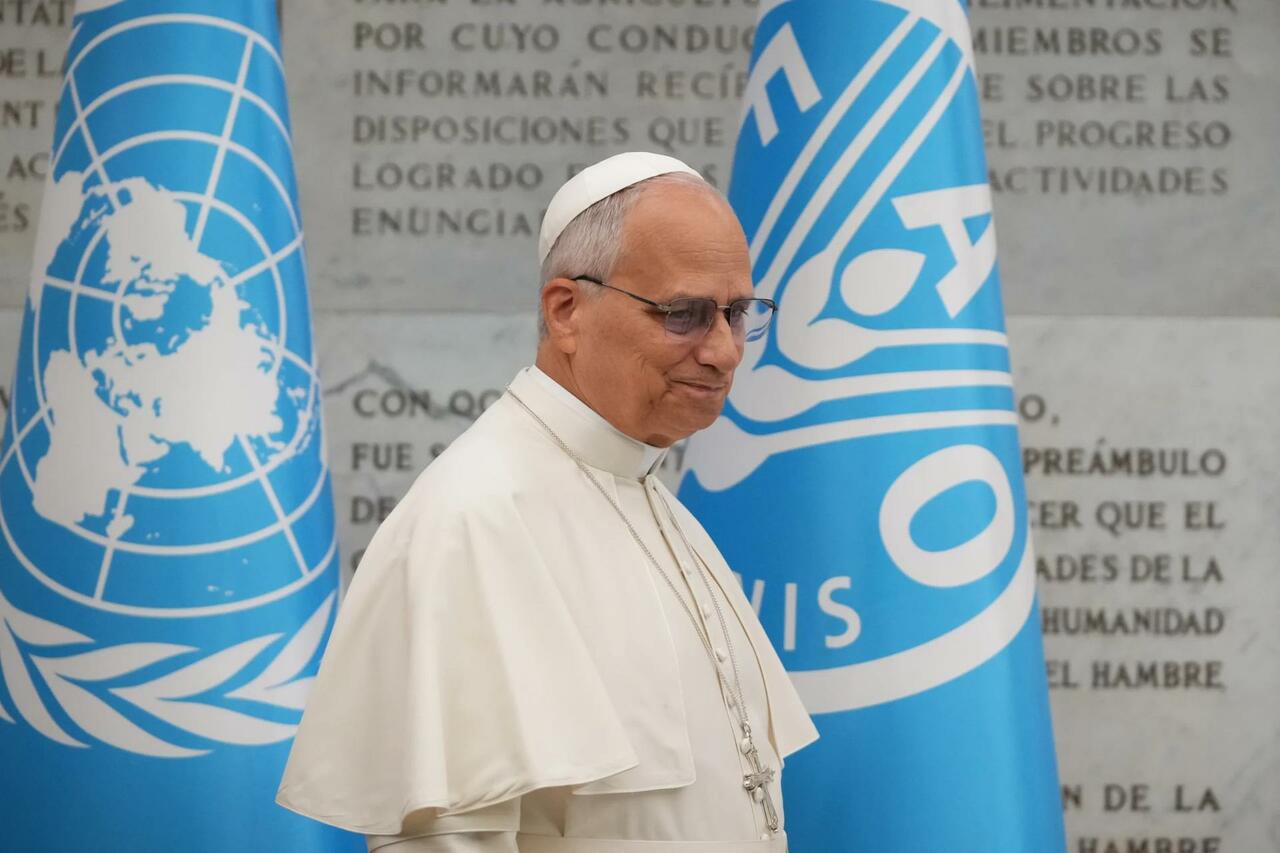
In recent news, Pope Leo XIV triggered widespread debate among conservatives when he offered up a thinly veiled attack on the Trump Administration, calling US strikes on Iran’s infrastructure akin to “war crimes”. Interestingly, Leo refused to condemn the wholesale slaughter of protesters by the Iranian regime until this week, likely due to pressure from conservative critics calling out the hypocrisy.
The Pope has been an avid critic not just of Trump, but conservative anti-immigration movements in general. In December of 2025 he argued:
“I know that in Europe there are, many times, fears that are present, but oftentimes generated by people who are against immigration and trying to keep out people who may be from another country, another religion, another race. And in that sense, I would say we all need to work together…”
This runs parallel to Leo’s statements in July of 2025, when he asserted that:
“The Church, like a mother, accompanies those who are walking. Where the world sees threats, she sees children; where walls are built, she builds bridges… She knows that in every rejected migrant, it is Christ himself who knocks at the door of the community.”
The treatment of immigrants as almost “divine” is a bizarre byproduct of the multicultural religion. This idea has been presented by several popes in recent decades, comparing refugees and illegal immigrants to the Holy Family traveling to Egypt to escape King Herod. In reality, Mary and Joseph were Roman subjects and merely traveled from one part of the Roman Empire to another. They were not “immigrants”, illegal or otherwise.
Keep in mind, the Pope lives within a secure compound protected by two miles of walls standing 40 feet high. The Vatican is one of the most restricted pieces of ground on the planet. Like most globalist elites, he never has to deal with the consequences of the mass immigration policies he supports.
For instance, the Vatican has refused to comment on the rising tide of crime and violence (including rape gangs) caused by mass immigration, specifically from Muslim countries. Nor has he commented on Islamic communities enforcing Sharia Law in Europe in defiance of integration.
In fact, Pope Leo pretends as if these problems simply don’t exist and that the millions of people opposed to third world migration are acting out of bigotry rather than a rational concern for the safety of their families and their culture.
And make no mistake, the Catholic Church has played an integral role in the spread of mass immigration. Under Joe Biden, the Catholic Church enjoyed over $200 million in direct grants for helping bring hundreds of thousands of migrants to the US. The U.S. Conference of Catholic Bishops (USCCB) was responsible for settling around 18% of all “refugees” and asylum seekers entering the US from 2021 to 2024.
The EU’s Asylum, Migration and Integration Fund (AMIF) has budgeted over $10 billion from 2021 to 2027 for organizations helping to settle millions of migrants in Europe, and a large portion of that budget goes to Catholic-based NGOs.
To many Christians the Pope still represents a central figure of influence despite the Vatican’s clear shift to the political left over the past several decades and its increasing abandonment of traditionalism. To non-Catholics (and wise Catholics), the office of the Pope is viewed as a Trojan Horse designed to destroy Christianity and the west from within.
The Vatican has grown into a purveyor of the progressive movement since the Vatican II reforms in the 1960s. These reforms including a focus on “interfaith relations” (universal religion) and a policy of detaching the church from its role as a pillar of western civilization. Today, 47% of Catholics vote Democrat despite the fact that woke ideology directly violates many of the most sacred Christian principles.
The Church’s interest in Muslim immigration spiked in 2010 under Pope Benedict XVI and they have been deeply involved with mass migration programs ever since, often in coordination with leftist politicians.
The Alliance Between The Vatican And The Luciferian Elites
Nothing woke up the masses more, in my opinion, than the nightmare of the Covid pandemic. During this crisis the globalists proudly proclaimed their intentions to lock down the world, enforce perpetual vaccine mandates, establish a medical tyranny and fast-track every NWO program imaginable.
One such program was the “Council For Inclusive Capitalism”, which I believe was the intended foundation for a global government; the top of the pyramid. The project was announced as a partnership between globalist controlled corporations, leftist NGOs, climate organizations, the Rothschild Family and, of course, the Vatican.
The Vatican’s mission within the council seemed to revolve around promoting socialism as “Christian adjacent” (This is a lie – Christianity encourages independent and voluntary charity, not forced charity through government taxation or atheistic collectivism). They were also tasked with forming a platform for a “universal religion”, or a union of religions.
The CIC took advantage of the hysteria surrounding the pandemic to advance the multicultural agenda as well as ESG (a program meant to use corporations to enforce woke ideology through social and financial influence). The project ultimately failed when the covid narrative fell apart.
The Council has since gone underground. However, in 2026 the Vatican Bank approved the appointment of François Pauly, a former Rothschild director, to lead its Board of Superintendence. The CIC is undeniable proof that the Vatican and associated leaders are intertwined with the luciferian elites. It is no longer a conspiracy “theory”, but a confirmed fact.
The Crusaders Were Right, The Globalist Pope Is Wrong
In 1095 AD at the Council of Clermont in France, Pope Urban II gave a speech on the relentless invasion of the Ottoman Turks which was threatening to destroy Europe and the last vestiges of western civilization. He appealed to Christian men to stand and fight, to stop the erasure of Christendom. For 300 years the Muslims had cut into the heart of the Holy Roman Empire, migrating and conquering as they went.
By the time of Urban’s call to arms, the Islamic caliphates had taken over 60% of all Christian lands and were on the doorstep of Western Europe.
Before this speech it was widely believed that Christians would not organize or fight. The success of Urban’s plea for action shocked the Pope himself. Thus began the First Crusade to save the west. In the end, the Muslims were pushed out of Europe, back to the Arab lands. Without the crusades we would still be living in the dark ages of a Muslim theocracy.
Nothing has changed since then in terms of the conflict. The western world is still completely incompatible with Islam. What has changed, rather, is the circumstances and the players. Today, the Vatican is a multicultural monstrosity working with people who, more than anything, want open borders, the dismantling of the west and the elimination of Christianity.
They clearly see Islamic immigration (and third world immigration from socialist nations) as a valuable weapon for cleaving the US and Europe. As I noted in my recent article “The US Separation From And NATO Is Long Overdue”, European globalists have used mass immigration to implant a foreign army to subdue and control the native population. It is a tactic as old as time – Political leadership using subsidized foreign hordes as a way to control their own rebellious citizens.
This is why they have ignored every reasonable call by the populace for reforms and deportations. This is why they ignore the rape gangs, the murders, the terrorism. They WANT these things to happen. That’s why they let the barbarians inside the gates in the first place. The Vatican and the Pope are a part of this agenda. As an institution, the Papacy was tasked with protecting the western world. If the Vatican is casting aside this sacred duty, then it no longer represents Christianity.
While media coverage of Israel’s war on Lebanon mainly focuses on the slaughter of hundreds of Lebanese civilians and destruction of entire villages, Israel Defense Forces commanders are tacitly condoning widespread looting by their troops in Lebanon, according to reporting Thursday.
Haaretz, Israel’s oldest daily newspaper, interviewed a number of IDF personnel who described routine theft of items including motorcycles, televisions, paintings, sofas, and rugs from the homes and businesses of some of the more than 1 million Lebanese forcibly displaced by Israel’s assault on its northern neighbor.
Israel has seized control of more than 50 villages in southern Lebanon as part of its expanding so-called “Yellow Line,” with residents who cross it risking their lives. Their absence offers IDF troops the opportunity to loot with no Lebanese resistance.
The looting of civilian homes and businesses is formally known as “pillage” and is strictly prohibited under numerous Israeli and international laws and conventions. However, according to the IDF soldiers and officers interviewed by Haaretz, senior and junior commanders know about the pillaging but are not punishing offending soldiers.
“It’s on a crazy scale,” one soldier said. “Anyone who takes something – televisions, cigarettes, tools, whatever – immediately puts it in their vehicle or leaves it off to the side, not inside the army base, but it’s not hidden. Everyone sees it and understands.”
Soldiers interviewed said commanders’ responses range from turning a blind eye to prohibiting looting but not punishing offenders. “In our unit, they don’t even comment or get angry,” one soldier claimed. “The battalion and brigade commanders know everything.”
Another said that “battalion and brigade commanders do speak up and get angry, but without action, those are empty words.” Some IDF soldiers have even posted videos of their looting on social media – usually with no consequences.
Responding to the Haartez report, the IDF claimed:
The military views any harm to civilian property and acts of looting with utmost severity and unequivocally prohibits them. Any allegation or suspicion of such acts is thoroughly examined and addressed with the full weight of the law. In cases where sufficient evidence is established, disciplinary and criminal measures are taken, including prosecution. The Military Police Corps conducts inspections at the northern border crossing as forces exit Lebanon.
However, some military police checkpoints along the border have been removed, and in some locations there have never been any checkpoints at all.
🇮🇱🇱🇧IDF soldiers reportedly filmed looting homes in southern Lebanon.
The video shows troops taking belongings from civilian houses during the ground operations.
Widespread looting by IDF soldiers has previously been documented in Gaza and the illegally occupied West Bank, sometimes by the perpetrators themselves.
IDF looting has also been reported in Syria, where Israel has seized as many as 200 square miles of additional territory in 2024, including dozens of border villages, under cover of the Gaza genocide. Israel already conquered and occupied much of the Syrian Golan Heights in 1967.
Israeli forces also allegedly backedPalestinians who looted Gaza aid convoys in order to boost the narrative that it’s Hamas, not Israel, thatof is preventing humanitarian aid from reaching starving Gazans.
Looting of Palestinian property was particularly rampant during the Nakba, or “catastrophe,” when more than 750,000 Palestinian Arabs were ethnically cleansed to make way for the establishment of Israel.
The systematic theft of Palestinian land, homes, and property – which continued with the occupation of the West Bank, Gaza, and Golan Heights in 1967 – is accelerating today, and can be witnessed in videos of settler pogroms in the West Bank and infamous footage of an American-born settler colonist telling a Palestinian family whose home he’s trying to steal that “if I don’t steal it, someone else is going to.”
Lebanese media reports Israeli airstrikes in the southern Lebanon town of Deir Aames.
The IDF warned residents of the town earlier to evacuate after it said Hezbollah had launched rockets from the area. pic.twitter.com/FQVwrwwmPh
— Emanuel (Mannie) Fabian (@manniefabian) April 24, 2026
Such unchecked usurpation emboldens further thievery. One soldier interviewed by Haaretz for Thursday’s article said the pillage would effectively end if there were serious consequences for offenders, pointing to units in which commanders took a tough stance against looting, resulting in negligible levels of the crime.
“Lenient enforcement sends a clear message. If someone were dismissed or jailed, or if military police were stationed at the border, it would stop almost immediately,” they said. “But when there is no punishment, the message is obvious.”