Contractors working for the State of Illinois took a 470,000-hour paid lunch break on taxpayers’ dime.
A company hired during the Covid-19 pandemic to fill staffing shortages at hospitals and long-term care facilities spent more than a third of its time on “standdown,” a contract provision that paid them to be on-site and available in case they were needed.
The contractor, Favorite Healthcare Staffing, was supposed to notify the state any time its employees were on standdown for more than 24 hours. There was no evidence those notifications occurred, and the state only conducted limited oversight, according to an Aug. 11 report from Auditor General Christopher Meister.
Key facts: Favorite Healthcare earned $220.3 million from Illinois from 2022 to 2023, including $78.5 million for standdown hours.
The audit found 270 employees who billed for standdown time without actually working a single hour in two years. They earned $7.5 million.
At least eight employees even billed overtime at rates of up to $330 per hour during weeks they were on standdown for five consecutive days, according to the audit. One employee billed for overtime while he was in quarantine and not working.
Other employees billed more than 24 hours in a single day. The state paid their invoices without flagging the discrepancy, the audit found,
Favorite Healthcare was reimbursed $1.4 million for lodging costs, even though its employees were staying in their personal residences.
Upon discovering the issues, Illinois hired the consulting firm Innovative Emergency Management to review Favorite Healthcare’s invoices.
But Innovative Emergency Management also had its own billing issues, the audit found. The company billed Illinois using duplicate timesheets and for employees who did not report working any hours.
Illinois later had to hire yet another firm, Crowe, to review Innovative Emergency Management’s invoices. Crowe earned $1.3 million.
Summary: The public should not have to pay contractors to sit around and twiddle their thumbs, nor pay consultants to figure out why.
The #WasteOfTheDay is brought to you by the forensic auditors at OpenTheBooks.com.
Twelve Companies Make DOE’s Latest Nuclear Launch Pad Cut
The DOE’s National Reactor Innovation Center announced12 companies covering 13 projects for its latest Nuclear Energy Launch Pad (NELP) round on August 24th. Similar to the project coverage from the first round, this new group also spans multiple stages of the nuclear industry.
As we covered when the first four companies were selected, the initial group included the uranium enrichment company General Matter and reactor developers Radiant, Deployable Energy and NuCube Energy.
Multiple companies are seeing repeat entries into the fast-track nuclear development programs under the DOE:
Oklo, Antares, and Valar are all returning after achieving criticality on their pilot reactor designs under the DOE’s Reactor Pilot Program
Deployable Energy is returning with two programs after also being included in the initial NELP selection round.
The NELP offers access to nuclear expertise and infrastructure with a prioritized pathway through DOE authorization. The NELP is the new program that succeeded the DOE Reactor Pilot Program and DOE Fuel Line Pilot Program that have kick-started the nuclear renaissance in the US.
While not every company has been open about what they’re working on under the NELP, we collected what we could find on each of the companies and their various programs:
Antares Nuclear: Transportable microreactors for military and space applications. Its R1 design combines TRISO fuel with sodium heat pipes, targeting 100 kilowatts to 1 megawatt of electricity. Its selection uses “Launch Pad USA”, which means they do not have to be at the Idaho National Laboratory (INL) site to enjoy the benefits of the program
Atlas Atomics: They’re developing heavy-water reactor technology intended to combine electricity generation with medical and industrial isotope production and the reuse of spent nuclear fuel. Not much is known about their reactor design, but based on it being heavy water, it makes it similar to the CANDU reactor fleet in Canada. And with a previously written letter of support for Utah being one of the locations considered for the Nuclear Lifecycle Innovation Campuses, it is anticipated the company will be starting in the same state for their initial work.
Deployable Energy: Working on Unity, a transportable, high-temperature gas-cooled “nuclear battery” designed to generate 1 megawatt using helium cooling and conventional two NELP selections cover a full-power demonstration at INL and a maritime demonstration with Hornbeck Offshore under Launch Pad USA.
Forge Atomics: Developing Ember, a factory-built, 25-megawatt reactor for data centers and the grid. It’s one of the least novel designs on the list, leaning into the industry’s decades of experience with pressurized water designs and conventional LEU fuel. Components are sized for highway transport, with factory manufacturing intended to bring down construction costs and delays.
Hexium: Developing laser-based isotope enrichment, initially targeting lithium for fusion and fission applications. The company is modernizing Atomic Vapor Laser Isotope Separation, technology developed at the DOE’s national labs, and has also outlined plans for uranium enrichment. The company announced partnerships with Oklo and TerraPower when they initially came out of stealth last year.
Lightbridge: Developing twisted uranium-zirconium metallic fuel rods for existing and new reactors, including small modular reactors, aiming to improve heat transfer, increase output and extend refueling intervals. Its NELP project is SHED, a planned INL manufacturing facility for lead test assemblies destined for testing in U.S. commercial power reactors.
Nusano: Developing accelerator-based radioisotope production for cancer diagnosis and treatment, with additional work on industrial isotopes and nuclear batteries. Its energy business is pursuing mass-separation technology that enriches uranium metal to produce high-assay low-enriched uranium (HALEU) for advanced reactor fuel.
Oklo: Developing Aurora fast-fission reactors to supply electricity and burn used nuclear fuel from traditional reactors. Their business model calls for owning and operating plants and selling their output under long-term contracts. The company is also pursuing nuclear-fuel recycling and isotope production for medical, industrial and research applications.
Raven-Flint Nuclear: Developing the Corvus Route for uranium conversion, producing uranium hexafluoride without elemental fluorine gas. Following laboratory production, its NELP project is Torch, a planned pilot conversion plant at INL targeting 500 tonnes of uranium annually. That would add capacity between uranium mining and enrichment.
Scaled Atomics: Developing the MN-350, a mobile nuclear power system designed for a standard 20-foot shipping container and a ten-year refueling interval. It targets military missions, disaster response and remote commercial sites. The company says Launch Pad USA will help advance MN-350 from advanced design toward demonstration and commercial deployment.
Sublime Nuclear: Focused on rebuilding the domestic nuclear fuel supply chain and reducing dependence on foreign suppliers. Unfortunately, that’s about as much information as is currently available. The website doesn’t have much else to it, and no press releases have been put out by the company yet.
Valar Atomics: Developing high-temperature gas-cooled reactors for mass production and deployment. Its ambitions extend across AI data centers, industrial heat, hydrogen and synthetic fuels, with manufacturing and deployment concentrated at what it calls gigasites. The company made headlines recently with a recent funding round that reached over $1 billion in equity and debt.
This was arguably a preemptive de-escalation move that would also gauge the US’ intentions…
The New York Times (NYT) interviewed Afghan Foreign Minister Amir Khan Muttaqi in Kabul as part of their coverage of the fifth anniversary of the Taliban’s return to power. Muttaqi invited the US to reopen its embassy and invest in his country’s minerals, dams, and roads. He also declared that “We consider the chapter of war to have come to an end, and from now on, we want relations based on mutual respect and a new chapter of positive engagement.” This new policy requires some interpretation.
After all, Trump has repeatedly called for the return of US forces to Bagram Airbase and the US has pivoted to the Taliban’s new Pakistani enemy over the past year and a half of his second term, both of which the NYT mentioned as possible obstacles. The Taliban also refuses to return the US arms and equipment that were left in Afghanistan while denying that it’s holding a dual Afghan-American citizen prisoner. The State Department thus predictably told the NYT that bilateral ties won’t be normalized.
Two of the experts that the NYT interviewed referenced Trump 2.0’s business-driven foreign policy, ergo why some might be surprised that the State Department rejected normalizing bilateral ties as a quid pro quo for presumably privileged access to Afghanistan’s rare earth minerals wealth. This goes to show that geostrategy, not geo-economics, is presently determining Trump 2.0’s policy towards Afghanistan. Interestingly enough, however, it’s the opposite with the Taliban. Here are three background briefings:
In a nutshell, Pakistan is passively facilitating the flow of arms to ISIS-K as part of its undeclared war with Afghanistan, which the US discreetly approves of as a means of pressuring the Taliban into complying with its demands. If the Taliban were weakened or deposed, they might not ever regain their former strength due to their historical Pakistani patron having cut them off and their new Russian military-technical partner being unable to replace the multifaceted support that Islamabad previously provided.
The end result could be the re-subjugation of Afghanistan, but this time as a US-Pakistani client state that would serve as a launchpad for expanding their military and economic influence into Central Asia, which aligns with Trump 2.0’s Neo-Reagan Doctrine of rolling back Russian influence. Turkiye is already poised to do the same from the west via August 2025’s “Trump Route for International Peace and Prosperity”, which also functions as a NATO military logistics corridor, so the combined effect could be profound.
Given the grand strategic consequences if the US and Pakistan successfully re-subjugate Afghanistan, there’s a certain logic to why Trump 2.0 rejected the rare earth minerals opportunity that the Taliban offered it. The group arguably did this as a preemptive de-escalation move that would also gauge the US’ intentions, which are now crystal clear. Looking forward, joint US-Pakistani pressure on Afghanistan is therefore expected to increase, which could lead to an increase in Russian-Taliban military-technical ties.
IAEA ‘Unclear’ On Iran’s Nuclear Program As US, Europe Escalate At UN Security Council
Western allies are pressing the International Atomic Energy Agency (IAEA) board to bring a formal complaint and resolution before the UN Security Council and the General Assembly. Reuters reports Saturday that the US, UK, France, and Germany are behind the new pressure campaign, which hinges on a request that the nuclear watchdog’s director general transmit the new resolution.
The draft resolution, as seen by Reuters, calls on Iran to “urgently remedy its non-compliance with its Safeguards Agreement by taking all steps deemed necessary by the Agency and the Board, so that the Director General can provide the necessary assurances regarding the correctness and completeness of Iran’s declarations.”
“The draft has not yet been formally submitted to the board and negotiations over the exact wording are ongoing,” Reuters wrote based on diplomatic sources.
Prior such draft resolutions have all been approved by the IAEA board. A year ago, prior to Trump launching Operation Epic Fury, an adopted IAEA resolution charged that was Iran in breach of its obligations under the Nuclear Non-Proliferation Treaty (NPT), which Tehran is a formal signatory to.
But Iran is being ‘non-compliant’ at a moment it is getting routinely bombed by US forces. Iran has also frequently pointed out the obvious double standard – that Israel itself is armed with nukes and is not a signatory to the NPT.
This fact has long been an ‘open secret’ in Washington and among world leaders. But if the US government were to officially recognize Israel as a nuclear-armed power, it could trigger legal repercussions which would impact foreign aid to Israel.
Days ago IAEA Director General Rafael Grossi stated in a formal report that the status of Iran’s nuclear program remains unclear:
The status of a key part of Iran’s nuclear program remains unknown while international inspectors have yet to gain access to nuclear facilities, the International Atomic Energy Agency reported on Tuesday, as the country’s six-month conflict with the United States shows no signs of resolution.
IAEA monitors cannot verify the location or status of Iran’s stockpile of near-bomb grade uranium, according to the 11-page restricted report that was sent to member states and cited by Bloomberg and Reuters.
“The agency’s lack of information about this nuclear material and access to facilities to verify it is a matter of proliferation concern,” Grossi wrote in the report.
Tehran’s position has remained that the IAEA is too cooperative with Israeli intelligence, and that it’s neutrality has been compromised…
Next week @iaeaorg which is a spy org for Israel will vote to declare Iran breach of NPT. They bombed all the sites and still want to send spies to inspect them. 😂 pic.twitter.com/bIGgOlUYAN
He called on Iran to allow inspectors back in “with the utmost urgency” – and yet, this a place that’s still under threat of more US bombing campaigns. There is basically an active war still on, even with occasional pauses.
Transport for London has dropped a dog house-shaped “calm space” onto the concourse at Ealing Broadway station and called it progress.
The tiny pod features a bench, noise-dampening acoustics and a “soothing” forest mural. They claim that it is part of an effort to “boost accessibility for neurodivergent travellers under TfL’s Equity in Motion strategy,” whatever that means.
Massive backlash has ensued, with many questioning this as a priority over train delays, complete lack of air conditioning on many lines, poor cleanliness, broken escalators and an epidemic of fare dodgers costing £190 million a year.
We’re trialling a calm space at Ealing Broadway station for four weeks ?
From today, you’ll find a quieter space for customers who may benefit from a calmer environment during their journey.
What we learn from the trial will help us understand how we can make our network… pic.twitter.com/mRFiD2vtvM
The kennel is part of TFL’s ‘Equity in Motion’ scheme, a ‘customer inclusion plan’ launched in February 2024 which it claims will make travel “fairer, safer, more inclusive and more accessible.”
Mark Evers, who leads customer insight, strategy and experience at TfL, told Ealing.News: “Everyone should be able to travel confidently and independently across London, and we know that busy environments can sometimes pose a barrier and be overwhelming, particularly for our neurodivergent customers.”
“These trials will help us understand how we can better support customers who might need to take some time out when using our services,” he added.
Jesus wept.
The photograph did more work than the press release. Open sides. Pitched roof. Wood-effect walls. A painted woodland. A single bench. It reads as a child’s playhouse parked in a ticket hall.
Darren Johnson, a former London Assembly member, went at the physics of the claim:
I am not sure that putting an open-sided kiosk in a station used by 42,000 passengers a day and calling it a ‘calm space’ actually makes it a calm space. https://t.co/pDBoR212mV
When I was a Councillor my Ward included Ealing Broadway Station. It is a manic station with lots of issues. This ‘calm space’ is an absolute joke, and a complete waste of money. It won’t be long until it is vandalised https://t.co/iRDJzcIxGy
Day 1-4: 13 year old gangsta wannabes take over and blurt drill music from a Bluetooth speaker and nuisance stream from it.
Day 5: Homeless guy takes a shit in it
Day 6: Someone is sexually assaulted inside it by an Eritrean
Day 7: Dismantled and removed by TFL https://t.co/nhjMIvPAX8
— Sir Webblyingworth Brian Squirrelingtonshire ? (@WebSquirrel) September 5, 2026
To be fair, the house is more cosy looking than those featured in plenty of accommodation ads in London.
When passengers noted that the pod would be almost immediately wrecked or occupied, TfL actually replied, suggesting “We understand the concern. The pod is located close to station staff and within CCTV coverage, and it’s included in routine station security and safety checks.”
They added, “Any inappropriate behaviour will be managed in line with standard station procedures, and any damage will be addressed as needed. The trial will also help us understand how the space is used in practice.”
We understand the concern. The pod is located close to station staff and within CCTV coverage, and it’s included in routine station security and safety checks. Any inappropriate behaviour will be managed in line with standard station procedures, and any damage will be addressed…
That sentence is doing a lot of work. “Standard station procedures” is the same toolkit that already coexists with barrier-jumping, vaping in carriages, speakerphone culture and graffiti that TfL has had to throw extra cleaning gangs at.
The Times reported earlier this year that a graffiti surge left parts of the Underground looking, in one MP’s phrase, “like 1970s New York,” with Bakerloo and Central hit hardest because those lines have so little spare stock that tagged trains stay in service. Bakerloo’s 1972 stock is the oldest passenger rolling stock in the country.
CCTV does not stop crime when there is no consequence. People refuse fares, vape on trains and disturb other passengers with impunity.
This is not a quiet branch line. Ealing Broadway is a Zone 3 interchange for the Central line, District line, Elizabeth line and National Rail. At peak times it is a crush of school runs, office traffic and Heathrow-bound crowds.
It is also a known fare-evasion hotspot. BBC reporting from the concourse described officers watching people hurdle barriers, crawl under them and “double gate” behind paying passengers.
TfL has put the network-wide loss at about £190 million a year – 3.5 per cent of fare income – and wants 1.5 per cent by 2030. A later disclosure to Tube Alerter, reported by MyLondon, said the real figure could be as high as £211 million because TfL applies a 10 per cent haircut to avoid “overstating” the loss.
The same station had a passenger trapped and dragged by a train in November 2024. RAIB published its report in March 2026. Temporary barriers went up on platform 4 because of the gap between train and platform. Lifts routinely fail. Step-free access comes and goes. That is the arena into which TfL has now inserted a woodland cubby and a QR code for feelings.
Ffs.
How about you ban people have their phones on speaker or listening to music?
Molly coddling adults in this way is embarrassing.
A functioning society never needed this kennel before.
What???????
Can someone please tell me what is going on with this generation???
All this ‘safe space’ nonsense and ‘you’re safe with me’ badges??
Can anyone imagine this generation in the world wars????
What are they all scared of? https://t.co/AyhNvwsw4I
TFL, which cannot keep toilet facilities usable, has discovered the language of trauma for a four-week photo opportunity.
There is no air con on most of the deep Tube. Central, Bakerloo, Jubilee, Victoria, Waterloo & City, Piccadilly and Northern still cook passengers in summer. Only about 192 of 620 Tube trains are air-conditioned. The trains many west Londoners ride every day were built when Ted Heath was in Downing Street.
Sadiq Khan’s City Hall has spent years announcing equity frameworks while the basic deal of public transport – you pay, the train comes, the carriage is usable – has got sloppier. Fare evasion doubled on the Tube against pre-pandemic levels. Prosecutions are still well below the old peak. Penalty fares often go unpaid. Staff take the abuse. Paying passengers fund the gap. Then the same organisation asks those passengers to admire a sensory pod.
This is peak clown world.
Your support is crucial in helping us defeat mass censorship. Please consider donating via Locals or check out our unique merch. Follow us on X @ModernityNews.
Always and everywhere, political institutions are controlled by elites. It doesn’t matter if the regime type is democratic or monarchical. It doesn’t matter if there is a written constitution or not. All political institutions – and certainly every sovereign state – are run by a group of elites who control the means of coercion.The myth of “rule by the people” is precisely that: a myth.
But this leaves a big question open: who are the elites? Wilfredo Pareto, that pioneer of Italian elite theory, convincingly suggests that elites are simply those people who are most skilled in their respective fields. Being skilled does not suggest any sort of virtue or beauty, of course, and we cannot assume that any member of the elite will be more moral or refined than any, say, middle-class mechanic.
In the case of political elites, to be “elite” simply means to be the most effective at organizing and commanding political action. This can be done toward both virtuous ends or evil ends. The political elites excel at the gaining and wielding of political power. Nothing more. In hereditary monarchies, for example, the monarch is a monarch because his ancestors were more effective at using violence – and at stealing and killing – than were their competitors. Their descendants are able to remain in the elite through effective political scheming to maintain their positions. In democracies, those who gain and maintain power are effective at deceiving the voting public and at currying favor with the ruling coalitions of various interest groups. They’re not “the elite” because they are especially virtuous or well educated. They simply excel at cultivating the knowledge necessary to wield the power of the state against their enemies and against potential rivals.
Economic Elites vs. Political Elites
There is, however, often confusion as to the difference between economic elites and political elites. One could say that economic elites are those who are most skilled at the management of property. Yet, the nature of the economic elites depends largely on what type of regime exists within society. In a society that has a mostly market system, the economic elites are those who are most productive in the free marketplace. These are the people who are skilled at entrepreneurship, sales, logistics, investing, and all other aspects of a freely functioning market. In a mostly free society, the economic elites are free to spend most of their time on their activities in the marketplace, and they are thus rewarded for spending their efforts in improving their own productivity. Moreover, all of society benefits from these sorts of economic elites. This is because rewards in the marketplace stem from delivering more goods and services to more people at a price that a growing number of people can afford.
Things are different in a society where the economy is dominated by the state – and thus by the political elite. In such a society, the economic elites are those who are most skilled at using the power of the state to achieve success in the state-regulated marketplace. In this case, the economic elites are those who are able to partner with the regime to obtain policies that benefit the elites through the manipulation and regulation of the market. These policies include bailouts, state-backed monopolies, and an easy-money-fueled financial system. In this system, the economic elites are able to maintain and enhance their positions and their wealth through effective political action, and by serving the political elites instead of customers in the marketplace.
When this happens, we cannot assume that the economic elites are there because they add value to society. Rather, the economic elites in this latter system are parasitical. They rely on the exploitation of others to maintain their positions and to expand their market share. One of the most dramatic examples of this can be seen in the response to the financial crisis that began in 2008.
Had the marketplace been allowed to function, many large banks and other firms would have been bankrupted, and their property repurposed by other, more efficient owners and managers. Those new owners could have become a new economic elite. But thanks to the intervention of the incumbent political elites, failing firms were saved through the redistribution of wealth from the productive classes to hand-picked, politically connected incumbent firms and owners. Thus, firms like Citicorp and AIG were bailed out, new regulations imposed, and firms like JP Morgan greatly expanded their market share. The Federal Reserve’s mass purchasing of mortgage-backed securities rescued a large portion of the financial sector from insolvency. As a result, most of the economic “elite” we find in the financial sector owe their positions to political action rather than any actual skill in the marketplace. Sure, these people are fond of telling themselves that they are rich because “the market” values them so highly. In reality, they are successful because lobbyists have succeeded in propping up their firms and ensuring, through constant monetary inflation, growth in their portfolios.
But this is just one example. In any society where the political elites are prolific spenders, or engage in widespread regulation of the economy, the economy is continually distorted in a way as to favor the politically well connected at the expense of everyone else. For example, the economic “elites” who rely heavily on government contracts – e.g., Elon Musk, Peter Thiel, the founder of Flock Safety, et al – are not in the elite because they are especially productive in a free market. They are in the elite because they are adept at seizing the property of taxpayers through the tax-and-spend mechanism.
Note that in this interventionist system, the real economic elites – the people who would have risen to the top of an actually free economy – are crowded out and kept down by government action that favors certain firms. Who are these would-be elites? We’ll never know, and instead we are left with our counterfeit billionaire class which is “elite” only in their skill at exploiting people who do real work in the private sector.
Conclusion
Thus we have a merging of the economic and the political elite. Both types of elites generally rely on some sort of deception to buttress their claims.
The political elite, for example, claim their positions by virtue of some sort of mandate from heaven, or moral virtue, or because they allegedly reflect the “will of the people.” These are all lies, of course, but have nonetheless worked to fool and pacify the public for many centuries.
Under a regime of economic interventionism, the economic elites rely on lies as well. They claim they are elites because they are efficient or hard-working, or “serve the customer.” These are lies as well since, in the absence of a free – or even mostly free – market, the elites are, in fact, in their positions due to political maneuvering. They are, in effect, merely an extension of the political elite. The more interventionist the regime is, the more this is true.
The real elites have always been those who receive the voluntary and free support of others through the private sector, or through other non-violent means of interaction: through families, religious institutions, and other institutions of the private sector. On the other hand, those who become “elites” through the initiation of violence, and through the looting of others, have always been frauds and imposters.
Hegseth’s Polygraphs Return To Pentagon In ‘Major Leak Hunt’ Over Iran War
The polygraphs have returned to the Pentagon, after the Trump administration has been furious over what the president calls ‘leaks’ by US officials to the press, particularly regarding alleged diminished munitions stocks and missile shortages.
The New York Times reports Saturday that Pentagon investigators have questioned roughly 50 personnel on the Joint Staff whether they had disclosed classified information to journalists.
The publication calls it a “major leak hunt” – with the widespread polygraph tests having taken place in August, and possibly with more rounds to come.
“Between 1,500 and 2,000 officers and officials work for the Joint Staff, which coordinates operations, policy and war plans with combatant commanders around the world,” the NY Times notes.
Dozens of other officials, including under US Central Command (CENTCOM), were also polygraph tested earlier this summer.
An avalanche of media reports in August, and from earlier in the summer, have said the US exhausted much of its stock of long-range Tomahawk missiles on the Iran war, along with Patriot and THAAD missile interceptors.
US officials have stated to CBS that no one failed the tests, but it has had a chilling effect, given that sources have also described the scope of the dragnet as “extraordinary”.
All of this seems not only geared toward preventing leaks to the press, but comes amid a climate of perceived ‘disloyalty’ and dissent against War Secretary Pete Hegseth.
Polygraphs are typically used in the military or intelligence community in cases of suspected foreign espionage or instances of suspicion of handing off classified information. Hegseth has already greatly narrowed his trusted inner-circle.
Pentagon spokesman Sean Parnell has only said that the Department of War “takes all leaks of classified national security information extremely seriously and investigates accordingly.”
This isn’t the first wave of polygraphs at the Pentagon under Trump. Hegseth had previewed these actions all the way back in Fall 2025. There’s also been widespread signings of NDAs.
While there already exist laws and policies covering unauthorized disclosure of classified, restricted, or sensitive information, this is clearly part of a broader push to tighten up leaks.
The reality too is that leaks to the media are a fairly standard part of any administration, going back through American history. Trump likely knows this, but is naturally leery of any further efforts to undermine his policies – especially in this sensitive moment ahead of the November midterm elections.
China’s new rules governing companies that produce and distribute content for social media took effect on Sept. 1, potentially exposing both independent content creators and the accounts they manage to penalties for violations.
The regulations require companies providing services such as content planning, production, distribution, marketing, promotion, and talent management to register as service providers.
Critics and independent content creators told The Epoch Times that the rules could broaden the communist regime’s control over online content, particularly information about sensitive social issues such as unemployment, unpaid wages, unfinished housing projects, and protests.
They spoke on condition of anonymity out of fear of reprisal.
Under the new rules, companies already registered to provide such services have 30 days from the regulations’ effective date to amend their business registrations.
Companies involved in online performance management, publishing, audiovisual services, or internet news services must also obtain the relevant licenses.
The rules require covered companies to appoint a person responsible for content management and establish a management team, as well as procedures governing employees and emergency responses.
When signing contracts with online creators, companies must verify their identities and clearly define their management responsibilities.
Platforms can also impose measures on both the companies and the content creators they have contracted with when alleged violations of laws, regulations, platform rules, or contractual agreements occur.
Those measures can include restricting account functions, suspending monetization, or shutting down accounts.
Risks to Online Creators
For people working in China as independent content creators, the new requirements have raised concerns about both income and uncertainty over what content is permissible.
A content creator in Shenyang, China, told The Epoch Times that the rules could directly affect the livelihoods of people who depend on online traffic for income.
“Many people doing livestreams don’t know what they can say and what they can’t say. Once the traffic gets high, the risks come with it,” she said.
The content creator explained that she has seen other creators have their accounts blocked after their livestreams began attracting substantial audiences.
She also questioned how regime authorities and platforms would determine what constitutes prohibited content.
“What does it mean to incite emotions, and what does it mean to make false propaganda? Who decides? There is no clear standard,” she said.
The regulations are formally framed as a system for managing businesses involved in the distribution and operation of online content.
However, critics say the requirements could extend beyond large multi-channel networks (MCNs), and apply to smaller operations that may not previously have considered themselves part of the industry.
A Chinese online commentator told The Epoch Times that the rules could encompass small studios, account-management teams, and small livestreaming accounts.
“In the past, many small studios simply helped people obtain advertising, edit videos, and do promotions. They didn’t consider themselves MCNs,” the commentator said.
“This time, the regulations are very broad. As long as you participate in producing content for online accounts, or help distribute it, you could be required to register and file records, and you would have to assume them as a condition for operating.”
In his view, the system shifts part of the regime’s censorship responsibilities onto platforms and content-operations companies. Rather than directly intervening in every piece of content, the regime can require companies and platforms to police the accounts under their control.
Concerns Over Reporting on Social Issues
The potential impact could be particularly significant for creators who cover social and economic problems in China.
An independent content creator in Harbin, China, who focuses on analyzing social issues and asked to be identified only by his surname Li, told The Epoch Times that he regularly follows issues including gig employment, difficulties facing restaurants and other businesses, unfinished housing projects, and problems withdrawing money from banks.
Such topics, he said, could potentially be interpreted by platforms as negative information or as an attempt to exploit social issues for attention.
“If influencers continuously follow these things, the network regulators may think you are hyping up a social incident, seeking attention, and making money from traffic,” Li said.
“I can only speculate this way. The regime has not clearly stated the standards.”
Although Li primarily analyzes information from the perspective of a reader, rather than reporting firsthand on every incident, he said he remains concerned about the restrictions.
“Some content is not false; it’s just different from what the official releases say,” he said. “Creators are afraid of losing their accounts or income, so they may simply give up publishing. This is self-censorship.”
Li said the result could be that social events increasingly have only the version of events permitted by regime authorities.
Once creators face the possibility of having their accounts closed, losing their ability to earn money, or effectively losing their livelihoods, he said, they may choose not to publish information even when they believe it to be accurate.
The regulations impose penalties for violations under existing laws and regulations. Where no specific penalty is provided, the regime can issue warnings and impose fines ranging from 10,000 yuan ($1,490) to 200,000 yuan ($29,800).
For creators and critics, however, the greater concern may be the effect of the rules before any formal penalty is imposed.
If platforms and companies are held responsible for the content produced by the accounts they manage, they have an incentive to remove material that could attract regulatory scrutiny.
That could leave creators increasingly reluctant to report on sensitive social issues, not necessarily because the information is false, but because the potential loss of an account, audience, or income may make publishing it too risky.
New Images Reveal China’s Stealth Drone At Secretive “Area 51” Base
Aviation researcher Andreas Rupprecht posted footage on LinkedIn that appears to show China’s next-generation high-altitude intelligence, surveillance and reconnaissance drone, an aircraft he estimates is “comparable in size to the US Air Force’s B-21 Raider.”
Rupprecht wrote on LinkedIn that the WZ-X drone was spotted at a secretive air base in China’s Xinjiang region, known to some as China’s version of Area 51:
Two new images of the PLAAF’s latest and largest intercontinental HALE ISR #UAV, provisionally referred to simply as the #WZ-X, have been leaked, apparently showing the aircraft somewhere in Xinjiang. The UAV was first spotted on satellite imagery in May 2025 at the PLAAF’s UAV test centre at Malan Air Base in the Xinjiang Uygur Autonomous Region of northwestern China.
Rupprecht continued:
In recent years, Malan/Uxxaktal (ZWML) has developed into the PLAAF’s main test centre for trialling UAVs and UCAVs of all types, while also serving as the base of the 178th UAV Brigade. Satellite imagery from 2022 onwards shows extensive expansion of the base’s infrastructure, including new hangars, taxiways and facilities likely linked to the previously unknown, very large flying-wing UAVs WZ-X and the similarly mysterious UCAV GJ-X, both of which are roughly comparable in size to the B-21 Raider. As such, the base, much like the second secret air base at Lop Nur, which is likely focused more on manned systems such as the J-36, J-XDS and, eventually, the H-20, is often compared to the US Area 51 because of its remote location and its role in testing next-generation weapon systems.
Based on the few, often blurry, images available, the WZ-X appears to be a twin-engined flying-wing design similar in configuration to the US RQ-180, but considerably larger. Rough estimates suggest a wingspan of about 52 m and a length of roughly 14 m. Its two engines, of unknown type, are reportedly fed by a central top-mounted intake, allegedly covered by a conformal mesh to reduce radar cross-section. Apart from its very wide span, the design appears to feature a relatively spacious central fuselage section and a dorsal SATCOM antenna. Its range is estimated at more than 20,000 km, with a normal cruising altitude of 18-20 km and a cruising speed of Mach 0.5-0.65. As for the manufacturer, some sources claim it was developed by Nantong University (NTU), located in Nantong, Jiangsu province.
The WZ-X could help Beijing locate warships, map air defenses and relay targeting information to China’s massive arsenal of long-range missiles, as well as hypersonic weapons, in the event of a conflict over Taiwan
Last week, a new report from Taiwan’s leading English-language daily newspaper, the Taipei Times, revealed that China had deployed a record 244 coast guard, research and other government vessels around the island.
Technical details about the WZ-X remain scarce, and claims about its capabilities remain unverified. However, the expanding infrastructure at Malan and repeated sightings suggest that the aircraft is undergoing flight testing.
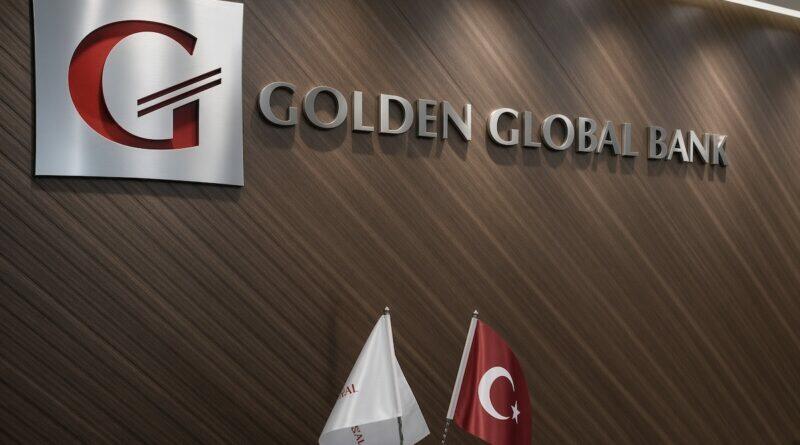
The US Treasury announced sanctions on Friday on a Turkey-based bank and two of its subsidiaries, accusing them of moving tens of millions of dollars on behalf of Iran’s Islamic Revolutionary Guard Corps (IRGC) Quds Force and facilitating Tehran’s movement of funds across the international banking system.
“”Financial institutions continue to find out the hard way that we are serious about Operation Economic Outcast,” US Treasury Secretary Scott Bessent said. “We know who you are, we know where you are, and we will continue to take action together with our allies and partners until we have buried the head of the Iranian snake.”
The Office of Foreign Assets Control (OFAC) named Golden Global Yatirim Bankasi Anonim Sirketi, alongside its two Istanbul-based units, Golden Global Varlik Kiralama Anonim Sirketi and Golden Global Portfoy Yonetimi Anonim Sirketi.
OFAC alleges the bank was created to help Iranian oil revenues reach Turkey from China, where exchangers converted the funds into cash and gold, and accuses it of opening correspondent banking to Iranian institutions through accounts under Quds Force control.
The sanctions come as part of Washington’s Operation Economic Outcast, a campaign to economically asphyxiate Iran by cutting off its remaining revenue and severing the channels it uses to move money abroad.
Bessent told Reuters on August 30 that fresh secondary sanctions would follow every week, with banks first in line. He said the Treasury was telling lenders it was not acceptable to hold Iranian money or assist the government in Tehran, and indicated the next escalation could mean severing an institution from the dollar system altogether.
Days earlier, the Treasury barred the UAE branches of Egypt’s Banque Misr from dollar access over alleged Iranian links.
Speaking ahead of the G20 finance meeting in Asheville, North Carolina, Bessent threatened ministers and central bank governors to break their economic ties with Iran or face secondary sanctions of their own, warning that no leakage would be tolerated.
The sanctions come as part of Washington’s “Economic D-Day,” an economic strangulation campaign launched after Washington failed to achieve its military objectives against Iran.
“In the Second World War, D-Day marked the historic beginning of a campaign with our allies to target and drive the enemy from its positions, including those in third countries. Today, in that same spirit, we are launching an economic onslaught against Iran’s financial connections around the globe. Our objective is to sever every economic lifeline that sustains this tyrannical regime until Tehran stands alone,” Bessent had said.
“President Trump has taken action that his predecessors have long deferred. Under his leadership, America is no longer managing the Iranian threat. We are ending it. Those who stand with the United States will reap the rewards of our partnership. Those who tether themselves to Tehran should expect to share in the isolation of a withering regime,” he had also said.