The plan in the first week of March was simple enough: bomb Tehran from the air, arm the Kurds on the ground, and wait for Iran’s minorities to do the rest.
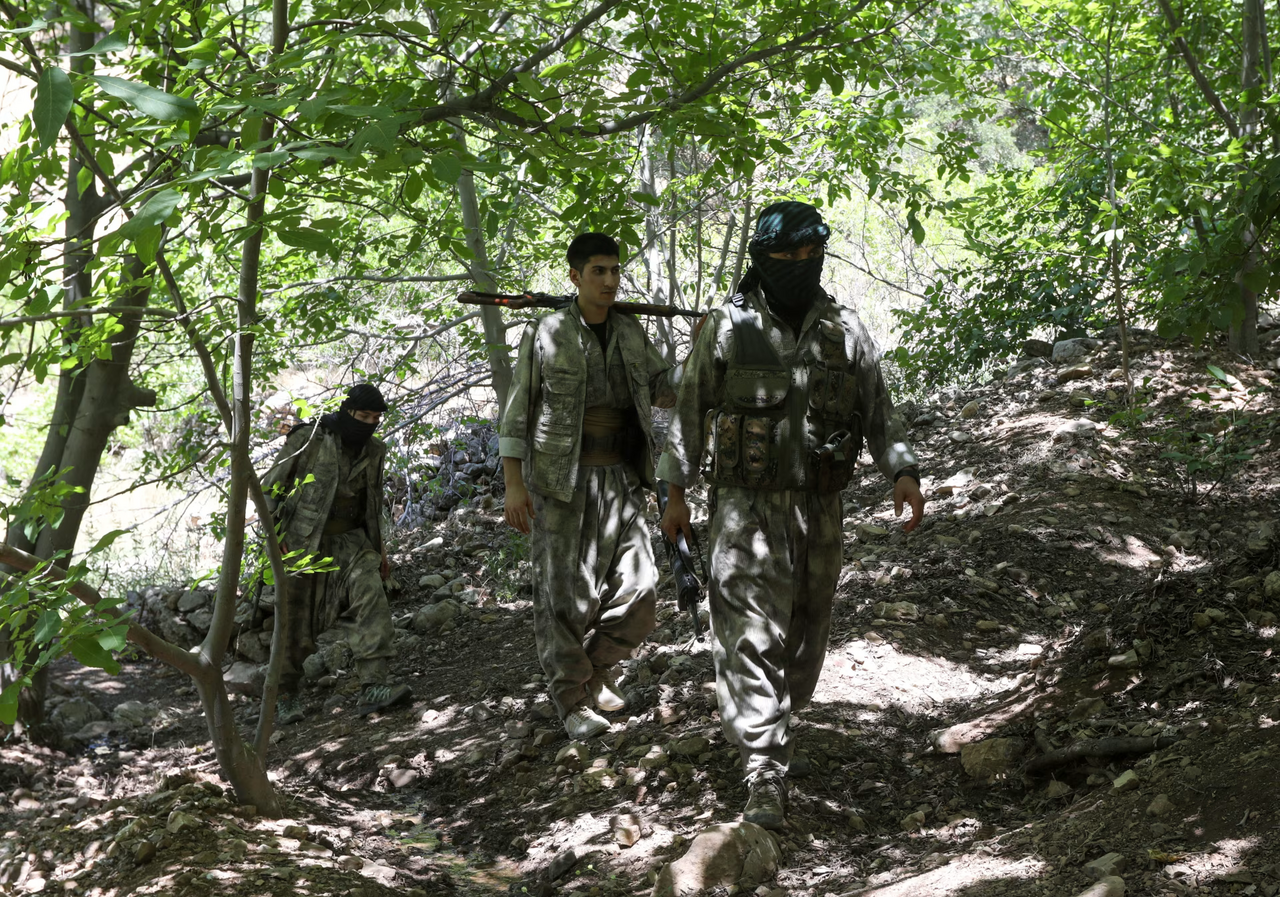
Well, the bombs fell, the Kurds stayed home, and the Islamic Republic is still there. But something has been stirring on Iran’s edges ever since, and according to a Wall Street Journal report published Thursday, it is now loud enough to count: militants in the southeastern province bordering Pakistan have carried out nearly 120 violent incidents so far this year, including 85 armed clashes, the most in at least a decade, with more than half of them since September.

Regular readers will not be shocked. We reported the killing of a Basij commander in Sistan-Baluchistan back on September 8, when the “mystery insurgents” were still a mystery, and have tracked the IRGC’s troop buildup in the Kurdish northwest since October. What the Journal adds is the tally, and the tally says the frequency has picked up materially in a regime that is already fighting the US Navy over the Strait of Hormuz, absorbing a blockade and, by Trump’s count, running 301% inflation.
Nearly 120 Attacks And Counting
Start with the southeast. The Journal, citing conflict monitor ACLED, describes militants armed with rocket-propelled grenades and heavy machine guns ambushing security patrols and hitting police and intelligence buildings in Sistan and Baluchestan, the poor, mostly Sunni province wedged against Pakistan and Afghanistan. ACLED’s count for the year is running at close to 120 incidents, 85 of which were outright firefights.

Some perspective is in order. The Journal is careful to say that the violence is local and nowhere near an existential threat to the men who run Tehran. Iran has lived with Kurdish, Arab and Baloch insurgencies since 1979, and it has outlasted all of them so far.
What has changed is the tempo, and the timing. ACLED describes the attacks as more ambitious than before, and they are landing on a security apparatus that lost a good part of its senior ranks in the spring (the Basij alone lost its national commander and, according to the IDF, its intelligence chief inside a week in March). Behnam Ben Taleblu of the Foundation for Defense of Democracies, a Washington think tank that has never met an Iran sanction it didn’t like, summed it up for the Journal with the phrase in our headline:
Ethnic insurgencies are increasingly a thorn in the side of the regime and chipping away at the Islamic Republic’s ability to project power or order.
Translation: nobody thinks the Baloch are marching on Tehran, but every IRGC battalion parked in Zahedan is one that is not guarding a missile base or a port.
From Checkpoints To Clerics
The second change is who is getting shot. For decades the border insurgencies went after local army and Guard units in the name of secession. This year the target list has moved to the people who make the regime work at street level: the Basij volunteer militia, friendly clerics and local officials.
- In September, Molavi Yousef Gargij, a Sunni cleric who backed the government, was shot outside his home. IRGC commander-in-chief Ahmad Vahidi promised revenge and pinned it on separatists he tied to Israel and the US.
- In October, a roadside bomb killed a female police deputy near Zahedan, the provincial capital. A few days later gunmen killed a commander in the women’s branch of the Basij outside her home.
- On November 3, a drive-by shooting killed another Basij commander.

Nearly all of this year’s attacks on security forces have been claimed by one outfit. Jaish al-Adl, the group formed in 2012 to fight for an independent Baloch state, has merged with smaller factions into something called the People’s Fighters Front, and it was not shy about the November 3 hit:
When you, as military forces, resort to terrorizing and suppressing ordinary citizens, or when you attack our revolutionaries…we have no choice but to punish you.
Then there is the geography, which is where this gets interesting for anyone who watches oil. Several of the recent attacks took place in Chabahar, Iran’s largest port outside the Persian Gulf, and others just outside Konarak, a major naval base. Both sit on the Gulf of Oman, on the open-ocean side of Hormuz. We have been warning since March, when Fujairah was in flames, that everybody’s Hormuz bypass would end up a target. It turns out Iran has one too, and it happens to sit in the middle of its least governable province.
It also sits next to Pakistan, which is the other half of this story. Washington has spent weeks leaning on Islamabad, Baghdad and Ankara to seal their land borders with Iran under CENTCOM’s new Task Force Iron Gate, and as we reported last week, all three have declined, with the neighbors warning that cutting about $3BN a year of Pakistan-Iran trade could itself spark unrest. So the same frontier the US wants closed to fuel trucks is wide open to men with RPGs. As one recent analysis put it, the likelier outcome here is a lawless strip next door to Gwadar and China’s CPEC corridor, which is probably not what Beijing had in mind when it sat down with Trump and Putin this week.
The Uprising That Wasn’t
To see why any of this matters, rewind to the first week of the war. On March 3 we reported that the CIA was moving to arm Kurdish forces in the hope of setting off a popular revolt, and when the IRGC promptly lobbed missiles at Kurdish camps in Iraq a day later, we assumed the obvious.
We assumed wrong, and so did Langley. Three days later Trump pulled the plug himself:
The Kurds, who had been thrown under the bus in Syria as recently as January, needed little persuading: by March 9 their leaders were telling anyone who asked that they did not trust the US enough to serve as its proxy army. US intelligence concluded two weeks into the war that the regime was not close to collapse. And in April the president offered his own post-mortem on the covert program:
We sent some guns; they were supposed to go to the people of Iran. You know what happened? The people we sent them through kept them.
Iranian Kurdish parties denied ever getting such a shipment, saying their rifles were 47 years old or bought at the market. Make of that what you will.
Fast forward to November and the northwest is active again, only with a different cast. The Journal reports that Kurdish militants are suspected in the killings of senior Basij members and an affiliated cleric, and that new groups with names like the Patriotic Youth of Kurdistan and the Kurdistan Martyrs’ Revenge Teams have popped up. Their statements are less about Kurdish grievances than about avenging the protesters killed in January’s crackdown and bringing down the government. Kasra Aarabi, who runs IRGC research at United Against Nuclear Iran (a group whose name tells you where it stands), sees a deliberate rebrand:
There is a shift in messaging. In recent communications, they said they no longer have separatist ambitions and want to work with the Iranian people.
Put differently, the separatists have worked out that “we want to carve up your country” is a poor recruiting slogan in the rest of Iran, and have switched to one that travels better.
Tehran has responded the way it usually does. As we reported on October 22, the IRGC moved artillery and hundreds of special forces into Sanandaj, Kamyaran, Marivan and Baneh, and three days later it sent drones after Iranian Kurdish rebels camped across the border in Iraq. It has not stopped the bleeding: on Tuesday the Guards buried an officer killed in Sardasht, a Kurdish town near the Iraqi border, in what the armed wing of the Kurdistan Free Life Party (PJAK) called payback for one of its own.
One Kurd who is not signing up is Bafel Talabani. The Iraqi Kurdish leader, whom Washington tried to recruit for exactly this kind of project, said last week that Iran is coming out of the war stronger, if different, and urged the US to cut a deal. He might have a clearer view of the Shaho Mountains than the think tanks do.
Tehran Blames The Usual Suspects (Who Have Not Exactly Been Shy)
Iran’s explanation for all of the above is the one it has used for 47 years: foreign hands. Foreign Ministry spokesman Esmail Baghaei said last month that the militants in Sistan and Baluchestan were following an Israeli-American plan to destabilize the borders, and in October the Intelligence Ministry announced it had rolled up three cells in Zahedan and other cities whose members, it claimed, had been trained abroad in bomb-making and assassination by US and Israeli operatives.
The Islamic Republic says this about every pothole, so some skepticism is warranted. Then again, this time the accused have largely confessed in advance. Israeli and US officials said earlier this year that they had backed ethnic rebels in the hope of toppling the regime. Trump said on camera that he tried to ship guns in through Kurdish middlemen. And Israel’s former Mossad chief boasted just weeks ago that the agency released footage of its operatives inside Iran during last year’s 12-day war on purpose, to provoke so many arrests (21,000, by his count) that Iranian counterintelligence would choke on them.
Asked by the Journal, a US official offered only that a government which killed protesters en masse in January would understandably be afraid of its own people. Which is one way of not answering the question.
Strangulation, With A Side Of Insurgency
So where does a border insurgency fit in a war that is now mostly fought with tankers, mines and Treasury designations?
Recall the sequence. The air campaign did not bring the regime down, exactly as Capital Alpha’s veteran defense analyst Byron Callan argued in the note we broke down last week in “The Nuke Question” (his full note is available to pro subs): a strategic bombing campaign can make Iranians miserable and the country poorer, but most of the military and the IRGC survives it. The proxy uprising never got off the ground. That left door number three, which Treasury Secretary Bessent opened in August when he said the goal was to collapse the regime through economic warfare, and which Trump formalized last week when he declared that the US does not need a deal and kept the blockade in place.
An insurgency in the periphery is the natural companion to a siege. It costs Washington next to nothing, it ties down Guards units and it forces Tehran to spend money it does not have on provinces that produce very little of it. It is also slow, and deniable right up until someone goes on television and admits it.
Whether the White House has the patience is another matter. When we last checked, JPMorgan’s commodity desk (available to pro subs) had it as a coin flip between more diplomacy and more strikes:

Those odds are from November 9 (and the strike branch has probably gotten fatter since). As we detailed earlier today in “Days-Long Strike Campaign On Table”, the New York Times reports that Israel is pressing for another round, Axios says the White House has asked the Pentagon how Iran would respond to each strike option, and Trump told Fox that Tehran is now looking at gas and biological weapons, while suggesting that any decision can wait for the new year:
We’re going to have a new year coming up, and we’ll see what happens after January 1. Look, if it does happen, we wipe them out.
Meanwhile the Guards declared the Strait of Hormuz closed on Sunday and keep reporting tankers on fire, which is roughly how a regime behaves when it has decided that it will not be the only one strangled.
Goldman’s Rich Privorotsky, for one, is not holding his breath for a settlement. In his Wednesday morning note (available to pro subs), the head of the bank’s EMEA one-delta desk noted that the US had just hit an Iranian missile launch site after Tehran claimed a strike on a US radar in Bahrain, and then gave his read on the diplomacy:
Oman and Qatar are still talking to Tehran. Nearly nine months in, the incentives to do a deal seem obvious, especially after the midterms. Still hard to see a path.
He also flagged that the US 3-2-1 crack spread has dropped 36% in six weeks, from $65.56 to $41.90 a barrel, even as Hormuz keeps a premium in Brent, the same crack collapse we have been covering. In other words, the oil market has mostly stopped paying for Iran headlines. A drive-by in Zahedan is not going to change that. A fire at Chabahar or Konarak might.
Thorns Don’t Topple Regimes
The honest summary is the Journal’s own: local, bloody and nowhere near fatal. The Islamic Republic has spent 47 years putting down exactly these revolts, it still has the heavy weapons, and as we noted in September, a country under attack tends to rally around the flag, which makes life harder for anyone seen as carrying a foreign rifle. Talabani, who actually lives next door, thinks Tehran comes out of this stronger.
The hawks’ case is that it adds up: a blockade, a currency in freefall, a decapitated security hierarchy and now a Basij that is being picked off at its own front doors. Maybe. But eight months of bombs and a blockade did not produce the uprising, and 85 firefights on the Pakistani border are not going to do it either. The more likely result is the one nobody in Washington is planning for, which is that the regime grinds on, the periphery bleeds, and Pakistan (and China’s very expensive corridor) inherits a frontier that looks a lot like the one Syria had in 2013.
We’ll check back when ACLED prints the December count, or when the first tanker fails to leave Chabahar, whichever comes first.
Much more in the full Capital Alpha note “Lots of Variables in Resumption of Middle East War. The Nuke Question.”, available to pro subs.