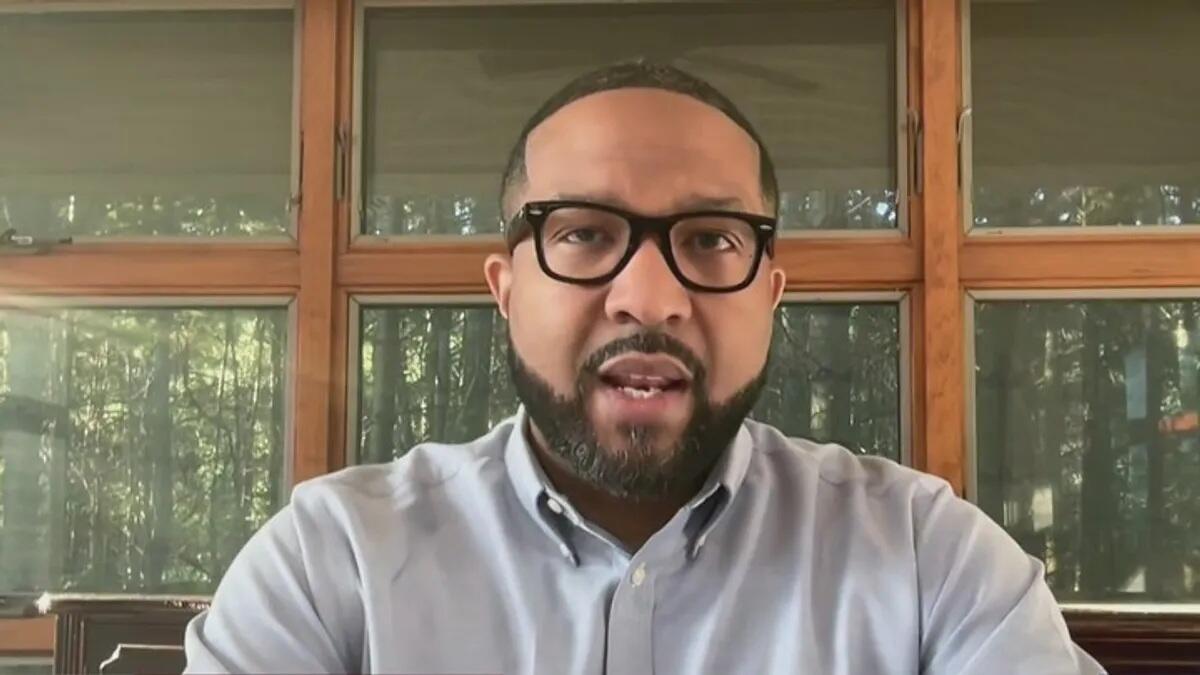
CIA Chief’s Moscow Trip Was About Iran, Not A NATO Warning: Estonia’s Ex-President
Speculation has abounded over the nature of CIA Director John Ratcliffe’s surprise Tuesday trip to Moscow and what was conveyed to top Kremlin intelligence officials.
The ‘official’ Washington narrative of what was behind the trip was issued on Wednesday in the pages of The Wall Street Journal, which laid out Ratcliffe delivered a “warning to Russia not to attack NATO countries, according to people briefed on the visit.“
Since then, media reports and pundits have mused that nearby small ‘eastern flank’ countries like Estonia, Latvia or Lithuania could be prime targets for some kind of Russian military action, at a moment Europe’s support to Kiev has steadily ramped up.
Surprisingly, on Thursday former Estonian president Toomas Hendrik Ilves (president: 2006 – 2016), who remains influential voice in the European security debate and has served on an EU task force, told a European outlet that the CIA director’s meeting was more likely centered on the Iran conflict and not on warning against attacking Europe.
Ilves in a freshly published interview with EuroNews said he had “severe doubts” that concerns over aggression against the Baltic states were the reason for Ratcliffe’s visit.
“What is the real problem for the United States right now? The real problem is Iran, the fact that the Russians are giving targeting information to the Iranians,” he said.
“Those are real problems for the United States, and that would be sufficient to warrant the director of the CIA to go to Moscow to tell them to back off.”
US intelligence and Trump officials for months have alleged that Russia is likely helping Iranian forces with identifying and locating US military assets in the region. At times throughout Operation Epic Fury, Tehran appears to have even targeted CIA stations.
The bulk of American military assets and bases in the Gulf countries have suffered severe damage earlier in the conflict, resulting in a Pentagon troop drawback to safer areas. This is indeed a big deal if it is the case that Russia or China (or both) have handed the Iranians intel to help push back American bases and forces.
Former Estonian leader Ilves further explained that in reality there had been “no change in the US’s threat assessment for the Baltic states.”
Yesterday CIA Director John Ratcliffe traveled to Moscow. The visit was brief but quickly fueled widespread discussion and speculation.
Official statements from Russia and Washington remain silent on the reason for the trip. Details about his counterparts remain unavailable as… pic.twitter.com/0W7t0i72Pq
“If the purpose was to go and genuinely tell the Russians not to do anything in the Baltic states, as was claimed, then there would be some kind of activity here,” he underscored.
Also, Estonian Foreign Minister Margus Tsahkna announced Thursday that the country’s threat assessment had “not changed”. Tsahkna said: “We remain vigilant, but Estonia’s threat assessment has not changed.”
Ilves concluded in his comments that the official narrative is but cover for the real reason underlying Ratcliff’s visit.
Skepticism has been widely voiced among independent journalists and pundits:
CIA chief urgently flew to Moscow in the middle of America’s losing war against Russia’s ally Iran, and the reason had nothing to do with a desperate attempt to turn Russia against Iran, but rather “Putin could try…limited assault on an allied country in the next few years”? 🤔 https://t.co/WmNYnGstfo
“I don’t think it’s a false flag, but rather just kind of make something up to divert attention from what is the real problem that the US faces right now,“ the Estonian ex-President said.
A street interview doing the rounds this week encapsulates the entire European open-borders agenda in under two minutes.
Older Spaniards nod along when asked if they would welcome a migrant into their home, saying it would make for a much better system if everyone did so.
Solidarity, humanity, of course. Then the interviewer produces a real migrant looking for a home and suddenly everything changes.
Funniest thing I’ve watched this week.
Boomers in Spain get asked if they’d accept a migrant into their home. They say yes. Chad offers them one. And instantly, they change their mind. pic.twitter.com/2ruX39i0Mh
The interviewer presents the couple with a Nigerian man named Sony who plays guitar on the pavement for small change – and their previous answers collapse into excuses, holidays, “not right now,” and finally “no, no, no, no, no.”
The clip, shared by Casey Krol and filmed in the Rescue You style, is the kind of unscripted moment the official narrative cannot survive. Abstract empathy and virtue signalling is easy, but when the reality of the situation is presented, everything is turned on its head.
The couple in the video are not monsters. They are ordinary people who have absorbed years of hectoring lecturing and know the approved answer. They just refuse to live it.
The same pattern repeats at every level in Europe: politicians, NGOs, and detached citizens demand that someone else absorb the costs of mass low-skilled inflows while they keep their own postcodes intact.
Spain’s socialist government has spent years selling the opposite message. Prime Minister Sánchez has called migration “one of the great engines of national development” and an “act of justice and a necessity.”
He has framed legalization as recognition that hundreds of thousands already “form part of our everyday lives.” Globalist Alex Soros praised him for it, saying Sánchez showed “what real leadership looks like” and “We need more elected leaders like him.”
The public has not bought it wholesale. A Sigma Dos poll for El Mundo found 70 percent of Spaniards support mass deportation of illegal immigrants – including 57 percent of PSOE voters. Only the far-left Sumar base rejects the idea.
The latest explosion for Spain came at the end of July when more than 70,000 people poured into the tiny North African enclave of Ceuta from Morocco in two days. Beaches, schools, and parks filled with tents, waste, and disease. Scabies, measles, and tuberculosis appeared among police and residents. Locals described playgrounds and sand turned into shit covered slums.
The chaos did not stay in Ceuta. Boats began hitting mainland tourist coves. In Cartagena, dozens of military-age men leapt onto a packed beach in full view of families. Mayor Noelia Arroyo said: “This cannot be normalised. We cannot accept that human trafficking mafias have such an easy time reaching our shores.” Former mayor Francisco Bernabe asked how a boat that size evaded radar: “Are they broken? Do they have them turned off?”
This week the tension in Ceuta boiled over again. Residents marched on the migrant camp at El Trampolín beach, tore down tents, and threw belongings into the sea. Police fired warning shots to keep the two groups apart. The city of 84,000 has been told to absorb what Madrid will not remove.
?? Ceuta residents have taken to the streets to protest the Spanish government’s handling of the migration crisis and demand the removal of migrants from public areas.
Sánchez oversaw a royal-decree regularization – no parliamentary vote – sold as covering 500,000 people. Applications blew past one million. Successful applicants get residence, work permits, benefits, and a path to citizenship that opens the entire Schengen zone.
The paperwork tsunami was immediate. Thousands of military-age men queued at consulates and registry offices in Madrid, Barcelona, Seville, Valencia, and Almería. Some camped overnight.
Others climbed embassy walls when appointments ran out. Union officials warned of collapse.
One municipal delegate said daily social-service requests in Madrid jumped from 1,500 to 5,500. Vox’s Santiago Abascal called it an accelerating “invasion.” Polish MEP Anna Bry?ka said left-wing governments were “bringing about the collapse of the Schengen Area and mocking the safety of Europeans.”
When patriots protested the amnesty, they were met by socialist counter-mobs.
The labor market tells the same story. Foreign-born workers now hold 52.6 percent of unskilled construction jobs and outnumber Spaniards in those roles. Since 2019 the sector has lost more than 22,000 Spanish workers and gained 238,000 foreign ones. Bricklayers, plumbers, and electricians show the same slide. Spain’s youth are not replacing the retiring generation; imported labor is.
Meanwhile, foreigners commit five times more rapes and four times more murders per capita than Spaniards. In Catalonia, 91 percent of convicted rapists are migrants, who make up 17 percent of the population. Reported rapes in Spain rose 322 percent in a decade. Penetrative rape cases more than doubled between 2019 and 2024.
The streets have turned into blood baths. Recently, a North African migrant shouted “Allah” while stabbing a young woman to death in Esplugues de Llobregat; a 58-year-old man who tried to intervene was also attacked.
The same weekend produced more stabbings and a shooting.
A man employed to evict migrant squatters was lynched and stabbed by a mob.
A Gambian migrant stabbed a police officer while shouting “Allahu Akbar.”
A repeat offender stomped a local man’s head.
Citizens rioted after an elderly man was beaten.
And on and on and on.
Many of the “unaccompanied minors” driving the migrant numbers are not minors at all. In Madrid, 70 percent of those tested by bone-age X-ray were adults. The same fraud appears across Europe.
Seventy percent of the country already knows the solution is removal, not more lectures about housing the next arrival.
The people who designed this system will keep calling it compassion. They will keep living somewhere the consequences do not reach. Ordinary Spaniards are the ones facing the dire fallout.
Your support is crucial in helping us defeat mass censorship. Please consider donating via Locals or check out our unique merch. Follow us on X @ModernityNews.
Former Chinese Premier Zhu Rongji, the hard-edged reformer who engineered China’s rise from planned-economy backwater to global manufacturing giant, died this month at the age of 97.
His legacy-tax centralization, mass layoffs, China’s accession to the World Trade Organization (WTO), and a brief, forgotten moment of tolerance toward Falun Gong-now stands as both the foundation of modern China’s wealth and a stark reminder of how easily that progress can be reversed.
Zhu’s Legacy of Economic Reform
After the decade-long Cultural Revolution pushed the regime to the brink, then-Chinese Communist Party (CCP) leader Deng Xiaoping pivoted China toward market reforms. He relied on pragmatic trial and error rather than a rigid master plan, describing his step-by-step approach as “crossing the river by feeling the stones.”
Zhu executed that vision. As vice premier and premier from 1991 to 2003, China’s “economic tsar” used iron-fisted reforms to engineer the country’s rise, including restructuring fiscal policy, dismantling inefficient state-owned enterprises, and securing China’s entry into the WTO.
Zhu was officially credited with advancing China’s landmark tax-sharing reform in the 1990s, which centralized much of the country’s tax revenue in Beijing. That reform undeniably strengthened the central government.
However, it stripped local governments of steady tax income, forcing them to rely on selling land to fund local budgets. Paired with state ownership of land, this shift created a “land-finance” model that drove housing prices sky-high and triggered today’s ongoing property crisis.
It isn’t the tax reform alone that is to blame. China’s system of state and collective land ownership is what enabled large-scale land sales in the first place.
The obituary also praises Zhu for safeguarding Hong Kong’s status as a global financial center. Ironically, Hong Kong’s diminished standing today stems largely from policies adopted under CCP leader Xi Jinping-making praise for Zhu an implicit rebuke of China’s current leadership.
WTO Entry-and Its Costs
One of Zhu’s most consequential achievements was leading China to join the WTO in 2001.
To prepare the country for global trade, Zhu aggressively restructured inefficient state-owned enterprises. While this boosted efficiency, it triggered mass layoffs, displacing tens of millions of workers.
Unlike post-Cold War America, China’s nascent private sector was too weak to absorb the surge of unemployed labor.
The aggressive restructuring stripped millions of workers of their livelihoods, leaving them with virtually no safety net. While the reforms eventually sparked massive economic growth, the workers who bore the cost were largely left behind without fair compensation.
The Premier Who Called Out Shoddy Construction
When the Yangtze River dikes failed during the 1998 summer floods, Zhu inspected the breach in Jiujiang, Jiangxi Province, and discovered that the construction had cut corners and used shoddy materials. Furious, he publicly denounced the dam as a “bastard project” and dubbed it a “tofu-dregs project”-comparing the crumbling concrete to the brittle, worthless pulp residue left over from making soy curd.
As long as corruption remains a recurring public concern in China, the term “tofu-dreg project” will likely remain part of the country’s political vocabulary and a defining mark of Zhu’s legacy.
The Premier Who Listened-Meeting With Falun Gong
One episode stands apart from Zhu’s economic legacy. In the late 1990s, Zhu and the entire Politburo Standing Committee opposed then-CCP leader Jiang Zemin’s decision to suppress Falun Gong, according to insider accounts.
On April 25, 1999, roughly 10,000 Falun Gong practitioners gathered peacefully near Zhongnanhai, the CCP’s headquarters, in Beijing to petition the authorities for freedom of belief. Earlier in the month, dozens of practitioners in Tianjin had been detained by local police for their faith.
In a bold move for an official, Zhu met directly with representatives, listened to their grievances, and ordered the release of the detained practitioners, along with an assurance that practitioners would have a lawful environment in which to pursue their practice.
The spiritual discipline was introduced to the Chinese public in 1992 and gained widespread popularity, attracting at least 70 million practitioners by the late 1990s.
At an internal leadership meeting the following day, according to insider accounts, Zhu suggested that suppression would harm the country’s image and that the regime should leave Falun Gong practitioners alone. Jiang, afraid of the practice’s growing popularity, responded that doing so would bring down the Party.
Months later, Jiang launched a sweeping, nationwide campaign against Falun Gong-initiating a persecution that continues today.
Reform Can Be Reversed Overnight
Zhu’s death cast an unexpected shadow over Xi’s plans to commemorate Jiang with unusually high political honors, an effort intended to elevate Jiang alongside the CCP’s founding generation. Instead of highlighting Jiang’s legacy, Zhu’s passing reminded the public that the reforms of China’s most prosperous era owed far more to Zhu.
It was Zhu who was behind Deng and the CCP in launching the Shanghai Stock Exchange in December 1990-now a global financial powerhouse that hosts major state-owned enterprise listings.
Although Zhu was the official most responsible for driving China’s reform era, Xi’s policies have now largely dismantled that work. That contrast reveals the ultimate lesson of Zhu’s legacy: under totalitarian rule, no amount of reform is secure-it can all be undone overnight.
FDA Clears Blood Test To Detect Signs Of Alzheimer’s Disease
Federal regulators have cleared a blood test aimed at detecting signs of Alzheimer’s disease.
The Food and Drug Administration cleared a blood test known as Elecsys pTau-217 for people aged at least 55 who have shown signs of, or have been complaining of, cognitive decline, Roche announced on Aug. 24.
The test, which can be used by primary care doctors and specialists, detects a biomarker called plasma phosphorylated tau 217. In a study that ran from 2004 to 2025 and was published in JAMA, researchers found that higher levels of the biomarker were associated with an increased risk of progression to cognitive impairment.
As Zachary Stieber reports via The Epoch Times, the FDA has previously approved several other tests for Alzheimer’s, beginning in 2025 with a test from Fujirebio Diagnostics that measures both pTau217 and another protein. Roche said its test is the first to measure a single biomarker.
“Elecsys pTau217 has the potential to transform how Alzheimer’s is assessed across primary and specialty care,” Dan Malarek, president and CEO of Roche Diagnostics North America, said in a statement.
“This kind of innovation can help bring diagnostic evaluation closer to patients and give clinicians greater confidence in determining the right step in their care.”
Alzheimer’s is a brain disorder that destroys a person’s memory and thinking skills over time. People with the disease gradually become unable to perform tasks such as eating and walking. Many people begin experiencing symptoms such as memory difficulties between the ages of 60 and 70.
The Alzheimer’s Association and other groups have welcomed the tests as a less invasive option than other methods, such as testing of cerebrospinal fluid.
“Each FDA clearance gives clinicians another validated option to work with when evaluating patients showing signs of cognitive impairment,” Maria C. Carrillo, the association’s chief science officer and medical affairs lead, said in a statement.
“That’s real progress for a field that, for decades, had far too few tools to offer.”
Dr. Carole Ho, executive vice president and president of Lilly Neuroscience, which helped develop the test, said in a statement that “for millions of families navigating the uncertainty of Alzheimer’s disease, a timely diagnosis is the first and most critical step toward meaningful care.”
Labcorp and Quest Diagnostics said they will carry the new test.
Once ordered by a doctor, patients can have their blood drawn for the test in a doctor’s office, a Labcorp service center, or a Quest center.
On a Sunday night in late July, Brazil’s Luiz Inácio Lula da Silva and China’s Xi Jinping spoke for more than an hour. It was cordial and faintly triumphant, with the two governments announcing their intention to accelerate a long-stalled China-Mercosur trade agreement. Alongside this, there are plans to deepen cooperation on satellites and critical-minerals processing, and waive short-stay visa requirements.
This marks a serious change for Brazil. For years, it was Brasília that had spearheaded all resistance to exactly this sort of deal within the Mercosur bloc. The reversal was as sudden as it was shocking, taking only a fortnight to emerge, following a new American tariff taking effect and the Brazilian president deciding that the cost of alignment with the United States had, at last, exceeded its benefits.
Confronted with a United States that has moved from partner to antagonist, Brazil sees itself as neither retaliating in kind nor capitulating; it is hedging, deliberately, on several fronts at once. For many observers, this is a rational reaction to the emergence of an increasingly multipolar world. But just under a century ago, this practice had a name: “pragmatic equidistance.” It was the way Brazil described its international strategy of balancing relationships with competing powers without committing to either.
The ongoing and escalating international trade war fueled by retaliatory tariffs has been the main catalyst here. In late July, a 25% tariff covering a broad range of Brazilian goods came into effect; per the Brazilian National Confederation of Industry’s reckoning, nearly half of all Brazilian exports to the United States are now subject to some form of additional duty. Alongside the general tariffs, a “forced-labor” levy of 12.5% was introduced by the US to enforce bans on importing goods made with forced labor abroad, which in many ways represents a globalization of America’s existing ban on Chinese goods using forced labor.
It is estimated that the hardest-hit goods carry a combined tariff of 37.5%.
President Lula’s response has been to reframe the introduction of these tariffs as Washington’s error rather than Brazil’s, calling the tariffs a “strategic mistake” in the Washington Post, and warning that the tariffs will drive Brazilian firms to replace their American suppliers with partners elsewhere.
The rhetoric is only part of it, though: Brazil has filed for consultations with the World Trade Organization to challenge both the broad tariffs and the forced-labor levy as breaches of the 1994 General Agreement on Tariffs and Trade (GATT). The effectiveness of these consultations is up for debate given the WTO’s general paralysis, but what matters more is what this reveals for Brazil’s international-relations strategy: it is pragmatic equidistance on display. Brazil has filed the complaint with the WTO, while continuing negotiations with the US.
Meanwhile, Brazil is attempting to hedge its bets by engaging with the wider global economy. This month, ApexBrasil (the Brazilian Trade and Investment Promotion Agency) has launched a R$105 million ($20.5 million) program to support just shy of 2,500 exporters across 57 industries in their search for new markets, including the EU, Southeast Asia, and Central Asia.
Simultaneously, the Mercosur bloc is actively pursuing parallel deals with India, Japan, and Canada, with Brazil at the heart of this strategy. Lula has enacted the Mercosur-Singapore agreement, the bloc’s first with a Southeast Asian economy, under which Brazilian exports will progressively enter duty-free.
What is also interesting is what the imposition of these tariffs has meant for Lula at home. Many Brazilians read the tariff regime as a direct attempt to influence the Brazilian elections that are due to take place in October 2026, which in turn has allowed Lula to cast himself as a defender of Brazil’s sovereignty against foreign interference. This strategy has borne fruit: Lula’s polling has remained steady in the mid-40s, while Flávio Bolsonaro-the only other major contender-has seen his popularity steadily decline since April 2026, meaning Lula’s lead has slowly widened.
Most notable, however, is Brazil’s attempt to sidestep all of this via improved trade relations between the Mercosur bloc and China. Of course, Mercosur is a customs union, and so all members must negotiate jointly-which is why a proposed China agreement has been formally proposed and “under study” since around 2017. In this, Brazil had been the brake, while Uruguay had spent years advocating for the trade agreement, and pursuing its own China talks whilst the other Mercosur members stalled.
In January 2023, Lula traveled to Montevideo to argue that Mercosur should secure an EU deal first, and only then negotiate with China. With this deal signed in Asunción in January 2026-after 26 years of negotiations-and coming into effect in Brazil in April, the roadblock had been cleared. At least, on Brasília’s end: Argentina’s President Javier Milei is ideologically opposed to China, and will likely veto any deal pursued by Mercosur. China is already Brazil’s largest trading partner, with bilateral trade valued at $188 billion, and a deal could meet Brazil’s other strategic interests, such as widening agricultural access.
Regardless, Brazil has been hedging its international trade relations with careful maneuvering, and in the long run, this may be the smart move.
Jury Weighs Whether “Darn Good Mother” Lindsay Clancy Is Criminally Liable For Murdering Her 3 Kids
Jury deliberations in the Lindsay Clancy murder trial started on Aug. 27 after five weeks of testimony.
Clancy, a former labor and delivery nurse, is accused of killing her three young children while her now-ex-husband was running errands in January 2023.
The 36-year-old mother faces three counts of first-degree murder, one for each child: Cora, 5, Dawson, 3, and 8-month-old Callan.
Judge William Sullivan gave the jury the option to instead consider second-degree murder or manslaughter.
Only a few hours of deliberations happened before Sullivan ordered a recess until 9 a.m. on Friday at the Plymouth Superior Court in Plymouth, Massachusetts.
No verdict was reached on Thursday.
In his closing argument on Aug. 27,Jacki Thrapp reports for The Epoch Times, that defense attorney Kevin Reddington urged jurors to find Clancy not guilty by reason of insanity, alleging that “her mind was gone” during the killings and said she was in the throes of postpartum psychosis.
“This young lady is not guilty of the killing of her children because she was suffering from a disease and defect, as his honor instructed you,” Reddington told jurors in closing arguments.
“And they’re not going to be able to prove otherwise.”
Additionally, Reddington describved the accused murderer by saying: “This young lady did nothing wrong in her life. She was… a darn good mother.“
Lindsay Clancy’s defense attorney:
“This young lady did nothing wrong in her life. She was… a darn good mother.” pic.twitter.com/mL03GAuHlg
Clancy admitted to strangling her kids with exercise bands in the basement of their home in a coastal Boston suburb, slicing her wrists and neck with a knife, and jumping out of a window in a failed suicide attempt, which left her paralyzed.
Her now-ex-husband, Patrick, said that months before the incident, the mother told him she was having thoughts of suicide and harming their kids.
Clancy was also prescribed medications and checked into a psychiatric hospital ahead of the incident.
Her then-husband testified that Clancy had a “normal” demeanor when he left to run errands that day.
When he returned, he found his injured wife, who informed him that the kids were in the basement.
Clancy detailed what happened in a call with him a week after the incident, he said.
“She heard a man’s voice telling her that if she didn’t do it now, she would lose her chance or something like that,” he testified.
Prosecutors acknowledged that Clancy suffered from mental health issues but said she carried out the killings while knowing it was wrong.
“This case is not about our mental health system or how it treats women,” Assistant District Attorney Jennifer Sprague told jurors.
“That’s a distraction to get you angry and passionate about an important issue, but an issue that’s not on trial here.”
Clancy faces life in prison with no possibility of parole if she is convicted on any of the first-degree murder charges she faces.
States are racing to reduce faulty payments to food stamp recipients, in a bid to avoid penalties included in the signature budget bill passed by Republicans last year.
Starting in October 2027, states with payment error rates of 6 percent or higher must cover 5, 10, or 15 percent of SNAP benefit costs, depending on the payment error rate.
Even though the deadline is more than a year out, enrollment in the program has dropped by more than 5 million recipients as a result of the stricter rules, according to Agriculture Secretary Brooke Rollins.
Forty-one states and the District of Columbia made improper payments of more than 6 percent in 2025, according to the Department of Agriculture. Nearly half of states will have to pay more than $100 million in penalties, according to publicly available federal data.
Just nine states fell below the 6 percent error threshold in the 2025 fiscal year: Idaho, Iowa, Kentucky, Nebraska, South Dakota, Utah, Vermont, Wisconsin, and Wyoming.
Four states are considering dropping the food stamp program entirely as a result of the new rules, according to a survey by the American Public Human Services Association.
California, New York, and Florida would be responsible for more than $1 billion in SNAP costs if they failed to reduce their rates of erroneous payments. Texas would owe around $750 million.
For several states, however, a provision in the One Big Beautiful Bill delays the cost-sharing requirement for an additional two years. Nicknamed “the Alaska Carveout,” the provision allows states with improper payment rates of 13.34 percent or higher in fiscal 2025 to put off the cost-sharing requirement until fiscal 2029.
Similarly, states exceeding that threshold in fiscal 2026 can put off cost-sharing until fiscal 2030.
In addition to next year’s deadline, beginning this October, states will bear 75 percent of the costs to administer the food stamp program.That’s up from the 50 percent share paid by states since the program was started in 1964.
The tighter rules address a “financing mismatch” in the food stamp program, according to the Cato Institute, a policy research organization. For decades, states have processed SNAP applications and distributed benefits, while financial consequences have fallen overwhelmingly on federal taxpayers. That gives states little incentive to control waste and prevent fraud.
SNAP payment errors totaled more than $10 billion in 2025. More than 87 percent of that amount was due to overpayments.
SNAP is a federally funded program, administered by the states, that provides food benefits to low-income families. In 2025, federal taxpayers spent about $103 billion on SNAP benefits and nearly $7 billion in administrative fees.
With an overall error rate of 10.6 percent, nearly one in nine food stamp allotments went to an ineligible recipient or was paid in the wrong amount.
State agencies made improper payments mainly because they did not verify recipients’ eligibility criteria, such as citizenship, employment, finances, identity, residency, and household size, before making a payment, according to the Government Accountability Office.
Although the 2025 error rate decreased slightly from previous years, it still showed “significant waste” at the state level, according to a June statement from the Department of Agriculture.
Errors can stem from either state agencies or recipients. While state agencies can make mistakes when updating recipient information or processing payments, recipients may also forget to report income changes or additional family members.
Those are “honest mistakes” rather than intentional fraud, the Center on Budget and Policy Priorities said in a July report. Even so, the errors prove that “state accountability is severely lacking in SNAP,” Rollins said in a June statement.
After the One Big Beautiful Bill Act took effect in July 2025, participation in the food stamp program dropped 12 percent-more than 5 million-to 37 million this April, according to Department of Agriculture data released in July.
Rollins attributed the decline to the administration’s crackdown on fraud and ineligible recipients.
The downward trend may continue, as 11 states reported that they may narrow eligibility policies when costs change.
State Response
Error rates might not reflect the true picture of how a state distributes money, historical reports suggest.
A 2015 audit by the Office of Inspector General found that states hired outside consultants and error review committees to mitigate individual errors identified by quality control, rather than addressing the root causes of eligibility inaccuracies.
And in 2014, the Department of Agriculture could not validate state-reported error rates in 42 of 53 state agencies because of date-quality issues.
Nonetheless, a July survey of 39 states from the American Public Human Services Association found that agencies across the country are “working incredibly hard” to reduce error rates by addressing root causes.
States reported that they will invest in workforce training, root-cause analysis, and technology upgrades to improve payment accuracy.
Virginia, which would face 15 percent cost-sharing based on its 2025 errors, has stopped self-attestation of eligibility since the One Big Beautiful Bill Act passed.
It previously allowed applicants to self-report expenses and incomes.
Louisiana is offering a $1,500 bonus to staff who maintain an error rate of 4 percent or lower.
The agency is also automating checks on household income to reduce unintentional errors, which account for 62 percent of the state’s inaccuracies, according to the think tank Invest in Louisiana.
Mississippi is updating its 35-year-old eligibility systems to ensure program integrity, according to the Mississippi Department of Human Services.
Minnesota is investing millions of dollars to modernize decades-old technology used to administer state programs, according to the Minnesota House of Representatives.
Each change suggests that new financial accountability rules are making a difference, according to the American Enterprise Institute.
The American Public Human Services Association survey reported trade-offs for increased accuracy, including timeliness of benefit payments and a delay in EBT chip card implementation.
And four states indicated that they may drop out of SNAP altogether or pause participation in the program as a result of the cost-sharing provisions. The survey report did not disclose which states are considering dropping out of the program.
The American Public Human Services Association did not respond to a request for comment.
The ‘Alaska Carveout’
Under the One Big Beautiful Bill Act, states with error rates at 13.34 percent or higher will secure a two-year delay in cost sharing. The “Alaska Carveout” provision was negotiated and secured by Sen. Lisa Murkowski (R-Alaska) prior to voting on the budget bill.
In a July 2025 letter to Alaskans, Sen. Dan Sullivan (R-Alaska) said the state had worked hard to include delayed cost-sharing in the act because it had the highest payment error rate in the country.
The provision currently affects six states and the District of Columbia. Those include Alaska, New Mexico, Delaware, Georgia, Illinois, and Oregon.
But the exemption may precipitate a reverse effect by rewarding the worst-performing states while penalizing those working to reduce their error rates, according to a July report from the Cato Institute.
To delay penalties, states could slow efforts in correcting errors and keep improper payment rates elevated, according to the think tank.
Data Sharing
In an effort to overhaul fraud, waste, and abuse in government programs, the Trump administration is pushing to codify data sharing between states and the federal government.
“We need to know where your tax dollars are going, and if the state of California and the state of New York aren’t going to tell us, we need Congress to force them to tell us,” Vice President JD Vance told a fraud task force roundtable on Aug. 5.
Technological verification and data-sharing measures can solve the majority of integrity problems in government programs, said Stephen Miller, White House deputy chief of staff for policy.
Mayor Of Indiana City Claims Race Discrimination After Delayed Utility Repairs
If a group’s entire world view is built on the notion that they are perpetual victims because of their race, every time something bad happens to them they are going to go looking for racism as the scapegoat. In other words, they are going to see “racism” under every rock and behind every tree. They will even see racism in a power outage.
When it come to the black community in the US, though, most of the bad things that happen in their neighborhoods are directly caused by their own behavior.
In mid-August a powerful windstorm hit northwest Indiana. Gusts reached around 99 mph in Gary, comparable to a Category 2 hurricane. The violent weather toppled trees onto lines, snapped hundreds of poles, and damaged transmission structures and substations.
The repairs have been difficult and slow moving. This week NIPSCO (the Northern Indiana Public Service Company) reported that 99% of customers in the region had their power back, however, Gary Mayor Eddie Melton (Democrat and mayor since 2024) took to the left-wing media to make political hay out of the incident.
In an interview with far-left activist “journalist” Don Lemon, the mayor answered in the affirmative when asked if he thought the large black population of Gary was the reason the utility companies were slow to finish repairs, suggesting that there was a racial element to the city’s longer wait time.
After a heavy storm in Gary, Indiana, the mayor went on the Don Lemon show and implied that the power was off for 13 days because of racism because Gary is a predominantly black city.
But, the electric company, NIPSCO, claimed that they were being shot at while they were trying… pic.twitter.com/ZfPUpU84VD
Other media outlets also asserted that Gary was being singled out for slower repairs because of the community’s 75% – 80% black population; comparing the event to the disastrous FEMA response to Hurricane Katrina in New Orleans. Indiana Governor Mike Braun (a Republican) has called for an investigation into the two week power outages in some areas of the state, though he has not supported any arguments of racial discrimination.
The delays in Gary can be easily explained by simply asking NIPSCO and checking with local police: The company had to hold off on repairs and find extra security for their line workers after scouts identifying damages were shot at in a predominantly black neighborhood. At least one NIPSCO vehicle was hit multiple times by gunfire and the workers pulled out of the area.
Police were called to the scene but never found the shooters. This news was widely reported, yet the Gary Mayor and the left-wing media have apparently ignored it.
As a result of the attack, the city had to coordinate with city police, Indiana State Police, and state officials to ensure crews were protected during the restoration process. The city added that ISP sent additional troopers to assist local forces. This takes time and adds extensive delays.
In other words, the violence inherent in black neighborhoods led to their own suffering. The inability to behave, even during a grid-down crisis, made it impossible for work crews to do their jobs.
The opportunism of activist politicians looking for racial victim-points is a dying business. Americans have had enough of race hysteria, BLM and the eternal quest for minority handouts and pity. Mayor Eddie Melton and agitators like Don Lemon will likely be dragged by the public for their behavior here.
That said, the crisis represents yet another example of leftist activists deliberately jumping to conclusions. They are so desperate to make the public believe “systemic racism” is real that they are willing to agitate and exaggerate for the sake of narrative. Eventually, they will end up creating the very anti-minority sentiment that they claim to be fighting against. Keep accusing people of racism after they tried to help you, and they will stop helping you.
Aspects of the Trump administration’s energy policy – such as the rollback of Inflation Reduction Act tax credits, the introduction of new tariffs and offshore wind lease buybacks – could cause the U.S to lose between 390 GW and 540 GW of new wind, solar and energy storage capacity over the next decade, according to projections from the Natural Resources Defense Council.
“Crucially, these lost projects are not actually replaced with other sources of new power,” the NRDC said in a Wednesday report. “At most, only 9 GW of additional gas capacity is added with Trump’s policies in place.”
The report cited near-term supply chain bottlenecks for gas turbines, volatile fuel prices, “and the general cost-competitiveness of new renewables relative to gas” as reasons for the NRDC’s low estimate for new additional gas investment.
An August report from Global Energy Monitor counts 189 GW of gas-fired capacity currently in the announced, pre-construction, and construction phases in the U.S., a number which “nearly doubled” in the first half of the year, “but uncertainty persists about how and when this capacity gets built.”
“Two-thirds of gas-fired capacity in development globally, and more than half of projects tied to data centers, do not have a named turbine/engine manufacturer,” Global Energy Monitor said. “Nearly one-quarter of projects earmarked for data centers do not have a named start year. Turbine supply constraints, financing uncertainty, local data center moratoriums, and mounting public opposition leave the true scale of the gas power buildout uncertain.”
Amanda Levin, NRDC’s director of policy analysis, said during a Tuesday press call that the group’s modeling still anticipates “significant growth in renewables under this administration. But we don’t go nearly as far, and we lose more than half of everything that we expected to be able to build with the combination of market forces and proactive policy.”
Both Levin and the Global Energy Monitor report noted that due to order backlogs for gas turbines for combined-cycle plants, developers who need to bring firm power online quickly are turning to alternatives like simple-cycle or reciprocating engine plants, which “are less efficient than combined-cycle plants and carry higher emissions per unit of electricity generated,” Global Energy Monitor said.
The trend “highlights actually the value of these types of standards … which is that the market is not acting in a perfectly rational economic way,” she said. “These types of regulations could prevent this type of highly polluting type of power generation by requiring us to think about how we are building out this gas that we’re trying to build over the next few years to meet this growing load.”
The NRDC’s report also forecast an increase in power costs due to a need to “rely more heavily on the existing, higher-cost legacy fossil fuel system” in absence of new renewables generation. The power sector will spend $5 billion to $15 billion more on fossil fuels, the NRDC said, while claiming $45 billion less in IRA tax incentives, relative to the group’s January 2025 Snapshot case.
“By 2035, average household electricity rates are projected to increase by an additional 4.2% to 5.5% nationwide, relative to the January 2025 Snapshot case,” the NRDC’s report said.
Your Tax Dollars At Work: Georgia Teacher Creates ‘Fart Corner’ In Classroom, Calls It The ‘Gas Station’
An Atlanta elementary school teacher has created a designated “fart corner” where students can pass gas without leaving class or interrupting lessons, according to NBC.
Second grade teacher Candy Sydney Browning calls the area the “gas station,” while the specific spot is known as the “gusty winds area.” Students can quietly get up, walk to the corner, take care of business and return to their seats without asking permission.
Sydney Browning came up with the idea after noticing that bathroom trips and students reacting to classmates passing gas were taking time away from lessons. She had already started encouraging students to use the restroom before lessons so they would not need to leave as often. Passing gas, however, created another distraction. Students would point fingers, move away from one another and announce who they thought was responsible.
Rather than treating it as something embarrassing, Sydney Browning wanted students to understand that passing gas is simply a normal bodily function. “It’s normal,” she told them. “But you have to excuse yourself.” Creating a specific area gave students a discreet way to do that without stopping the lesson.
They do not need to raise their hands or ask for permission, which means Sydney Browning can continue teaching while the student briefly steps away.
NBC writes that the idea soon became a normal part of classroom life. Sydney Browning said the first student to use the station attracted a few smiles and curious looks from classmates. However, no one pointed fingers or made fun of him, and eventually students stopped paying attention altogether.
“It just became a norm,” she told TODAY. She said the station has become so ordinary that she sometimes forgets it is even there.
After Browning shared the setup on TikTok, the unusual classroom rule received widespread attention. Thousands of viewers reacted to the idea, with some praising it as a clever way to normalize bodily functions while keeping students focused. Several teachers said they wanted to introduce similar areas in their own classrooms, while others shared that they already had their own versions of a designated fart area.
Not everyone was convinced. Some commenters worried that students who use the corner frequently could feel embarrassed or become targets for teasing. Others questioned whether children could really ignore a classmate walking across the room specifically to pass gas. Sydney Browning believes making the practice routine is exactly what prevents it from becoming a bigger issue. When adults and students stop treating it as something shocking or funny, it becomes less interesting.