America’s Top War Unicorn To Begin Combat Drone Production As Next-Gen Startups Challenge Big Defense Primes
Weaponized AI, interceptor drones, automated kill chains, ground robots armed with machine guns, humanoid robots, and FPVs equipped with shaped charges all offer a scary preview of what warfare in the 2030s was expected to look like.
Instead, four years of war in Ukraine, followed by the U.S.-Iran conflict, have sharply accelerated that timeline, pulling the future of warfare into today. These are truly frightening times, as defenses against this technology are still lacking across the West (Amazon found that out with its data centers bombed).
We warned about this drone threat exactly one month before. Wall Street analysts largely missed it because their framework remained fixated on climate change nonsense rather than properly assessing real-world incoming risks. They get paid the big bucks, yet still fail to see actual threats.
On the positive side, the U.S. Department of War under President Trump appears to recognize that the modern battlefield is shifting quickly toward low-cost, scalable autonomous systems (first revealed here). In response, the DoW’s DOGE initiative is focused on overhauling its procurement program, moving away from legacy primes such as Lockheed and Boeing and toward a new generation of defense startups, or “war unicorns,” now viewed as a national security priority.
This brings us to Palmer Luckey’s Anduril Industries, which is expected to begin production of its new FURY “loyal wingman” high-speed combat drones at a new facility in Ohio next week.
Reuters said Anduril’s new Columbus-based production facility is expected to employ more than 4,000 people over the next decade, starting with 250 this year as production begins to ramp up for the new drone built for the Air Force loyal-wingman program.
Reporter Molly O’Shea recently interviewed Luckey, during which he said, “We [were] competing against Boeing, Northrop Grumman, and Lockheed Martin, and in the end, Anduril beat all of them.”
“This is the first autonomous fighter that the United States Air Force has ever procured,” Luckey said, adding, “We went from signing a contract with the Air Force to first flight in 556 days, which is, as far as I know, the fastest new fighter development program since the end of the Korean War.”
FURY: “We [were] competing against Boeing, Northrop Grumman, Lockheed Martin, & in the end Anduril beat all of them.”
Matt Grimm, Anduril’s co-founder and chief operating officer, told Reuters that its manufacturing approach is fundamentally different from that of the big defense primes. Because of this, we noted last month “the rise of the war unicorns.”
Regarding fund flows, the DoW is seeking seasoned bankers to help deploy $200 billion in private equity over the next three years into war unicorns, a sign that defense startups may be emerging as the next major investment boom.
We just discussed the horrifying story of a Christian family in Sweden who have been unable to regain custody of their daughters after the government declared them religious extremists.
In Iceland, a father has been stripped of his parental rights after speaking out against his 11-year-old autistic son‘s sex change.
Alexandre Rocha, a French national who has lived in Iceland for 25 years, lost custody of the child to the child’s mother in December after questioning the long-term impacts of puberty blockers and hormone therapies.
Rocha says that his child is confused and exposed to little beyond video games.
He argued that his child’s autism and the trauma of the marital separation led to the findings of mental and emotional instability.
He believes that his child was pulled along this course, attracted by the attention from the various advisers.
The issue is not who is right or wrong, but why Iceland would terminate his parental rights because he has spoken out against what he believes is a harmful course of treatment for his child.
He believes that experts ignored how autism can produce the same feelings that they used to justify his gender transition as a minor.
He noted that his child also wanted to be a cat–often wearing cat ears in public.
Musk has complained that he felt “tricked’ by experts in consenting to his own child to transition into a female.
Rocha had accused the mother of obstructing visits. Court documents show that the mother denied intentionally obstructing court-ordered visitation. She alleged that the child refused visits because Rocha did not affirm the child’s gender identity or use the new name.
There is an intense debate over the gender transitioning of minors.
Various European countries have also halted certain procedures after countervailing studies suggesting that the risks are too high.
England’s National Health Service 2024 report on the subject, known as the Cass Report, found concerning evidence of harm for minors and inconclusive benefits.
The Trump Administration has moved against hospitals engaging in such treatments.
Watch: McDonald’s Restaurant Rolls Out Robots To Greet, Serve Customers
A McDonald’s restaurant in Shanghai is trialling a team of humanoid robots as staff, offering a glimpse into what is likely to be the future of fast-food, Digitaltrends reports.
The robots, developed by Keenon Robotics, were spotted at a McDonald’s in the Shanghai Pudong New Area, where they picked up orders from customers at the front counter using a touchscreen. The video also shows children in the restaurant playfulling chasing after the animal-like robots that were greeting customers.
McDonald’s has yet to issue a statement on the now-viral video of the robot, but Keenon confirmed that its robots were deployed at the location.
“Watch the Keenon robot squad suit up and join the McDonald’s party,” the firm said, sharing a clip of its breakthrough technology. “Our humanoid series is leading the squad and hitting the streets,” Keenon Robotics said in a statement. “It’s a showcase of how service automation is becoming a seamless part of global dining, and how technology brings more smiles to every mealtime.”
The sighting of robots at McDonald’s comes as fears over robots and AI causing widespread job displacement has reached a feverish pitch. A recent Wall Street Journal report revealed that Amazon soon plans to roll out a million robots at its warehouses. Amazon currently has more robot workers than human workers, the Journal also said.
Federal prosecutors in Virginia have charged four men — a Bulgarian arms trafficker with ties to the notorious Russian weapons dealer Viktor Bout, and several African co-conspirators with connections to the governments of Uganda and Tanzania — with conspiring to supply the Cartel de Jalisco Nueva Generación with a $58 million military arsenal that included rocket launchers, surface-to-air missiles, anti-aircraft drones, and high-powered explosives the brokers boasted could bring down helicopters.
The international arms trafficking conspiracy deepens an already troubling portrait of the military reach and intelligence ties of the Cartel de Jalisco Nueva Generación. Court documents unsealed by the Department of Justice, in an investigation first reported by The Bureau, revealed that Iran’s Ministry of Intelligence and Security publicly issued threats directing the cartel to execute Goldie Ghamari — a prominent Iranian-Canadian activist and former Ontario politician — at her Ottawa home, offering a $250,000 bounty. The arms case suggests that the cartel Iran chose as its instrument of political assassination was simultaneously seeking the weapons inventory of a mid-tier military force.
The investigation was carried out by the Drug Enforcement Administration’s Special Operations Division — an elite, little-known counternarcotics unit that deploys high-grade intelligence tradecraft and has built its reputation targeting criminals of international reach, including those with connections to senior officials in hostile and corrupt states.
The April 2025 indictment, unsealed this month, identifies Peter Dimitrov Mirchev as the network’s central architect — a Bulgaria-based international arms trafficker the grand jury describes as having engaged in weapons trafficking for approximately 25 years. Court records note that Mirchev was previously implicated in supplying arms to Bout, the Russian weapons trafficker convicted in a New York federal court of conspiring to kill United States nationals, and conspiring to provide material support to a designated foreign terrorist organization.
Scott McGregor, a Canadian former military intelligence and federal police adviser, pointed to the case’s geographic sprawl as evidence of something beyond a conventional cartel prosecution.
“Not just a Mexico story. Not just a U.S. case,” McGregor wrote. “This DOJ case runs thru Bulgaria, Spain, Kenya, Tanzania, Uganda, Morocco, and Ghana, tied to an effort to arm the CJNG with military grade weapons. That is the anatomy of a transnational threat network.”
Arms transactions of this scale require End-User Certificates and Delivery Verification Protocols — import-export documentation that tracks military hardware from manufacturer to declared recipient, and that exists specifically to prevent transnational criminal organizations from acquiring weapons through legitimate channels.
According to the indictment, Mirchev recruited Kenyan national Elisha Odhiambo Asumo — described by prosecutors as a longstanding associate who sources arms certifications from various African countries “through bribery” — to obtain fraudulent documentation that would falsely identify the Tanzanian military as the weapons’ end-user.
Asumo in turn recruited Michael Katungi Mpeirwe, a Ugandan national described in the filing as a Policy Advisor employed by the Government of Uganda and as a security logistics officer associated with the African Union Commission. Mpeirwe recruited Tanzanian national Subiro Osmund Mwapinga.
Together, the three men obtained an arms certificate bearing the seal of Tanzania’s Ministry of Defence and National Services, certifying that 50 AK-47 automatic assault rifles were destined “for the Sole use of” the Tanzanian military.
At meetings in Cape Town, according to the indictment, Asumo and Mwapinga described their work openly — they had been constructing a “paper trail,” designed to conceal that the weapons were intended for Mexican drug traffickers. In July 2024, Mirchev and others exported the 50 rifles and accompanying magazines and ammunition from Bulgaria. After the shipment was seized, Asumo obtained a false Delivery Verification Protocol purportedly signed by Tanzania’s Permanent Secretary for Defence, confirming the Tanzanian military had received the weapons — even though it had not.
In April 2024, Mpeirwe attended a meeting in London where he offered to obtain additional firearms for the cartel through a planned arms deal between the governments of Russia and Uganda, explaining that his government connections across Africa would allow him to easily procure End-User Certificates for future transactions in exchange for a two percent commission.
The test shipment, prosecutors allege, was only the beginning.
By October 2024, Mirchev was in discussions about supplying the cartel with surface-to-air missiles, anti-aircraft drones, and the ZU-23 anti-aircraft weapon system — a Soviet-era gun platform capable of firing 23x152mm high-explosive rounds.
Mirchev described the ZU-23 as able to “automatically” track targets, firing rounds that “could put down helicopters.”
These discussions led to the procurement list totaling approximately 53.7 million euros: 2,000 modernized Kalashnikov assault rifles, 68 rocket-propelled grenade launchers, 60 PKM machine guns, multiple grenade launcher systems, sniper rifles, night vision equipment, anti-drone systems, drones with multi-spectrum cameras, armored vehicles, and tens of millions of rounds of ammunition across multiple calibers.
The scale of the procurement — a combined-arms package of the kind assembled by small national militaries — offers a measure of why the United States government has come to regard the Cartel de Jalisco Nueva Generación as an acute national security threat, not merely a criminal one.
According to the indictment, the cartel is one of Mexico’s most violent and prolific transnational criminal organizations, formed around 2011 and now operating across South and Central America, Europe, Asia, Australia, Africa, and throughout the United States.
Its primary criminal activity is the trafficking of cocaine, fentanyl, and methamphetamine, financed by billions of dollars in drug proceeds. The cartel uses violence against journalists, local communities, rival organizations, and government officials — attacks on military convoys and helicopters, assassinations and attempted assassinations — violence the indictment states is made possible in part by the illegal transfer of military-grade weaponry to transnational criminal organizations.
On February 20, 2025, the United States Secretary of State designated the cartel a Foreign Terrorist Organization and a Specially Designated Global Terrorist — a designation that triggers the indictment’s third count, conspiracy to provide material support to a foreign terrorist organization, which carries a mandatory minimum of ten years and up to life in prison.
The case is being prosecuted as part of Operation Take Back America. Mirchev was extradited from Spain. Asumo was extradited from Morocco. Mwapinga was extradited from Ghana. Mpeirwe remains at large.
An oil supertanker hauling two-million barrels of Iraq’s crude got through the Strait of Hormuz, the first vessel observed moving Baghdad’s barrels through the the vital waterway – according to Bloomberg – since it all but closed to commercial shipping because of the Iran war.
The Omega Trader, managed by Japan’s Mitsui OSK Lines Ltd, signaled over the past few days that it reached Mumbai. Its prior signal before reaching the Indian port city had been from inside the Persian Gulf more than ten days ago, suggesting the tanker had shut off its tracking beacon while making the transit.
While only a few tankers have gone through since the conflict began, the transits help to alleviate what the International Energy Agency describes as the biggest supply disruption in the history of the oil market.
Many of the ships that have managed to get through Hormuz have discharged in India (the rest have proceeded onward to Singapore and “friendly” China). The nation’s government has engaged with Iranian officials to seek passage for vessels due to haul energy to the country, and one liquefied petroleum gas vessel was guided through Hormuz by the Iranian navy.
The ship’s technical manager is Mitsui OSK, according to data on the Equasis maritime database. The company didn’t respond to a request for comment outside of normal business hours.
Meanwhile, in a first for the Strait’s new role as Iran’s (temporary), toll road a Chinese-owned feeder containership has become the first vessel with confirmed mainland Chinese ownership to pay Iran for passage through the Strait of Hormuz, transiting via a so-called “safe” shipping corridor near Tehran’s Larak Island, Lloyd’s List reported.
As previously reported, multiple oil tankers and containerships have made a break from the Persian Gulf in recent days. The Al Ruwais loaded naphtha from the UAE in early March and is now heading to Asia, while the Abu Dhabi-III is expected to arrive in India’s Vadinar port on Monday after also loading fuel at Ruwais. Given that a lot of ships go through with their signals off, it’s possible that other tankers will pop up having already left the Persian Gulf.
A mother in Lower Saxony who found a disturbing video on her daughter’s phone that revealed that she was gang raped inside a church-run youth center by three teens, including a Syrian, Iranian, and Dutch national, in Gnarrenburg. However, once the story came out, it only grew darker, as it was revealed that staff, church officials and local authorities subsequently did everything possible to bury the story.
This gang rape comes after national news reports revealed that a gang rape sexual assault occurred in another youth center in Berlin, but which was covered up because the assailants were Muslims and the youth center workers did not want to increase stigmatization.
In this latest case, the woman, 43, says she first suspected something was wrong when she found a disturbing video on her daughter’s phone. It showed a girl being pinned down by a boy, filmed from behind. Confronted with the footage, her daughter was defensive, saying she had “no idea” where the footage came from and claimed, “It’s not me!”
However, within days, the truth emerged in a WhatsApp message the girl sent to her mother: “Then they all did it to me and locked the door and turned on music so you wouldn’t hear anything.”
The assault is alleged to have taken place in an upper room of the youth center in Gnarrenburg. The facility is jointly run by the local Protestant church and the Gnarrenburg community.
Three suspects have been identified — a 16-year-old Dutch national who attends the vocational school across the street and is said to have lured the girl there via Snapchat, an 18-year-old Iranian with a substantial file at the youth welfare office, and a 15-year-old Syrian who, according to the mother, later claimed he was coerced into participating.
The supervisor on duty, a part-time church deacon, later claimed he heard nothing.
When the girl showed him a pregnancy test in the days that followed, he neither contacted her parents nor the police, reportedly telling the family he was bound by a duty of confidentiality.
Experts say no such obligation exists in cases of serious criminal conduct.
During the rape, other young people were reportedly cheering outside the locked door during the attack.
The story only became impossible to contain a week later, when recordings of the incident began circulating among local young people. The girl told her mother: “This video is going around everywhere. I was also approached by two girls at the outdoor pool that something had probably happened before.”
She ultimately documented her account across seven handwritten pages for police. The Stade public prosecutor’s office has confirmed to Bild newspaper that the case is a priority, though no outcome is expected for at least two months.
The mother says she has received no support from the church, the youth center, or the local administration. The mayor of Gnarrenburg was reportedly informed that boys had allegedly been arranging such encounters at his municipality’s youth center, yet was unavailable to speak with Bild.
“We’re fighting windmills,” said the mothers.
“The congregation, the church, everyone remains dead silent, as if nothing had happened. Everyone carries on as if nothing happened. Only we as a family will never be able to forget it. It will always accompany us.”
Her decision to go public, she says, was driven by her daughter’s isolation.
“The story is all over the whole village and at the school. My daughter doesn’t go anywhere anymore. I want to give her a sign: you are not to blame.”
The mother continued, saying: “We simply want the alleged perpetrators to receive their just punishment, and most importantly, we want our daughter to be able to walk through the community with her head held high, without feeling ashamed or anything like that.”
The doors to the room where the assault allegedly took place have since been removed from their hinges. In a joint statement to Bild, the mayor and the superintendent of the Bremervörde-Zeven church district said the team had acted correctly at all times based on their knowledge at the time.
Israel, US Strike Gas Facilities In Iran’s Isfahan, Possibly Triggering Retaliation Against Gulf
Summary
Israel, US strike gas pipeline, distribution station in Iran
Trump announces “productive” talks with Iran, “postpones” military strikes for 5 days
Iran Foreign Ministry + Parliament speaker say no talks have happened, after Trump said “speaking with a top person in Iran”, says will “just keep bombing” if Iran talks fail
Trump says Hormuz will be “jointly controlled”; Russia and Pakistan step-up as potential mediators, engage with Tehran; US officials have told CBS News that there are at least a dozen underwater mines through the vital passageway, citing US intelligence.
Israel is not seeing an imminent end to the war, and plans to continue operations while avoiding energy assets, an Israeli official said. US says Israel “will be pleased”
Iran publishes broad list of potential regional targets: threatens “the entire region will go dark.”
IEA Executive Director warns of 1970s level oil shocks: “No country will be immune to the effects of this crisis if it continues to go in this direction.” Russia mediates in call with Tehran.
Market response on the day: oil down, yields down, stocks up (but all well off their kneejerk extremes as skepticism grows as strikes continue – on both sides)
“The market woke up to some potentially good news,” said Chris Larkin at E*Trade from Morgan Stanley.
“But follow-through on any relief rally will likely require tangible follow-through on the geopolitical front. We’re still living in a headline-driven market.”
The prediction market odds of a ceasefire by April 30th surged above 65% initially but have faded since, back below 50%…
“It is impossible to tell whether this signals genuine progress towards an off-ramp for the war, or Trump ‘zig-zagging’ to buy time and keep oil from breaking out towards $150,” said Krishna Guha at Evercore.
“It should though offer at least a brief respite on rates – possibly more.”
Overnight reports are emerging of a huge and alarming escalation which will likely dash any chance at alleged peace talks: US-Israeli strikes Monday reportedly targeted energy-related facilities in Iran’s Isfahan province and southwestern city of Khorramshahr:
Israel and the United States have delivered strikes on a pipeline and a gas distribution station in southwestern and central Iran, Fars reported.
According to the news agency, the building of a gas distribution station in Isfahan and a gas pipeline running to a power plant in Khorramshahr on the border with Iraq came under attack. No injuries have been reported. Material damage was caused to the infrastructure and adjacent residential buildings, the news agency specified.
Reportedly a natural gas administration building and a gas pressure reduction station were hit, with damage in the area also impacting residential areas. As a reminder of where things stand, via TASS:
On March 21, President Donald Trump stated that the United States would destroy several Iranian power plants if the Strait of Hormuz was not fully reopened to shipping within 48 hours. In response, the Iranian Armed Forces General Staff warned that, in the event of such an attack, Iran would launch retaliatory strikes against US energy and communications infrastructure in the region.
On March 23, the US leader ordered the Pentagon to postpone strikes on Iran’s energy infrastructure for five days amid what he called ongoing “constructive conversations” between Washington and Tehran. Iran denied holding talks with the United States.
Immediate reaction in oil…
All of this holds the potential for Iran to retaliate in kind against sites in the Gulf region, in potential runaway escalation.
The IRGC’s Fars News says U.S.-Israeli airstrikes targeted Iranian energy facilities, including the gas management building and a gas pressure reduction facility in Isfahan, and a gas pipeline feeding the Khorramshahr power plant. The footage is of tonight’s strikes in Isfahan. pic.twitter.com/11sbxkVBQE
— Ariel Oseran أريئل أوسيران (@ariel_oseran) March 24, 2026
Trump Doubles Down, Insists There Have Been Talks, Amid Iranian Denials
In his latest comments to the press, President Trump reiterates the US and Iran had preliminary talks over the past few days, had very good discussions with Iran, and that’s why energy strikes were postponed temporarily. He described that this time, Iran means business, they want to settle, and Trump stresses “we will get it done I hope.” Meanwhile speculation and theories of secretive backchannel dealing abound.
Below is a note and astute observation from Rich Privorotsky, Goldman’s EU head of Equity Execution:
Escalate to De-Escalate?: Trump’s behavior over the past 72 hours follows a familiar pattern. Friday he floats “winding down”… Saturday he escalates to an extreme ultimatum. Signal willingness to exit, then maximize leverage to extract a concession he can frame as a win. Same playbook as North Korea 2017–18, Soleimani 2020, tariffs with China… escalate then create deadline then offer off ramp. Issue is… this time may be harder. Iran likely sees the pattern and won’t offer an easy concession. A decentralized IRGC makes negotiation structurally difficult. And the West/Gulf won’t accept any equilibrium where Iran has de facto control over Hormuz transit.
US troop status update:
There are indications, based on plane spotters, that elements of the 82nd Airborne Division—likely the alert brigade—have arrived in the Middle East via cargo flights from Fort Bragg and likely Fort Campbell.
Iran Confirms No Talks With US, “Fake News”; IRGC Launches More Missiles on Israel
Finally a little ‘clarity’ from a top Iranian state source: Iran’s Foreign Ministry Spokesperson says they had no talks with the US, via IRNA. “In recent days, friendly countries sent messages indicating US request to talks to end the war but Iran did not respond,” the statement says.
Iran’s Foreign Ministry Spokesperson affirms that the stance on Strait of Hormuz, conditions to end war did not change, according to more from IRNA. Importantly, state media further says the US tried to negotiate with Iran via intermediaries. Previously, Iranian officials have made clear they want to impose more costs on their attackers. Huge direct confirmation of Iran’s rejection/denial:
2/ No negotiations have been held with the US, and fakenews is used to manipulate the financial and oil markets and escape the quagmire in which the US and Israel are trapped.
— محمدباقر قالیباف | MB Ghalibaf (@mb_ghalibaf) March 23, 2026
The IRGC further announced fresh missile launches on Israel, also as FT reports on further mediation efforts: Pakistan steps up as go-between in Trump’s Iran crisis.
The question of whether Israel actually wants de-escalation remains a big one, as Israel has continued attacking the Islamic Republic even as Trump touts alleged indirect dialogue. This was Trump earlier in the day… some surprising words to say the least:
Reporter: “what about the Strait of Hormuz, who is going to be in control of that?”
President Trump Refutes Iran’s Denial of Talks, says Hormuz Will Be “Jointly Controlled”
Trump says US, Iran talks have “major points of agreement”.
President Trump responded to reporters questions about Iran’s denial of talks:
TRUMP: IRAN NEEDS BETTER PUBLIC RELATIONS PEOPLE
TRUMP: IRAN WOULD LIKE TO MAKE A DEAL, WE WOULD LIKE A DEAL TOO
TRUMP: WE’LL GET TOGETHER WITH IRAN PROBABLY BY PHONE
TRUMP: SPEAKING WITH A TOP PERSON IN IRAN
TRUMP: PERSON WE’RE SPEAKING WITH IS NOT IRAN’S SUPREME LEADER
TRUMP: WE HAVE NOT HEARD FROM IRAN’S SUPREME LEADER
Trump then laid out what Washington wants:
TRUMP: WE WANT NO ENRICHMENT, WE ALSO WANT THE ENRICHED URANIUM
TRUMP: WE WANT TO SEE NO NUCLEAR BOMB OR WEAPON FOR IRAN
On Hormuz:
*TRUMP: HORMUZ WILL BE OPEN VERY SOON `IF IT WORKS’
*TRUMP: STRAIT OF HORMUZ WILL BE JOINTLY CONTROLLED
On oil prices:
*TRUMP: OIL PRICES WILL ‘DROP LIKE A ROCK’ WHEN DEAL IS DONE
On funding:
TRUMP: THE $200B MILITARY FUNDING WOULD BE NICE TO HAVE
Israel is not seeing an imminent end to the war, and plans to continue operations while avoiding energy assets, according to an Israeli official, who asked Bloomberg not to be identified discussing private matters.
Israel was told about Trump’s social media post ahead of time, two officials said.
*TRUMP: WE JUST SPOKE WITH ISRAEL A LITTLE WHILE AGO
*TRUMP: ISRAEL WILL BE VERY HAPPY WITH WHAT WE HAVE ON IRAN
President Trump, asked about Iranian media denying talks with the US, says the most recent set of negotiations took place last night, Fox Business reports.
He said talks involved Steve Witkoff, Jared Kushner and their counterparts, adding a deal with Iran could be reached in five days or sooner. CBS: “Amid Trump administration demands for Tehran to keep the free flow of commerce in the Strait of Hormuz, U.S. officials have told CBS News that there are at least a dozen underwater mines through the vital passageway, according to current American intelligence assessments.”
Russia as Potential Mediator
As we reported, Iranian Foreign Minister Abbas Araghchi held talks with Russian Foreign Minister Sergei Lavrov shortly after Trump claimed Washington and Tehran were dialoguing. Russia moved to position itself as a mediator. Its Foreign Ministry said Lavrov called for an “immediate cessation of hostilities and a political settlement that takes into account the legitimate interests of all parties involved, above all Iran,” in a call initiated by Tehran.
Oman’s Foreign Minister Badr Albusaidi said the conflict with Iran is “not of their making” and is already causing major economic disruption. “Whatever your view of Iran, this war is not of their making,” he said. And the UK too has weighed in on Trump’s messaging, with a spokesperson for Prime Minister Keir Starmer responding: “Any reports of productive talks are welcome.” The statement indicated: “We’ve always said that swift resolution to the war is in global interests and the Strait of Hormuz specifically needs to be reopened.”
Iran State Media Casts Trump As In Retreat, Who Warns US Can Just ‘Keep Bombing’
President Trump in Monday remarks to the press stated that the United States will “just keep bombing” if Iran talks fail.
Iran’s Foreign Ministry made clear there is “no dialogue” between Tehran and Washington despite President Trump’s early Monday assertion that weekend discussions were productive.
“Yes, there are initiatives from regional countries to reduce tensions, and our response to all of them is clear: we are not the party that started this war, and all these requests should be referred to Washington,” the ministry said, according to state broadcaster IRIB. It added that Trump’s statements were “part of efforts to reduce energy prices and buy time to implement his military plans,” which could include occupying or blockading Iran’s critical Kharg Island.
Weekend major air strikes targeted the Dezful air base (Shekari 4) of Iran’s air force in western Iran:
Multiple major air strikes target the Dezful air base (Shekari 4) of Iran’s air force in western Iran today. The impact of the blast wave is visible at the end.
The Dezful air base is home to Iran’s F-5 fighter jets.
To recount, Trump said the US and Iran had held talks on the “complete and total resolution of hostilities” in the Middle East and that he would delay attacks on Iranian power plants by five days after “productive conversations” with Tehran. Iranian media has cast Trump’s remarks as a retreat: “Fearing a response from Iran, Trump backed down from his 48-hour ultimatum,” IRIB said.
Iranian media outlets to issue some kind of response/ reaction so far are Fars News, and Tasnim – both considered to have close ties with the IRGC.
Irna, or IRIB, the more traditional govt-linked outfits, yet to issue any comment.
Amid the headline pingpong, Yields are rebounding higher, along with oil as stocks retreat from earlier gains…
So who’s lying, and is the truth somewhere inbetween the bombastic headlines?
“This feels very similar to Trump’s tariff playbook — delay, create optionality, and ultimately step back,” said Manish Singh, chief investment officer at Crossbridge Capital.
“If cooler heads prevail, the outcome here could be a shift toward negotiation rather than confrontation.”
The key now will be how Donald Trump takes the Iranian response.
“The tone is more upbeat now. But it would be naïve to assume the situation will now be resolved to the satisfaction of all the main combatants and victims of hostilities,” said Bloomberg macro strategist, Simon White.
“Further, negative effects from higher energy prices are now baked in. Stock dynamics will continue to remain negative while an abundance of potential pitfalls remain ahead.”
There’s a chance he will find the situation embarrassing and that matters to markets because he would be more likely to swing back towards a more belligerent stance.
Israeli Strikes A Mere Hour After Trump Announced US Halt
Israel launched a new wave of strikes on Iran about an hour after Trump announced the halt to US attacks. “The Air Force has begun, a short while ago, another wave of strikes targeting infrastructure of the Iranian terror regime across Tehran,” the Israeli Air Force said on X.
Various reports suggest that Trump waving an olive branch will not be received well by Israeli leadership. “For Israeli Prime Minister Benjamin Netanyahu and members of the Israeli cabinet, anything but escalation and complete regime change in Iran is a catastrophe, says Akiva Eldar, an Israeli author and former columnist for the Haaretz newspaper, referring to how Trump’s announcement of talks with Iran was received in Israel,” Al Jazeera writes.
“Trump going back to negotiations means that Israel will not be able to remove the Iranian nuclear threat, which has become Netanyahu’s flag, his claim to fame,” Eldar told the outlet.
There continues to be evidence of severe damage and destruction in Tehran and across the Islamic Republic:
Just ahead of Trump’s decision to delay further strikes, Tehran threatened to expand attacks on US and regional infrastructure. The weekend saw Iranian military spokesman Lt. Col. Ebrahim Zolfaghari warn Iran would target all US -used fuel, energy, technology, and desalination infrastructure in the region if its own energy sites were hit.
Trump “Postpones” Military Strikes On Iran for 5 Days, Citing “Productive” Talks
Market sentiment has flipped dramatically optimistic this morning just after 7am ET, following a post by President Trump on his TruthSocial feed that says due to “very good and productive conversations” on a “total resolution” of hostilities in the Middle East, the US will postpone “any and all military strikes” against Iran’s energy infrastructure for five days…
The front-running of his self-imposed ultimatum deadline (around 7pmET tonight) has caught market participants off guard. Iran hasn’t confirmed the talks but, if they do, this is the first time we’re seeing any kind of opening for an off-ramp to end the war.
Iran has repeatedly said it wasn’t looking to sit down with the US.
There has been no comment from Israeli officials.
The reaction to Trump’s statement – as you might expect – is a crash lower in crude…
…though still well above pre-war levels (as traders are still pricing in a prolonged hit from higher energy prices, even if there is relief following the latest headlines)…
TACOs came early this week… or is it Mission Accomplished?
Iranian officials haven’t yet commented on Trump’s statement, but the headline banner on state TV sets the tone: “US President Retreats After Iran’s Decisive Threats.”
Billionaire hedge fund manager, Dan Loeb had some thoughts…
An oil trader friend of mine shared this Arabic saying.
On Monday, Iran’s Supreme Defense Council threatened to deploy “various types of naval mines” across the Persian Gulf if its coasts or islands are attacked, according to Tasnim. The warning followed Trump’s 48-hour deadline for Tehran to fully reopen the Strait of Hormuz, after which he said the US would strike all Iranian power plants.
“The entire Persian Gulf will be in conditions similar to the Strait of Hormuz for a long period of time,” the council said, according to Tasnim. It added that “non-hostile countries” could transit the strait “through direct coordination with Iran.”
Iran’s IRGC-affiliated Mehr news wrote: “In case of the slightest attack on the electricity infrastructure of the Islamic Republic of Iran, the entire region will go dark.” Here’s the target list it shared:
Saudi Arabia
The Village (near Al-Khobar): gas power plant (4,000+ MW)
Ras Tanura (Sharqiya Province): major oil and gas facility / power infrastructure
United Arab Emirates
Barakah (Al Dhafra, Abu Dhabi): nuclear power plant (~5,600 MW)
Jebel Ali (South Dubai): gas power and desalination complex (multi-GW capacity)
Mohammed bin Rashid Solar Park (Dubai): large-scale solar power project
Qatar
Ras Laffan (north Qatar): gas power plant (one of the largest in Qatar)
Umm Al Houl (south of Doha): gas power + desalination plant (multi-GW capacity)
Kuwait
Al-Zour South: oil and gas power plant
Al-Zour North: combined-cycle power plant (multi-GW capacity)
Shaqaya Energy Park (west Kuwait): solar and wind renewable energy complex
State media published this graphic:
Hormuz Crisis Could Surpass Oil Shocks of 1970s
…if there’s no off-ramp soon – that’s according to International Energy Agency Executive Director Fatih Birol. Here’s what he said according to the Associated Press:
The head of the International Energy Agency said Monday that the global economy faces a “major, major threat” because of the Iran war.
“No country will be immune to the effects of this crisis if it continues to go in this direction,” Fatih Birol said at Australia’s National Press Club in Canberra on Monday.
The crisis in the Middle East, he said, has had a worse impact on oil than the two oil shocks of the 1970s combined, and a worse effect on gas than the Russia-Ukraine war.
Ship traffic through the strait has dropped from about 100 vessels a week before the war to seven, according to Kpler. Iran has attacked multiple commercial vessels since the US-Israeli assault began, causing fires, damage, and at least one death, and has laid mines in the waterway.
War in Lebanon Expands
On the Lebanon front, Israel said a civilian was killed near the Lebanese border died from friendly fire, not a Hezbollah attack. The Israeli military said initial findings showed Ofer Moskowitz was killed by artillery fire intended to support troops in southern Lebanon.
Hezbollah had earlier claimed a rocket strike killed the civilian in the Israeli town of Misgav Am; however, the Israeli military says it is investigating whether its own forces were responsible.
Israel’s defense minister has meanwhile ordered expanded destruction of bridges and homes in southern Lebanon, raising concerns about a deeper, entrenched buffer zone. Over one million people have fled their homes and over 1,000 have been killed, according to the Lebanese government. Israeli officials warned residents across large parts of southern Lebanon to evacuate or face danger as a ground operation continues, which they say is aimed at protecting northern Israeli communities.
Pre-Trump Overnight News
And while we wait, let’s take a closer look at global markets prior to the Trump headline, they were all sharply led on the downside by KOSPI which plunged 6.5%. China – SHCOMP and SHPROP were lower by 350bps as well with news outlets highlighting China as a % of global GDP is on the decline. Europe holding on a relative basis but major indices (were) down ~200bps. In commodities, European gas continues reverses previously up 5% to $65 to now down 5% to $55 – still essentially doubling vs. a month ago. Crude (was) steady but elevated with WTI approaching $99 (now $85 post headlines … ).
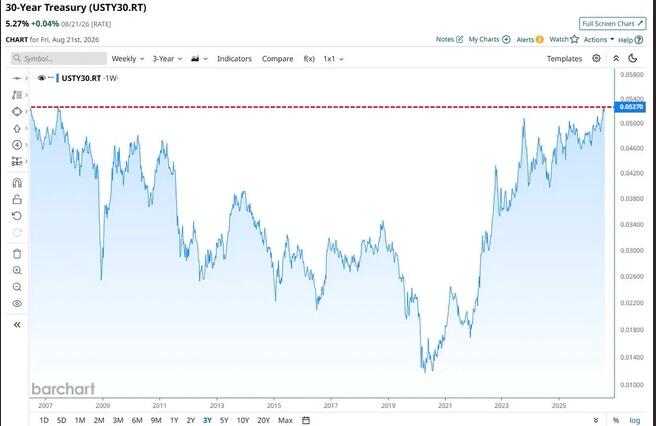
Precious metals (were) weak with gold off 500bps to $4,270 (now approaching flattish). Yields remain the other part of this difficult equation with the 10-year up to 4.43% (now 4.38%) highest levels since July, breaking out above levels earlier in 2026 despite additional rate cuts now potentially back on the table in market expectations. Dollar following with DXY above $100. Bitcoin flattish but closer to local lows $68.6k (now $71.6k). Macro trading likely to dominate trading & price action today, particularly in light on quiet micro backdrop this morning. The only data on deck is the Chicago Fed and Construction Spending. On the data front, we’ll get US construction spending, Eurozone consumer confidence and Japanese CPI later this morning. Fed’s Miran speaks at 8:45am.
Looking at premarket movers away from the non stop newsflow, Mag 7 stocks are higher (Tesla +0.5%, Alphabet +0.6%, Amazon +1.8%, Meta +1.4%, Nvidia +2.1%, Microsoft +1%, Apple +1.6%). Energy stocks are falling and airline stocks are rising after Trump said he told US forces to postpone all strikes against Iranian power plants and energy infrastructure.
Apogee Therapeutics (APGE) soars 16% after the drug developer provided maintenance data from a mid-stage trial that showed its experimental therapy deepened responses in patients with moderate-to-severe atopic dermatitis.
DraftKings (DKNG) gains 8% and Flutter (FLUT) rises 8% after the Wall Street Journal reported that US senators are set to introduce bipartisan legislation to ban sports bets on prediction markets.
Synopsys (SNPS) gains 3% after people familiar said activist investor Elliott Investment Management has made a multibillion-dollar investment in the chip-design software maker and plans to push for changes.
Valvoline rises 2% after Stifel raised the recommendation to buy, saying a recent selloff has created a buying opportunity for the automotive services company as concerns about more expensive base oil and gasoline are largely priced into the stock.
In other news, BBG reported that Fannie Mae and Freddie Mac have begun placing sizable orders to purchase mortgage-backed securities. UBS Group AG Chief Executive Officer Sergio Ermotti said the Iran war could force him to pare back spending, although it won’t fundamentally alter the bank’s overall strategy. Owners of luxury brands ranging from Gucci to Fendi and Bulgari opened more stores in Europe last year despite a slowdown in the wider sector.
Trump’s comments sparked a sharp turnaround in markets after the two sides escalated rhetoric over the weekend, with hours left before a deadline for Iran to reopen the Strait of Hormuz. Rising oil prices have fueled fears that central banks may be forced to tighten monetary policy.
“Assuming this holds and there is a path toward a cessation of hostilities, we can expect stabilization in equities, panic liquidation, and crucially, an unwinding of some of the very aggressive rate hikes which have been priced into markets,” said Geoff Yu, senior macro strategist at BNY.
Since it is pointless to discuss where stocks are since moves are +/- 1-2% every minute, here is a quick recap of …
Trump postponed threatened strikes against Iranian energy infrastructure and power plants for five days, pending the outcome of talks with Iran to end the war. Iran’s semi-official local media denied any talks had taken place: BBG
The Trump administration is telling foreign officials and others that it will not reschedule a summit between the president and Chinese leader Xi Jinping until the Iran war ends. Politico
Donald Trump’s new tariff plans risk getting bogged down in protracted legal challenges as the president relies on obscure laws to wage his trade war after the top court in the US ruled many of his previous duties illegal. FT
The BoJ is laying the groundwork for tweaks to its policy language in April, keeping alive the chance of a near-term interest rate hike as the weak yen and Middle East conflict pile inflationary pressures on the economy.
Japanese companies have agreed to raise wages by more than 5% for a third consecutive year, early results from annual labor talks showed on Monday, reflecting sustained gains in pay that policymakers see as key to fostering durable economic growth. RTRS
A Cuban official said the country is preparing for a possible military assault as Trump increases the economic pressure on the country. BBG
LaGuardia Airport was closed until at least 2 p.m. after an Air Canada Express plane collided with a fire truck shortly after landing. Two pilots died in the crash. BBG
Truckers are being “crushed” by the surge in diesel expense, and US consumers will soon feel the increase as the whole supply chain is forced to adjust prices higher to maintain profitability. WSJ
Kevin Warsh is facing one of the most awkward Federal Reserve leadership transitions in decades. The economy has grown more complicated than when he promised interest-rate cuts last year while campaigning for President Trump to nominate him for the job. Even before the war in Iran sent energy prices higher, the Fed’s preferred inflation measure was heading in the wrong direction. The war threatens to push inflation higher still in the coming months, and investors now view rate increases to be more likely than cuts this year. WSJ
ARE WE OVERSOLD? That has been one of the most frequent questions this week – and there is not a ton of reassuring evidence just yet. A tactical bounce is clearly possible given recent price action, but the broader setup does not yet point to capitulation. Locally, only ~14% of S&P stocks have hit oversold levels. For context, that figure reached over 50% in April ’25 and north of 40% during Q3 ’22: Goldman
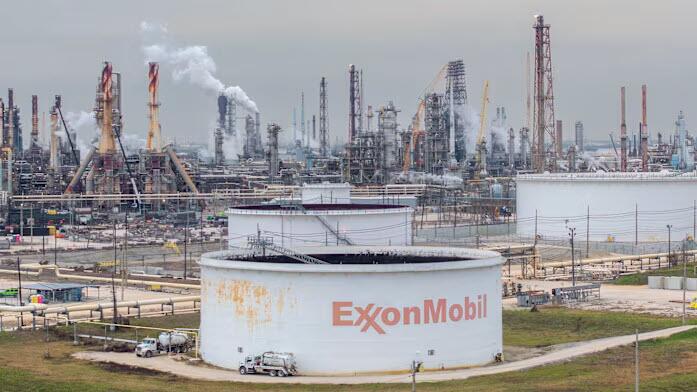
Oil Jumps After Explosion And Massive Fire At One Of The Largest US Oil Refineries
An explosion and large plumes of smoke at the Valero refinery in Port Arthur prompted officials to order west-side residents to shelter in place according to 12 News Now.
🚨 Jefferson Co. Commissioner says “I’m asking people to stay tuned because if this chemical is deemed to be toxic or carcinogenic … then I guarantee we’re going to order to evacuate.” pic.twitter.com/MVpOu5b28M
A fire broke out at a diesel hydrotreater, with the unit suffering severe damage, according to people familiar with the incident. The fire was near the plant’s fluid catalytic cracker, and part of the refinery has been shut down, according to the people, who said a decision hasn’t yet been made whether to shut the entire plant.
A few minor injuries were reported, according to people familiar. A Valero spokesperson said all personnel have been accounted for. Local officials have shut two nearby state highways as a precaution, the spokesperson said.
Footage reportedly shows the effect of a large explosion at the Valero oil refinery in Port Arthur, Texas that resulted in a massive fire. Residents are currently advised by emergency services to shelter in place. pic.twitter.com/50qaqsuVec
Witnesses across the Mid-County area reported hearing a loud boom that rattled car windows. A resident near the scene told a 12News crew the area smelled of rotten eggs, an indication of sulfur in the air.
Antonio Mitchell with the Port Arthur Fire Department confirmed an incident at the Valero facility, though details remained limited. “The type of incident is unknown at this time,” Mitchell said not long after the explosion as his crews headed to the scene.
Following reports of an explosion, a massive fire can be seen at the Valero oil refinery in Port Arthur, Texas. pic.twitter.com/I3UYBTS41A
Interim Port Arthur Fire Chief Louie Havens said two engines were initially sent to the refinery and a hazmat team is being deployed to Valero. Havens also confirmed there have been no injuries or deaths reported. Beaumont Fire Department and the Jefferson County Sheriff’s Office are assisting the Port Arthur Fire Department.
The City of Nederland issued a statement through the Southeast Texas Alerting Network saying its police and fire departments are actively patrolling and conducting air monitoring on the south side of the city.
“At this time, there is no impact to the City of Nederland,” officials said, adding that updates would be provided if conditions change.
The Texas Commission on Environmental Quality said emergency response coordinators and regional staff have been deployed with handheld and mobile air monitoring assets in response to the Valero fire in Port Arthur and are coordinating through incident command. Officials said updates will be shared as they become available.
The Texas Department of Transportation urged drivers to avoid the area, asking motorists to steer clear of SH 87 and SH 82 near the refinery.
The refinery can process 435,000 barrels of heavy sour crude a day, making it one of the top 10 largest refineries in the US.
News of the fire, coupled with fresh reports of hostilities in Iran, sent WTI crude – which earlier in the day dropped as low as $85 – back over $90 and rising.
Which in turn is weighing on equity futures, erasing much of the earlier gains.
* * * If you haven’t already, start stocking up on this stuff
Israel’s intelligence agency Mossad had a plan to ignite public protests that would lead to the collapse of Iran’s government, the New York Times has reported.
David Barnea, Mossad’s chief, met with Israeli Prime Minister Benjamin Netanyahu days before the US and Israel began their war on Iran and told him that the agency would be able to galvanize Iranian opposition in order to bring about regime change.
Barnea, according to the report, which cites interviews with US and Israeli officials, also presented this proposal to senior US officials during a visit to Washington in mid-January.
The plan was then taken up by Netanyahu and Trump, despite doubts among some senior American officials and Israeli military intelligence. Mossad’s promises were, according to US and Israeli officials, used by Netanyahu to convince the US president that collapsing the Iranian government was possible.
In the plan’s conception, the war would begin with the killing of Iranian leaders, followed by a “series of intelligence operations intended to encourage regime change.” This could, Mossad believed, lead to a mass uprising that would bring about victory for Israel and the US.
As the war began, Trump’s public messaging reflected this. In an eight-minute video statement he said:
“Finally, to the great, proud people of Iran, I say tonight that the hour of your freedom is at hand…when we are finished, take over your government. It will be yours to take. This will be probably your only chance for generations.”
But talk of regime change quickly evaporated. Less than two weeks in, US senators came out of a briefing on the war to say that overthrowing the Islamic Republic was not one of its goals, and that in fact there was “no plan” at all for the military operation.
Netanyahu frustrated with Mossad
The CIA’s own assessment of the situation is that the Iranian administration will not be overthrown. In fact, the US intelligence agency had said that if Iran’s leaders were killed, a “more radical” leadership would take power.
Israeli intelligence sees Iran’s government as weakened but intact. “The belief that Israel and the United States could help instigate widespread revolt was a foundational flaw in the preparations for a war that has spread across the Middle East,” the NYT report said.
While Netanyahu has remained bullish about the prospect of putting troops on the ground in Iran, he is said to be frustrated that Mossad’s promises to bring about an uprising have not come to fruition.
According to the NYT, Netanyahu said in a security meeting days after the war began that Trump could end the war at any moment if Mossad’s operations did not bear fruit.
Allegations that the White House went in the direction of ‘optimistic’ Israeli assessments over US intelligence consensus:
Another example of that high-value intelligence we get from Israel, I guess. The CIA doubted that a war would quickly lead to a democratic uprising against the Iranian regime. But Israel’s Mossad was optimistic it could spur regime change. Trump listened to the Israelis. https://t.co/knLLHpzSyw
Mossad’s promises were, according to the report, disputed by many senior US officials and analysts at the Israeli army’s intelligence agency, Aman.
US military leaders told Trump that Iranians would not take to the streets while bombs were falling, while intelligence officials assessed that the chances of a mass uprising were low.
Choosing when to collect Social Security retirement benefits is a consequential decision. It will affect your finances for the rest of your life. You’ll be able to claim reduced retirement benefits as early as 62.
In fact, in 2022, nearly 30 percent of new Social Security beneficiaries began receiving benefits at age 62, according to the Bipartisan Policy Center. The full retirement age (FRA) for those born in 1960 or later is 67, according to the Social Security Administration (SSA). Although you can claim the benefits early, there are drawbacks. And one of them relates to any continued employment.
Social Security Earnings Test
You can receive Social Security or survivors’ benefits and work at the same time. But the Social Security earnings test will be applied to you.
According to the SSA, if you start collecting retirement benefits before FRA and earn more than $24,480 in 2026, you will be penalized. The SSA deducts $1 from your benefits for every $2 you earn above $24,480.
If you reach FRA in 2026, the SSA deducts $1 from your benefits for every $3 you earn above $65,160 until the month you reach FRA.
For example, you file for benefits in January 2026, and your payment is $600 monthly, or $7,200 annually. But during 2026, you plan to work and earn $26,080. You will be $1,600 above the limit. The SSA would withhold $800 of your Social Security benefits.
How Do You Pay the Penalty?
If you file for Social Security benefits at 62 in January 2026, and your benefit is $600 a month, or $7,200 per year. During 2026, you plan to work and earn $26,080, which is $1,600 above the limit. The SSA would withhold $800 of your Social Security benefits ($1 for every $2 you earned over the limit).
To do this, they would withhold all $600 benefits in January and all $600 benefits in February to take the $800. Keep in mind that the SSA does not make partial payments. So, they would take all the February benefits. In other words, you would go two months without benefits. But you would receive all your $600 benefit in March.
The SSA would pay you the additional $400 they took from February 2026 back to you in January 2027.
The SSA doesn’t actually know your earnings in advance. They rely on three items: your estimate when you apply; your employer’s wage reports; and your tax return later.
Often, they don’t know you’ve gone over the maximum until the following year. At that point, they would withhold the overage.
First-Year Rule Saves Money
Sometimes, people younger than FRA begin receiving benefits in the middle of the year. At that point, they may have already exceeded the yearly limit.
According to the SSA, under the first-year rule, you can receive full Social Security benefits for any whole month you are retired, and earnings are below the monthly limit. In other words, the limit starts the month you start receiving benefits, not for the prior months when you may have gone over the limit.
So, if you started receiving benefits in July 2026, you must be under the limit from July through December 2026. But you don’t have to be below the limit from January 2026 through June 2026.
This rule allows you to work earlier in the year, retire midyear, and still collect Social Security immediately without losing benefits earned before you started collecting them.
Social Security Refunds Penalties at FRA
Although some of your benefits may be reduced if you work, they will be returned later. According to the SSA, if some of your benefits are withheld because of your earnings, your monthly benefit will increase starting at FRA. It will take into account those months when benefits were withheld.
Earnings Drawback to Collecting Social Security Before FRA
Whether or not you’re working, if you start drawing your Social Security benefits before FRA, you’ll receive less money.
If you start receiving benefits early, your benefits will be reduced by a small percentage for each month before your FRA. According to the SSA, those born in 1960 or later will have their benefits reduced by 30 percent if they retire at 62.
So, if your FRA benefit is $1,000, because of the reduction, you’ll receive $700 if you start benefits at age 62. A spouse’s benefit is reduced by 35 percent, which brings it down to $325, according to the SSA.
How to Contact the Social Security Association
The best and most convenient way to contact the SSA is to visit www.ssa.gov. You’ll be able to use their services and receive information. If you live outside the United States, visit www.ssa.gov/foreign to access online services.
If you don’t have internet access, call 1-800-772-1213 or the TTY number, 1-800-325-0778 if you’re deaf or hard of hearing. They recommend calling between Wednesday and Friday and later in the month when it’s less busy.