Musk’s xAI Turns To Wall Street Bankers To Improve Grok’s Financial Analysis
Elon Musk’s AI startup xAI is expanding efforts to make its chatbot Grok more capable in financial analysis by hiring experienced finance professionals to help train the system, according to Bloomberg.
Job listings show the company is recruiting investment bankers, traders, portfolio managers, and credit analysts to join its data-training teams. These specialists would help teach Grok how to reason through complex financial work, including leveraged loan syndication, distressed investing, mortgage-backed securities, and collateralized loan obligations. The company is also seeking experts with experience in equity and cryptocurrency markets.
The move reflects a broader push by major AI developers to sell products to financial professionals. Competitors such as OpenAI and Anthropic have already introduced tools designed to speed up tasks like market analysis, research, and investment memo writing. These advances have raised concerns that some traditional financial software providers could lose relevance.
Compared with those rivals, xAI is generally seen as behind in attracting corporate customers. Much of its revenue so far has come from agreements with Musk-related businesses, including Tesla, Inc. and SpaceX, which merged with xAI last month.
Bloomberg writes that the company is also adjusting its strategy after a turbulent start to the year that included significant staff departures, including members of its founding team, as well as criticism over Grok generating explicit non-consensual images.
Recently, Musk recruited two senior employees from Cursor, an AI coding startup currently seeking funding at a reported valuation of around $50 billion. Musk has acknowledged publicly that xAI still lags competitors in coding tools, a category that has become an important revenue driver for other AI companies.
xAI relies on workers known internally as AI tutors to train Grok by supplying data and adjusting responses. At a recent staff meeting, tutor team lead Diego Pasini said the company’s biggest constraint remains the supply of training data. Much of Grok’s dataset currently comes from X.
Many of the new tutor roles are focused on credit markets, which are under increasing pressure as private credit funds face withdrawals and other industry challenges. Great timing.
Stellar 20Y Auction Stops Through Amid Surge In Foreign Demand
Moments ago the week’s lone coupon auction priced in what was a stellar sale of 20Y Treasury paper.
At 1pm ET, the US Treasury auctioned off $13BN in 20Y paper, with very solid metrics and even more solid buyside demand.
The auction priced at a high yield of 4.817%, up from 4.664%, but below January’s 4.846%. The auction stopped 0.7bps through the 4.824% When Issued. This was the 3rd stop through auction in the past 4, following an especially ugly, tailing February 20Y auction.
The bid to cover jumped to 2.76 from 2.36, which was also above the six-auction average of 2.63.
Internals were especially strong, with Foreign demand surging from just 55.2% in February, to 69.2% in March, the highest Indirect award since April 2025 (and obviously above the recent average of 62.1%). And with Directs taking down 21.6%, below the six-auction average of 27.0%, Dealers were left holding 9.2%, a big drop from 17.6% in February and one of the lowest Dealer allotments on record.
Overall, this was a stellar 20Y auction despite the lack of concessions in today’s session, and suggests that despite the recent selling across the curve, the bond market remains in solid shape one day ahead of the Fed’s decision to keep rates on hold (as most expect).
Trump Scoffs At ‘Vietnam Quagmire’ – Says Iran War Ends ‘Soon’ And Oil To ‘Drop Like A Rock’
Summary:
Trump: War will be over “soon” after which “oil prices will drop like a rock”; We are “not ready to leave Iran yet” but will in “near future”. Brushes off potential for ‘Vietnam-style quagmire.’
Trump on China and delayed Xi meeting – “Looks like it’ll happen in five weeks.”
Macron: “We are not party to the conflict and therefore France will never take part in operations to open” Strait of Hormuz. Trump says we don’t need NATO.
Israel issues widest evacuation order for southern Lebanon since the major 2006 war.
Israel claims major decapitation strike: Says Ali Larijani and Basij chief Gholamreza Soleimani were killed, but Iran disputes.Iran rejects ceasefire, vows escalation.
Trump confirmed earlier he asked China to delay Xi meeting ‘a month or so’ due to Iran war.
New oil targeting phase as Tehran pledges to be gatekeeper of Hormuz: Ships pass only “in coordination” with Tehran – talk of separate deal-making with BRICS capitals, while Iraq is in contact with Iran to persuade Tehran to allow some Iraqi oil tankers to pass through Hormuz.
Allies hesitate as Trump issues contradictory rhetoric: Key NATO states are refusing to join US efforts to secure Hormuz, amid lack of confidence in Trump’s often shifting articulation of operation.
* * *
Trump: “Not Ready to Leave Iran Yet” But Will in “Near Future”
President Trump met with Irish Prime Minister Taoiseach Micheál Martin on Tuesday late morning in honor of St. Patrick’s Day, and the Q&A focused almost exclusively on Iran, with Trump again signaling an eventual US exit from the Iran war – but not just yet, and really with no set timeline (amid at least a “five week” delay until Xi summit). “We’re not ready to leave yet, but we will be leaving in the near future,” he said, adding that US-Israeli strikes have set Iran back so severely it could take “a decade” to rebuild.
Important: Trump on China and Xi meeting – “Looks like it’ll happen in five weeks.”
Crucially (and alarmingly) Trump also brushed off warnings from Tehran that deploying US ground troops could trigger a Vietnam-style quagmire. “No, I’m not afraid of – I’m really not afraid of anything,” he said.
At the same time, Trump is lashing out at NATO allies for sitting on the sidelines. “We help them, and they didn’t help us, and I think that’s a very bad thing for NATO,” Trump said. “Everyone agrees with this, but they don’t want to help,” he said.
Still, he stopped short of threatening immediate consequences, calling it simply “not good for a partnership.” All the while, Trump kept touting that the world faced “nuclear holocaust” from Iran if he didn’t give the order to attack. He even claimed nuclear conflict would have reached Europe if he hadn’t taken action.
BREAKING: TRUMP SAYS HE IS NOT AFRAID TO PUT BOOTS ON THE GROUND IN IRAN:
Q: Are you afraid that if you put boots on the ground in Iran, it could be another Vietnam?
US Doesn’t Need NATO to Help with Iran Mission: Trump
President Trump is not happy with NATO and is letting the world know it. First countries like Spain, Germany, and Greece made it clear they would not heed his call for a coalition to open the Strait of Hormuz, and on Tuesday France’s Macron stated it is “not our war”.
Trump said in a fresh Truth Social Post “I am not surprised by their action, however, because I always considered NATO, where we spend Hundreds of Billions of Dollars per year protecting these same Countries, to be a one way street — We will protect them, but they will do nothing for us, in particular, in a time of need.” And more:
Because of the fact that we have had such Military Success, we no longer “need,” or desire, the NATO Countries’ assistance — WE NEVER DID! Likewise, Japan, Australia, or South Korea. In fact, speaking as President of the United States of America, by far the Most Powerful Country Anywhere in the World…
Without doubt, these countries have memories of Iraq and Afghanistan, which were multi-national efforts (and largely failures in terms of becoming unanticipated ‘forever wars’ and quagmires).
Macron: France Won’t Join Trump’s Hormuz Ops
President Emmanuel Macron has just slammed the door on Trump in a huge way, though he did so in his classic meager and weak, somewhat ambiguous fashion.
He said Tuesday that though France will not immediately take part in efforts to militarily unblock the Hormuz Strait, it will continue to prepare for a potential future coalition that could provide freedom of navigation once the conflict ends.
“We are not party to the conflict and therefore France will never take part in operations to open or liberate the Strait of Hormuz in the current context,” Macron said at the start of a cabinet meeting.
As a reminder, Trump on Monday said of Macron: “I have spoken to him. On a scale of 0 to 10, he’s been an eight. Not perfect, but it’s France…” And the US president added, “I think he’s going to help. I spoke to him yesterday. I don’t do a hard sell on them because my attitude is that we don’t need anybody. We’re the strongest nation in the world. We have the strongest military by far in the world.”
Expanding Lebanon War: IDF Issues Widest Evacuation Order Since 2006
A new – or perhaps it should be renewed – ground war between Israel and Lebanon has fully opened, also as Beirut continues to get hit from the air. Israel told residents of southern Lebanon that its military would be conducting airstrikes against Hezbollah. The area under immediate evacuation orders is seeing the biggest Israeli-drive evacuation going all the way back to the major 2006 war.
“Remaining south of the Zahrani River could endanger your life and the lives of your families,” the Israeli military’s Arabic spokesman Avichay Adraee said on X. Israeli officials have meanwhile signaled readiness to fight in Lebanon even beyond the conclusion of the Iran war, which itself hasn’t been subject of a timeline.
⚡️U.S KC-135 refuelling tanker seen in the background of an interception above Israel pic.twitter.com/orFDwBFztZ
Via Rabobank note: Trump has announced his long-awaited looming trip to Beijing is unlikely to happen because of the war: he wants a delay of a month or so. In short, only if the war ends without a US retreat can Trump and Xi discuss the US-China relationship.
The messaging is crystal clear. So is that China can get energy from the Western hemisphere to replace Iran and the GCC if needed. So is the US ability to then put a foot on the hosepipe in certain geopolitical circumstances – as it is now doing with Iran at far greater distance, risk, and cost. But that doesn’t mean it isn’t part of a future deal.
Trump said when asked about the trip Monday, “I don’t know, we’re working on that right now.” He added: “We’re speaking to China. I’d love to, but because of the war, I want to be here. I have to be here, I feel.”
Israel Claims Big Decapitation Strike: Larijani & Basij Chief
Israel is making another big ‘decapitation strike’ claim, saying it has taken out Iran’s top security believed to be effectively running the country and the war, Ali Larijani. Israel further announced early Tuesday the longtime head of the Basij militia, Gholamreza Soleimani, was also killed.
If true it would mark one of the most significant blows to Tehran’s leadership since the war began. But in classic fog-of-war fashion, Tehran is pushing back against Israeli statements. Tehran has presented a handwritten message attributed to him, though not exactly what passes for proof of life.
The note was released ahead of funeral ceremonies for Iranian sailors killed in a recent US strike, and urges citizens to show support for the national ‘martyrs’ – but in the end does little to clarify whether Larijani is alive or dead. Just days ago he was seen marching defiantly in the streets of Tehran with other high-ranking officials as US-Israeli bombs fell not too far away.
The IDF announcement proclaiming his alleged death:
🔴Ali Larijani, Secretary of Iran’s Supreme National Security Council and the regime’s effective leader, has been eliminated.
Throughout the years, Larijani was considered one of the most veteran and senior figures within the Iranian regime leadership, and was a close associate… pic.twitter.com/kBIgSSGBm0
“The martyrdom of the brave members of the Navy of the Army of the Islamic Republic in Dena is part of the sacrifices of the proud nation that has emerged in this time of struggle against international oppressors,” Larijani wrote, in what could prove to be his last message. If he is deceased, he is likely to quickly be replaced.
No Peace Yet: Must Be ‘Brought to Their Knees’
Iranian President Masoud Pezeshkian is calling on citizens to flood the streets for mass funerals of sailors killed when the IRIS Dena was sunk off the coast of Sri Lanka. Enemies “should know that in the shadow of the name of each of these high-ranking martyrs, thousands of other brave men will rise,” he said.
Most importantly, he announced that Islamic Republic leadership is rejecting any talk of de-escalation. Iran will exact a steep cost against its aggressors, he vowed. It is not “the right time for peace until the United States and Israel are brought to their knees, accept defeat, and pay compensation,” a senior official was quoted in Al Jazeera as saying, describing the position as “very tough and serious.”
Iran’s messaging here has been consistent. On Monday when President Trump claimed Tehran was “talking” – and later there were reports of text messages between Iran’s FM Araghchi and White House envoy Steve Witkoff, Iran’s government was quick to call this fake news.
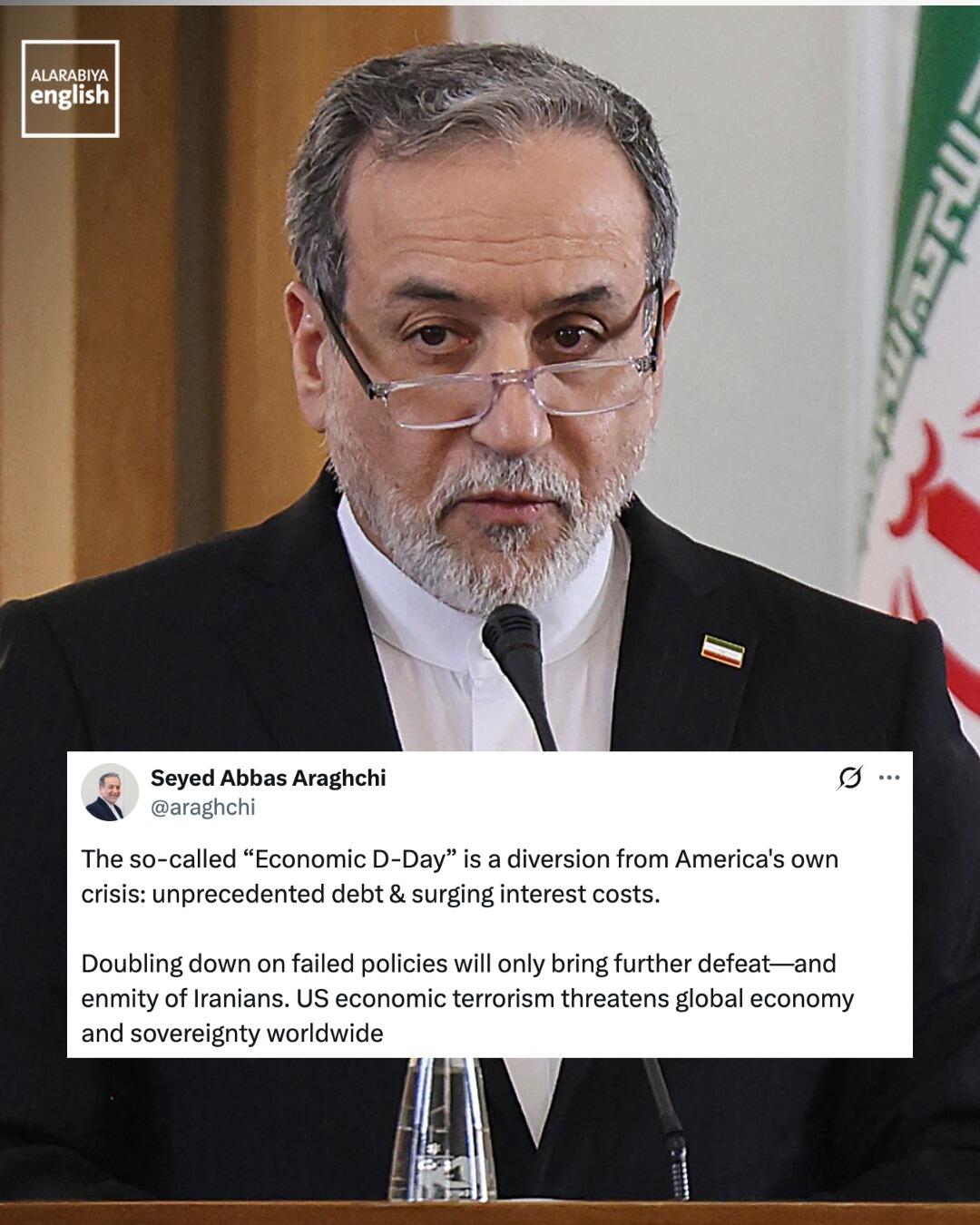
“We don’t ask for ceasefire, but this war must end, in a way that our enemies never again think about repeating such attacks,” Araghchi has said. Central Israel has also continued to see inbound projectiles, also from Hezbollah in Lebanon.
Iran: Hormuz Isn’t Officially Shut, But it Controls Who Gets Through
Foreign Ministry spokesman Esmail Baghaei pushed back on blockade claims, while signaling Tehran is effectively managing traffic through the critical chokepoint – as it tries to play nice with its BRICS allies but tries to keep the leverage on Washington, its allies, and the global economy.
“Ships from some countries passed through the Strait of Hormuz in coordination with the Islamic Republic of Iran,” he said, framing Iran’s position as ultimately as the gatekeeper of the world’s most important oil artery. “Iran has always been the guardian of the Strait of Hormuz and the safe passage of ships.”
This could include pledges for Indian, Chinese, and Russian safe passage – and there’s been evidence of some of these getting through, just as in the Houthis Red Sea crisis of last year.
On Tuesday, Iranian parliamentary speaker Mohammad Baqer Qalibaf said: “The Strait of Hormuz cannot be the same as before and return to its previous conditions,” adding that “there is no longer any security.”
Bombardment of US Bases, Embassy, Oil Sites
“We have no hostility toward regional countries,” Baghad also said. “What we target are American bases and assets.” This after a likely Iranian-made drone hit the US Embassy in Baghad to start of this week, and also a drone slammed into the central Al-Rasheed Hotel in Baghdad’s highly protected Green Zone.
Air defenses in the Green Zone engaged incoming threats, but to no avail – the drones still got through. At the same time, energy infrastructure is increasingly in the crosshairs.
A drone attack forced the shutdown of a gas field in Abu Dhabi, while a tanker was reportedly hit by an “unknown projectile” near a UAE oil port – only adding more pressure to already volatile markets and pushing oil prices higher.
C-RAM System reportedly seen in action, but is Green Zone’s defense crumbling?
An Iranian-backed militia successfully used a (likely fiber optic) FPV drone to carry out a reconnaissance mission through the U.S. Embassy in Baghdad yesterday.
Seen here, the drone flies unchallenged through the embassy complex for nearly two minutes. pic.twitter.com/S1Ky3eVUv0
Still, amid all this, NATO allies are holding back – perhaps confused and lacking confidence in President Trump’s daily shifting rhetoric, and as sometimes Trump issues contradictory messaging on the same day, or even in the very same presser.
“What does … Donald Trump expect a handful or two handfuls of European frigates to do in the Strait of Hormuz that the powerful US Navy cannot do?” German Defense Minister Boris Pistorius told reporters on Monday. “This is not our war, we have not started it.“
Some leading NATO powers have made clear they won’t directly support any military effort to unblock the strait – including Germany, Italy, and Spain.
President Trump himself has conceded this week of Western partners: “Some are very enthusiastic about it, and some aren’t. Some are countries that we’ve helped for many, many years. We’ve protected them from horrible outside sources, and they weren’t that enthusiastic. And the level of enthusiasm matters to me.” Naturally they might be looking back only to last year and the Gaza War, when the major US-led naval coalition in the Red Sea struggled to halt Houthi attacks on global shipping, resulting in a stalemate and uneasy status quo where the Iran-linked Houthis built a lot of leverage.
Iran’s “New Phase Of Oil War”
Bloomberg Opinion and commodities columnist Javier Blas has written on X. “Further ominous developments today. For the first time, Iran successfully targeted oil and gas production facilities, rather than refining, terminals, and storage,”
Blas listed the IRGC’s attacks on Gulf oil and gas facilities:
Oil and gas field in the UAE (Shah) hit
Oil field in Iraq (Majnoon) attacked
Plus Saudi Arabia saw large drone swarms
He explained that these attacks suggest “Iran has started a new phase of its oil war” against Gulf states aligned with the US. “Tehran is clearly going after the Strait of Hormuz bypass route, with Fujairah (UAE) coming under attack. But so far, the Saudi pipeline bypass hasn’t been attacked, and neither the Yemeni Houthis have tried to close the Red Sea,” Blas said. Brent crude has jumped more than 40% since the start of Operation Epic Fury in late February, but out-of-control spikes in crude markets have largely been capped so far by the IEA’s 32-nation “historic” emergency SPR release. Read our fuller analysis here.
The federal Iraqi government is in contact with Iran to persuade Tehran to allow some Iraqi oil tankers to pass through the Strait of Hormuz, Iraq’s Oil Minister Hayyan Abdul Ghani said on Tuesday.
“There is communication with Iran regarding allowing the passage of some Iraqi oil tankers,” the minister said in statements carried by the Iraqi News Agency (INA).
Iraq, unlike Saudi Arabia and the United Arab Emirates (UAE), doesn’t have any options – even partial – to bypass the Strait of Hormuz, which has been closed for over two weeks now, forcing Baghdad to slash oil production as storage sites and tankers available in the Gulf filled up.
Iraq was the first to announce more than a week ago it was slashing crude oil production amid the de facto blockade of the Strait of Hormuz.
UBS Eyes Possible Bottom In Airline Stocks After Bear Market
The S&P 500 Passenger Airlines Index has tumbled into a bear market since Operation Epic Fury unleashed flight disruptions across the Middle East and sent Jet A fuel prices sharply higher, with Deutsche Bank warning the fuel price shock could become an “existential threat” for the weakest carriers. The key question now is whether the worst of the selloff in US airline stocks is over, with UBS analysts beginning to ask if a bottom is near.
UBS analyst Atul Maheswari said that “most airlines will likely point 1Q towards the midpoint of the guidance” in the earnings season, adding, “Fuel spiked in early March, but airlines tend to hold two weeks of fuel inventory, implying higher fuel will impact only about 15 days of 1Q.”
“This should cushion the drag to 1Q EPS. Plus, airlines have been talking up demand through the course of the quarter, suggesting upside to 1Q RASM. With respect to FY guide, we expect airlines to suspend FY’26 outlook given the significant uncertainty around fuel costs for the rest of the year,” Maheswari noted.
The analyst said that airline stocks are approaching a 2022-style decline, similar to the Russia-Ukraine fuel shock, which may now imply a potential bottoming for airline stocks.
He explained:
How does the current decline in airline stocks compare to historical periods?
If we use share price performance in 1H’22 as a guide, then it suggests that the bottom might be near for these airline stocks.
Since 2/26, shares of ALK and smaller players are down around -30% while UAL, AAL, and LUV are down mid 20%. DAL is down only -17%. The decline in LUV, ALK and smaller players have already matched the peak to trough declines witnessed in 1H’22 – the last time jet fuel witnessed a spike of similar magnitude (following the Russia-Ukraine conflict) as we are seeing currently (full details in fig. 3).
The declines in share prices DAL/UAL have not yet matched the levels witnessed in 2022, but these players now have superior business models with relatively higher margins, suggesting better ability to deal with the fuel price shock.
However, there is a caveat:
Though, one needs to be mindful of the tail risk of this conflict persisting for longer than expected driving jet fuel even higher from current levels. There is also potential for inflation to pick up materially the longer the conflict persists and for consumers to start pulling back from travel and other spending. We don’t think this scenario of demand destruction is necessarily priced into the stocks even at these levels.
The S&P 500 Passenger Airlines Index is currently showing a drawdown of about 22%.
Maheswari lowered estimates and price targets for airline stocks within the UBS coverage universe:
DAL: We lower our FY’26 EPS estimate to $5.85 (was $7.17) assuming 50% pass through of higher fuel costs. Our FY’27 EPS estimate goes to $8.31 from $8.72. Our revised PT is $83, down from $87 previously based on 10x FY’27 EPS estimates.
UAL: We lower FY’26 EPS estimate to $10.22 from $13.56 while our FY’27 EPS estimate goes to $14.87 from $16.28. We assume ~45% fuel pass through rates for UAL for FY’26. Our new PT is $134 vs. $147 previously.
AAL: AAL has higher fuel sensitivity than DAL/UAL. As such, the decline AAL sees a greater decline in FY’26 estimates (now at $0.43 vs. $2.21 previously). Our FY’27 EPS falls to $2.13, down from $2.99. This drives a moderation in our PT to $15 from $21.
LUV: We lower our PT to $59 from $73, which is 11x (was 12x) our new FY’27 EPS estimate of $5.33 (was $6.07). Our FY’26 EPS moves lower to $3.59 (was $5.05).
ALK: We lower our PT to $60 from $77 based on 8x (was 9x) our new FY’27 EPS estimate of $7.48 (was $8.60). ALK also has high fuel sensitivity to EPS. As such, our FY’26 estimates move meaningfully lower to $2.19 from $5.21.
We lower lower price targets and estimates for JBLU, ULCC, ALGT, and AC. Full details in figure 1.
Sensitivity to higher fuel: We estimate that every $0.25/gallon increase in jet fuel would lower DAL’s EPS by around -15 to -17% and 20-25% for UAL/LUV (assuming no pass through in the form of higher fares). Fuel sensitivity is higher for AAL/ALK and smaller players. We calculate that for every $0.25/gallon increase in fuel RASM would need to increase by 200-250 bps to fully offset the fuel drag (see fig. 2).
Earlier, US airlines reported strong bookings, with Delta and American both posting some of their best sales days in history as premium leisure and corporate travelers rushed to lock in fares before fuel-driven price increases spread further.
Airlines also pointed to rising fuel costs, with Delta indicating that expenses have already climbed by about $400 million this month. JetBlue said first-quarter demand improved, but warned of reduced capacity amid fuel price shock.
US Pending Home Sales Barely Bounce Off Record Lows Despite Tumbling Rates In Feb
After reaching a record low last month – with the decline blamed on weather – pending home sales bounced modestly in February (up 1.8% MoM vs -0.6% MoM exp and -10.% MoM prior).
Year-over-year home sales continue to decline (down 0.6% YoY)…
Source: Bloomberg
…just barely off of all-time-record lows…
Source: Bloomberg
Pending home sales in the South, the biggest home-selling region in the country, increased 2.7%.
They rose 4.6% in the Midwest and edged up in the West.
Contract signings dropped in the Northeast.
Mortgage-rates have tumbled (to their lowest since 2022) – helping affordability – so what is holding pending home sales back?
Source: Bloomberg
“The slight gain in pending contracts appears to be driven by improved affordability conditions. However, those conditions could reverse if higher oil prices lead to an uptick in mortgage rates,” NAR Chief Economist Lawrence Yun said in a statement.
Indeed, it certainly won’t help in April that in the first week of March, mortgage rates jumped by the most since September as war with Iran sparked concerns about inflation.
Housing affordability has been a key issue ahead of November’s midterm election. President Trump has taken several steps to boost home ownership, including signing two executive orders last week aimed at improving access to mortgage credit and easing environmental rules to speed up development projects.
As a reminder, pending-homes sales tend to be a leading indicator for previously owned homes, as houses typically go under contract a month or two before they’re sold.
The oil spike has moderated and markets are mellow for the time being, but could the long-term economic consequences of this war just be getting started?
U.S. allies have shown a lackluster response after President Trump’s request for assistance in reopening the Strait of Hormuz — a corridor carrying roughly 20% of global oil supply — and this may spell a trend of what’s to come. What happens when oil-producing Gulf states have had enough of our/Israel’s foreign policy machinations and, as a result, begin to de-dollarize or offload U.S. sovereign debt?
Tonight at 7pm ET, wealth manager Peter Schiff, proponent of the Austrian school of economics, and Rabobank global strategist Michael Every will square off on these questions and debate whether the Iran war will undermine the foundations of dollar dominance.
Moderating the discussion is the great Dave Collum, chemistry professor at ZeroHedge and long-time friend of ZH.
Schiff: Dollar’s Days Numbered
Schiff has long argued that U.S. fiscal deficits, monetary expansion, and reliance on foreign capital have put the dollar on an unsustainable trajectory. In recent commentary on the Iran conflict, he warned the war could accelerate those vulnerabilities.
The U.S. economy and labor market were already weakening, and inflation strengthening, before the war with Iran began. Now, as those problems get worse, Trump can blame them on a war he will insist we had no choice but to fight. Stagflation will be sold as the cost of freedom.
According to Schiff, the combination of higher oil prices, massive war spending, and renewed inflation pressures could trigger a severe economic downturn and destroy purchasing power for Americans. The conflict could be the catalyst that finally exposes structural weaknesses he has warned about for years: a heavily indebted U.S. economy dependent on monetary stimulus and foreign financing.
When other countries start offloading their dollars, it may be rapid and jarring. As Schiff is fond of saying, stocks take the escalator up and the elevator down.
Every: Manufactured Hegemony
Rabobank’s Michael Every takes a different approach.
Less worrisome, he sees Hormuz being opened in two to three weeks:
1/2
Some thoughts on the Iran War on CNBC which are not quite as their headline puts it.
Our base case remains thst Hormuz is reopened by the end of this month or early April.
Yet geopolitically, that’s more likely to be through US force escalation (“The only way out is…
Rather than collapsing the dollar, crises can actually reinforce its dominance, as global investors rush into U.S. assets during periods of uncertainty. Indeed, in the opening days of the Iran conflict the dollar initially strengthened even as global markets tumbled.
Every also sees the war as a geopolitical chess move that can strengthen the U.S. dollar. If the post-war Iranian regime is more subservient to the Americans, they would control another crux of the world’s energy trade.
Tune in tonight at 7pm ET to witness the showdown. Right here on the ZeroHedge homepage and streaming on X.
Yesterday’s Global Daily by Ben Picton, ‘The Wrath of Kharg’, couldn’t help but get me thinking about the infamous Kobayashi Maru scenario in Star Trek II: The Wrath of Khan. For those unfamiliar, back when Star Trek was a popular franchise based on serious ideas, not an unpopular one based on frivolous ones, Starfleet Academy tested its budding starship captains by making them try to rescue the simulated crew of a disabled freighter stranded in dangerous territory. Abandoning them was a failure; yet every attempt to retrieve them would be met by an ever-increasing number of attackers. Crucially, this no-win scenario was a key test of officer candidates’ characters, not their tactics or strategy.
The question today is if President Trump is himself caught in a Kobayashi Maru scenario given:
If he retreats from Iran, it’s a geopolitical defeat the equivalent of the 1956 Suez Crisis; and he may not even be able to retreat if Iran refuses to stop the war regionally.
If he continues to attack, energy markets will panic further. The Israeli press says the country is preparing to fight for another month vs Iran and Hezbollah in Lebanon, not the three weeks alluded to yesterday; and Iran is now targeting upstream oil and gas fields (such as Shah in the UAE), not just refineries and export terminals, threatening energy supply, not flow.
Yet in Star Trek II we hear that Captain Kirk, in his youth, found a novel solution to the no-win outcome: he reprogrammed the computer, so victory was possible, winning a commendation for original thinking. “I don’t like to lose,” he tells a logical Vulcan who had already failed the test. Indeed, even as the media are calling this war Operation ‘Epic Folly’ –and recalling that oil prices vs physical supply, and bunker fuel, jet fuel, and diesel are worse– the futures market continues to price for cheaper energy within a few months. Even with backwardation showing the current physical squeeze, which seems to suggest an inherent view there will be no long-run disruption to the region’s energy flows: and US assets are not tanking more than others on the suggestion this is due to a looming 1956 defeat. Or is that just the normal science fiction of mean-reverting “because markets” thinking? Let’s be clear: it’s very easy to see how things can get far worse. However, there are arguably ways things can also improve as a result.
On one hand, Treasury Secretary Bessent says the US is fine with some Iranian, Chinese, and Indian vessels having successfully made it through Hormuz. Why wouldn’t they be? If Iran starts letting everyone but the US and Israel through —neither of whom use it— then the blockade is effectively over. Yet that argues for Iran not to do so to any great extent.
On the other, the underlying logic is that Trump also needs to reprogram the no-win scenario via further escalation of his own. As an example, Trump has announced his long-awaited looming trip to Beijing is unlikely to happen because of the war: he wants a delay of a month or so. In short, only if the war ends without a US retreat can Trump and Xi discuss the US-China relationship. The messaging is crystal clear. So is that China can get energy from the Western hemisphere to replace Iran and the GCC if needed. So is the US ability to then put a foot on the hosepipe in certain geopolitical circumstances – as it is now doing with Iran at far greater distance, risk, and cost. But that doesn’t mean it isn’t part of a future deal.
For those who can’t join those dots, note that after Trump blocked most oil exports to it after flipping Venezuela by force, the communist Cuban government has just embraced perestroika, allowing Cuban American exiles to return to the island and open private-sector businesses. That’s yet another Russian-Chinese-Iranian ally that seems in the process of being flipped into the US camp. The world is changing radically and rapidly – and it’s not something one just gets to sit out in splendid isolation.
Indeed, while NATO allies and Japan and South Kore (so far) won’t send ships to help reopen Hormuz despite Trump threats to NATO and even key Asian security alliances, the “It’s not our war” crowd must note that the longer this drags on, the more painful it risks getting for them. Moreover, they may also come to see that an angrier nuclear Iran with ballistic missiles, which can happen if the regime survives, would have huge implications for everyone. Japan’s PM Takaichi is reportedly ‘weighing her options’ and could agree to join a Hormuz coalition for freedom of navigation in principle, according to the Japan Times.
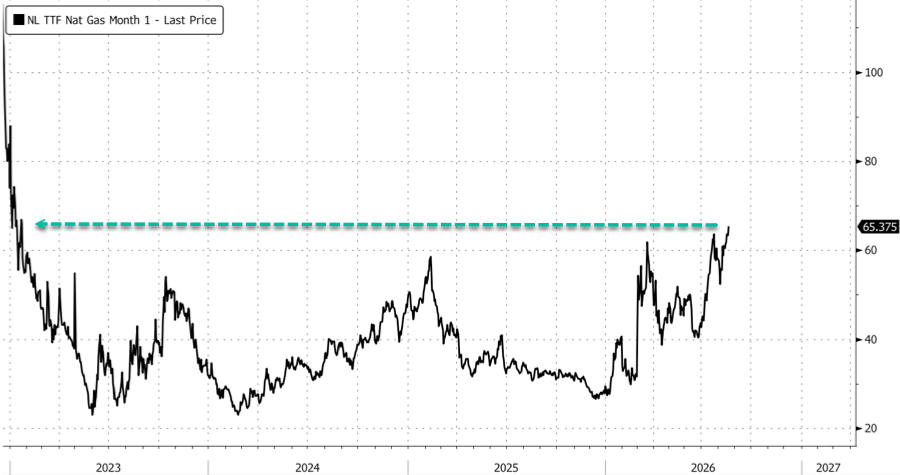
By contrast, the EU is saying “Don’t “blackmail” us’: but it arguably is being – in which case, who has the greater leverage and risks the larger fallout? Notably, Europe is also arguing ‘Not one molecule!’ and has ruled out relaxing a Russian gas ban, which logically only leaves the US as an LNG supplier. Via a transitive geopolitical process, that also places Europe on the same side as the US vs Iran, a key supporter of Russia vs Ukraine… and then vs China(?) Meanwhile, with India pushing to now deepen new EU ties even further, does that tie the EU to the US via that South Asian route too, or to pro-Russia India?
The first of the major central banks to have to try to grapple with this today was the RBA. They opted to raise rates 25bps to 4.10%, as expected. They also noted that sustained higher energy prices will add to inflation and that risks on that front have tilted further to the upside: indeed, Aussie inflation is seen staying above target for “some time” even as there are “material uncertainties” about the economic outlook. The Reserve Bank also added it “will do what’s necessary to deliver its price and jobs goals” – but, in the worst case, what if they run in opposite directions ahead? The Aussie 10-year yield, which managed to break through the psychological 5% level yesterday, is now back at around 4.92%. AUD softened slightly on the decision.
What will the other central banks say and do this week? And what will they say and do next month if this really is a Kobayashi Maru scenario for them rather than one they can simply reprogram with a new liquidity acronym?
The federal Iraqi government is in contact with Iran to persuade Tehran to allow some Iraqi oil tankers to pass through the Strait of Hormuz, Iraq’s Oil Minister Hayyan Abdul Ghani said on Tuesday.
“There is communication with Iran regarding allowing the passage of some Iraqi oil tankers,” the minister said in statements carried by the Iraqi News Agency (INA).
Iraq, unlike Saudi Arabia and the United Arab Emirates (UAE), doesn’t have any options – even partial – to bypass the Strait of Hormuz, which has been closed for over two weeks now, forcing Baghdad to slash oil production as storage sites and tankers available in the Gulf filled up.
Iraq was the first to announce more than a week ago it was slashing crude oil production amid the de facto blockade of the Strait of Hormuz.
Last week Iraq said it would maintain crude oil production at roughly 1.4 million barrels per day (bpd) as the war disrupting the Persian Gulf continues to cripple the country’s export routes.
Before the war, Iraq, OPEC’s second-largest producer behind Saudi Arabia, produced more than 4.4 million bpd.
But with no way out of the Gulf for all these barrels, Iraq and the other major producers are forced to slash upstream production.
Initial losses of about 5 million bpd have already hit about 10 million bpd, according to estimates by the International Energy Agency (IEA) in its monthly report published last week.
For Iraq, the situation is more critical than the other Gulf producers—its dependence on oil revenue is the highest in the region, and unlike Kuwait, the UAE, and Saudi Arabia, Baghdad doesn’t have a huge sovereign wealth fund to lean on.
So Iraq is also scrambling to restore a northern oil export route that would send crude from the Kirkuk fields directly to Turkey’s Mediterranean port of Ceyhan, as the southern export route via the Strait of Hormuz has been effectively closed for weeks.
SK Chairman Warns Global Memory Crunch May Last Until 2030
SK Group Chairman Chey Tae-won warned that the global high-bandwidth memory crunch, driven by AI data center buildouts, will last until the end of the decade.
Chey told reporters on the sidelines of Nvidia’s annual developer conference, ‘GTC 2026,’ at the San Jose Convention Center in California on Monday that the memory chip shortage could last another four to five years, with supply unlikely to catch up to demand until 2030.
He explained, “The supply shortage problem stems from a wafer shortage, and it takes at least four to five years to secure more wafers,” adding, “We expect the supply shortage (across the industry) to persist at over 20% until 2030.”
“I will do my best to stabilize prices,” he noted. “I understand that our CEO (Kwak No-jung) will soon announce a new plan to stabilize DRAM prices.”
Chey was asked by a reporter about plans to move manufacturing plants or production capacity to the US under President Trump’s ‘Make America Great Again’ industrial base buildout. He responded that, at the moment, intentions are mostly focused on facilities in South Korea.
He explained, “It is the same wherever we go, and even if we establish production capabilities outside of Korea, it takes the same amount of time. Since Korea already has an established foundation, we can respond much more quickly, which is why we are focusing on Korea.”
Chey’s timeline for how long the memory crunch will linger is set to cause a “tsunami-like shock” across the global smartphone industry, according to a recent report from the market research firm International Data Corporation. The shock is expected to spread to every consumer electronics company that heavily relies on memory, first squeezing margins and then forcing companies to raise prices for consumers.
Bloomberg Markets Live reporter Michael Ball warned the other week that the memory crunch is becoming yet another bottleneck for AI data center buildouts.
Last week, Goldman analyst Katherine Murphy told clients that a “structural supply crunch in the memory market” will “put constraints on the availability of PCs and drive vendors to raise prices in order to protect thin margins.”
Murphy forecast that shipments in 2026 will slide by about 12% year over year to 245 million units, with consumer PCs declining 15% year over year to 108 million units and commercial PCs down 9% year over year to 137 million units.
“As of March 2026, we expect PC unit shipments at DELL and HPQ will be down high single digits to low double digits year over year in C2026, with AAPL PC units up modestly year over year on new product launches, including the entry-level MacBook Neo,” the analyst noted.
Murphy said the soaring DRAM and NAND component costs, which typically account for 20% of a PC build’s total cost, will account for about 40% under the current pricing regime.
Rachel Rooney, once a celebrated children’s poet, has been forced to abandon her career after trans activists launched a vicious assault on her for simply stating biological truths. In a revealing new interview, she details the bullying that ended her time in publishing, all because she refused to bow to radical gender ideology pushed on kids.
The backlash highlights yet another example of the alphabet mob silencing anyone who deviates from their dogma, prioritizing activist agendas over free speech and child safeguarding in the UK.
“This is the book that ended my career,” Rooney told The Telegraph, referring to her 2018 title My Body is Me!, which encourages children to accept their natural bodies. The book was designed to counteract the “explosion” of books promoting radical gender ideology.
✍️ ‘Author @RooneyRachel made the mistake of speaking up for women and children’s rights in an industry dominated by rigid gender ideology’
Trans activists didn’t see it that way. They branded My Body is Me! as ‘terrorist propaganda’ and ‘transphobic,’ sparking a harassment campaign that included death threats, online abuse, and professional blacklisting. Rooney endured relentless vilification, leading her to announce she was “withdrawing from public life” as a writer.
“I’ve given up writing children’s books after being vilified by trans activists,” Rooney stated in the interview, describing the “traumatic cancellation” that followed her daring to speak up for children and women’s rights.
You can’t tell a child their body is wonderful while also encouraging them to believe they are the opposite sex.
It’s not rocket science.
I have a signed copy of My Body is Me! to give away – just put a ❤️ below ⬇️ & I’ll contact the winner by DM.
*UK ONLY* pic.twitter.com/iayawMBZkv
The report notes that her publisher distanced itself, events were canceled, and the Society of Authors—supposed to defend writers—faced criticism for failing to support members against such cancel culture. Rooney’s experience echoes broader attacks on authors like J.K. Rowling, where expressing that sex is binary invites mob fury.
This is the book that led to @RooneyRachel losing her career in children’s publishing: a joyful, inclusive book encouraging children to feel at home in their bodies.
Rooney told The Telegraph, “It is an inclusive and life-affirming book. I knew I’d probably get a little bit of stick for it, but I had no idea of what I would actually get. No idea.”
Children’s author hounded by other children’s authors because she’s against the unnecessary medicalisation of kids.
Rooney adds, “I expected the activists to attack me, but I didn’t expect it from the people I worked with. I noticed when publishers and other people in the industry who used to follow me [on social media] suddenly blocked me. It only takes one person in an organisation. I received an email from my publisher by mistake to another member of staff, apologising that my views had upset them. The activists were being pandered to because they caused trouble.”
Here is the full text of My Body is Me!
All 284 (some repeating) words of it.
Let me know if you have any issues with the message. pic.twitter.com/HTYQlgidj8
A huge thanks to Jessica Ahlberg for her input, illustrations & bravery putting her name to the book #MyBodyisMe. Her illustrations of children are so warm and they’re such familiar characters, you keep spotting new little details every time you look. https://t.co/xY3QlGs55Fpic.twitter.com/MGrNpRKjs8
There has been a broader surge in ‘children’s books’ that tie into this indoctrination trend. Parents have called it “psychological warfare” on kids, while LGB Alliance CEO Kate Barker has labeled it “grooming in plain sight” and an “egregious safeguarding failure.”
One parent shocked by the display highlighted in the report above regarding the museum display said, “Kids should not tolerate grown men in the nude around them,” noting how such books normalize inappropriate themes under the rainbow flag. Shadow equalities secretary Claire Coutinho added, “It is madness that the children’s section… allows them to read about what it means to be ‘polyamorous’ or ‘pansexual’.”
The indoctrination also extended to children’s television programming. In excess of 650 families have charged that the BBC is providing a “constant drip-feed” of biased content promoting trans lifestyles in shows like Hey Duggee, which features “they/them” pronouns. A Bayswater Support Group spokesman warned, “The constant stream of propaganda about gender and trans activism the BBC has transmitted has played a significant role in creating a dangerous culture for children.”
The letter to Ofcom accused the broadcaster of leading “non-conforming children… to believe simplistic identity labels and extreme medical interventions can resolve complex feelings,” resulting in “a generation of teens and young adults who have come to severe harm.” The BBC’s defense? They’ve “updated the news style guide,” but parents see it as too little, too late.
Netflix children’s programming has also come under scrutiny for the same reasons.
.@Netflix is shamelessly distorting what it means to be gay.
Here is Barney Guttman, of Netfix’s animated series for children, ‘Dead End’.
Netflix’s new children’s cartoon ‘Nimona’ features pro-trans messaging and follows the journey of an LGBTQI+ character who has been dubbed a ‘sadistic little shapeshifter’ by Rolling Stone magazine.
As we previously highlighted, the UK government now allows primary school children to socially transition with pronoun changes, despite warnings from experts like Helen Joyce that schools have been “indoctrinating children” with trans ideology for years. Joyce emphasized, “no child can change sex,” and called for de-radicalizing teachers influenced by groups like Stonewall.
Lobbyists continually push for gender-neutral bathrooms and non-disclosure to parents, undermining family rights. “Social transitioning in primary schools should happen very rarely,” the guidance claims, yet it still permits kids as young as four to “change their gender and adopt different pronouns.” Critics like Maya Forstater blasted it as “a dangerous fairytale.”
All of this is ongoing despite the UK Supreme Court’s 2025 decision that legal sex is based on birth biology.
Rachel Rooney’s ordeal underscores the chilling effect of this ideology on creative freedom. Trans activists’ tactics—smearing dissenters as bigots—stifle debate and harm the very children they claim to protect.
Your support is crucial in helping us defeat mass censorship. Please consider donating via Locals or check out our unique merch. Follow us on X @ModernityNews.