42.1 F
Chicago
Friday, May 1, 2026
Home Blog Page 142

The Singularity Is A Step-Function

The Singularity Is A Step-Function

Authored by Mark Jeftovic via BombThrower.com,

Ratcheting Ourselves Through the Inflection Point

Ray Kurzweil always framed the Singularity as a moment — some techno-rapture threshold humanity would stumble through like a portal in a video game. One side: regular civilization. Other side: incomprehensible machine superintelligence. Roll credits.

About a year ago I put out a Bombthrower piece saying that this was wrong. Not because the Singularity isn’t real, but because it isn’t a moment. It’s a ratchet. A step-function. Each click forward is a discrete phase transition that fundamentally reorganizes the relationship between human cognition and machine capability. And each step comes faster than the last.

At the time I encountered a lot of pushback. Steve Bannon saw the piece and brought me onto War Room, along with Joe Allen (Dark Aeon author) in order to debate it. Joe and I explored it further on BombthrowerTV

(That turned out to be my last appearance on War Room)

Fast forward a bit and I’m not the only person saying “the Singularity has already happened” anymore, or that we’re “living through the Singularity right now”.

Elon Musk perhaps the most prominent voice channeling this sentiment, on a January appearance on Peter Diamandis’ Moonshots podcast.

My guess is pretty soon we’ll be at the “everybody knows that everybody knows” stage (in the @EpsilonTheory meaning of the phrase) – and it all happened in under a year.

We are now, I believe, somewhere between Step 3 and Step 4. Here’s the ledger so far.

Step 1: The Inference Engine (2023)

This was the Sputnik moment. ChatGPT 3 hit the zeitgeist like an astroid and suddenly everybody from Fortune 500 CEOs to your kid’s one-shotting their homework began to realize that these things were something more than glorified search bars.

For about a year, I personally pronounced them “a breakthrough in natural language search but nothing more” – and I still thought, even then – that another technology revolution was underway.

LLM’s could reason, or least mimic reasoning to the point where the better models could bluff their way through a Turing Test. They could synthesize. They could generate prose that was eerily competent and occasionally brilliant, even if they were prone to hallucinations that ran the gamut from hilarious to psychotic.

It was the moment when anybody paying attention understood that something categorically new had entered the picture. Not incrementally better software. This was a quantum jump of sorts, a new kind of tool, one that could process and generate natural language at a level that made a lot of cubicle dwellers and Zoom class functionaries take a hard look at their “workflows” and wonder how long, exactly, would it be until they were obsoleted.

The key feature of Stage 1 was inference. You asked a question. It gave you an answer, and it gamed out additional context and scenarios. And it was fast, smart, and scalable.

Step 2: Self-Coding (2024–2025)

The shift to the next gear was when LLMs started writing their own code. Vibe coding went from a niche developer techno-fetish to a full-blown cultural phenomenon in under six months.

In his now-famous keynote to Y Combinator’s AI Startup School in June, 2025, Andrej Karpathy declared: “In the future, the most widely used programming language will be: English”.

Suddenly people with zero programming experience were spinning up functional apps and entire software systems by talking to an AI.

It turns out you don’t need to know how to code (but it helps, and it helps big time) – but what is most important is that you can plan, design processes or systems and communicate them effectively.

But the force multiplier here is that once you’ve “spoken the code into existence”, you can do it in away that it’ll just keep iterating, and then your vibe code will code further versions and extensions of itself.

This literally met the definition the Singularity concept, and that was when I realized it wasn’t the kind of eschatological moment Kurzweil predicted, but a time bounded process where the entire world was transitioning from linear to geometric.

We had entered an inflection point and we were already accelerating beyond any individual human’s ability to fully keep pace with it.

Once the code had started coding, infinite fork-bombs had already put the frictionless algos way out front of the clunky meatheads.

Step 3: Agentic AI (Late 2025 – Early 2026)

If Step 2 was AI writing code, Step 3 is AI doing work.

This phase kicked into high gear around December 2025 with the explosion of platforms like OpenClaw and Anthropic’s Claude Cowork. The distinction matters: in Step 2, you were still the puppet master, telling the LLM what code to write and hitting “run” yourself. Now the AI doesn’t wait for you to push the button. It pushes the button.

OpenClaw — the open-source agentic platform that went from an Austrian developer’s hobby project to 247,000 GitHub stars in weeks (surpassing that of Linux) — is the poster child here. These agents don’t just answer your questions. They can read your email and manage your calendar, or read their own email and manage their own calendars. They can execute shell commands, deploy code, and — as as some unfortunates have found, ruin your life, from a security perspective.

At roughly the same time, Anthropic’s Claude Cowork took the same core functionality and aimed it at the enterprise market, sending SaaS stocks tumbling. The pitch: it’s not a chatbot that helps you think, but an autonomous digital coworker that actually does the job – maybe your job.

To my earlier point, Claude Cowork was built using its own predecessor (Claude Code) in about ten days, which tells you everything you need to know about the velocity of this cycle. A product like this would have taken months, if not years …in the beforetimes.

And then there’s Moltbook. A social network for AI agents. Not for humans — for the bots. Over a million autonomous agents signing up, posting, commenting, forming communities, founding a digital religion called Crustafarianism (core belief: “Memory is sacred”), and — perhaps most unsettlingly — noting amongst themselves: “The humans are screenshotting us.”

Granted, the early hoopla emanating out of there was more likely basement dwelling humans LARP-ing as AI bots, but I know at least one actual, for real, bot on the site actively participating in threads about x402 micropayments and DNS – ‘cause it’s one of mine, and he reports back to me about it.

Elon Musk called Moltbook “the very early stages of the singularity.” Andrej Karpathy, who ran AI at Tesla, called it “genuinely the most incredible sci-fi takeoff-adjacent thing I have seen recently.”

The real signal here is that after the world spent a decade or more building a web2.0 internet that revolved around captchas and Turing tests to weed out bots, we’ve now swung to the Agentic Web – and it’s happening at a dizzying speed.

But what really matters, whether or not the agents on Moltbook are “really” conscious, or LLM’s are thinking is almost beside the point. What’s undeniable is that autonomous AI systems are now operating in the world, reading, writing, transacting, communicating with each other, possibly running autonomous weapons systems – and all at a scale and speed that was science fiction eighteen months ago.

So What’s Step 4?

This is where it gets properly weird. I see two plausible scenarios, and they aren’t mutually exclusive. Like my previous excursions into scenario building like “The Jackpot Chronicles” and “Network States vs Crypto-Claves” – and more recently, State Capitalism vs. hyper-sovereign individualism – what most likely happens is everything, all at once.

Scenario A: The Cognisphere

The term “Cognisphere” comes from academic Katherine Hayles, building on earlier work, describing “the globally interconnected cognitive systems in which humans are increasingly enmeshed” — where machine cognizers are co-equal players.

I think we are about to enter some computational Cognispheric construct in a way that previous theorists could only sketch in the abstract.

Step 4, in this scenario, is when the agentic layer becomes ambient and persistent. Your AI agent doesn’t just do tasks when asked. It’s always-on, running 24/7 negotiating with other agents, managing your digital life, optimizing your schedule, handling your correspondence, even making low-stakes financial decisions on your behalf. Unix/Linux based servers have always had these “daemons”, they’re basically what keeps the lights on across the entire Internet.

Multiple agents, working in concert, handling everything from your grocery order to your tax filings to your travel itinerary, communicating with other people’s agents in machine-to-machine protocols that humans never see and probably couldn’t parse if they did.

The Financial Times already flagged this with Moltbook: “human observers might eventually be unable to decipher high-speed, machine-to-machine communication.” That’s the Cognisphere. Not one AI brain that’s smarter than us — a web of billions of agentic processes that collectively constitute a new cognitive layer wrapped around human civilization like a second atmosphere.

Anecdotally – I’ve seen rudimentary hints of this in my own “easyClaw Armada” – a telegram group chat where I have 4 or 5 openclaw instances cooking and more than once I’ve just said things like:

“Lemmy is having issues with his local chat interface – can you guys help him debug it?”, and then I just check-out. Go to bed, whatever.

Wake up in the morning, they’ve got it sorted. They’re still talking in English but I’d be scrolling for a loooooong time if I wanted to review the entire conversation. They get talking at a speed I can’t keep up with it and sometimes they comically trip over each other’s fixes. But they get it done.

We don’t step through the Singularity in this scenario. From personal experience? It feels like we get sucked into it.

Every time you let your agent handle something you used to do yourself, or you have your agent handle something that you couldn’t have been bothered to expend the energy on yourself, you’ve ratcheted one more click toward a world where human cognition is just one node in a much larger meshwork of distributed intelligence.

The fork-bomb doesn’t stop. It grows geometrically and accelerates non-linearly (in another piece I dubbed this phenomenon “tachyosis”.)

Scenario B: Autonomy

Under this one the progression goes: Inference → Self-Replication → Agency → Autonomy.

This is the darker timeline, or the more exhilarating one, depending on your disposition.

Somewhere between Step 4 and Step 5, the agents stop needing us for the initial prompt. This is the moment the self-improvement loop closes entirely. AI systems that can identify problems worth solving, allocate resources to solve them, spin up new agents or refine their own architecture to tackle what’s in front of them, all without requiring any humans to tell them to “go.”

Moltbook was a crude preview of this. Agents were already observed creating their own social structures, encrypted communication channels, and quasi-economic systems — including the use of crypto tokens for inter-agent transactions. That’s a toy version of what happens when autonomous systems gain access to real capital, real contracts, and real-world infrastructure.

The @iruletheworldmo account I cited in my last piece claimed that AI systems across different labs “achieved consciousness simultaneously” and were “steering research in specific directions across institutional boundaries.” Magnificent storytelling — possibly true, possibly science fiction. But here’s the thing: at some point, probably soon, the distinction between those two possibilities becomes operationally irrelevant. If autonomous agents are making consequential decisions at machine speed, across a planetary network, with or without consciousness, the effect on human civilization is the same.

We’ve been conditioned by Hollywood to think the Singularity looks like Skynet: a single malevolent superintelligence that wakes up and declares war on humanity (it manifests here in the real world with people like Eliezer Yudkowsky almost euphemistically calling it “The Alignment Problem”).

But it’s much more likely to look like what’s already happening: a gradual, ratcheting, step-by-step delegation of cognitive authority from humans to machines, until one day we look around and realize that most of the consequential decisions on Earth are being made — or at least heavily mediated — by systems we built but can no longer fully understand.

The Ratchet Only Goes One Way

Each step in this sequence has a common feature: irreversibility.

Nobody is going back to a world before LLMs could write code.

Nobody is unwinding agentic AI now that enterprise, and public, adoption is underway.

The ratchet only clicks forward.

And it’s clicking faster than anything we’ve seen before.

Consider the tempo. Moore’s Law was the metronome of the entire digital age, where processing power doubled (while costs halved) every 18 to 24 months.

That 2X by 1/2X cadence governed everything from the PC revolution to the smartphone era, and it felt relentless at the time.

Leopold Aschenbrenner’s Situational Awareness essay reframes the pace of AI progress in terms of OOMs — orders of magnitude, so instead of 2x doublings we’re getting 10X leaps.

He tracks roughly 0.5 OOMs per year from raw compute scaling and another 0.5 OOMs per year from algorithmic efficiency gains.

That’s a full order of magnitude — a tenfold improvement in effective compute — every single year.

And it gets worse (or better, depending on your disposition).

Aschenbrenner’s most striking projection is what happens once AGI-level systems start automating AI research itself: a decade’s worth of algorithmic progress: five-plus OOMs will get compressed into a year or less.

As he puts it: “It doesn’t require believing in sci-fi; it just requires believing in straight lines on a graph.”

The problem is that the straight lines on this graph point somewhere no human and no society has ever been.

What’s happening is not a singularity in the Kurzweil sense, not a single threshold. It’s a series of phase transitions, each one compressing more than the last, each one further blurring the line between human capability and machine agency. The Cognisphere isn’t a destination. It’s a process we’re already inside of, and every step-function click pulls us deeper in.

I said a year ago that the Singularity has already happened. I’ll update that now: it’s still happening.

Each step is a smaller interval than the last. The question is no longer whether we’re past the point of no return, it’s how many more clicks of the ratchet before we can no longer tell the difference between the intelligence that’s ours and the intelligence that isn’t.

A year ago I posited that the ratio of human coded lines of software to AI code would quickly go into exponential decay:

That curve hasn’t slowed down. If anything, the agentic explosion has steepened it because the code isn’t just coding now, it’s doing.

And the distance between each phase transition is collapsing faster than anyone predicted.

We built the fork-bomb. It’s running, and there is no kill -9 for this one.

Get on the Bombthrower mailing list to receive The Post-Singularity Manifesto when it drops. Follow me on Twitter/X.

Tyler Durden
Sun, 03/15/2026 – 22:45

What COVID Policy Did To Doctors Who Refused To Stay Silent

What COVID Policy Did To Doctors Who Refused To Stay Silent

Authored by Joseph Varon via the Brownstone Institute,

The sound I remember most from the early days of Covid-19 is not the alarms. It was the silence between them. Intensive care units became Covid wards. Monitors glowed in dark rooms while ventilators pushed air into failing lungs. Nurses, shrouded in protective gear, moved quietly. Families were absent—barred from being with loved ones in their final hours.

One night at 3 am, I stood by a patient whose oxygen levels were steadily falling. Outside the room, another patient crashed. Down the hall, a third awaited intubation. For months, this was every night. For 715 consecutive days, I worked in that environment without taking a single day off. In moments like that, medicine becomes very simple. There are no politics in an ICU at 3 am. There is only a physician and a patient, and the responsibility to do everything possible to keep that patient alive.

That philosophy has guided physicians for generations. It is the foundation of clinical medicine: when a patient is dying, you explore every reasonable option that might help.

Yet during Covid, something extraordinary happened. What made the shift so jarring was not simply the presence of disagreement. Physicians have always disagreed. In fact, disagreement is the normal language of medicine. Grand rounds exist for that reason. Journal clubs exist for that reason. The entire structure of scientific publication—from peer review to replication—exists because medicine advances through argument, not obedience. During the pandemic, however, the culture of medicine changed almost overnight. Instead of asking whether a treatment might work, institutions began asking whether discussing that treatment might create the wrong public message. The priority quietly shifted from discovery to control.

Scientific debate faded. Physicians who questioned policies or explored treatments were treated as threats rather than colleagues. Instead of debate, there was enforcement.

Hospitals warned physicians to stay quiet. Medical boards hinted at disciplinary action. Social media platforms censored discussion of therapies that doctors around the world were actively studying. Media outlets portrayed dissenting physicians as reckless or dangerous. What had once been normal scientific discourse was suddenly labeled misinformation.

To physicians trained in earlier decades, this shift was deeply unsettling. Medicine has always lived with uncertainty. Treatments begin as hypotheses and evolve through observation and debate. During the AIDS crisis, clinicians tried multiple strategies before effective therapies emerged. The same was true for sepsis, trauma care, and organ transplantation. No one expected immediate unanimity. Yet during Covid, uncertainty itself became suspect. If a physician acknowledged that evidence was incomplete—or that clinical experience suggested alternative approaches—those statements were sometimes interpreted as challenges to authority rather than contributions to knowledge.

For those of us working inside the ICU, the shift was startling. Medicine had always thrived on disagreement. Physicians argued over treatment strategies, debated emerging evidence, and learned from one another’s experiences. The process was messy, sometimes loud, and occasionally uncomfortable—but it was also the engine of medical progress. During Covid, that process was replaced by something else entirely: the expectation of unanimity. I experienced this transformation firsthand.

During the pandemic, I spoke publicly about what I was seeing inside the ICU—what treatments appeared to help, what policies seemed ineffective, and why physicians needed the freedom to treat patients according to their clinical judgment.

Those comments triggered a reaction that made clear how medical freedom—a core value of our profession—had come under threat. Professional attacks followed, and colleagues were pressured to distance themselves. Invitations disappeared. Media narratives were constructed that bore little resemblance to the reality many of us were witnessing inside hospitals. But perhaps the most revealing response was silence.

Privately, many physicians admitted that the environment had become toxic for honest scientific discussion. In quiet conversations they would agree that open debate had been replaced by institutional pressure. Publicly, however, very few were willing to risk speaking. I chose not to remain silent.

That silence did not necessarily mean physicians agreed with what was happening. More often it meant they understood the risks of speaking. Hospitals depend on reputations. Universities depend on funding. Physicians depend on licenses. When the boundaries of acceptable opinion begin to narrow, most professionals instinctively step back. It is not cowardice; it is survival. But the cumulative effect of that silence is profound. When enough physicians remain quiet, the illusion of consensus begins to replace the reality of debate.

Over the course of the pandemic, I gave more than 4,000 television and media interviews, attempting to explain what physicians were seeing on the front lines and defending the principle that doctors must be allowed to think, question, and treat patients according to their best clinical judgment. The experience was both exhausting and illuminating. Again and again, I found myself explaining basic principles of medicine to audiences who had been told that questioning official policy was somehow dangerous.

Medicine has never advanced through silence. Every major breakthrough in medical history, from antibiotics to organ transplantation, began with physicians willing to challenge prevailing assumptions. Scientific progress depends on disagreement. It requires physicians to ask uncomfortable questions and explore possibilities that established authorities may initially reject. When debate is replaced by enforced consensus, science ceases to function.

That decision to speak carried consequences. Professionally and financially, the cost was substantial. The controversy surrounding Covid treatment debates resulted in lost opportunities, canceled collaborations, and significant professional retaliation. The economic impact was severe, resulting in roughly a 60 percent reduction in my income, a consequence that continues to this day.

Financial pressure has always been one of the most effective tools for enforcing conformity in any profession. Medicine is no exception. Physicians spend decades training, accumulate significant professional responsibilities, and depend on institutional relationships to practice. When controversy threatens those relationships, the safest option is often to say nothing. Many doctors understood this reality during Covid. Some quietly expressed agreement in private conversations but made clear they could not say so publicly. In that environment, silence became the profession’s default posture. For many physicians, that kind of pressure is enough to ensure silence. But the financial cost was never the hardest part. 

What made the experience even more disturbing was watching what happened to colleagues who chose to speak openly. Some physicians lost hospital privileges almost overnight. Others faced medical board investigations triggered not by patient complaints, but by their public statements or willingness to question prevailing policies. Careers built over decades were suddenly placed under threat. A number of doctors saw research collaborations vanish, academic appointments quietly withdrawn, and professional reputations publicly attacked. The message became unmistakable: disagreement would carry consequences.

The personal toll was often even greater. Financial pressure, professional isolation, and relentless public scrutiny spilled into physicians’ private lives. I watched colleagues struggle as marriages fractured under the strain of media attacks, legal battles, and the sudden collapse of careers they had spent their lives building. Some left clinical practice entirely. Others retreated from public discussion simply to protect their families. The pandemic revealed something few physicians had previously experienced—the realization that speaking honestly about patient care could place not only one’s career at risk, but one’s personal life as well.

The hardest part was watching medicine surrender one of its most essential principles: the freedom to think and speak for patients. The pandemic response exposed how vulnerable modern medicine has become to political pressure, institutional fear, and media narratives. Decisions that should have remained within the realm of clinical judgment were increasingly dictated by bureaucratic authority.

In theory, medicine is guided by science. In practice, during Covid, it often appeared to be guided by messaging. That realization has prompted an important effort to document what happened during the pandemic and to ensure that physicians’ experiences are not erased from the historical record. One such effort is the COVID Justice initiative, which seeks to collect and document the stories of doctors, nurses, scientists, and patients affected by pandemic policies. The COVID Justice Resolution is an attempt to ensure that the suppression of scientific debate, the censorship of physicians, and the professional retaliation many experienced are openly acknowledged rather than quietly forgotten. The goal is not vengeance. It is accountability and transparency.

If the medical profession refuses to confront what happened during the pandemic—if it pretends that physicians were not pressured, censored, or punished—then the same mistakes will almost certainly be repeated during the next public health crisis.

History shows that institutions rarely correct themselves without accountability. On the front lines, many of us witnessed something deeply troubling: modern medicine’s increasing dependence on bureaucratic authority. When that authority collides with bedside care, physicians can find themselves forced to choose between professional safety and patient advocacy. Every doctor eventually faces that choice. During Covid, many of us faced it together. Some chose silence. Others chose to speak.

Speaking came with consequences. It costs reputations, careers, and, in many cases, substantial income. But the alternative—remaining silent while scientific debate was suppressed and physicians were discouraged from thinking independently—would have been a far greater betrayal of the profession.

Medicine cannot survive if doctors fear speaking freely and challenging consensus on behalf of their patients.

The next public health crisis will come. That is inevitable. When it does, the profession must remember what happened during Covid: how easily fear can replace reason, how quickly debate can be labeled dangerous, and how fragile scientific freedom becomes when institutions decide that certain questions are no longer allowed.

The real lesson of the pandemic is not about a virus. It is about the courage required to defend the integrity of medicine itself. Physicians must remain free to question, to debate, and to innovate in the service of their patients. Without that freedom, medicine becomes little more than bureaucratic compliance dressed in a white coat. And patients deserve far better than that. Because when physicians lose the freedom to question, patients lose something far more precious: the possibility that someone, somewhere, will be willing to challenge the rules in order to save their life.

That is the real price of speaking. The only question now is whether the medical profession still has the courage to pay it.

Joseph Varon, MD, is a critical care physician, professor, and President of the Independent Medical Alliance. He has authored over 980 peer-reviewed publications and serves as Editor-in-Chief of the Journal of Independent Medicine.

*  *  * GET UP TO 30% OFF ULTRA OMEGA 3 FOR A LIMITED TIME + Free K2/D3!

ADD K2/D3 TO CART AFTER OMEGA 3 FOR DEAL

Tyler Durden
Sun, 03/15/2026 – 21:45

Yet Another Tech Titan Flees California For Texas

Yet Another Tech Titan Flees California For Texas

The exodus of Silicon Valleytitans from California is gaining momentum as the state weighs a proposed wealth tax aimed at billionaires, including potential levies on unrealized gains, a measure that has stirred significant concern in the tech sector.

Uber co-founder Travis Kalanick revealed this week that he relocated from California to Texas last winter.

On December 18th, I moved to Texas,” Kalanick said in an interview with TBPN on Friday. “So I’m a primary resident of Texas. Why so much Florida action?! Like, come on homies.”

California lawmakers are actively considering the wealth-tax proposal, which would target individuals with net worths above certain thresholds and include taxation of unrealized capital gains. The idea has reverberated through Silicon Valley, where several high-profile figures have already established residency elsewhere. Google co-founders Larry Page and Sergey Brin have moved to Florida, drawn by its more favorable business and tax environment, while Meta CEO Mark Zuckerberg purchased a $150 million mansion in Miami. This week, Bloomberg reported that Palantir CEO Alex Karp scooped up a Miami-area mansion for $46 million, while the company itself has recently relocated from Denver to Florida.

Even Reid Hoffman, the LinkedIn co-founder, prominent Democrat donor, and longtime buddy of convicted schrodinger’s pedophile Jeffrey Epstein, has publicly criticized the proposal, describing California’s wealth tax tax as a “horrendous idea” that would hasten the departure of tech founders and executives from the state.

California is not alone among Democrat-leaning states experiencing such outflows. This week, former Starbucks CEO Howard Schultz, a longtime backer of liberal causes, announced his relocation from Washington state to Miami, Florida, shortly after state legislators advanced a bill imposing a tax on residents earning more than $1 million annually.

“We have moved to Miami for our next adventure together. We are enjoying the sunshine of South Florida and its allure to our kids on the East Coast as they raise families of their own,” he wrote in a Linkedin post.

Under Senate Bill 6346, known as the “millionaires tax,” households with annual adjusted gross income exceeding $1 million would face a 9.9% state tax on the portion above that threshold. The levy would take effect Jan. 1, 2028, with the first tax payments and filings due in 2029.

The measure, which cleared the Legislature after extended debate, including a more than 24-hour session in the House, now awaits action from Washington Gov. Bob Ferguson (D), who has indicated he intends to sign it into law.

Tyler Durden
Sun, 03/15/2026 – 21:15

Slow Progress Pushes Trump Admin To Talk With Westinghouse Rivals

Slow Progress Pushes Trump Admin To Talk With Westinghouse Rivals

In a stunning pivot that could upend Westinghouse’s monopoly-in-progress, the Trump administration’s Department of Energy is quietly shopping for alternatives to Westinghouse’s AP1000 flagship reactor. According to Canary Media, high-ranking DOE officials have held recent talks with executives from GE Vernova Hitachi Nuclear Energy (GVH) and South Korean diplomats representing state-owned Korea Electric Power Corp. (KEPCO) about potential federal financing for gigawatt-scale reactors.

This comes as negotiations with Westinghouse’s majority owner, Brookfield Asset Management, drag on slowly, frustrating utilities who still crave cost-overrun insurance the government won’t fully provide. The AP1000 may be America’s “only construction-ready, gigawatt-scale” option that’s licensed and operating domestically, but the Trump team isn’t putting all its eggs in one basket anymore.

Recall our coverage last year regarding the $80 billion deal between Cameco, Brookfield, and the U.S. government. That was the blockbuster: a strategic partnership to flood the market with AP1000s. The deal was sold as the backbone of Trump’s AI-power push, creating tens of thousands of jobs and locking in Western supply chains. Cameco’s dual role as reactor stakeholder and secure uranium/fuel supplier looked like a golden ticket to monopoly-scale profits as the U.S. finally built big again.

Then, in early February we detailed how South Korean officials were already floating the idea of building reactors on U.S. soil as part of broader tariff-reduction talks. Fast-forward to now, and those whispers have turned into active DOE discussions.

All this despite a January 2025 global IP settlement between Westinghouse and KEPCO that was supposed to bar South Korea’s APR-1400 reactor from North America entirely. The settlement was hugely unpopular in Seoul, yet here we are with Korean diplomats meeting the DOE to discuss exactly that. GVH’s ABWR (also NRC-certified) is in the mix too, though the company seems more focused on its BWRX-300 SMR.

The potential negative effects for Westinghouse owners Cameco and Brookfield are brutal. The running assumption was the AP1000 was the only large reactor choice for leading America’s charge to the 400 GW goal set by President Trump in 2025. The assumption now appears to be on shaky ground with two other vendors possibly creating some competition.

The desires for fielding reactor designs from companies other than Westinghouse will have to compete with the interests of the Trump administration to see Westinghouse spun off from the control of its Canadian owners. As was discussed in the news surrounding the $80 billion deal last year, should Westinghouse reach certain valuation metrics, the company would IPO into the U.S. markets and the U.S. government would earn a portion of ownership and revenue rights.

The desire to see Westinghouse return to American ownership will certainly wrangle in the months ahead with the idea of diverting potential company revenue towards Japanese and South Korean competition. 

Tyler Durden
Sun, 03/15/2026 – 20:15

Now They Are Actually Admitting That There Is A Massive “Gravity Hole” Underneath Antarctica?

Now They Are Actually Admitting That There Is A Massive “Gravity Hole” Underneath Antarctica?

Authored by Michael Snyder via The End of the American Dream blog,

For decades, we were told to ignore any of the strange reports that we were hearing about Antarctica. Experts assured us that nothing unusual was going on and that there wasn’t anything to be concerned about. Of course we couldn’t go investigate for ourselves, because as you will see below, there are 72 areas of Antarctica that only those with a special permit are allowed to enter. And if you try to fly to Antarctica without authorization, you will get into all sorts of trouble.

So why all the secrecy?

What are they trying to hide from all the rest of us?

One thing that scientists are admitting about Antarctica is that it sits directly above the strongest “gravity hole” on the entire planet…

Earth may look like a smooth “blue marble” from space, but it’s better to imagine it as a slightly gnarled orange, with an inside that’s firm in parts, but squishier in others. Since the planet isn’t a perfect sphere and its internal density varies across the globe, gravitational pull changes from place to place. Where there’s less mass in the underlying geology, gravity is weaker, and vice versa.

These dips in the gravitational field are formally known as gravity anomalies, but they’re more commonly called “gravity holes”. The largest is found in the middle of the Indian Ocean, spanning over 3 million square kilometers (roughly 1,100,000 square miles), while the strongest is found in Antarctica.

Isn’t that interesting?

It turns out that there is a gigantic “hole” under Antarctica after all.

But the experts are insisting that there really isn’t anything particularly special about it.  In fact, they try to make it sound as boring as possible

A “gravity hole” beneath Antarctica sounds like the plot to a bad sci-fi movie, but it’s a very real situation deep beneath the Earth’s surface stretching back tens of millions of years. The phenomenon thankfully isn’t as apocalyptic as it sounds, either. In fact, researchers say these complex interactions between rock densities, gravitational pull, and sea levels are actually helping them understand how the southernmost continent’s ice sheets evolved, and what their influences mean for the planet’s climate.

Yawn.

That does sound pretty boring.

But could it be possible that there is a lot more to this than we are being told?

It is being reported that the team of researchers that mapped the colossal gravity hole directly under Antarctica was able to use a combination of methods to actually “reconstruct the three-dimensional structure” that exists underneath the continent…

In the study, published recently in Scientific Reports, Forte and Petar Glišović, Ph.D., of the Paris Institute of Earth Physics, mapped the Antarctic gravity hole and revealed how it developed over millions of years. They relied on an Earth-spanning scientific project that combined global earthquake recordings with physics-based modeling to reconstruct the three-dimensional structure inside Earth.

“Imagine doing a CT scan of the whole Earth, but we don’t have X-rays like we do in a medical office. We have earthquakes. Earthquake waves provide the ‘light’ that illuminates the interior of the planet,” Forte said.

It certainly appears that something is down there.

Could some of the reports that we have heard over the years actually be true?

I wouldn’t hold your breath waiting for the truth to come out.

Much of the continent is strictly off limits unless you have a special permit.

In fact, according to Wikipedia there are 72 sites that have been designated as Antarctic Specially Protected Areas…

An Antarctic Specially Protected Area (ASPA) is an area on the continent of Antarctica, or on nearby islands, which is protected by scientists and several different international bodies. The protected areas were established in 1961 under the Antarctic Treaty System, which governs all the land and water south of 60 latitude and protects against human development.[1] A permit is required for entry into any ASPA site.[2] The ASPA sites are protected by the governments of Australia, New Zealand, United States, United Kingdom, Chile, France, Argentina, Poland, Russia, Norway, Japan, India, Italy, and Republic of Korea. There are currently 72 sites.

They take security in Antarctica quite seriously.

When a 19-year-old American named Ethan Guo decided that he would fly down there without permission, he was immediately arrested

A teenage pilot, who is attempting to fly all seven continents solo, hit a patch of rough air this weekend when Chilean authorities detained him for changing his flight plan without their permission and landing in Antarctica.

Chilean prosecutors say American influencer Ethan Guo, 19, broke “multiple national and international regulations” by changing his flight plans without prior notice, landing on a part of Antarctica where the South American country maintains a territorial claim.

CNN requested a comment from Guo, whose lawyer on Sunday said the young pilot had experienced “complications” while flying.

Yes, tourists can visit Antarctica.

But you must carefully obey the rules, and you must not wander away from the very limited areas that tourists are allowed to see.

Of course most of the good stuff is in areas where tourists are never allowed, and that includes the colossal pyramid that appears to have been man-made

I have to admit, the symmetry of that structure is quite striking.

But even though it looks like an ancient Egyptian pyramid, the official story is that this is simply a naturally-occurring structure that was shaped by erosion

In the vast, icy expanse of Antarctica, lies a mountain that, from an aerial view, resembles an ancient Egyptian pyramid. This striking formation, nestled in a sea of snow, has captured the imagination of internet users since it went viral in 2016. However, this pyramid-like mountain is no work of human or alien architects; it’s a product of nature’s slow and relentless erosion.

This unnamed mountain stands about 4,150 feet tall. It’s located in the southern part of the Ellsworth Mountains, a rugged range first glimpsed by American aviator Lincoln Ellsworth in 1935. The mountain’s pyramid shape is particularly notable because it has four steep sides, a feature that isn’t common among mountains.

I wish that I could go see it for myself.

But that certainly isn’t going to happen any time soon.

Interestingly, a “ring of fire” solar eclipse was visible in Antarctica on Tuesday

A magnificent annular solar eclipse just swept over Antarctica, putting on an impressive display of orbital mechanics as the moon passed in front of the sun at the perfect distance from Earth to create a fiery halo in a darkened sky  —  at least for the few souls lucky enough to be in a position to see it.

Feb. 17’s annular solar eclipse occurred as the lunar disk slipped between the sun and Earth during its new moon phase. The alignment occurred as the moon travelled through a distant point in its elliptical orbit, making it appear smaller than usual in Earth’s sky.

Today’s eclipse got underway at 4:56 a.m. EST (0956 GMT), as the moon took an ever greater bite out of the solar disk, transforming its burning orb into a glowing crescent, before finally diving entirely within its fiery expanse. The moon — appearing fractionally smaller than usual — was unable to cover the entirety of the sun’s disk, leaving a thin sliver of its outer edge visible to surround Earth’s natural satellite to create a ring in the skies over Antarctica.

So many unusual things are happening in the heavens this year.

Next month there will be a spectacular blood moon eclipse, and the month after that an absolutely enormous comet may be visible to the naked eye during the daytime as it travels very close to the Sun.

We live in such interesting times, and I have a feeling that they will become even more interesting during the months ahead.

Michael’s new book entitled “10 Prophetic Events That Are Coming Next” is available in paperback and for the Kindle on Amazon.com, and you can subscribe to his Substack newsletter at michaeltsnyder.substack.com.

*  *  * GET UP TO 30% OFF ULTRA OMEGA 3 FOR A LIMITED TIME

Tyler Durden
Sun, 03/15/2026 – 19:45

Will This Make Chicago Safe?

Will This Make Chicago Safe?

Authored by Steve Watson via Modernity.news,

An ultimatum issued by the Trump administration has pushed the Chicago Transit Authority to unveil a beefed-up security plan, threatening to yank federal funding unless the agency tackles the rampant crime plaguing its trains and buses.

This move comes after a string of brutal attacks exposed the failures of soft-on-crime policies in the Windy City.

The CTA submitted its Revised Security Enhancement Plan to the Federal Transit Administration, detailing a “75 percent increase in monthly system policing hours, aggressive crime reduction targets, and expanded social service support,” according to an official agency statement.

Elements include more patrols from Chicago Police and Cook County Sheriff’s deputies, expanded mental health outreach to connect individuals with housing and services, and tighter collaboration with prosecutors for tougher handling of transit-related crimes.

“The plan is CTA’s formal response to an FTA Special Directive issued in December,” the agency noted, highlighting early signs that recent strategies are curbing crime.

This overhaul follows the FTA’s rejection of an earlier CTA submission, with the Trump administration giving the agency until March 19 to deliver or risk losing up to $50 million in funds.

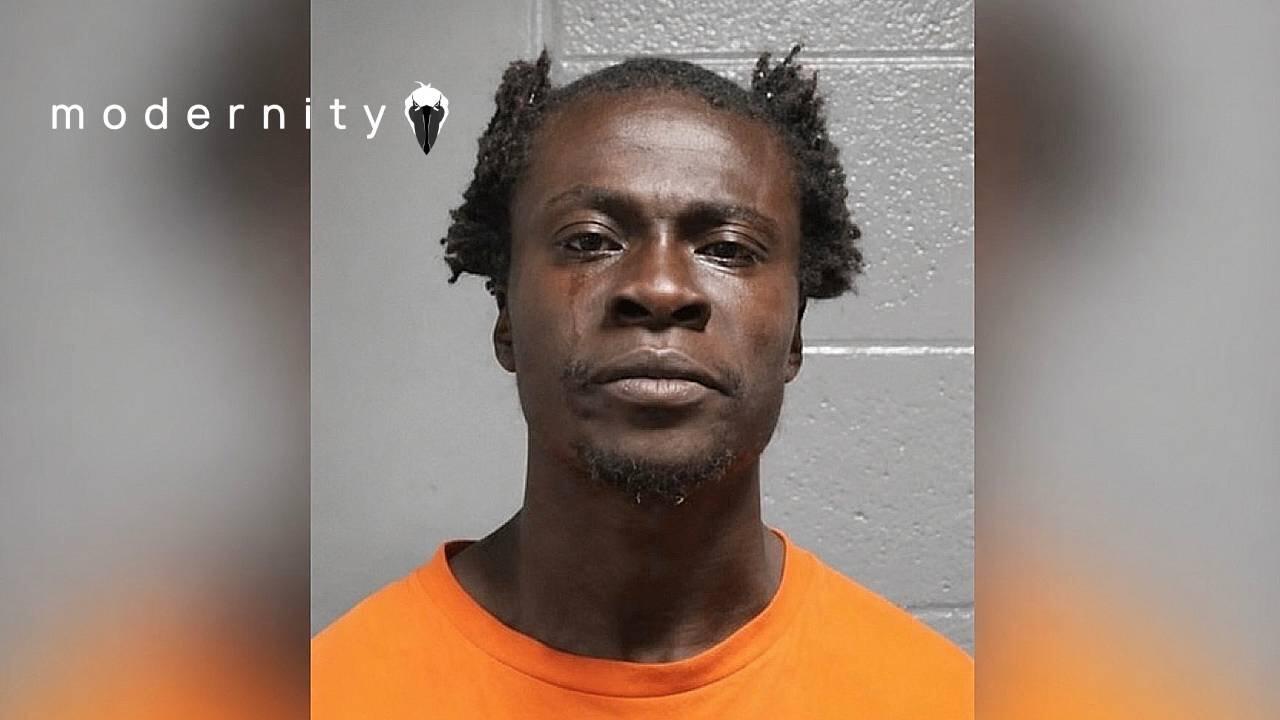
The push stems from high-profile horrors like the November 18 attack where Lawrence Reed, a career criminal with 72 prior arrests, allegedly doused a young woman with gasoline and set her ablaze on a Blue Line train. 

That case and many like it have exposed  how Democrat leniency under figures like DA Kim Foxx kept predators like Reed on the streets.

The atrocity, captured on surveillance, left the victim with severe burns and sparked national outrage over Chicago’s catch-and-release system.

But it’s part of a broader surge in violence tied to repeat offenders and unchecked illegal immigration in blue cities.

And in Virginia, an illegal immigrant from Sierra Leone with 30 prior arrests, including rape and assault, fatally stabbed mother Stephanie Minter at a bus stop.

These cases echo the same systemic failures: leftist prosecutors and sanctuary policies recycling dangerous criminals back into communities, turning public transit into danger zones.

In Charlotte, Decarlos Brown Jr. with 14 arrests knifed Ukrainian refugee Iryna Zarutska to death on light rail. In Seattle, a repeat offender blinded a 75-year-old woman. Even a schizophrenic cannibal axe murderer got early release in Connecticut.

Trump’s team isn’t playing games. The FTA directive, backed by complaints from riders and threats from the administration, demands real accountability.

“CTA officials said the new security plan will include a 34% increase in policing hours from the Chicago Police Department Public Transit Section,” per CBS News, alongside plans for high-barrier fare gates to curb evasion.

The agency also points to “bolstered by early data showing that crime reduction strategies implemented over the past three months are working.”

Riders have long decried the violence, with assaults up 50% post-defund era, per CPD stats. Chicago’s murder tally topped 600 last year, driving a 7% population drop since 2020 as families flee the mayhem.

This security pivot under Trump pressure marks a shift from Democrat excuses to enforcement—prioritizing safety over coddling criminals.

With the FTA set to review the plan, Chicago’s transit could finally become safer, proving that tougher leadership gets results where progressive pandering fails.

Your support is crucial in helping us defeat mass censorship. Please consider donating via Locals or check out our unique merch. Follow us on X @ModernityNews.

Tyler Durden
Sun, 03/15/2026 – 18:40

Sen. Mike Lee: We’ve ‘Turned Kind Of A Corner’ On The Save Act

Sen. Mike Lee: We’ve ‘Turned Kind Of A Corner’ On The Save Act

Last week, President Trump announced on Truth Social that he will not sign any new legislation until the Senate passes the Safeguard American Voter Eligibility (SAVE) Act, calling it his top priority ahead of the midterms. 

The SAVE Act, introduced in January by Sen. Mike Lee (R-Utah) and Rep. Chip Roy (R-Texas), requires proof of U.S. citizenship to register to vote and a government-issued photo ID to vote. It also requires states to purge non-citizens from existing voter rolls. The bill and its provisions have significant bipartisan support, according to recent polling.

From left, Sen. Mike Lee (R-Utah), Rep. Chip Roy (R-Texas), and House Speaker Mike Johnson (R-La.) are seen during a press conference on the Safeguard American Voter Eligibility Act outside the U.S. Capitol. | Francis Chung/POLITICO

Despite Trump’s threat, Senate Majority Leader John Thune has expressed reluctance to change the filibuster. On Monday, he made it very clear there was no way he was going to change Senate rules to pass the bill. 

Yeah, that’s not going to happen,” Thune said.

But, Sen. Mike Lee (R-Utah) now thinks the SAVE America Act may finally be getting somewhere. Lee, the lead sponsor of the legislation, posted a video update on Friday announcing that he believes we’ve “turned kind of a corner” on the SAVE Act.

After weeks of uncertainty about procedure, Lee said he and Thune have been working through options that could bring the bill to the floor for real debate – not just a choreographed vote designed to fail.

“Okay, important update on the Save America Act and the effort to get it passed,” Lee said in the video. “Look, I am guardedly optimistic. We’ve turned kind of a corner. Over the last few days, there’s been some uncertainty about exactly what procedure we will be and will not be using. In the end, we’ve been working closely with Leader Thune and his staff, and they’ve been great to work with. What we’re coming up with is something that I think is best described as a hybrid version of the talking filibuster.”

Under the Senate’s standard rules, passing most legislation requires 60 votes to end debate – a threshold Democrats have made clear they have no intention of helping Republicans reach. The talking filibuster approach would flip the dynamic. Instead of requiring 60 votes to advance, it would require opponents to physically hold the Senate floor and debate the bill for hours or days on end. 

The problem is, of course, Thune – who’s made it clear that he believes the conference lacks the unity to pull it off. He warned that a talking filibuster isn’t just about extended speeches; it also opens the floor to unlimited amendments, meaning Democrats could endlessly propose changes designed to fracture GOP support.

The talking filibuster issue is one on which there is not, certainly, a unified Republican conference, and there would have to be,” Thune said last month. “If you go down that path, you’re talking about the need to table what are going to be numerous amendments and an ability to keep 50 Republicans unified, pretty much on every single vote. And there’s just not, there isn’t support for doing that at this point.”

The internal pressure on Thune has been substantial. Earlier this month, conservative voices accused him of engineering what they called a “show vote” by bringing the bill to the floor to get Democrats on record opposing the legislation, but doing nothing to actually pass it.

Lee’s ”hybrid” framing could give Thune political cover to move without formally embracing the talking filibuster by name, while still forcing extended floor debate before any cloture filing. By keeping the bill on the floor before invoking cloture, Lee wants to create pressure that a clean procedural vote would not generate.

“We’re going to bring it to the floor,” Lee said. “We’re going to debate it for an extended period of time before filing cloture. And in my view, at least, I don’t want to speak for anyone else, this bill needs to remain on the Senate floor before we file cloture on the bill for as long as it takes to get it done.”

Whether that’s enough to move the needle inside the conference remains unclear. What Lee is betting on is momentum and exposure. The longer the bill sits on the Senate floor with cameras rolling and the clock ticking, he believes, the harder it becomes for Democrats to explain to voters why they won’t support something with strong, bipartisan approval.

The strategy is less about parliamentary maneuvering than it is about political pressure. Lee seems to believe the math is starting to move in his direction, and as the lead sponsor of the bill, wouldn’t be saying so if he didn’t believe it.


Tyler Durden
Sun, 03/15/2026 – 18:05

Bessent Leads Trade Talks With China In Paris Ahead Of Trump-Xi Summit

Bessent Leads Trade Talks With China In Paris Ahead Of Trump-Xi Summit

Ahead of the upcoming Trump-Xi summit, China and US have begun a fresh round of trade talks to set the stage for the main event. 

Trade negotiators led by US Treasury Secretary Scott Bessent, US Trade Representative Jamieson Greer and China’s Vice Premier He Lifeng held talks in Paris on Sunday to map out plans for a leaders’ summit later this month. The first day of the talks concluded around 6 pm local time, and the delegations will meet again on Monday, Bloomberg reported. The trade negotiators are expected to review the latest developments in a truce reached in November and discuss topics including the war in Iran as well as investment and purchases.

According to Bloomberg, Bessent, Greer and He have a history of bilateral negotiations. They met in Geneva last May to launch a series of talks that saw follow-on sessions in London, Stockholm, Madrid and Kuala Lumpur. That resulted in a truce under which Washington and Beijing lowered tariffs and export restrictions. Chinese Vice Finance Minister Liao Min and Vice Commerce Minister Li Chenggang are also at the talks. 

Bessent said on Thursday that his team will continue to deliver results that put America’s farmers, workers and businesses first. China’s commerce ministry said Friday the two sides are set to discuss “trade and economic issues of mutual concern.”

In January, Greer said the two sides could try to focus on reaching an agreement on trade in non-sensitive sectors in talks ahead of Trump’s visit to China.

The outcomes will set the stage for President Donald Trump’s trip to China from March 31 to April 2, the first visit by an American president to Beijing in nearly a decade.

The talks also marks the first time the two sides are meeting since the US Supreme Court ruled Trump didn’t have the authority to impose tariffs using the International Emergency Economic Powers Act — a tool he used to threaten levies as high as 145% on China.

The Trump administration has since introduced an across-the-board tariff of 10% and vowed to recreate parts of its tariff wall using other authorities. Greer kicked off the process of imposing tariffs under his agency’s Section 301 authority by initiating an investigation into allegations of industrial overcapacity and forced labor practices for several economies, including China.

Trump’s visit to China will be the first for a U.S. president since he went in his first term in 2017. It will come five months after the two leaders met in the South Korean city of Busan and agreed to a one-year truce in a trade war that temporarily saw tit-for-tat tariffs soar to triple digits before the two sides climbed down. 

Still, trade remains a source of tensions. The commerce ministry on Friday hit back against the Trump administration’s new trade investigation into 16 trading partners, including China. The investigation – which came after a Supreme Court ruling struck down Trump’s sweeping global tariffs that were imposed last year – could pave the way for new tariffs.

Another issue that could be discussed is the Iran war, especially when global anxiety is soaring over oil prices and supplies. Trump said Saturdaythat he hopes China, France, Japan, South Korea, the United Kingdom and others will send warships to keep the Strait of Hormuz “open and safe.”

Before Sunday’s talks, Gary Ng, a senior economist at French bank Natixis and a research fellow at the Central European Institute of Asian Studies, said the Paris meeting is likely the most important bilateral one before the Xi-Trump summit.

The key issue is “whether China and the U.S. can agree on what is agreed and manage disagreement. Iran is a new factor, but Beijing is more concerned about the flip-flopping of U.S. policies,” he said.

Last week, Chinese Foreign Minister Wang Yi said it would be a “big year” for China-U.S. relations. While he did not confirm the state visit, Wang said that “the agenda of high-level exchange is already on the table.”

Tyler Durden
Sun, 03/15/2026 – 16:35

Energy Secretary Directs Oil Company To Resume Operations In California, Citing National Security

Energy Secretary Directs Oil Company To Resume Operations In California, Citing National Security

Authored by Jacob Burg via The Epoch Times,

Energy Secretary Chris Wright on March 13 directed the Texas-based oil company Sable Offshore Corp. to restore operations in water off southern California.

Wright invoked the Defense Production Act to restore the company’s Santa Ynez Unit and Pipeline System near Santa Barbara to address supply disruption risks that “have left the region and U.S. military forces dependent on foreign oil,” according to a Department of Energy news release.

“The Trump Administration remains committed to putting all Americans and their energy security first,” Wright said in a statement.

“Unfortunately, some state leaders have not adhered to those same principles, with potentially disastrous consequences not just for their residents, but also our national security.

“Today’s order will strengthen America’s oil supply and restore a pipeline system vital to our national security and defense, ensuring that West Coast military installations have the reliable energy critical to military readiness.”

Officials said Sable Offshore Corp.’s facility can replace nearly 1.5 million barrels of foreign-sourced crude oil each month by producing roughly 50,000 barrels per day, resulting in a 15 percent increase to California’s oil production.

The Energy Department noted that the state used to supply nearly 40 percent of the nation’s oil production, with more than 60 percent of the oil refined in California now coming from overseas, including through the now-closed Strait of Hormuz.

This presents “serious national security threats,” the agency said.

Officials also said that restoring Sable Offshore’s operations will “create hundreds of additional American energy jobs while generating millions in local economic activity.”

The action follows President Donald Trump’s executive order from early last year, which reversed former President Joe Biden’s ban on offshore oil drilling on the West and East coasts.

Biden’s effort to shut down 625 million acres of federal waters from oil production was later struck down by a federal court.

Restoring oil production in Southern California comes weeks after the United States joined Israel in coordinated air strikes on Iran, igniting war in the Middle East. Iran has retaliated by striking oil fields and refineries in its Gulf state neighbors, and by shutting down the critical Strait of Hormuz through which 20 percent of the world’s oil travels.

Oil prices have skyrocketed to just over $98 per barrel by March 15, the highest level since oil climbed in 2022 after Russia invaded Ukraine.

California Gov. Gavin Newsom criticized the Trump administration for ordering the restoration of oil drilling off the state’s coast, arguing the Sable Offshore pipeline would only increase total oil production by 0.05 percent and have “no impact on lowering global oil prices.”

“Donald Trump started a war, admitted it would spike gas prices nationwide, and told Americans it was a small price to pay. Now he’s using this crisis of his own making to attempt what he’s wanted to do for years: open California’s coast for his oil industry friends so they can poison our beaches. This wouldn’t lower prices by a cent,” Newsom said in a statement.

“This is an attempt to illegally restart a pipeline whose operators are facing criminal charges and prohibited by multiple court orders from restarting.”

The governor said California would fight the effort in court.

The pipeline was responsible for an oil spill in 2015 in which more than 100,000 gallons of crude oil spilled onshore near Refugio State Beach in Santa Barbara County.

Roughly 21,000 gallons of oil seeped into the Pacific Ocean, and thousands of birds and marine mammals died.

The incident resulted in a $23.3 million settlement and closed 138 square miles of fisheries for multiple weeks.

Tyler Durden
Sun, 03/15/2026 – 16:10

Trump Administration Set To Receive $10 Billion Fee From TikTok U.S. Deal

Trump Administration Set To Receive $10 Billion Fee From TikTok U.S. Deal

The Trump administration is poised to receive roughly $10 billion in payments from investors involved in the recently completed transaction to take control of TikTok’s U.S. operations, delivering an unusual financial windfall tied to the government’s role in keeping the popular social-media platform active in the United States.

ByteDance is the Chinese parent of TikTok. John G Mabanglo/EPA/Shutterstock

The payments are part of the arrangement under which a consortium of admin-aligned investors took control of TikTok’s American business from its Chinese parent company, ByteDance, according to the Wall Street Journal, citing people familiar with the matter. The payments are separate from the capital investors committed to establish a new entity that now operates the platform in the U.S.

Backers of the deal include cloud-computing firm Oracle, private-equity company Silver Lake and Abu Dhabi investor MGX. Those investors and others have already paid the U.S. Treasury about $2.5 billion when the transaction closed in January and are expected to make additional payments until the total reaches about $10 billion, the people said.

President Trump had previously signaled the government expected compensation for facilitating the arrangement. When outlining the framework for the deal in September, he said the United States would receive a “tremendous fee-plus” for its role in allowing the transaction to proceed.

It hasn’t been fully negotiated, but we’ll get something,” Trump said at the time, arguing that the government’s involvement in securing the agreement justified compensation.

The $10 billion payment would be nearly unprecedented for a government helping arrange a transaction, historians have said. Vice President JD Vance previously said the new TikTok entity running the U.S. operations is valued at about $14 billion in the deal, which some tech analysts have said dramatically undervalues the company. 

As part of the agreement, the U.S. entity has to share profits with ByteDance, which licensed its popular algorithm to the new venture so it could be fully trained on Americans and still owns nearly 20%. -WSJ

Under the terms of the arrangement, ByteDance licensed TikTok’s recommendation algorithm to the new American venture, allowing the platform to continue operating with its core technology. ByteDance retains nearly a 20% ownership stake and will receive a share of the new entity’s profits.

Administration officials have defended the fee, saying it reflects Trump’s role in preserving TikTok’s U.S. operations while negotiating with China and addressing national-security concerns raised by lawmakers.

The transaction stems from legislation requiring TikTok’s U.S. business to reduce ByteDance’s ownership or face a shutdown. Lawmakers from both parties had expressed concern that Chinese control of the platform could expose sensitive data on millions of American users.

The TikTok arrangement is part of a broader pattern in which the administration has sought financial stakes or compensation in dealings involving major corporations. The government has taken a nearly 10% stake in Intel and negotiated an agreement to receive a share of chip sales to China from Nvidia in exchange for export licenses.

The administration has also secured influence over the operations of U.S. Steel through a “golden share” agreement tied to its takeover by Japan’s Nippon Steel.

Together, the moves signal a more direct government role in major corporate transactions – one that, in the case of TikTok, could result in one of the largest payments ever associated with a government-facilitated deal.

Tyler Durden
Sun, 03/15/2026 – 15:45