60.9 F
Chicago
Monday, September 21, 2026
Home Blog Page 2628

Futures Flat In Quiet End To Torrid Week

Futures Flat In Quiet End To Torrid Week

US equity futures are flat to end a torrid week which saw all indexes hit a fresh all-time high while the terminally anachronistic Dow Jones briefly topped 40,000. Pre-market, MegaCap Tech are mixed: AMZN +20bp, MSFT +20bp, META -22bp, GOOGL -18bp. WMT is down 27bps pre-mkt, after its +7.0% rally post-earnings yesterday. As of 7:00am S&P and Nasdaq futures are unchanged while bond yields are largely flat. Commodities are mixed: oil is lower; metals/ags are higher. Overnight, China reported mixed April macro data (IP beat, Retail Sales miss) and also announced a new rescue plan to support housing; as a result base metals rallied (Copper +2.0%; Iron Ore +1.4%). Today, key macro focus will be on comments from the Fed’s Christopher Waller, Neel Kashkari and Mary Daly for further clues about the path for interest rates as well as the data from the leading index due at 10:00am (est -0.3%).

In premarket trading, GameStop and AMC rebounded following two sessions of losses, as the meme-stock rally shows fresh signs of life. While GameStop shares rise as much as 9.2% in premarket trading on Friday, AMC jumps as much as 9.5% — both stocks pared some of those early gains. Reddit shares rise 14% after the firm partnered with OpenAI to bring its content to the popular ChatGPT chatbot. Analysts note that this deal will boost the social media company’s data licensing business. Here are the other notable premarket movers:

  • Applied Materials share edge lower, falling 0.9% as the largest US maker of chipmaking machinery’s forecast failed to live up to high investor expectations following the stock’s 32% year-to-date rally.
  • Baidu ADRs tick up 0.4% in premarket trading, after rising 1.7% on Thursday. The search engine operator is set for weak growth in advertising revenue for coming quarters, Morgan Stanley says in a note that downgrades the stock to equal-weight from overweight.
  • Cracker Barrel shares trade 11% lower after the restaurant chain reduced its quarterly dividend as the company increases investment in its business. Additionally, the company also sees third- and fourth-quarter results coming below prior expectations, citing weaker-than-anticipated customer traffic as the main driver.
  • Doximity shares rise 14% after the application software company gave a first-quarter forecast that is stronger than expected. It also reported fourth-quarter results that beat expectations.
  • DXC Technology shares sink 23% after the IT services company gave a full-year forecast that was weaker than expected for both revenue and adjusted earnings. It also reported its fourth-quarter results.
  • Snowflake shares slip 1.3% after Bloomberg reported that the software firm is in talks to acquire startup Reka AI for more than $1 billion, according to people familiar with the matter.
  • Take-Two shares drop 2.8% after the video-game giant issued a weak full-year forecast, reflecting a later release date for the highly-anticipated Grand Theft Auto VI video game. The Rockstar Games title is now expected to release in fall 2025, which is in fiscal year 2026 rather than fiscal year 2025 as some analysts had expected.

Friday’s tentative mood reflected a repricing of US rate cut expectations to only one reduction in 2024. Several Fed policymakers said the the central should keep borrowing costs higher for longer as they await more evidence that inflation is easing.

“The markets are now at a bit of a crossroads,” said Stuart Cole, head macro economist at Equiti Capital. “With the central banks all very much in a data-dependence mode, the markets will be also adjusting expectations to each piece of relevant data that comes out.”

Investors will be tracking comments from the Fed’s Christopher Waller, Neel Kashkari and Mary Daly due later Friday for further clues about the path for interest rates.

European stocks slid for a second day weighed down by rates-sensitive sectors such as tech and real estate as traders pared back bets for policy easing after several Fed speakers suggested interest rates should stay high for longer. The Stoxx 600 dropped 0.4% but was off its worst levels, as construction, industrials and tech underperformed after ECB Executive Board member Isabel Schnabel warned against back-to-back interest rate cuts in June and July. Swap traders continue to price in three ECB rate cuts this year, with a first reduction likely next month. Luxury group Here are Europe’s top movers:

  • Richemont shares rise as much as 6.9%, the most in four months, after the Swiss watch and jewelery maker’s full-year sales beat estimates.
  • Bavarian Nordic shares jump as much as 5.6%, the most in 10 weeks, after US authorities warned that cases of a new clade of the Monkeypox virus are increasing in the Democratic Republic of the Congo.
  • Siemens shares fall as much as 2.4%, declining for a second day after the German industrial giant’s earnings on Thursday disappointed investors.
  • Lanxess shares decline by as much as 5.3% after both Jefferies and BNP Paribas Exane cut stock to underperform, with the former citing risks around demand recovery and also cutting Ebitda outlook.
  • Azelis shares decline by as much as 13%, the most on record, after EQT and PSP Investments Holding Europe offered to sell shares worth approximately 11% of total outstanding in the chemicals distributor, according to terms seen by Bloomberg.
  • Scor shares tumble as much as 13% after the French reinsurer’s first-quarter net income fell short of expectations, with analysts flagging a hit from one-offs including an impact on the firm’s L&H reinsurance division from volatility in US mortality claims.
  • Auto Trader shares slide as much as 5.3% as Morgan Stanley analysts cut their rating on the stock to underweight, saying the market is expecting too much too soon from the online auto marketplace’s Deal Builder product.
  • Engie shares fall as much as 2.2% after the French utility reported a miss in results that was somewhat expected after a warm winter pushed energy prices lower.
  • Haleon shares slip as much as 1.7% after GSK agreed to sell its remaining stake in the consumer health company for £1.25 billion, completing the drugmaker’s separation from the company.

Earlier in the session, property stocks in mainland China rose to the highest since November after the government announced a rescue package — its most forceful attempt yet to shore up the troubled sector. Elsewhere, Asian markets saw mild losses, though still on pace for weekly gains, as a late rally in Chinese stocks was not enough to offset weakness in tech-heavy markets of South Korea and Taiwan. The MSCI Asia Pacific Index declined 0.1%, to cut its weekly gains to 2.2%. Chipmakers TSMC and Samsung Electronics were among the biggest drags Friday. Benchmarks in South Korea, Taiwan and Australia posted among the largest declines in the region.

China’s mainland shares rallied to close at their highest level since Oct. 12 after the world’s second-largest economy announced its most forceful attempt yet to shore up the beleaguered property market, easing mortgage rules and encouraging local governments to buy unsold homes from developers for conversion into affordable housing. The new measures sent a Bloomberg index of Chinese property developers to its highest level since November.

“The lowering of down-payment ratio is beyond market expectations, while scrapping the minimum mortgage rate is well expected by the market,” said Shujin Chen, head of China financial and property research at Jefferies Hong Kong Ltd. “Investors are more willing to chase property stocks on speculation of a series of upcoming supportive policies before the Third Plenary Session in July,” she said.

In FX, the Bloomberg Dollar Spot Index rose 0.2%, but was still on track to end the week 0.5% lower after US CPI data earlier in the week cemented the view that the Fed will cut rates later this year. ING strategists say markets may have oversold the greenback following this week’s CPI and PPI data.  “We still think there is not enough thrust from US data to justify a significantly weaker greenback just yet,” they wrote in a note. USD/JPY climbed as much as 0.4% as the Bank of Japan left the amount of debt purchases unchanged. Leveraged-currency accounts bought dollars against the yen after the BOJ kept debt purchases unchanged in its regular operations Friday following a surprise reduction on Monday, according to an Asia-based FX trader.

In rates, the 10-year Treasury yield inched up 1bp to 4.39%, bouncing off 4.31% hit on Thursday, its lowest in nearly six weeks. Swaps imply a 76% chance of a quarter-point rate cut from the Fed in September, compared with 73% earlier in the week; around 44bps of cuts are priced in total through the end of the year, from around 40bps at the start of the week. Meanwhile in Europe, money markets trimmed ECB interest rate-cut wagers after policymaker Isabel Schnabel warned against back-to-back rate cuts.

In commodities, WTI trades within Thursday’s range at around $79.31. Most base metals trade in the green; LME nickel outperforms peers. Spot gold rises roughly $8 to trade near $2,385/oz.

Market Snapshot

  • S&P 500 futures down 0.1% to 5,314.00
  • STOXX Europe 600 down 0.4% to 521.29
  • German 10Y yield little changed at 2.48%
  • Euro down 0.2% to $1.0842
  • Brent Futures up 0.4% to $83.57/bbl
  • Gold spot up 0.3% to $2,383.06
  • US Dollar Index up 0.29% to 104.76
  • MXAP down 0.1% to 181.46
  • MXAPJ down 0.1% to 569.53
  • Nikkei down 0.3% to 38,787.38
  • Topix up 0.3% to 2,745.62
  • Hang Seng Index up 0.9% to 19,553.61
  • Shanghai Composite up 1.0% to 3,154.03
  • Sensex up 0.4% to 73,983.35
  • Australia S&P/ASX 200 down 0.8% to 7,814.37
  • Kospi down 1.0% to 2,724.62

Top Overnight News

  • European stocks retreated for a second day as dialed-down bets for Federal Reserve policy easing weighed on risk sentiment.
  • China announced its most forceful attempt yet to shore up the beleaguered property market, easing mortgage rules and encouraging local governments to buy unsold homes from developers for conversion into affordable housing.
  • Investors are divided on the likelihood of the Bank of Japan repeating its surprise move earlier this week by reducing purchases of government bonds in a regular buying operation this morning.
  • China’s economic recovery tilted even further toward manufacturing, leaving it more vulnerable to trade barriers and highlighting the stakes of a new bid to shore up domestic demand.

A more detailed look at global markets courtesy of Newsquawk

APAC stocks were mostly subdued following the mild losses on Wall St where the major indices pulled back after printing fresh record levels, while participants also digested mixed activity data from China. ASX 200 was pressured as losses across most industries overshadowed the gains in the mining and materials. Nikkei 225 declined but was off worst levels amid a weaker currency and after the BoJ refrained from further cutting its bond purchases. Hang Seng and Shanghai Comp were indecisive with early outperformance in Hong Kong owing to tech strength before briefly wiping out all of its gains, while the mainland was constrained as the focus centred on a slew of data including a further deterioration in Home prices which saw the steepest monthly drop in 9 years, while activity data was mixed as Industrial Production topped forecasts but Retail Sales disappointed. Modest extension of/return of strength in the Hang Seng and Shanghai Composite on the announcement of various Chinese property support measures, incl. a cut to the housing fund loan level.

Top Asian News

  • China’s Vice Premier He Lifeng says must effectively ensure the delivery of homes, adds local governments can purchase some homes for affordable housing at ‘reasonable’ prices, according to Xinhua.
  • PBoC announces it will lower interest rates on provident housing fund loans by 25bps and China will abolish the lower limit of interest rates for housing provident fund for first and second homes at the national level.
  • PBoC to create a CNY 300bln relending loan for affordable housing, expected to drive bank lending of CNY 500bln.
  • China stats bureau spokesperson said complexities and uncertainties in the external environment grew outstandingly and continued economic recovery and improvement still face many challenges, while April economic operations were stable even though some indicators slowed due to a high base and holiday factors. China’s stats bureau said with macro policies taking effect and economic momentum recovering, China’s economic improvement will be further consolidated and strengthened but also noted that China’s property sector continues to be under adjustments.
  • BoJ Governor Ueda said there is no immediate plan to sell BoJ’s ETF holdings and must spend time deciding the fate of BoJ’s holdings including whether to unload them in the future, according to Reuters.
  • BoJ may raise rates as many as three more times this year with the next move potentially coming as early as June given how much room there is to adjust its “excessively” easy settings, according to former BoJ chief economist Sekine cited by Bloomberg.

European bourses, Stoxx600 (-0.2%) are mostly on the back foot, continuing the broad weakness seen in APAC trade overnight. European sectors are mostly lower; Telecoms are found at the top of the pile, building on the prior day’s outperformance; Tech lags.
US Equity Futures (ES -0.1%, NQ -0.1%, RTY -0.1%) are flat, with price action circulating on either side of the unchanged mark.

Top European News

  • ECB’s de Guindos sees inflation moving toward the 2% goal in 2025. Favourable stance on cross-border consolidation in the banking sector.
  • Riksbank’s Thedeen says recent data does not change the picture for rate cuts.
  • UK Chancellor Hunt will claim that only the Conservative Party will cut the tax burden after the election, according to FT.
  • ECB’s Schnabel said depending on incoming data, a rate cut in June may be appropriate, but the path beyond June is much more uncertain, while she added that a rate cut in July does not seem warranted based on current data. Schnabel also stated that with inflation risks still being tilted to the upside, front-loading of the easing process would come with a risk of easing prematurely and cannot pre-commit to any particular rate path due to very high uncertainty, according to Nikkei.

FX

  • DXY is firmer, continuing to reclaim lost ground following the dovish US CPI report on Wednesday, which led the index as low as 104.07. The index currently sits towards the upper end of a 104.77-49 range.
  • EUR is modestly softer vs USD, and overall unreactive to the final EZ inflation figures. EUR/USD dips beyond the lows of Thursday, printing a trough at 1.0842.
  • GBP is slightly softer vs the Dollar, largely a factor of broader Greenback strength, rather than UK-related newsflow; trading towards the bottom end of today’s 1.267-264 range.
  • JPY continues to trundle lower, with USD/JPY going as high as 155.98, just shy of the round 156.0 level. USD/JPY was supported after the BoJ refrained from making any further reductions in Rinban purchase amounts.
  • Antipodeans are both softer vs the Dollar, with the Aussie the G10 underperformer. Chinese activity data overnight was mixed, and subsequent support measures which lifted the Yuan failed to prop up the Antipodes.
  • PBoC set USD/CNY mid-point at 7.1045 vs exp. 7.2222 (prev. 7.1020)

Fixed Income

  • USTs are modestly softer, and to a lesser degree than EGBs; bullish-impetus from the BoJ maintaining its Rinban purchase amount is weighed up against hawkish commentary from ECB’s Schnabel. Currently only a handful of ticks lower at around 109-14.
  • Bunds are weighed on by remarks from ECB’s Schnabel overnight who said that the data does not currently point to a cut in July. Bunds down to a 131.01 base, but with someway to go before the WTD trough from Tuesday at 130.24.
  • Gilts are taking impetus from EGBs and as such are at session lows of 98.08 but again well above Tuesday’s WTD base at 97.23; potential focus on extensive fiscal commentary from Chancellor Hunt, though nothing fundamentally new just yet.

Commodites

  • Crude benchmarks were incrementally firmer but have been drifting from best levels as the USD picks up; WTI & Brent Jul’24 at the low-end of the day’s range at USD 78.80/bbl and USD 83.37/bbl respectively.
  • Precious metals are a touch firmer, torn between the stronger USD/somewhat higher yields and a general downtick in risk appetite. XAU at USD 2380/oz, still yet to test USD 2400/oz.
  • Base metals are in the green, support derived from the extensive Chinese property support measures announced across the APAC/European sessions transition, despite the mixed read from the region’s data overnight.

Geopolitics

  • US Official says the US will agree to the Rafah operation but on conditions, via Al Arabiya; adds, the US’ warnings to Israel about the operation in Rafah are serious. “The Biden administration will accept a full Israeli attack in Rafah aimed at liquidating Hamas”.
  • Iraqi armed factions said they targeted a “vital target” in Eilat, southern Israel, according to Asharq News.
  • Israel presented a proposal to Egypt to reopen the Rafah crossing with the participation of Palestinians from Gaza and UN personnel, according to Israeli media cited by Asharq News.
  • US Defence Secretary Austin reinforced to Israeli counterpart in a phone call the necessity to protect civilians and ensure uninterrupted aid flow before any potential Israeli military operation in Rafah.
  • Yemen’s Houthis say they downed US MQ9 plane on Thursday evening Maareb Governorate.
  • North Korean leader Kim’s sister denied arms exchanges with Russia and said North Korea has no intention to export its arms, while she added that rocket launchers and missiles recently unveiled are for defence against South Korea, according to KCNA.
  • South Korea said North Korea fired at least one ballistic missile towards the Sea of Japan.

US Event Calendar

  • 10:00: April Leading Index, est. -0.3%, prior -0.3%

Central Bank Speakers

  • 10:15: Fed’s Waller Speaks on Payments Innovation
  • 10:15: Fed’s Kashkari Gives Brief Introduction of Waller
  • 12:15: Fed’s Daly Gives Commencement Speech

Tyler Durden
Fri, 05/17/2024 – 06:50

Left’s “Sue-Till-Green” Strategy Comes To PA

Left’s “Sue-Till-Green” Strategy Comes To PA

Authored by André Béliveau via RealClearPennsylvania,

When climate activists use the term “environmental justice,” they mean it literally. Rather than legislating and passing laws (as is customary in a constitutional republic), they’ve turned to the courts to fight their quixotic battles.

Pennsylvania is no stranger to litigating climate-related policies.

The Keystone State’s history with the Regional Greenhouse Gas Initiative (RGGI), for example, has been nothing but litigious. The legal battle began when Governor Tom Wolf unconstitutionally entered Pennsylvania into the multistate compact. A Commonwealth Court ruled that Wolf’s executive order constituted an illegal tax, but Wolf’s successor, Governor Josh Shapiro, appealed the decision, prolonging the legal limbo.

RGGI is part of a larger “sue-till-green” strategy sweeping the nation and gaining momentum in Pennsylvania. The strategy began to take shape in 2012, when the Climate Accountability Institute hosted a pivotal conference in La Jolla, California. The gathering discussed a new approach to climate activism, mirroring the campaign against Big Tobacco—but this time targeting the oil and gas industry.

The goal: to effectively revoke the oil and gas industry’s “social license to operate.” Ultimately, this approach inundates oil and gas companies with legal fees and, together with other “green” policies, artificially raises the cost of reliable energy and subsidizes the production of less-reliable alternative energy sources.

Since then, climate radicals have created a centralized, interconnected network of operatives to file suits against the gas and oil industry nationwide. More than two dozen local and state government jurisdictions filed lawsuits on purely ideological grounds, seeking hundreds of billions of dollars in damages.

This legal onslaught has become a cash cow for law firms. The Center for Climate Integrity (CCI), which offers an array of environmental-centric advocacy services, attracts deep-pocket donors, including the Rockefeller Brothers Fund, Hewlett Foundation, and JPB Foundation. Together, these organizations grant money through the Collective Action Fund for Accountability, Resilience, and Adaptation, a donor-advised fund established to support cases by law firms focused on climate alarmism.

CCI isn’t alone. Local activist groups—Penn Environment, Breathe Project, Conservation Voters of PA, and Clean Air Council—make up a sophisticated network, with many linked to national organizations. These larger organizations start and fund the local-level subsidiaries, creating the appearance of grassroots engagement.

Increasingly, activists target swing states with significant gas and oil production. In July 2023, CCI published “Pennsylvania’s Looming Climate Cost Crisis.” This report attempts to attach a price tag (or quantifiable damage claim) on supposed climate change impacts in the Keystone State.

CCI doesn’t shy away from its intent to sue. CCI President Richard Wiles said that filing a climate-damages lawsuit in Pennsylvania would be a “cherry on top.”

One Pennsylvania community, Bucks County, took the bait. In March 2024, Bucks became the first county in Pennsylvania to sue a group of oil companies for “their alleged role in global warming.”

Wiles sees the Bucks County lawsuit as just the sounding whistle, hinting to local news that “it likely won’t be the last.” In April, CCI pitched ideas to the Allegheny County Council and the Pittsburgh City Council.

The sue-till-green strategy is gaining popularity on the political stump. Eugene DePasquale, a candidate for Pennsylvania attorney general, campaigns as the climate-action candidate who will take on “corporate polluters.”

The advocacy also pushes convoluted legal theories in Pennsylvania. Philadelphia district attorney Larry Krasner recently expressed concern about “climate homicide,” a fringe concept that suggests prosecuting fossil-fuel companies for “killing members of the public at an accelerating rate.”

What’s really endangered here is Pennsylvanians’ livelihoods. When it comes to energy, Pennsylvania is the “Saudi Arabia of the Northeast.” Criminalizing one of the commonwealth’s largest industries will lead only to higher energy costs, fewer jobs, reduced exports, and an unreliable power grid.

The self-proclaimed champion of democracy, the Left intentionally violates the “democratic norms” it claims to cherish by bypassing the deliberative processes where public issues belong. Climate radicals increasingly abuse the courts as an arena to penalize and shut down America’s energy sector, employing judges—not elected representatives—to codify their fever dreams of a future without hydrocarbons.

Tyler Durden
Fri, 05/17/2024 – 06:30

VW The Latest Automaker To Step Back From All-Electric Plans To Embrace Hybrids

VW The Latest Automaker To Step Back From All-Electric Plans To Embrace Hybrids

Not to be left behind by the rest of the industry, Volkswagen is the latest auto manufacturer to walk back its plans to go all-electric.

The move should come as no surprise to Zero Hedge readers, as we have been writing non-stop about the industry’s shift from BEVs back to a more common sense (and cost efficient) model, hybrids, over the last year. 

Volkswagen was once heavily invested in promoting its ID line of electric vehicles as the future, Bloomberg wrote this week. But now it has admitted it needs more plug-in hybrids due to slowing EV sales.

This shift is part of a broader reworking of VW’s electrification plans, following botched model releases and falling behind in China, the report says. The company has abandoned efforts to seek outside investment for its battery unit and canceled plans for a €2 billion EV factory in Germany.

Despite its pivot to electric cars, VW is still selling many combustion engine vehicles and is likely to exceed its emissions allowance next year. CEO Oliver Blume has requested leniency from European regulators, a stark change from VW’s aggressive EV lobbying just three years ago.

VW’s electrification drive was partly a response to the fallout from its diesel emissions scandal, leading to an ambitious plan to launch 75 electric models by 2029. Former CEO Herbert Diess championed this rapid transition, causing friction with industry peers.

While not abandoning EVs, Blume is forming partnerships, like with Xpeng Inc., and preparing a new EV brand in China to attract young consumers. VW is also discussing with Renault SA to develop cheaper EVs for the mass market.

Recall back in April we noted that Ford was “re-timing” its efforts to go all electric and back in February we wrote that GM was shifting to plug-in hybrids, too. 

CEO Mary Barra said on an earnings call back in February: “Let me be clear, GM remains committed to eliminating tailpipe emissions from our light-duty vehicles by 2035, but, in the interim, deploying plug-in technology in strategic segments will deliver some of the environment or environmental benefits of EVs as the nation continues to build this charging infrastructure.”

Barra announced plans to introduce plug-in hybrid electric vehicles (PHEVs) in North America on select models, aiming to comply with stricter federal fuel economy regulations. This shift mirrors industry trends, as automakers increasingly adopt hybrid technology to meet consumer demands and federal standards, following GM’s main rivals who already offer hybrids and PHEVs, according to CNBC

As we noted then, the automotive industry – which has now seen investment pulled from EV development by both major automakers that struck massive extortion labor deals with the UAW over the last year – is screaming that pure electric vehicles simply don’t make financial sense. 

That’s the magic of Bidenomics!

Tyler Durden
Fri, 05/17/2024 – 05:45

Common Medications For ADHD Linked To Increased Risk Of Glaucoma

Common Medications For ADHD Linked To Increased Risk Of Glaucoma

Authored by Marina Zhang via The Epoch Times (emphasis ours),

Common drugs prescribed to treat attention-deficit/hyperactivity disorder (ADHD) are associated with an increased risk of glaucoma, a recent Canadian study found.

(joel bubble ben/Shutterstock)

Glaucoma is a progressive eye disease that causes vision loss. Angle-closure glaucoma is a subtype that contraindicates with popular ADHD drugs.

Dr. Rami Darwich, an ophthalmology resident and the study’s lead author, told The Epoch Times that the study “does not establish causation but rather highlights an elevated risk of glaucoma.”

Common ADHD Drugs

Many popular ADHD drugs are sympathomimetic drugs, meaning they activate the sympathetic nervous system to help people focus. However, their downstream effects can inadvertently contribute to elevated eye pressure.

High eye pressure is a significant risk factor for glaucoma, though Dr. Darwich added that some glaucoma has developed even without significant pressure changes in recent years.

Common ADHD drugs include sympathetic stimulants such as methylphenidate and amphetamines. These are often first-line treatments for people with ADHD due to their greater efficacy. Psychostimulants are effective for about 70 percent of ADHD patients.

Non-sympathomimetic drugs, such as atomoxetine, increase chemicals in the brain to help the brain work and concentrate. Atomoxetine is usually prescribed when the patient is unresponsive to first-line drugs.

The study authors followed 240,257 newly prescribed subjects who took either methylphenidate, amphetamines, atomoxetine, or a combination of these drugs for a year or more.

Study participants were then followed and compared to people who had not taken ADHD drugs to determine glaucoma risks.

People who took amphetamines and atomoxetine had a higher risk of angle-closure glaucoma (ACG), while people who took methylphenidate had a higher risk of open-angle glaucoma (OAG).

Our eyes are made up of fluids. Comparing a person’s eyes to a sink, Dr. Darwich explained that ACG occurs when “the drainage pipe of the sink gets blocked, causing the water (fluid inside your eye) to build up suddenly.”

With OAG, “the drainage pipe is open, but it’s like it’s clogged or narrow, so the water (fluid inside your eye) drains too slowly,” he said.

One might experience “severe eye pain, headache, and blurred vision” with ACG. “It can feel like there’s pressure building up in your eye.”

OAG is more chronic and doesn’t present with noticeable symptoms at first. Over time, blind spots can appear in the periphery, which can then progress to the center of one’s vision. However, much of the eye damage has already been done by that stage.

The authors also noted that atomoxetine and amphetamines were weakly linked to the development of OAG, though they said the correlation wasn’t statistically significant.

How ADHD Drugs Contribute to Glaucoma

The authors were surprised that methylphenidate was not strongly linked to ACG, which is contraindicated by psychostimulants that activate the nervous system.

In general, sympathomimetic drugs such as methylphenidate and amphetamines are not recommended for individuals with known or suspected ACG.

Since these medications activate the sympathetic nervous system—the system that prepares the body for fight or flight—the pupils dilate, which can mechanically obstruct the eye’s natural drainage pathway. This fluid buildup can increase eye pressure and damage the optic nerves, causing glaucoma and progressive vision loss.

OAG is more common than ACG, though it has a lower risk of vision loss, and its link to ADHD drugs is not well-established.

Methylphenidate, the drug shown to increase the risk of OAG, has also been found to be toxic to eye cells. The three medications studied have also been known to induce redox reactions, which may lead to oxidative damage, potentially impairing optical nerves and affecting eye health.

People whose bodies don’t properly metabolize ADHD drugs may also be at greater risk of drug-related glaucoma.

“Given the prevalence of ADHD medication use (medically and recreationally), further studies are needed to confirm our findings and investigate associations of ADHD medication use and glaucoma,” the authors wrote.


Tyler Durden
Fri, 05/17/2024 – 03:30

France Blames Deadly New Caledonia Uprising On TikTok, Russia, & Azerbaijan 

France Blames Deadly New Caledonia Uprising On TikTok, Russia, & Azerbaijan 

More shocking images have come out of the ongoing unrest and riots which have gripped the French Pacific territory of New Caledonia, as additional French troops, including reports of elite security forces, are en route to help authorities restore order. 

Determined to suppress an uprising that’s killed at least four people and injured hundreds, France starting Wednesday declared a state of emergency — deploying soldiers, banning the social media platform TikTok, and granting additional police powers to authorities. Authorities say the TikTok shutdown is necessary to thwart the rioters’ ability to organize and instigate.

The upheaval was sparked when France passed legislation that would expand the privilege of voting in local elections to all citizens who’ve lived in New Caledonia for more than 10 years. The territory’s pro-independence factions see that move as a deliberate effort to weaken the power of the indigenous Kanaks. 

But instead of focusing on finding a way forward through the archipelago’s complex and historic tensions, Paris authorities are now highlighting a ‘foreign hand’ which has allegedly fueled the anti-France violence. According to a fresh Thursday report in Politico:

French Interior Minister Gérald Darmanin said that the violence, which has claimed the lives of three indigenous Kanak people and a police officer, had been actively supported by Azerbaijan.

“This isn’t a fantasy,” he insisted on Thursday. “I regret that some of the separatists have made a deal with Azerbaijan.” However, “even if there are attempts at interference, … France is sovereign on its own territory, and so much the better,” he added.

And of course, the name Russia was quickly invoked as also allegedly ‘interfering’:

Speaking to POLITICO, a French intelligence official granted anonymity to discuss sensitive issues of national security, said that “we’ve detected activities from Russia and Azerbaijan in New Caledonia for weeks, even a few months. They’re pushing the narrative of France being a colonialist state.”

But the more obvious reality is that the territory has large wealth disparities between those of native and European descent. The French government has invited proponents and opponents of independence to talks in Paris, in what could signal the new voting law could be suspended. 

“Protests turned violent Monday night, with shots fired at security forces, vehicles torched and shops looted in the worst unrest the French overseas territory has seen since the 1980s,” reports France24. More than 130 people have been arrested so far. Among the injured: 64 gendarmes and cops. 

“Shots were fired at the gendarmes using high calibre weapons and hunting rifles,” French High Commissioner of the Republic Louis Le Franc told reporters on Monday. The many arson targets have included car dealerships and a bottling facility. Crude roadblocks have been set up on highways and supermarkets and shops have been looted. Some proprietors are surrendering their inventory without resistance while begging the rioters to leave their buildings intact. 

An arson attack utterly devastated this dealership in Noumea, New Caledonia (AFP via Telegraph)

“The police station nearby was on fire and a car was too, in front of my house,” a woman whose family’s Caledonia roots go back generations told The Telegraph. “There was non-stop shouting and explosions, I felt like I was in a war. We are alone. Who is going to protect us?” 

Some citizens are banding together to take security into their own hands: This neighborhood installed a barrier to keep rioters out (Théo Ruby, AFP via France24)  

For now, the state of emergency covers the next 12 days. It empowers authorities to conduct searches, seize weapons, impose house arrests and restrict individuals’ movements. Public gatherings are banned and a curfew has been imposed. The initial focus of troop deployments: securing the territory’s ports, and its international airport, which is closed amid the violence. An additional 500 police officers are being sent to the territory.

“No violence will be tolerated,” said French Prime Minister Gabriel Attal, noting that the new state powers “will allow us to roll out massive means to restore order.” The dead include a 24-year-old French gendarme who succumbed a gunshot wound to the head after he took his helmet off to speak to residents.

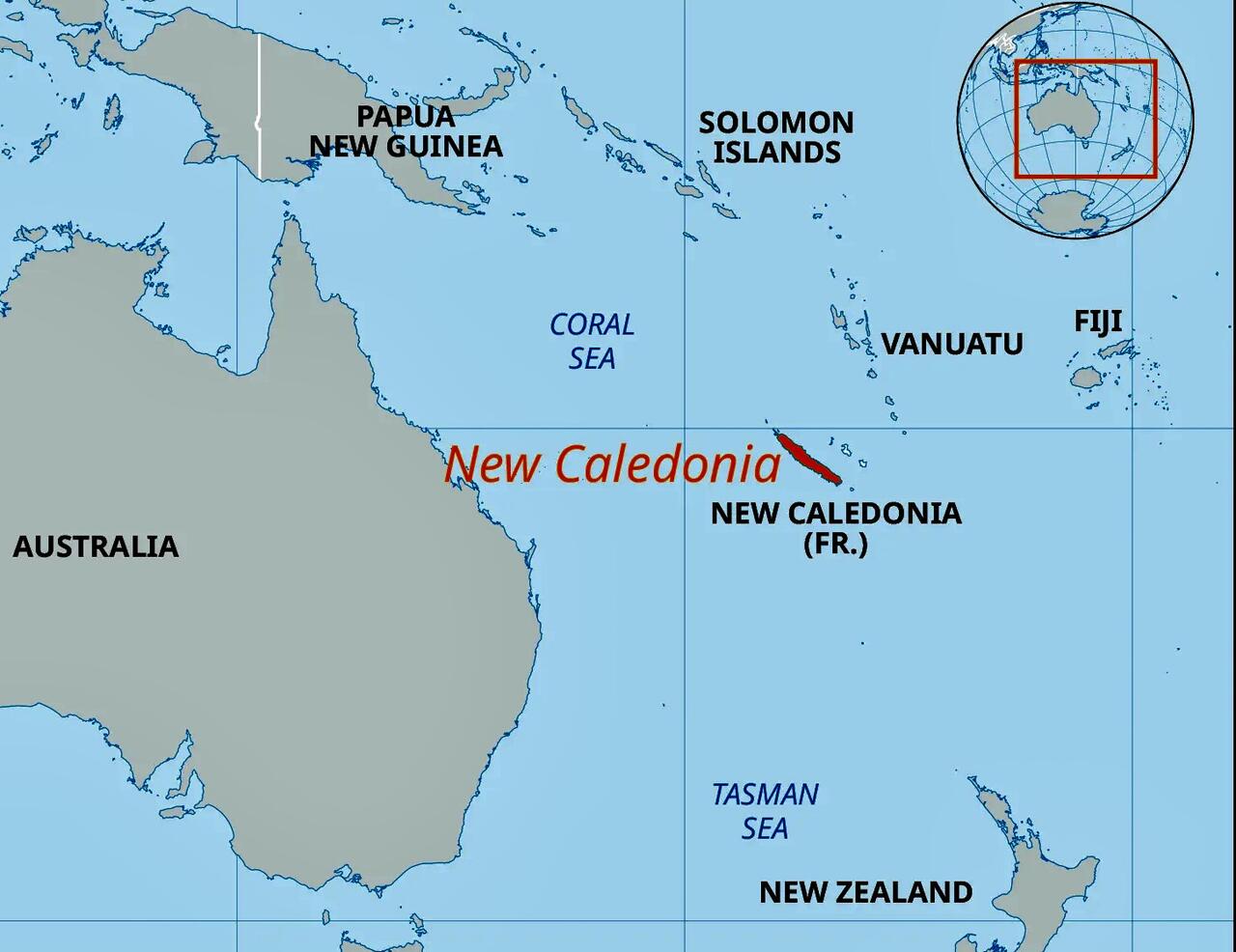
Located about 900 miles east of Australia, New Caledonia is one of the remaining vestiges of the French empire. It comprises several island groups, including the 240-mile-long, 25-mile-wide main island, which is also called New Caledonia. Its surrounding barrier reef is the second-largest in the world, behind Australia’s Great Barrier Reef.  

via Brittanica

New Caledonia is the world’s fourth-largest producer of nickel, behind Indonesia, the Philippines and Russia, and accounts for 7% of world production. However, its nickel industry is on the ropes. Its three processing facilities are near financial collapse, owing to the ongoing political strife that predates the current crisis, as well as high costs, mining.com reported in February. That’s prompted negotiations for French bailouts.

Earlier this month, our own Congress passed legislation that would effectively ban TikTok in the United States unless Beijing-based parent company ByteDance sells it.

France’s banning of TikTok on New Caledonia should stand as a reminder that, for all the US government’s screeching about the popular platform being a Chinese weapon that targets Americans’ information, the US ban is really about information control. 

Tyler Durden
Fri, 05/17/2024 – 02:45

US Wars Are Making Türkiye’s Relationship With The West Politically Untenable

US Wars Are Making Türkiye’s Relationship With The West Politically Untenable

Authored by Conor Gallagher via NakedCapitalism.com,

Turkish public opinion of the West dropped due to the Iraq War and has not recovered. There have been almost constant issues since, with both sides fanning the flames – the US with its arrogance and Turkish President Recep Tayyip Erdogan for using the disputes for political gain. Beneath the surface, however, they continue to cooperate on a wide range of issues.

That might get more difficult. The fact is the US, by supporting Israel’s “plausible” genocide in Gaza, has managed to find an issue that could cause an irreparable break between the West and the vast majority of Turkish citizens, which could make it politically toxic for Erdogan or anyone else to remain partially aligned with the West.

For months after October 7, Erdogan paid lip service to the Palestinian cause while trade kept flowing between Turkiye and Israel. Voters forced him to take a firmer stand at the polls on March 31 when Erdogan’s Justice and Development (AK) Party lost the popular vote for the first time since 2002 – partially due to the government response to Israel’s war in Gaza (the other big issue was the economy).

The Islamist far-right New Welfare Party (YRP) left Erdogan’s ruling People’s Alliance and campaigned on ending trade with Israel, and as a result it became the third largest party nationwide with 6.2 percent of the vote and won 60 municipalities.

A contrite Erdogan said the AKP would begin listening more to voters’ concerns.

On May 2, the news broke that Türkiye is halting all trade with Israel, which in theory could be a major blow to the latter. Türkiye is the fifth-largest source of Israeli imports, which include high-value products like iron, plastic and steel in addition to basic goods such as food items and textiles. In 2022, iron and steel topped the list of Turkish exports to Israel, and were together worth $1.19 billion.

The US surprisingly bit its tongue over Türkiye’s announcement with State Department Spokesman Matthew Miller saying that “they are both allies of ours, and we would encourage them to work through their differences.” The fact is there isn’t a whole lot the US can do as Washington has already pushed so much on the Ukraine issue, trying to do so on the issue of the slaughter in Gaza, which has inflamed public opinion in Türkiye, would be unwise. Miller’s statement also ignores the fact that “their differences” could be solved by the US forcing Israel to put an end to its “plausible” genocide.

Israel’s Foreign Minister said on May 9 that Erdogan was retreating on his trade restrictions only for Ankara to deny that’s the case. That makes the statement from Israel sound either imprudent or like more of a threat.

There are still questions of just how firm Erdogan and the Turks are on the trade suspension.

On May 5, the Israeli financial daily Globes reported the following:

Türkiye has not yet halted the loading of oil tankers at Ceyhan port bound for Israel, according to Israeli sources. Azerbaijan is an important supplier of oil to Israel, via the Baku-Tbilisi-Ceyhan (BTC) pipeline, at the end of which the oil is loaded onto tankers that bring it to Haifa.

Azerbaijan and Türkiye are strong allies, and Israel enjoys probably its closest ties with a majority Muslim nation with Azerbaijan and is a major supplier of arms to the Caspian country. From 2016 to 2020 Tel Aviv accounted for 69 percent of Azerbaijan’s major arms imports, including loitering munitions (they have been likened to missiles that can hunt for a target while directed from a control station).  The weapons gained notoriety in the 2020 Nagorno-Karabakh War.

Israel is one of the top customers for Azerbaijani oil, importing $297 million worth in January.

If Erdogan really wanted to get tough on Israel and lead the Muslim world response as he’s claimed, he could not only stop the transit of Azerbaijani oil, but maybe even try to do something about other suppliers. After Azerbaijan, the second biggest exporter of oil to Israel is Kazakhstan, which sends it through the Chevron-, ExxonMobil-, and Shell-controlled Caspian Pipeline Consortium (CPC) pipeline to the Russian Black Sea port of Novorossiysk.

Article 5 of the 1936 Montreux Convention states that if Türkiye is a belligerent, neutral merchant vessels may transit the straits by day through designated routes, but only if they do not assist the enemy.

Instead, Israel is beginning to send back its diplomats to Türkiye, half a year after it withdrew them over security concerns, and there are also rumblings about Türkiye rerouting exports through a middleman:

One proposed solution is to transport the products through European countries, according to the Yedioth Ahronoth newspaper.

Israeli shipping company iShip Forwarding has suggested a workaround to bypass the ban by establishing a new logistical route where Turkish products are first transported to third countries, and from there, to Israel.This solution allows Turkish manufacturers to continue supplying goods to Israel without violating the ban and without their knowledge that the products are reaching Israel. The shipping company has refused to disclose the specific third country through which the shipment passes, but the Israeli newspaper mentioned Bulgaria and Romania among others. This transit would incur additional costs on the shipment but ensures the continuous flow of goods.

If these reports of Türkiye already softening its trade suspension with Israel are true, more blowback can be expected as Turks are paying close attention to this issue – demonstrated by Erdogan being unable to get away with his usual talk-but-no-action strategy in the recent local elections.

And the longer Erdogan and the higher ups in Türkiye try to keep a lid on popular backlash against Israel and its partners in the West, the more likely it is that the situation explodes.

The Bigger Picture – Türkiye and the West

The number of issues between Ankara and the West over the past few decades are almost too numerous to count. Here’s just a brief list:

  • Sanctions and more sanctions. The US sanctions Turkish individuals and companies for “aiding Russia,” for “aiding Iran,” and the US is already threatening to slap on more sanctions over Turkish firms’ exports to Russia. A quick search on the US Treasury’s Office of Foreign Assets Control site turns up a whopping 232 sanctioned Turkish individuals or entities.  This is not a great look when Türkiye is going through its worst economic crisis in two decades.

  • Türkiye was snubbed by the EU.

  • Since the 1990s, Ankara asked NATO multiple times to deploy early warning systems and Patriot missiles to Türkiye, but it never came to pass. In 2017 Russia sold Türkiye its S-400 missile defense systems, which are arguably superior to anything the West has. In response the US expelled Türkiye from its F-35 program and sanctioned the country’s defense industry organization and its leaders.

  • Possible US involvement in failed 2016 coup attempt.

  • US proxy forces in Ukraine have reportedly tried to sabotage pipelines between Russia and Türkiye over the past year.

  • Western support of Kurds to the point there exists the possibility of Turkish soldiers coming face to face in the field with American soldiers, who are supporting the YPG in Syria.

  • The US abandoned its largely neutral stance on Türkiye’s relationship with both Greece and Cyprus. Washington is ramping up military aid to Greece, turning a port near the Turkish border into a naval base, and sending weaponry to Cyprus after ending a decades-old ban on arms sales.

This has all taken place despite Türkiye’s status as the second most important member of NATO just based on its geographic position, which includes controlling access to the Black Sea. These issues highlight a fundamental difference in how the two sides view the alliance: while Türkiye views itself as something more than just a regional power and wants to be treated as such, the US essentially wants Ankara to follow orders.

For now, the relationship continues largely out of economic necessity. While Turkiye imports cheap and reliable energy from Russia, its factories produce goods for the European market.

But economic concerns can be overruled by popular opinion, as we have seen by Erdogan being mostly forced by voters to start taking more active measures against Israel despite Türkiye’s economic woes. There are no signs that the trajectory of US-Israel attitudes and actions are going to change, and as a result it’s difficult to see how Turkish public opposition to the US-led West doesn’t continue to stiffen.  Sinem Adar, an associate at the Center for Applied Türkiye Studies at the German Institute for International and Security Affairs, writing at War on the Rocks:

Türkiye’s ruling elites believe that “the West lacks strategic thinking and has increasingly become estranged from the rest of the world in the face of various issues including relations with China, migration and terror, and the shift in economic gravity from the West to the East.”

For Ankara, the unequivocal and unconditional support that the Biden administration gives Israel confirms this belief. Triggering a convergence between the policies of Türkiye, Egypt, Saudi Arabia, and other countries, pro-government journalists expect that the conflict would lead to an increasing isolation of Israel. Regardless of their ideological affiliation, most Turkish political actors tend to see the recent conflict in Gaza as one between the so-called West (led by the United States) and the East. Since the disputed attack at the al-Ahli hospital in Gaza City, there have been calls on the government to ally with countries in the Global South to “stop the U.S.-Israeli alliance.”

Yet the proposed methods vary. Addressing an emergency session of the Organization for Islamic Cooperation on Oct. 18, Fidan called upon Muslim countries to act with “self-confidence” and “challenge the hegemonic narrative that has been imposed on them,” but without offering a concrete roadmap for how to do that. Devlet Bahçeli, the leader of the AKP’s junior partner, the Nationalist Movement Party, said Türkiye should intervene militarily if there is no ceasefire. Those critical of Ankara’s civilizationist aspirations yet share its aspirations for a foreign policy independent from the West call for booting U.S. military members at Incirlik Air Force Base and the Kürecik Radar Station in Malatya.

While the main opposition remains committed to the West and even the usually nimble Erdogan has looked a bit slow in keeping up with public opinion on the Palestine issue, others are beginning to fill the gaps, speaking out against the lack of Turkish action on Palestine, as well as increasingly blaming NATO.

There were protests at the American Incirlik air base in November. Protestors tried to storm the base and fought with police in riot gear who fired tear gas and used water cannons to disperse the crowds. The base in southern Türkiye is reportedly still used by the US to deliver weapons to Israel. There’s also the fact that Incirlik hosts US nuclear weapons, which has become increasingly controversial. Asked about it before the 2020 election, Biden said he is “worried.”

According to Nordic Monitor, the protests were at least partially organized by the Turkish intelligence agency MIT, which in a bid to give Erdogan more leverage in talks with DC, “engaged a jihadist charity organization to orchestrate a nationwide march.” Let’s hope MIT doesn’t lose control of its assets.

There have also been protests at NATO’s Kürecik Radar Station in southeastern Türkiye, where thousands chanted against Israel and NATO. Although Türkiye agreed to host the radar station under the condition that information gathered there only be shared with NATO member states, it is widely believed Israel also receives the information. Iran criticized Türkiye when the radar was being installed back in 2011, saying it would help to protect Israel from Iranian missile attacks in case of a war.

Seeing as the US and Israel are joined at the hip, Israel’s actions in Gaza also increase opposition in Türkiye to the US and NATO. And this trend predates Israel’s “plausible” genocide:

A poll conducted in December 2022 by the Turkish company Gezici found that 72.8% of Turkish citizens polled were in favor of good relations with Russia. By comparison, nearly 90% perceive the United States as a hostile country. It also revealed that 24.2% of citizens believe that Russia is hostile, while 62.6% believe that Russia is a friendly country. Similarly, more than 60% of respondents said that Russia contributes positively to the Turkish economy.

Those results are astounding. Russia and Türkiye share a long, difficult history, and as recently as 2016, Russia was seen by the public as the biggest threat to Türkiye. Only 16 percent of Turks had a favorable opinion of Russia in 2014. The major reversal is likely the result of a sustained campaign by Russia to improve ties through energy links and the construction of Türkiye’s first nuclear power plant. Further US heavy handedness haven’t helped, and there’s a strong possibility that due to the unpopularity of the US in Türkiye, that when Russia’s ties deteriorate with the West it is held in higher regard in Türkiye.

While low opinions of the West have persisted since the Iraq War, there are many differences between then and today that make the situation more volatile.

The US is seen as worsening Türkiye’s economic crisis by applying sanctions over a perceived lack of enthusiasm for the economic war against Russia. (Türkiye has not joined the West’s sanctions against Russia and has profited from acting as a middleman between Russia and other countries.)

But most of all, it is the fact that the US could put a stop to the daily carnage in Gaza that is widely reported across Türkiye day after day going on seven months now, and it chooses not to.

These issues helped propel the rightwing New Welfare Party (YRP) to third place in recent elections. YRP demands an end to trade with Israel and the closure of NATO’s Kürecik Radar Station in southeastern Türkiye. The YRP had also previously opposed Sweden’s NATO bid.

Erdogan is already moving towards the YRP position on trade with Israel – or at least is trying to make it appear as though he is. We’ll have to see if more is coming.

Erdogan has been playing this card of the big, bad West for years now, but he’s been in power for more than two decades. His problem is that voters believe him; they also see that not much has been done about it. And they’re increasingly starting to demand action – whether it comes through the democratic system or not.

The fact that Incirlik Air Force Base and the Kürecik Radar Station have become targets of public outrage is not a great sign for the US.

Leaders of Arab countries are getting increasingly nervous about their restive populations angry about their countries’ lack of action against Israel. US support for Israel has put a big target on US bases throughout the Arab world, and that is also the case in NATO-ally Türkiye where the ties holding Ankara and Washington together at arm’s length are increasingly fraying.

Tyler Durden
Fri, 05/17/2024 – 02:00

Whistling Past The National Train Wreck

Whistling Past The National Train Wreck

Authored by Donald Jeffries via I Protest,

There are only so many ways one can say that America is collapsing. That the Fat Lady is nearing the end of her song. That we’re running on fumes. If Yogi Berra were around, he’d say it’s over. We had a good run, as far as civilizations go. We were the light of the world for a long time. Maybe even Reagan’s shining city upon a hill.

Yesterday, Jason Whitlock reported on one Dexter Taylor, a software engineer who was just convicted and sentenced to ten years for constructing his own guns without a license. Shades of January 6. Taylor is Black, by the way, for those of you to whom that matters. I don’t expect to see former crack dealer turned FBI informant “Reverend” Al Sharpton leading a protest about this particular Black man being a victim of injustice. Our record-setting prisons are overflowing with people like Taylor, of all races. People who most decidedly don’t belong behind bars. Having watched enough of those Investigation Discovery shows, and cops gone wild videos, I often wonder just how many actual criminals are in prison. The system devotes so much effort to framing innocent people, that they may no longer be capable of convicting truly guilty ones.

I could have titled this Substack Whistling Past the American Graveyard. Maybe I should have. But America 2.0 isn’t literally dead yet. On life support? Yes. With an almost certain terminal prognosis? Yes. I used the train wreck analogy because everywhere we look, things are wrecked. A sad vestige of what they were even a decade ago. It’s fitting that we haven’t addressed our Third World infrastructure for over sixty years. What you see is what you get now. America is in critical condition, and it looks it. You can judge this book by its cover. Give me your obese, your tattooed, your weezing, chronically ill with oxygen tanks and walkers. Wretched refuse indeed. Your endless migrants, who don’t speak English and urinate and defecate in public. What’s not to love?

A society is reflected in its leaders. And what leaders America 2.0 has! Our political “representatives” are so dedicated to not representing us that every piece of legislation they pass is assumed to be yet another figurative drone strike to the population. I’ve been a political junkie for over fifty years, and I couldn’t tell you when the last law was passed that benefited the People in the slightest way. That’s why libertarianism, and now anarchy, has become popular. The best we can hope for with these beloved statesmen (and stateswomen, and soon to be statetransgenders), is that they do nothing. That we pay them their generous salaries, and give them the lucrative benefits very few of us get, to maybe rape an underage page, or be bribed by a special interest group. Just don’t pass any legislation. Pretty please.

As I wrote recently in depth about, Americans also have to contend with the occupying force of militarized police officers. They are the standing army Thomas Jefferson warned about. They serve no function other than to annoy, harass, and sometimes kill the befuddled citizens who pay them. They are never there when you need them, and are incapable of solving any real crime. They are good at beating people (as long as you are a vulnerable target who represents no danger to them), planting evidence, and lying on their police reports. But people love them. Jolly coppers on parade, as Randy Newman called them long ago. The best you can hope for is to completely avoid any interaction with them. They are upholding the systemic corruption. Doing the bidding of their masters. Guarding the train wreck.

Our government agencies are all worthless, providing no real services other than to begrudgingly pay us back the money they stole from us (Social Security, Medicare, and Unemployment Compensation), or provide the benefits they promised (military personnel). But, like savage beasts that are always hungry, they must be fed. Paid better than those who pay them, and with much better benefits. While conservatives bemoan “welfare,” which was altered significantly under Bill Clinton, so that fewer people receive less money, they fail to see the federal government itself for what it is: a gigantic, entitled welfare recipient. Think of Reagan’s mythical Welfare Queen. Living it up with house money. Taxpayer money.

To paraphrase Rodney Dangerfield, private industry is no winner, either. Much of it would welcome back child labor. They hate the minimum wage. If we raise it, your Big Mac will cost $50 and all that. They’ve been chipping away at the best legislation of the twentieth century, the 1938 act that created the forty hour work week, overtime, sick and vacation pay. They don’t like paying their lowly serfs time and a half. Remember, this law only came about because of the pressure Huey Long put on the Left, to pass a thirty hour work week, with a month’s paid vacation for all workers. The 1938 act was a watered down version of his ideas, a compromise that was still far better than what workers had before that. Which was basically nothing. I think that 1938 act may have been the last good law, passed eighteen years before I was born.

Corporate America used to represent the epitome of conservatism. Now, they are at least as “Woke” as every government agency is. Say that men can’t have babies at your own risk. Object to some mentally unbalanced co-worker complaining that you don’t respect his/her/its ridiculous new “pronouns,” and be immediately “cancelled.” Without passing “Go” or collecting $200. Say “All Lives Matter.” Wear a MAGA hat. You’ll find that your right to “free expression” is severely restricted. I could never make it in any work environment today. Virtually every word I uttered would be a fireable offense under the “new normal.” And sociable guys like me would be in hot water constantly. Just smiling and saying “hello” to the wrong Karen is no longer permitted. Unless you’re Black. Then be as loud and vulgar as you like. Except saying “9/11 was an inside job,” or talking about the Jews in a loud voice, that is.

Our dystopian downfall might be a bit more tolerable if it had a nice soundtrack. This one doesn’t, because new music has effectively stopped. I don’t consider rap and the American Idol-inspired wailing to be rock or pop music. It’s like the Titanic going down, and the band decides to be fronted by Snoop Dogg and Cardi B. That’s not quite the same as Nearer my God to Thee. And we can’t even watch any good movies or television shows that critique or satirize the madness. That’s because this train wreck can’t even be mentioned, let alone criticized. So we’re forced to watch old movies and television shows instead. It’s a form of therapy, like digitized valium. That’s how I wind down at night. Get lost in that black and white world, with attractive people, simple values, solid acting, writing, and production values.

And then there’s the populace. Sure, there are millions of people awake now, to varying degrees. But millions more are sound asleep. If you try to act as their alarm clock, they can quickly become violent. Against all reason, they appear to like the present situation. They seem to feel there is hope for the future. They recoil at our re-pilled and black-pilled proclamations like we were holding them up at intellectual gunpoint. As e.e. cummings once chided his fellow poet Ezra Pound, who was obsessed with Jews, the Federal Reserve, and unnecessary wars, and involuntarily committed to a mental health facility for a decade by the government, “You bastard- you’re trying to get them to think!” Most people desperately don’t want to think. It’s an ignorance is bliss thing, you wouldn’t understand.

A citizenry basically has two ways to try and reform things. To abolish bad laws and “mandates,” get rid of corrupt leaders, and enact better laws that ensure better leaders. One is by the voting process. As should be obvious by this point, that isn’t an option here. ‘Murricans reelect some 96 percent of the worst people on earth to “represent” them every election. Either this is because they are incurably stupid, or because the votes aren’t honestly counted. Either way, we’re screwed. The other way is by legal redress. Judicial Review, which everyone except Thomas Jefferson, and me, seems to think is the constitutional way to do it. Donald Trump’s and Alex Jones’s show trials alone demonstrate that the legal system is hopelessly compromised, by criminally biased judges, unethical prosecutors, and brainless juries.

The judge in Dexter Taylor’s trial proclaimed that the Second Amendment didn’t exist in her court. These lordly judges seem to think that the courtroom itself is their property, that it belongs to them. Instead of “get off my lawn,” they yell, “you’re in contempt!” So the Constitution she is supposed to be upholding, which includes the Second Amendment, is irrelevant to her. That statement alone would instantly assure her removal from office in an honest society. This obviously isn’t an honest society. And it follows on the heels of all those Trump and Jones’ judges who have decreed that the First Amendment can’t be cited as a defense in their courtroom. All rise! Here comes ‘da judge, as they used to say when you could lampoon such things.

Some allegedly famous “social media influencer” named Haley Kalil, who has some ten million followers on social media, recently scoffed at the unwashed masses by quoting Marie Antoinette’s iconic “Let them eat cake.” And to think, I can’t even get 5,000 followers on the platform formerly known as Twitter. Now, it’s highly unlikely that young Haley has even heard of Marie Antoinette. She certainly doesn’t have the mental acuity to realize how that sounds. What she is representing. But some other celebrities, as crazed as they are themselves, became incensed enough at the remark to announce that they were going to subject her to the digitine- the digitalized guillotine. I’m impressed that any young celebrity knows the connection between Marie Antoinette and the guillotine. So I guess that’s a positive development.

If present-day Americans had anything of the mindset of the eighteenth century French, or the American colonists, then they would have long ago started sharpening some real guillotines. I must stress that I am not supporting guillotining anyone. I oppose capital punishment. Period. Whatever the French monarchy was doing to the masses in the late 1700s certainly cannot compare to the tyranny we see in America today, or really everywhere around the world. Taxes on tea and stamps are laughable compared to the unfair and unjust monolithic establishment present-day Americans must contend with. Someone in an American courtroom faces the same cruel and unusual punishment which is forbidden under the Constitution, every day in this country. And we still have that whole “taxation without representation” thing.

RFK, Jr.’s recent inexplicable disclosure that he had suffered from a brain worm, which caused him to lose some cognitive function, really hammered home how tragically comic things are. We have Joe Biden, so obviously suffering from dementia that he wouldn’t be trusted by the average nursing home to lead a transgender story time hour, and Donald Trump, who if you accept him at face value (which I don’t), has the emotional maturity of a twelve year old. And now Bobby, Jr. With a worm in his head. Not exactly Jefferson vs. Adams. But many- perhaps millions- still believe the “White Hats” are just around the corner. Despite no evidence of any good people in power anywhere, some still trust that they will save us.

So all aboard the American train wreck. It’s not going anywhere, but you’ll need to give your ticket to the conductor anyway. You’re forced to watch (and finance) inaction in motion. Just don’t point out it’s not moving. There are a lot of fellow passengers that will want to punch you for that. To them, it’s the best ride they’ve ever been on. Maybe they can keep this facade up a bit longer. Look what they’re doing with the stock market. Even evil magicians can work wonders. This is still the greatest country in the world. Love it or leave it. Pull yourself up by the bootstraps. Those who don’t work don’t eat. Choose your pronouns wisely. And stay on this wreck. We’re number one! And we prosecute dissenters.

Subscribe to “I Protest” by Donald Jeffries

Tyler Durden
Thu, 05/16/2024 – 23:30

Russia Orders UK Defense Attaché Out Of The Country In Tit-For-Tat

Russia Orders UK Defense Attaché Out Of The Country In Tit-For-Tat

Russia has hit back at the UK’s latest diplomatic moves against Moscow, on Thursday ordering the expulsion of the British defense attache from the country.

“The defense attaché at the British Embassy in Moscow, A. T. Coghill, has been declared persona non grata. He must leave the territory of the Russian Federation within a week,” Russia’s foreign ministry said.

UK Embassy, Moscow, via TASS

It follows the UK first expelling Moscow’s defense attache from British soil earlier this month as he was accused of being “an undeclared military intelligence officer.” Russia blasted it as a lie, and its top diplomat overseeing military affairs was forced to leave.

The Kremlin is now threatening further diplomatic escalation while complaining about London’s “unfriendly,” “anti-Russian” and politically motivated recent actions.

The British government has of late quietly launched a pressure campaign on Russian diplomatic facilities and personnel in the UK, with Interior Minister James Cleverly recently briefing parliament that multiple Russian-owned properties will be downgraded from having diplomatic status and protections.

Cleverly alleged that Russian sites in Sussex as well as in London will see their diplomatic immunity removed. Cleverly told parliament that “we believe have been used for intelligence purposes.”

As we detailed this week, British intelligence has gone so far as to accuse Putin of plotting ‘physical attacks’ on British soil and NATO sites.

There have been a spate of new accusations of specific attacks on UK infrastructure being linked to Russia. For example The Telegraph writes that “Last week, a British man was charged with an arson attack in London and accused by prosecutors of working for Wagner Group, the Russian paramilitary organization.”

Tyler Durden
Thu, 05/16/2024 – 23:00

Coffee Linked To Reduced Parkinson’s Risk

Coffee Linked To Reduced Parkinson’s Risk

Authored by George Citroner via The Epoch Times (emphasis ours),

Your morning cup of joe may be doing more than just giving you an energy boost to tackle the day. New evidence suggests that the caffeine in your brew could pack an extra punch by reducing your risk of developing Parkinson’s disease.

(Shutterstock)

Findings Suggest Caffeine May Reduce Parkinson’s Risk by 40 Percent

While previous research highlighted caffeine’s benefits like increased energy and enhanced cognitive performance, a recent study in Neurology adds to the evidence that caffeine may help prevent Parkinson’s disease, a progressive movement disorder.

The new study examined coffee intake and future Parkinson’s risk in 184,024 participants across six European countries.

Unlike prior studies, it quantified caffeine biomarkers years before Parkinson’s onset. Researchers identified 351 Parkinson’s cases, matched with controls by age, sex, study center, and fasting status during blood collection.

Results showed that higher caffeine consumption and the presence of key metabolites like paraxanthine and theophylline were linked to reduced Parkinson’s risk.

Paraxanthine and theophylline have been shown to have antioxidant effects. Oxidative stress is believed to play a role in the neurodegeneration seen in Parkinson’s, so compounds with antioxidant activity may help protect neurons from damage. Also, Parkinson’s involves the death of dopamine neurons. Some research suggests paraxanthine and theophylline may increase dopamine receptor signaling, which could compensate for neuron loss.

The neuroprotective effects were exposure-dependent, with the highest consumption group having nearly 40 percent lower Parkinson’s risk compared to non-coffee drinkers.

The “sweet spot of coffee consumption” is probably two to four cups per day, Dr. Jack Wolfson, a board-certified cardiologist in Scottsdale, Arizona, not associated with the study, told The Epoch Times. Above that amount, “there is probably not much benefit,” he added.

Link Promising but Not Proven

The scientific evidence linking coffee consumption to a decreased risk of developing Parkinson’s disease is quite strong, Dr. Hwai Ooi, a neurologist at Weill Cornell Medicine in New York, who was not associated with the study, told The Epoch Times. Numerous studies over the past 20 years have demonstrated a “clear association,” she said.

However, association does not imply causation. The exact mechanism by which caffeine might offer neuroprotection and reduce the risk of Parkinson’s disease development remains unknown, Dr. Ooi added.

Also, clinical trials to date investigating whether caffeine or its metabolites can slow the progression of Parkinson’s disease or help improve its symptoms have not shown such benefits, she noted.

Though the evidence looks promising, Dr. Ooi said more research is needed to fully understand the relationship between coffee consumption and Parkinson’s disease risk. This includes determining the optimal amount and type of coffee to consume for maximum benefits.

Don’t Overdo the Coffee: Expert

Dr. Ooi cautioned against consuming excessive coffee to lower Parkinson’s risk. “As with almost everything we put into our bodies, moderation is key,” she said.

Excess caffeine intake has been linked to increased anxiety, sleep issues, gastrointestinal problems like heartburn, elevated heart rate and blood pressure (especially problematic for those with heart conditions or hypertension), decreased bone density, and potential medication interactions.

Regular consumption of large amounts of coffee can lead to dependency and withdrawal symptoms like headaches, fatigue, and irritability when reducing intake.

Dr. Ooi advised consulting a health care professional for any concerns about caffeine intake.

Other Ways to Reduce Parkinson’s Risk

In addition to coffee consumption, experts say there are other lifestyle factors and habits that could play a role in reducing the risk of Parkinson’s disease.

The most important is aerobic exercise, “which has clearly been shown to be neuroprotective effects in Parkinson’s disease and can slow down progression of the disease,” Dr. Ooi said. Current guidelines recommend a minimum of 2.5 hours of aerobic activity per week for those with Parkinson’s.

Other factors linked to optimal brain health and lower Parkinson’s risk include maintaining a healthy, balanced diet. Dr. Wolfson recommends a diet rich in wild seafood, noting higher consumption is associated with lower risk.

Getting adequate sleep, managing stress through practices like mindfulness meditation, and staying socially and mentally active are other modifiable lifestyle changes that may be beneficial, he added.

Tyler Durden
Thu, 05/16/2024 – 22:30

Netanyahu Could Fire Defense Chief As Public Spat Erupts Over Gaza ‘Day After’

Netanyahu Could Fire Defense Chief As Public Spat Erupts Over Gaza ‘Day After’

Prime Minister Benjamin Netanyahu is at odds with his own defense minister Yoav Gallant after Gallant said in a Wednesday televised address that the Israeli leader must take “tough decisions” on Gaza’s ‘day after’ the war ends. Gallant came out very strongly against any scenario that leaves Israel in charge of overseeing the Gaza Strip. He called for advancing non-Hamas Palestinian governance, which would of course mean the Palestinian Authority (PA, which is made up primarily of Fatah), along with international backing. 

Times of Israel highlighted that “The public comments, seen as the most direct political challenge to Netanyahu from within his government since the start of the war, sparked an angry backlash among members of the coalition, who urged Netanyahu to fire the defense minister.”

What made matters worse is that just a few hours prior to Gallant issuing his direct challenge, Netanyahu asserted publicly that any discussions of the “day after” Hamas in Gaza are meaningless until the terror group is defeated.

In response to Gallant, Netanyahu issued televised remarks wherein he laid out that he’s “not prepared to switch from Hamastan to Fatahstan” – in reference to the PA which currently governs the West Bank, and represents the older era of Palestinian resistance to Israel.

Gallant’s challenge is also ultra-sensitive due to going tensions between Netanyahu and the Biden White House. Gallant’s plan is widely seen as the one Washington would favor as an outcome. The US has meanwhile condemned any scenario which would see the Israeli government or military permanently administer the Gaza Strip. 

Some hardliners within the Israeli coalition even want to eventually open up the Strip to direct settlement by Jewish families.

Below is a more detailed look at Gallant’s ‘day after plan which Netanyahu has rejected, via David Ignatius’ Washington Post column:

It’s time for Israel to begin building a Palestinian security force in Gaza that can provide stability there after the political power of Hamas is broken, Israeli Defense Minister Yoav Gallant said in a blunt briefing this week.

“The idea is simple,” Gallant told me. “We will not allow Hamas to control Gaza. We don’t want Israel to control it, either. What is the solution? Local Palestinian actors backed by international actors.” Gallant’s frank comments mark a turn in the Israeli government’s debate about governance and security issues in Gaza, known by the shorthand phrase “the day after.” His views are widely shared by the defense and security establishment but opposed by Prime Minister Benjamin Netanyahu and his right-wing coalition.

Concerning Washington’s view of this, Ignatius writes further:

Biden administration officials say Gallant has taken a larger role in U.S.-Israeli dialogue in recent months, as relations have soured between Netanyahu and President Biden. One U.S. official described Gallant as an “indispensable” problem-solver in the increasingly tense debate about how to end the war in Gaza.

…In January, Gallant released a public plan that stated his central point: “Gaza residents are Palestinian, therefore Palestinian bodies will be in charge, with the condition that there will be no hostile actions or threats against Israel.” He proposed a multinational task force to help stabilize Gaza including U.S., European and Arab partners, with Egypt playing a special role as a “major actor.”

Netanyahu in his response has tried to frame it as a matter of Gallant making “excuses” for not having eradicated Hamas yet, but without naming him directly.

TOI/Flash90

But central to Gallant’s rationale is that direct Israeli rule over the Strip will perpetuate rebellion among Palestinians, driving them into the arms of Hamas. “As long as Hamas retains control over civilian life in Gaza, it may rebuild and strengthen, thus requiring the IDF to return and fight in areas where it has already operated,” he has said.

“We must dismantle Hamas’ governing capabilities in Gaza. The key to this goal is military action, and the establishment of a governing alternative in Gaza,” Gallant concluded.

Tyler Durden
Thu, 05/16/2024 – 22:00