

64.6 F
Chicago
Sunday, September 20, 2026
Home Blog Page 2731

US Officials Expect Israeli Counterattack On Iran As Soon As Today

US Officials Expect Israeli Counterattack On Iran As Soon As Today

Update(1030ET): The Wall Street Journal issued a mid-morning report citing US officials who predict that Israel will quickly launch a military response on Iran, and that it’s expected to come as early as today

U.S. and Western officials anticipate that Israel will quickly respond to Iran’s attacks, as soon as Monday, officials said. But the officials said they hoped both countries could come away with a sense of victory, giving them an off ramp that would limit escalatory moves.

Israel’s war cabinet convened again Monday, however it issued no clear decision (nothing communicated to the public at least) – and the question of whether the Netanyahu government has decided to pursue retribution on a military level remains open. It will likely be a ‘surprise’ attack – and the public will hear about when missiles are airborne. 

The WSJ report is also full of caveats while presenting the alarming assessment of US officials:

Israel might also choose to defer action until a later point. One option is “‘we will respond, but not immediately.’ Iran will give Israel reason to respond and retaliate in future,” said Ehud Yaari, a fellow with the Washington Institute for Near East Policy. “I think it’s very clear at this point that Israel would have to do something about Iran at some point, but not now,” he added.

Shortly on the heels of the WSJ quote, Axios issued its own bombshell which points the way to an Israeli response to Tehran being imminent

Israeli Minister of Defense Yoav Gallant told Defense Secretary Lloyd Austin Sunday that Israel has no choice but to respond to the unprecedented missile and drone attack launched by Iran over the weekend, a U.S. official and another source briefed on the call told Axios.

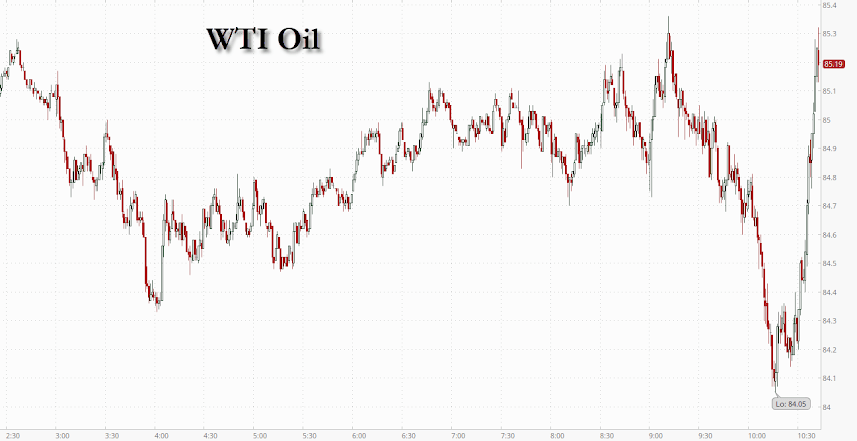
Oil is surging on the twin Axios/WSJ headlines…
Leading European countries, including the UK, France and Germany are pleading for Israel to hold off on fears that the whole region could slide into a major war. The Biden administration has thus far been clear that it does not support Israel retaliation attacks at this point. Biden told PM Netanyahu to “take the win” after Iranian drones and missiles by and large failed to inflict significant damage or casualties.

* * *

As Israel’s war cabinet again meets Monday to debate how to respond to Iran’s first-ever direct attack on Israel, intense international reaction continues, with leading European countries joining the Biden White House in urging restraint. The United Kingdom, France and Germany have condemned the weekend Iranian attack which saw hundreds of drones and ballistic missiles target Israel, but they are warning against an Israeli counterattack, saying that this would assure that an all out war-is sparked. British Foreign Secretary David Cameron said that while Israel’s mulling a military response is understandable and justified, the country must “think with its head as well as its heart, to be smart as well as tough.”

Cameron told BBC the UK’s position is that Israel will be better to not retaliate because the Saturday night attack was a “double defeat” for Iran in that its assault failed to result in major damage despite over 350 projectiles launched, and that at the same time Tehran is coming under world condemnation and isolation. Cameron said the aggression has revealed “to the world that [Iran is] the malign influence in the region prepared to do this.”

Via Al Jazeera

This is consistent with Biden’s words to Prime Minister Netanyahu in the Saturday overnight hours when he told the Israeli leader to “take the win” and don’t retaliate. The US is hoping Israeli decisions-makers “slow things down” at this point to avoid spiraling into major war. Washington has also affirmed it will not back any Israeli military action against Iran.

French President Emmanuel Macron also acknowledged to a French outlet Monday that the situation is “very unstable” and that Israel must show restraint. “We will do everything to avoid a conflagration,” he said to BFMTV news channel.

But Iran has accused Britain, France, and Germany of “double standards” after they all condemned the Iranian attack. On Sunday Iran’s foreign ministry summoned their ambassadors over the “irresponsible stance”, according to the semi-official Iranian Labour News Agency.

Iran has further once again lashed out at the UN Security Council, pointing out that it failed to condemn the April 1st Israeli aggression against its consulate in Damascus which killed two top generals and several others. “The Security Council… failed in its duty to maintain international peace and security,” Ambassador Amir Saeid Iravani said during Sunday’s session. 

He said his country “had no choice” but to react in a “necessary and proportionate” and proportionate way while still asserting the Islamic Republic does not  “seek escalation or war.” However, he underscored that “If the US initiates military operations against Iran, its citizens, or its security and interests, Iran will use its inherent right to respond proportionately.

Russia too has called for restraint, but defended Iranian actions as done in self-defense. “We have repeatedly warned that the numerous unresolved crises in the Middle East, primarily in the Palestinian-Israeli conflict zone, which are often fueled by irresponsible provocative actions, will lead to an increase in tension,” its foreign ministry said.

Unlike the West, Russia firmly condemned the prior Israeli attack on Iran’s sovereign embassy:

Russian Foreign Minister Sergei Lavrov on Saturday held phone talks with Iranian counterpart Hossein Amir-Abdollahian. The Russian Foreign Ministry said Lavrov reiterated “decisive condemnation” of an Israeli strike in Syria this month that killed Iranian generals.

Russia has previously condemned Israel’s conduct in its six-month war in Gaza.

Regional media noted of Moscow’s stance: “Russia noted Tehran’s claim that the attack was made within the right to self-defense after the strike in Damascus, which Moscow condemned.”

Israel’s war cabinet meets, Anadolu via Getty Images

Interestingly, deputy chairman of Russia’s Security Council Dmitry Medvedev said on Telegram that “America does not want a big war in the Middle East” as “The killings in Gaza worsen Biden’s prospects in the elections, and war between Israel and Iran would introduce additional uncertainty.”

The below is some additional commentary via Bill Blain and his Morning Porridge blog

* * *

But, of course, the big issue is the Middle East.

Markets don’t like uncertainty – even though uncertain markets often offer the best opportunities. The current wisdom is that it’s all utterly dependent on how Israel responds – will they go big with an all-out strike on Iran bases and its nuclear capability, or will they take the apparent win Iran granted them over the weekend?

There has been something of the sense of a well-choregraphed dance between Israel and Iran circling each other over recent weeks and months – very aware it’s not what is done, but how actions are perceived. Everyone expected the well-flagged Iran attack over the weekend. That’s why Oil prices barely wobbled. After a few words of predictable fury, this morning there are signs an Israeli stand down might be on the cards – which would favor markets. Doesn’t mean it’s over – revenge is oft a dish best tasted cold and considered.

The weekend strikes gave Israel a tactical win. After Israel took out key Iranian generals in a pinpoint surgical missile strike on Iran’s embassy in Damascus, over 300 Iranian missiles, drones and rockets rained down, mostly in broken bits over deserts outside Israeli borders, swotted out the skies by Western and Israeli defence tech. Iron Dome and other systems were shown to work effectively.

But, strategically it might be a win for the Iran/China/Russia Axis. The strike’s apparent abject failure may have been exactly what the Iranian war planners expected. They would be very aware of how Russian drone and missile strikes have fared in Ukraine. The attack would have provided valuable information by forcing Israel to reveal just how effective their top of the range tech defences are at a time when global opinion meant there was a significantly reduced likelihood of a devasting Israeli counterstrike.

The Russians will be factoring countermeasures garnered from the strike into their current glide missile assaults, while the Chinese will already be pouring over the data to determine the practicalities of taking out similarly protected US carrier task forces in the South China Seas at some future date.

* * *

Meanwhile…

Tyler Durden
Mon, 04/15/2024 – 10:30

US Supreme Court Rejects BLM Activist’s Appeal, Allows Louisiana Cop To Sue Over 2016 Protest

US Supreme Court Rejects BLM Activist’s Appeal, Allows Louisiana Cop To Sue Over 2016 Protest

The US Supreme Court on Monday rejected an appeal from a Black Lives Matter activist who’s being sued by a Louisiana police officer who was injured during a 2016 protest.

DeRay Mckesson

The Court declined to hear an appeal by DeRay Mckesson, leaving a lower court decision in place which revived a lawsuit brought by the Baton Rouge police officer, John Ford Reuters reports. Ford has accused Mckesson of negligence after being struck by a rock during a protest over the fatal police shooting of Alton Sterling.

In 2023, the New Orleans-based 5th US Circuit Court of Appeals rejected Mckesson’s defense that his rights to free speech and assembly under the First Amendment protect him against the negligence claim. Mckesson is being represented by the American Civil Liberties Union (ACLU).

The decision could make it easier to sue protest organizers for the illegal conduct of an attendee, according to the report.

Alton Sterling was shot by a Baton Rouge police officer on July 5, 2016 (prior to the George Floyd incident), after a struggle outside a convenience store in which Sterling reached for a loaded handgun in his pants pocket, he was shot dead by officers who were trying to control his arms. Officers recovered a loaded .38 caliber revolver from Sterling’s pants pocket.

Four days later, BLM organized a protest demanding accountability – during which Ford, the plaintiff, was struck in the face by a rock or a piece of concrete thrown by an unidentified person. He lost teeth and suffered brain injuries, according to the complaint.

Ford argues that Mckesson, who was arrested the day of the protest but had a charge dropped, should have known that the protest would turn violent.

Ford’s case was initially dismissed by US District Judge Brian Jackson (Obama appointee), however it was later revived by the 5th Circuit in 2023 – which found that the First Amendment didn’t bar the negligence claim. In doing so, the Court rejected Mckesson’s argument that the lawsuit was foreclosed by a 1982 Supreme Court ruling involving black civil rights activists in Mississippi which limited liability for protest leaders.

Tyler Durden
Mon, 04/15/2024 – 10:30

Tesla To Slash Global Headcount By More Than 10%, Electrek Reports

Tesla To Slash Global Headcount By More Than 10%, Electrek Reports

Shares of Tesla Motors are muted in the early premarket trading hours in New York after a report from the EV blog Electrek cited an “internal company-wide email” detailing layoffs at the EV company amounting to more than 10% of its global workforce. 

Electrek alleges that Elon Musk sent an email to staff explaining a “duplication of roles and job functions in certain areas” as the main reason for the layoffs, which could affect as many as 14,000 employees. 

Here’s the full text of the email (courtesy of Electrek): 

Over the years, we have grown rapidly with multiple factories scaling around the globe. With this rapid growth there has been duplication of roles and job functions in certain areas. As we prepare the company for our next phase of growth, it is extremely important to look at every aspect of the company for cost reductions and increasing productivity. 

As part of this effort, we have done a thorough review of the organization and made the difficult decision to reduce our headcount by more than 10% globally. There is nothing I hate more, but it must be done. This will enable us to be lean, innovative and hungry for the next growth phase cycle.

I would like to thank everyone who is departing Tesla for their hard work over the years. I’m deeply grateful for your many contributions to our mission and we wish you well in your future opportunities. It is very difficult to say goodbye.

For those remaining, I would like to thank you in advance for the difficult job that remains ahead. We are developing some of the most revolutionary technologies in auto, energy and artificial intelligence. As we prepare the company for the next phase of growth, your resolve will make a huge difference in getting us there.

Thanks,

Elon

The latest data from Bloomberg shows that Tesla has around 140,000 employees, nearly double the 2020 level. 

Electrek noted, “We don’t know which specific teams will be most or least affected by Tesla’s layoffs.” 

The alleged layoffs come after the company recorded its first quarterly decline in four years and delivered 386,810 vehicles in the first quarter, far below the Bloomberg consensus of 449,000. 

Slowing EV demand has weighed on Tesla shares this year, down 31%, and one of the worst performers in the S&P 500 Index. 

As Bloomberg notes, the EV slowdown has hit other automakers: 

The EV slowdown Tesla has felt of late has been widespread. China’s BYD Co. delivered just 300,114 battery-electric vehicles in the first quarter, down 43% from the final three months of last year, when it briefly pulled ahead as the world’s top EV seller. Manufacturers including Volkswagen AG, General Motors Co. and Ford Motor Co. have delayed, dialed back or altogether scrapped EV projects as consumers balk at still-high prices and a dearth of charging stations.

On Tesla’s most recent earnings call, Chief Financial Officer Vaibhav Taneja said, “We just have to chase down every penny possible.” 

Tesla will report next Tuesday, April 23. Wall Street analysts expect the company to turn a profit of about 50 cents a share, down from around 85 cents a share in the first quarter of 2023. 

If Electrek’s report is correct, Elon appears to be tightening Tesla’s belt, suggesting broader troubles are ahead for the US economy. 

Tyler Durden
Mon, 04/15/2024 – 06:55

CNN Is Wrong… Deflation Is A Good Thing

CNN Is Wrong… Deflation Is A Good Thing

Authored by Soham Patil via The Mises Institute,

recent video by CNN states that lower prices are bad for the United States economy and that consumers must get used to the newer, higher prices.

The video goes so far as to say, “We’re never going to pay 2019 prices again.”

The video claims that deflation is responsible for a long list of problems including layoffs, high unemployment, and falling incomes.

Americans should simply get used to paying more and more each year and be happy about it. Except, deflation is actually good for consumers despite the contentions of inflation-supporting economists.

The conclusion that inflation is a good thing is reached by the mishandling of economic terms.

While Austrian economics accepts that inflation is the expansion of the money supply, mainstream economics contends that inflation is an increase in the general price level in an economy. This skewed definition allows one to erroneously conclude that inflation causes prosperity by raising profits and incomes through higher consumer prices. The problem with this is that “price inflation” is also often caused by real inflation: the increase of the money supply. An increase in the money supply comes from the creation of additional units of money ex nihilo, out of nothing. The wealth of savers is diluted by the expansion of the money supply, which leads to the hardships many Americans face.

Further, while the video contends that the pandemic may have caused rising prices, it cannot explain the continual growth of prices even after the effects of the pandemic have subsided. The pandemic is not responsible for the continual trend of increasing prices; the growth of the money supply is.

Figure 1: The M2 in the United States, 1959–2024

Source: FRED. Data from the Board of Governors of the Federal Reserve System.

While the money supply of US dollars has increased steadily over the past few decades, a significant jump can be seen after 2019 when the Federal Reserve’s expansionary monetary policies caused a great rise in the money supply. This growth, uncompensated by additional production due to the pandemic, caused the price inflation that many now blame solely on the pandemic. The truth is that if the pandemic were the cause of prices rising a significant amount, the absence of the pandemic should account for a proportionally drastic deflationary period afterward. This never occurred, and thus the money supply paints a more honest picture of inflation than any index of a collection of prices ever could.

By contrast, deflation, as opposed to inflation, is often a good thing for consumers. Deflation means that the same unit of money is worth more today than it was yesterday. Consumers thus can buy more today than they could yesterday. Instead of actively being impoverished during conditions of inflation, consumers would rather be made richer during times of deflation.

The reason many economists are quick to champion inflation as creating prosperity is because central banks have previously used expansionary monetary policies to temporarily boost the economy by increasing aggregate demand. Several of these policies, often specifically lowering interest rates, cause a boom-bust cycle. When the money supply is expanded and cheap credit is abundant, firms are able to take on ambitious projects that they may not have been able to previously. Malinvestment results from the unsustainable credit expansion created by extremely low interest rates. There is greater demand for the factors of production, and an increase is seen in conventional metrics of economic growth such as gross domestic product.

During the process of malinvestment, an increase in employment occurs due to the firms having access to cheap and easy credit, allowing for greater business spending. However, when firms lose access to cheap and easy credit due to the central banks having to prioritize cutting inflation, jobs are lost. These job losses are not the fault of the deflation but rather the malinvestment during economic booms. Without malinvestment and inflation, resources would have been invested in more-profitable endeavors, making better use of these resources.

Artificially cheap credit causes a misallocation of resources by skewing price information. Eventually, a bust must follow the boom. In this period, deflation often occurs due to market actors coming to more-realistic valuations of the factors of production. After these realistic valuations come about, consumers are able to pay less for their goods and services . . . at least until the central bank causes the next boom-bust cycle.

In conclusion, it would be wrong to pinpoint deflation as a potential issue for the economy.

To do so would be to conflate the cause and effect of how money supply affects an economy.

Contrary to CNN’s video, the Federal Reserve throughout its history has not helped the cause of consumers, evidenced by the exponential growth of prices since its foundation.

Tyler Durden
Mon, 04/15/2024 – 06:30

Airbus Beats Boeing For Deliveries In 2024

Airbus Beats Boeing For Deliveries In 2024

Boeing’s deliveries of commercial aircraft have faltered in the first three months of the year, according to the company’s reports, published this week.

The U.S. aircraft manufacturer delivered just 83 planes in Q3, down from 130 in the same three-month period of last year.

In the meantime, its sole major competitor, Europe’s Airbus, saw an uptick in Q1, having delivered 142 of their planes, marking an increase from their Q1 2023 figure of 127.

Boeing has been mired in a series of safety issues since the start of the year, following a mid-air panel blowout on an Alaska Airlines 737 MAX 9 jet in January. This has led to a slowdown in production for the U.S. company, which is now limited to producing 38 of the 737 planes per month until it is clear that quality and safety procedures are being properly adhered to, as per the advisory of the U.S. Federal Aviation Administration (FAA). Boeing has slowed production even below this limit, with the company’s Chief Financial Officer Brian West stating that once the company has it “right” it will ramp up production, expecting to see figures improve in the latter half of the year.

Prior to 2019, Boeing had been in the lead for deliveries out of the two companies, but this changed following the two deadly 737 MAX 8 crashes of 2018 and 2019, and the ensuing temporary production halt of the model. While the same family, these were different planes than those involved in the more recent incidents and they were caused by different issues.

As Statista’s Anna Fleck shows in the following chart, both companies saw dips in deliveries in 2020 with the Covid pandemic.

Infographic: Airbus Beats Boeing for Deliveries in 2024 | Statista

You will find more infographics at Statista

Boeing and Airbus are the world’s two major competitors when it comes to commercial plane manufacturing. While other manufacturers exist, they produce far lower numbers of aircraft than either of these two giants.

In a report by CNN, writer Allison Morrow explains that since pilots are trained in either Boeing or Airbus operating systems, it is difficult for airlines to switch planes.

With few companies having the capacity to produce large jets, both Airbus and Boeing continue to have a long backlog of orders (8,598 at the end of 2023 for Airbus; 5,591 at the end of March for Boeing).

Tyler Durden
Mon, 04/15/2024 – 05:45

“This Memory-Holing Bull$hit Makes Me Go Ballistic” – CJ Hopkins’ Greatest Satiricial Ragefest Yet

“This Memory-Holing Bull$hit Makes Me Go Ballistic” – CJ Hopkins’ Greatest Satiricial Ragefest Yet

Authored by CJ Hopkins via Substack,

Thank God for the German Hate Police!

Or heil … or whatever the appropriate salutation is for these unsung heroes. They just saved us all from “hate” again!

Yes, that’s right, once again, democracy-loving people here in New Normal Berlin and all across the New Normal world were right on the brink of being exposed to “hate,” and would have been exposed to “hate,” had the Hate Police not sprang into action.

You probably have no idea what I’m talking about.

OK, what happened was, some pro-Palestinian activists organized a “Palestine Congress,” and attempted to discuss the situation in Gaza, and call for solidarity with the Palestinians, and so on, right here in the middle of Berlin, the epicenter of European democracy, as if they thought they had a right to do that. The German authorities were clearly intent on disabusing them of that notion.

Early Friday morning, hundreds of black-clad Hate Police descended on the congress location. Reinforcements were called in from throughout the nation. Metal barricades were erected on the sidewalks. Hate Police stood guard at the entrance. The German media warned the public that a potential “Hate-Speech” attack was now imminent. Berliners were advised to shelter in place, switch off their phones and any other audio-receptive communication devices, and wad up little pieces of toilet paper and ram them deep into their ear canals to prevent any possible exposure to the “hate.”

Sure enough, minutes into the congress, the anticipated “Hate-Speech” attack was launched! A Palestinian activist — Salman Abu Sitta — who had written an article that allegedly “expressed understanding of Hamas,” and thus had already been placed on the official German “No-Speak” list, started speaking to the congress on Zoom or whatever. Or … it isn’t quite clear whether he actually started speaking. According to a Hate Police spokesperson, they raided the congress because “there [was] a risk of a speaker being put on the screen who in the past made anti-Semitic and violence-glorifying remarks.”

Anyway, the Hate Police stormed the venue, pulled the plug, dispersed the crowd, and banned the rest of the “Palestine Congress,” which was scheduled to continue on Saturday and Sunday. Then they arrested a Jewish guy who was wearing a Palestinian-flag-kippah, presumably out of an abundance of caution.

But the “Hate-Speech” attack wasn’t over yet. It was one of those multi-pronged “Hate-Speech” attacks, or at least it involved one other prong. Earlier that morning, or perhaps while the Hate Police were still neutralizing the threat at the venue, Dr. Ghassan Abu Sitta, a prominent British surgeon, who had volunteered in Gaza and was due to speak at the congress, was intercepted by the Berlin Airport Hate Police, refused entry into Germany, and forced to return to the UK. The Airport Hate Police informed the doctor that he was being denied entry in order to ensure “the safety of the people at the conference and public order,” Abu Sitta told the Associated Press.

Kai Wegner, Berlin’s mayor, presumably feeling a bit nostalgic for the fanatical days of 2020 to 2023 when one could persecute “the Unvaccinated” with total impunity, took to X to celebrate the Hate Police’s thwarting of this “Hate event.”

The pro-Palestinian activist community also took to X and expressed their displeasure. Yanis “Vaccinate Humanity” Varoufakis, who was one of the organizers and was scheduled to speak, was particularly incensed over the new German “fascism,” which apparently he has just now noticed, despite the fact that it has been goose-stepping around in a medical-looking mask for the last four years.

Yanis was not alone in his outrage. An increasing number of mainstream German journalists, authors, academics, and other members of the professional “progressive” classes are stunned that the new totalitarian society that they fanatically ushered into being during the so-called “Covid Pandemic” era — or stood by in silence and watched it happen — is now unleashing its fascistic force against them.

Which, OK, I get it. I mean, if I had just spent the last four years behaving like a Nazi, you know, persecuting “the Unvaccinated,” demonizing everyone who refused to wear the insignia of my fascistic ideology on their face, and parroting official propaganda like an enormous Goebbelsian keyboard instrument, or had just stood by in silence while other people did that, I would probably want to act like that never happened, and pretend that Germany was suddenly going “fascist” over the Israeli/Palestinian conflict, and just memory-hole the whole “Covid” thing.

I would probably be highly motivated to do that — if that was how I had behaved for the past four years — so that I didn’t appear to be a fucking hypocrite who will start clicking heels and following orders the moment the authorities declare another fake emergency and jack up the Fear.

Sorry … I’ve been trying to be less vituperative, but this memory-holing bullshit makes me go ballistic.

If there is one demographic that I do not need to hear sanctimonious exhortations to speak out against the global crackdown on dissent from, it is recently ex-Covidian-Cult leftists.

In any event, thank God for those Hate Police! If it weren’t for them … well, just imagine the horror, if the activists at that Palestine Congress had been allowed to express their opinions about Israel. They might have said the word “genocide,” or made reference to a “river” and a “sea.”

Who knows what that kind of unbridled “hate” could lead to?

Perhaps the end of democracy. Maybe even World War III.

Tyler Durden
Mon, 04/15/2024 – 05:00

Nine Critical Energy Minerals For Investors

Nine Critical Energy Minerals For Investors

Emission-free technologies such as electric vehicles (EVs), solar panels, wind turbines, and nuclear reactors are critical to reducing energy-related emissions and fulfilling net zero goals by 2050.

In this graphic, Visual Capitalist partnered with Sprott to explore nine minerals crucial for these technologies and their projected compound annual growth rates (CAGR) in global market size from 2022 to 2027.

Identifying the Nine Key Clean Energy Minerals

Sprott has identified the following minerals from the U.S. 2022 Critical Minerals List as fundamental to the energy transition, offering significant financial opportunities for investors as the transition accelerates.

Let’s delve into each one. 

  1. Cobalt: Maximizes the stability and longevity of batteries. Cobalt is part of the chemistry of 63% of EV batteries worldwide.

  2. Copper: Essential for conductivity in electrical infrastructure, including wind, solar, and EV charging stations. In general, renewable energy systems can use up to six times more copper than traditional ones.

  3. Graphite: The largest component of lithium-ion batteries used for EVs and energy storage.

  4. Lithium: An essential component of electrolytes in EV batteries and lithium-based energy storage systems. By 2030, 95% of lithium demand is expected to come from batteries.

  5. Manganese: Used as an electrode in many lithium-ion batteries for EVs.

  6. Nickel: A key element in battery cathodes, offering higher energy density and longer driving ranges for EVs. 

  7. Rare earths: A vital component in the magnets used in wind turbines and EVs. 

  8. Silver: Essential for conductivity in solar panels and other electrical infrastructure, possessing the highest electrical and thermal conductivity among all metals.

  9. Uranium: The fuel for nuclear power plants that can provide dispatchable and low-carbon power to the electricity grid. Nuclear power ranks as the second-largest contributor to low-carbon electricity production.

Projected Growth for Clean Energy Minerals 

With demand escalating for clean energy technologies, demand for their essential components is also expected to grow, offering avenues for investors to capitalize on the dynamic clean energy market.

Below we list the projected compound annual growth rates (CAGR) for each of these minerals, which is their average annual growth in market size over a specified period, taking into account the effects of compounding.

Mineral Compound Annual Growth Rate (2022–2027P)
Lithium 25% (Source: ReportLinker)
Silver 9% (ReportLinker)
Rare Earths 8% (Technavio)
Uranium 7% (Technavio)
Copper 6% (Technavio)
Cobalt 6% (360 Markets and Updates)
Graphite 6% (IndustryARC)
Nickel 5% (Market Research Future)
Manganese 4% (IndustryARC)

With an average projected CAGR of over 8% through to 2027, driven especially by demand for lithium, silver, and rare earth metals, investors are taking note.

Tyler Durden
Mon, 04/15/2024 – 04:15

Spirulina Significantly Reduces COVID-19 Mortality: Study

Spirulina Significantly Reduces COVID-19 Mortality: Study

Authored by Marina Zhang via The Epoch Times (emphasis ours),

Hospitalized COVID-19 patients who took spirulina had a lower risk of death than those who did not, according to results of a randomized controlled trial recently published in Frontiers in Immunology.

(MarcinWojc/Shutterstock)

Study participants took spirulina for six days. No deaths were recorded in the spirulina group, while 15 percent of those who only received standard treatment died.

“The overall results of the present study showed that a six-day course of Spirulina platensis plus the standard treatment of COVID-19 was superior in the recovery of patients compared to standard treatment alone,” the authors wrote.

The study was conducted at two Iranian hospitals, where 189 patients were randomized to take 15.2 grams of spirulina capsules alongside standard COVID-19 treatment or only receive standard treatment. Previous research showed that this dosage of spirulina would provide potent anti-inflammatory and antioxidative effects.

In both the experimental and control groups, half of the patients were in the intensive care unit (ICU), while the other half were in a non-ICU.

Ninety-one participants were assigned to take spirulina. Some withdrew, but there were no deaths. There were 98 people in the control group, 46 of whom were in the non-ICU. Four of these died, alongside 11 ICU patients. All patients received follow-up for seven days.

The authors noticed that the spirulina group had significant reductions in inflammatory markers in their blood and higher oxygen levels.

Both groups received standard treatment, which included antiviral therapy (remdesivir), corticosteroids (dexamethasone), and anticoagulants (heparin or enoxaparin). Patients who rapidly developed inflammatory disease were also given tocilizumab or other steroids to control inflammation.

What Is Spirulina?

Spirulina, or Arthrospira platensis, is a nutrient-dense type of dried-up blue-green algae that can grow in both fresh and marine water environments.

It doesn’t surprise me that there are benefits from adding this to the diet and regimen of those in hospital,” Dr. Yusuf Saleeby, an integrative medicine doctor and director of Carolina Holistic Medicine not involved in the study, told The Epoch Times.

Spirulina is rich in beta carotene, B-complex vitamins, vitamin E, and minerals such as manganese, copper, zinc, and selenium. “All these are important in maintaining health and a healthy immune system,” he said. It also contains an essential fatty acid called gamma-linolenic acid.

Dr. Saleeby said that functional and integrative medicine uses spirulina, chlorella, and other relatively simple plant foods “to detoxify patients with chronic diseases, toxicities, and poisoning.” Spirulina is found to absorb heavy metals from the body.

Dr. Elias Mazkopakis, director of internal medicine at the Naval Hospital of Crete in Greece, was the first to conduct a worldwide clinical trial on spirulina use in COVID-19.

In his trial, 102 unvaccinated individuals were assigned to take 6 grams of spirulina for six months, while 84 participants in the control group took nothing.

Among those who took spirulina, less than 14 percent contracted COVID-19—caused by the Delta variant at the time of the study—and had only mild symptoms. Two needed hospitalization due to gut problems. In the other group, about 74 percent contracted COVID-19 and experienced mild symptoms, with one-fifth of them requiring hospitalization.

Other Health Benefits

Spirulina has also been shown to help reduce blood lipid and cholesterol levels.

Dr. Mazokopakis’ team has tried spirulina in Greek patients with high blood lipid levels. Participants took 1 gram of spirulina daily; after three months, the team saw decreased blood triglyceride levels and cholesterol. Participants’ blood pressure and weight remained unchanged.

Spirulina may also be liver-protective. Dr. Mazokopakis has also tested spirulina in patients with nonalcoholic fatty liver disease, where he observed a decline in the markers indicating liver diseases.

Additionally, a study in heart disease patients found spirulina supplements could reduce triglycerides and low-density lipoprotein (LDL) cholesterol, considered the “bad” form of cholesterol.

Cancer studies in animals showed that hamsters supplemented with spirulina and beta carotene had reduced tumor growth. A follow-up study in humans showed that 45 percent of patients had a complete regression of leukoplakia—thickened, white patches inside the mouth—after taking spirulina for a year.

Side Effects and Sources

In the Iranian study, researchers observed no side effects but noted that it is difficult for patients to adhere to a daily regimen of high-dose spirulina. To reach 15 grams of spirulina, patients had to consume 19 capsules per day.

Side effects from spirulina may include cramping, bloating, nausea, headaches, and insomnia. People who are allergic to spirulina can develop rashes, and contaminated spirulina may exacerbate autoimmune conditions and lead to blood thinning.

Some people also think spirulina has an unappealing taste. Depending on the environment from which it is harvested, it may taste earthy, bitter, fishy, or salty.

Dr. Saleeby cautioned that sourcing spirulina from trusted brands is essential because it can be adulterated and contaminated with various heavy metals. Freshwater spirulina may be contaminated with toxins produced by other freshwater cyanobacteria in the environment.

In stores, spirulina is often sold as a dried blue-green powder, sometimes packed into capsules or tablets. Because its antioxidizing potential can be easily degraded when it is exposed to heat or sunlight, spirulina must be kept in cool, shaded areas.

Tyler Durden
Mon, 04/15/2024 – 03:30

60% Of Poles Feel Healthcare Is Falling Short; Only 1 In 3 Americans Feel Same

60% Of Poles Feel Healthcare Is Falling Short; Only 1 In 3 Americans Feel Same

Just over six in ten people in Poland feel that their healthcare system frequently lets patients down.

That’s according to a survey run by Statista’s Global Consumer Insights, which looks at perceptions of healthcare services in different countries around the world. 

As Anna Fleck reports, data shows that of the OECD countries selected for this chart, South Koreans had a far more positive view of their healthcare system, with only 13 percent saying they felt the same way.

Infographic: Six in 10 Poles Feel Healthcare Is Falling Short | Statista

You will find more infographics at Statista

According to an Ipsos survey conducted in 2022, the main issues that patients cite internationally when it comes to their country’s state of healthcare are access to treatment, waiting times and the cost of treatments.

A lack of staff is also a widespread concern, with many nations globally currently facing the challenge of a shortage of healthcare professionals, which can lead to poorer quality of care as workers are stretched thin.

Tyler Durden
Mon, 04/15/2024 – 02:45

Why Mankind Remains So Lost In Economic-Ignorance & Tribalistic-Warmongering

Why Mankind Remains So Lost In Economic-Ignorance & Tribalistic-Warmongering

Authored by Jorge Besada via The Mises Institute,

Carl Menger’s Overlooked Vital Evolutionary Insights

Carl Menger is widely recognized as one of the economists leading the so-called marginalist revolution along with William Stanley Jevons and Léon Walras. There are two other contributions by Menger that are relatively underappreciated and are vital for making sense of the socioeconomic order, including why mankind remains so lost in economic ignorance and tribalistic warmongering.

They are, first, his insights into the proper method or way to study the economy or social order and its emergence-evolution, and second, his application of such wisdom to explain the evolution of money and the entire socioeconomic order that further emerges thanks to money. Let’s further expand on these two.

Menger wrote an entire book devoted to discussing the proper method with which to study the social sciences, aptly titled Investigations into the Methods of the Social Sciences. So how should we study the social sciences according to Menger? He writes,

Natural organisms almost without exception exhibit, when closely observed, a really admirable functionality of all parts with respect to the whole, a functionality which is not, however, the result of human calculation, but of a natural process. Similarly we can observe in numerous social institutions a strikingly apparent functionality with respect to the whole. But with closer consideration they still do not prove to be the result of an intention aimed at this purpose, Le., the result of an agreement of members of society or of positive legislation. They, too, present themselves to us rather as “natural” products (in a certain sense), as unintended results of historical development. One needs, e.g., only to think of the phenomenon of money, an institution which to so great a measure serves the welfare of society, and yet in most nations, by far, is by no means the result of an agreement directed at its establishment as a social institution, or of positive legislation, but is the unintended product of historical development. One needs only to think of law, of language, of the origin of markets, the origin of communities and of states, etc. Now if social phenomena and natural organisms exhibit analogies with respect to their nature, their origin, and their function, it is at once clear that this fact cannot remain without influence on the method of research in the field of the social sciences in general and economics in particular. . . . Now if state, society, economy, etc., are conceived of as organisms, or as structures analogous to them, the notion of following directions of research in the realm of social phenomena similar to those followed in the realm of organic nature readily suggests itself. The above analogy leads to the idea of theoretical social sciences analogous to those which are the result of theoretical research in the realm of the physico-organic world, to the conception of an anatomy and physiology of “social organisms” of state, society, economy, etc.

Like Herbert Spencer, his contemporary and arguably the most famous and influential intellectual of the late 1800s, Menger too felt like the social order was akin to a “social organism” and should be studied using an organic or evolutionary approach similar to how we study the biological order. Menger thus felt like the methods of the physical sciences, like their use of mathematics, was as inappropriate for understanding the monumental complexity and evolution of the social order as it was for the biological one.

He writes, “I do not belong to the believers in the mathematical method as a way to deal with our science. . . . Mathematics is not a method for . . . economic research.”

Ludwig von Mises and F.A. Hayek would of course follow suit. Mises wrote, “As a method of economic analysis econometrics is a childish play with figures that does not contribute anything to the elucidation of the problems of economic reality.”

Hayek also ridicules the “extensive use of mathematics, which must always impress politicians lacking any mathematical education, and which is really the nearest thing to the practice of magic that occurs among professional economists.”

The following analogy helps us further understand Menger’s vital insights.

Just like the human body organism and the numerous “systems” that coordinate it—like the respiratory-nervous-digestive systems—are the result of the actions of some seventy trillion human and bacterial cells but obviously NOT the result of any conscious planning or designing by them. And thanks to the likes of Darwin and a modern understanding of genetics, we can hypothesize how natural selection was the inadvertent “designer” of such systems and complex order. The modern global socioeconomic order—“social organism”—is also coordinated by a system, by what Menger’s intellectual descendants like Ludwig von Mises and his great protégé 1974 Nobel laureate in economics F.A. Hayek referred to as “the market process.” The market process is composed of “parts” like money, prices, economic competition, interest rates, and the legal-religious-governmental frameworks that sustain it. However, the result of the actions of men “do not prove to be the result of an intention aimed at this purpose . . . but is the unintended product of historical development,” similar to how cells inadvertently and unconsciously acted to create the systems that coordinate multicellular life.

The above mindset or “method” allowed Menger to then make what is arguably the most important insight, or what I like to call the “flux-capacitor” idea, of the social sciences: Menger’s explanation of the evolution of money and its numerous ramifications. Consider the following: from the tradition of private property emerges the freedom to trade it with anyone in the entire planet which inadvertently transforms mankind into a global supercomputer where people via the private companies they create are motivated to innovate and learn from each other (competitors), thus inadvertently cooperating to discover and spread superior information and subsequent order throughout the world.

Money is what enables this civilization-creating mechanism. Every social-order entity, whether a person or a company, is in a constant cycle of the production and consumption of wealth. A business’s sales revenue or a worker’s paycheck is an estimate of how much wealth was produced, and costs are an estimate of how much wealth was consumed while production took place. If there is more production (sales revenue) than consumption (costs), then the order is profitable and has thus increased the economic pie of wealth.

Money is what allows the profit-loss calculation that allows billions of people and companies to order their actions in a profitable and thus pie-order-increasing manner. Also, without money, how would a heart surgeon trade his services for a toothpick? Everything mentioned above that plays a vital role in creating civilization or “the social organism” ultimately depends on and emerges from the use of money. Economics students quickly learn how money is what overcomes the “double coincidence of wants” problem that allows trade and its vital benefits like the ever-expanding division of labor and information to arise.

Without money there is no complex division of labor or information above the levels of small tribes, and thus no large-scale civilization or “social organism.” Menger’s vital insight regarding money is that he showed how money, just like language, was an evolved and NOT designed innovation. Since money was an evolved and NOT designed innovation, this also means that all the other vital mechanisms that, taken together, make up the market process like profit-loss calculation and economic competition, they too are largely evolved/undesigned mechanisms.

This is the key to understanding how we live in this massively complex world, with a rapidly expanding and intensifying division of labor and information that creates mind-bogglingly complex microchips, the internet, etc. Yet the masses and their politicians remain economically ignorant, segregating themselves into us versus them, using the technology to fight deadlier wars, and ignorantly attempting to centrally plan the social-order economy, which inadvertently destroys the evolved and undesigned economic competition which is what really creates and spreads the information that creates civilization.

The above insights and more associated with Menger’s Austrian School of Economics, as Hayek tells us, “belong fully and wholly to Carl Menger.” Hayek again said, “There must be few instances . . . where the works of an author who revolutionized the body of an already well-developed science and who has been generally recognized to have done so, have remained so little known as those of Carl Menger.”

Yes! And we are running out of time to catch up to Menger. It took a while for the vital myth-shattering ideas of Galileo, Bruno, and Copernicus to spread. We find ourselves in a similar situation.

Whether homo sapiens ultimately self-destroy in another tribalistic world war, socialist revolution, environmental disaster, or covid-mania, self-mutilating economic lockdown, it will all come down to whether Menger’s ideas reach people of influence in time.

Tyler Durden
Mon, 04/15/2024 – 02:00
