91.4 F
Chicago
Tuesday, September 1, 2026
Home Blog Page 3357

How Deep Runs The Corruption?

0
How Deep Runs The Corruption?

Authored by Jeffrey Tucker via The Epoch Times,

For the past several years, my friends in public health and science have expressed astonishment and professional disorientation at the behavior and messaging of the Centers for Disease Control and Prevention (CDC) and the National Institutes of Health (NIH). The scientific journals are part of this.

They simply couldn’t believe the brazen manipulation of science for political purposes. They couldn’t believe that so many people within these agencies and journals went along with it for reasons of career protection. They’ve been appalled that science and public health have been deployed in this way.

They worry about the future with this level of corruption. And they’ve been quite passionate in decrying it, while paying a professional price for not going along.

Implicit in this reaction is a history in which they implicitly trusted these institutions, their data, their reporting, and their sincerity with regard to public health. They presumed that these agencies weren’t capable of manipulating science for political reasons. They certainly would never have believed that they would preside over the worst public health calamity of our lifetime.

When they set out to decry this, correct the error, and alert the public to the truth, it wasn’t because they hated the NIH and the CDC. Indeed, it was the opposite. They wanted them to be good. They wanted their integrity restored. They wanted to trust again.

In other words, what motivated them is piety in their professions and the agencies that preside over them. In this, the real haters get it all wrong. My friends aren’t disinformation spreaders, they’re spreaders of facts in the interest of public well-being. They believed strongly that the system isn’t broken fundamentally and could be improved.

They decided that they didn’t want to practice their craft in an environment of lies. They wanted restoration of truth.

I’ve listened and understood, but because this hasn’t been my realm or my main intellectual interest for the dominant part of my career, I’ve not entirely understood the intensity of their critique or the motivations of my friends. Maybe I’ve always assumed that such enormous bureaucracies were up to no good. I’ve never believed that the CDC, for example, was a net positive in terms of public health, not that I thought about it much before the pandemic.

I’m seeing this fully now because of something that happened this past week. It affects a realm about which I care deeply, namely economics. The Bureau of Labor Statistics (BLS) reported the jobs data again, with a headline number of 187,000 new jobs. That isn’t great, but it isn’t bad news.

But over the past year and a half, I’ve grown incredulous toward these data releases and the little essay that sits on top of them that’s routinely copied by all media outlets as the truth. So I’ve started to look more carefully at the underlying data. The release text said that the number of part-time jobs for reasons of economics—meaning the people who have part-time jobs when they would actually prefer full-time jobs—was “little changed.”

That’s what the BLS said, but the data showed otherwise. It showed an increase of 221,000 part-time jobs. That’s 5.4 percent growth. That’s not “little changed.” That’s a huge and alarming change.

It’s also more than the total number of jobs created. This means that many people have lost full-time work and have been forced to take part-time jobs. This is truly awful news, the very opposite of where we would like to be. One might suppose that the BLS would just admit this outright. It didn’t admit it. It covered it up. The person who wrote those words “little changed” either knew and lied under pressure or didn’t look at the data himself and simply trusted his superiors.

In any case, it’s flat-out wrong. And demonstrably so!

This makes one wonder about all the data releases coming from the Biden administration. Every month, an output release from the previous month is reduced. This has been systematic and large, and it just keeps happening.

It raises the question: If we were in a technical recession now—or if we never left the one from 2020—would we actually know it? We have no choice but to trust the government’s numbers. Maybe we shouldn’t. Maybe everything is much worse than we know from the agencies’ reporting. It certainly feels that way.

We look at independent data that we know we can trust and find out terrible things. A survey by the Lending Club recently reported that nearly two-thirds of Americans are living paycheck to paycheck. This isn’t only a huge increase, it’s completely unsustainable.

Why is this happening? Many consumers are spending without thinking. They’re persisting in their old habits even though the value of money has fallen by nearly 20 percent in three years. Everyone is poorer than before but continuing to live as if all is normal. To blame—at least in part—is the relentless propaganda from the Biden administration that says the economy is in great shape and there’s nothing to worry about.

These are very costly lies.

Do you see the relationship here between economics and public health? During COVID-19, we were told that distancing would protect people. Then we were told that masks would do the trick. Then we were told that the vaccine would work. Do all those things, and you won’t be bothered by COVID-19.

That was a lie. Everyone got it anyway. And once people got sick, they had no real protocol for how to get better. That’s because the agencies had disparaged repurposed drugs such as Ivermectin. They did this in order to pretend as if the vaccine was the only real solution, thereby making the “emergency use authorization” compatible with prevailing conditions.

Thus, when people got sick, they had no idea what to do. The agencies that people trusted are fully culpable for this.

It’s true in the economic realm. The government hasn’t been straight with people about the economic crisis of our time. All official channels say everything is hunky-dory, just keep adding to that credit card debt, spending as always, draining your savings such as it is, and don’t worry about your job. Everything is fine. Look at our press release! Listen to the weird White House spokeswoman!

This is malpractice. It also undermines trust even further.

No society can run without trust. Builders have to trust measurements, economists trust the data, scientists trust the journal, doctors have generally trusted pharmaceutical companies, and philosophers trust logic. There’s just no alternative. If we take that away and replace truth with lies, where does that leave us? As one of my friends says: in a new dark age.

Last night, I was watching the U.S. Open. Several times, an ad came on saying that COVID-19 is still with us, killing more people than the flu, so we need to be alert. The ad is just text with ominous music. It ends by urging that everyone get the COVID-19 vaccine immediately. The closing slogan is “No one has time for the 19.”

That’s weird, I thought. We know for sure that the vaccine doesn’t protect well, or perhaps at all, against infection. Who’s putting out this propaganda? The CDC? The third time that the ad ran, I noticed a tiny word at the end: Moderna. It’s a pharmaceutical ad. For some reason, the ad escaped all the usual legal injunctions about side effects and downsides. There wasn’t a word about those.

There’s no way that viewers knew that this was a pharma ad. It looked for all the world like a public service announcement from the CDC or NIH. It turns out to be a Moderna ad. But, really, is there much of a difference? We know now that these agencies themselves are wholly captured and doing pharma ads themselves.

I never wanted to live in a world without trust. I perhaps hoped that people would trust government less, but there’s much more going on now. Government is involved in everything, and therefore a loss of integrity in government means a loss of integrity in a huge range of areas, leaving us confused about what the truth is.

There’s never been a better time to trust your instincts. If you smell a rat in these official pronunciations, there probably is a rat. The corruption goes very deep. We don’t yet know the bottom of it.

Tyler Durden
Fri, 09/08/2023 – 15:05

Nancy Pelosi Announces She’s Running For Reelection In 2024

0
Nancy Pelosi Announces She’s Running For Reelection In 2024

Former House Speaker Nancy Pelosi, who is 83-years-old, announced on Friday that she’ll run for reelection to another term in Congress, as Democrats attempt to win back the majority in 2024.

Pelosi made the announcement while speaking to labor allies in the San Francisco area district she’s represented for more than 35 years.

“Now more than ever our City needs us to advance San Francisco values and further our recovery,” Pelosi also said in a tweet. “Our country needs America to show the world that our flag is still there, with liberty and justice for ALL. That is why I am running for reelection — and respectfully ask for your vote.”

Pelosi was first elected to Congress in 1987 – becoming the first female speaker in 2007.

Last November, Pelosi vowed not to seek reelection as Speaker.

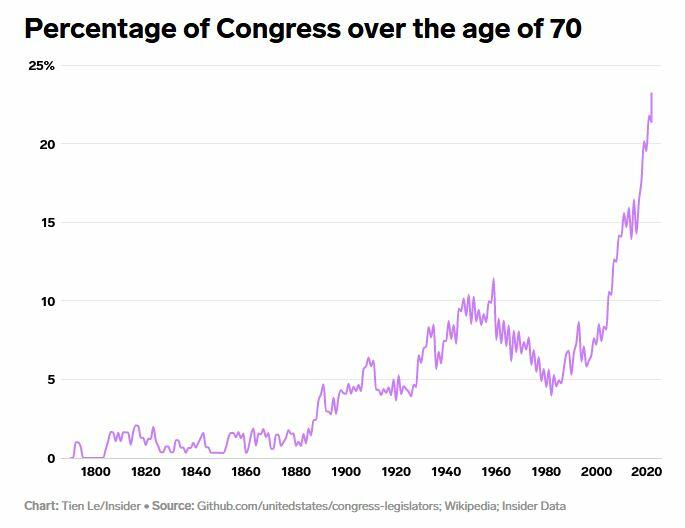
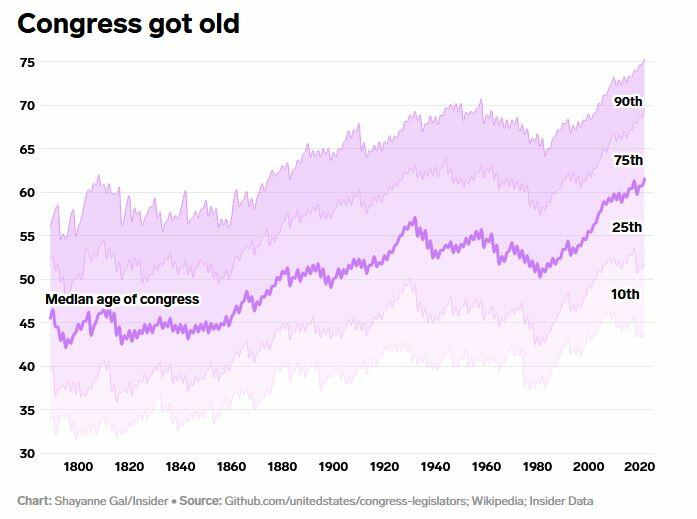
As noted last year by Insider, America’s Congress is the oldest in its history, beginning in the early 1990s. In the 1980s, only about 5% of COngress was over 70. Now it’s nearly 25%.

Will Nancy start glitching too?


Tyler Durden
Fri, 09/08/2023 – 14:45

“No Plan B, No Excess Capacity Anywhere”: Oil Industry Warns Of Looming Refining Crisis As “Dirty” China Grabs Market Share

0
“No Plan B, No Excess Capacity Anywhere”: Oil Industry Warns Of Looming Refining Crisis As “Dirty” China Grabs Market Share

Over the past 3 years, we have often said that with the Biden administration’s unprecedented and bizarre belligerence toward the US E&P sector, where even Rabobank notes tongue-in-cheek that the Fed is purposefully selling oil to keep its price low and ensure Biden’s reelection…

With a largely-drained US Strategic Petroleum Reserve, if the Fed really are active in oil futures, as some whisper, they need to get busy again soon.

… it will be a miracle if any new refineries are built at all, and as a result of moribund capex spending, the cracking (no pun intended) US refining infrastructure will soon become the gating factor for gasoline production, even more so than access to oil.

Well, we were right: as Bloomberg reports, the increasingly stretched global refining system means fuel-price volatility is set to become more common, top oil executives warned at the APPEC by S&P Global Insights conference in Singapore this week.

The lack of spare crude-processing capacity due to under-investment, and shutdowns happening more frequently with refiners ramping up on better margins and deferring planned work were common themes at the APPEC by S&P Global Insights conference in Singapore this week. That’s left fuels like diesel and gasoline vulnerable to sudden swings when there are unplanned outages.

The dilapidated infrastructure means that there have been unplanned plant shutdowns almost every week or two in Europe, Gunvor global head of research Frederic Lasserre told Bloomberg adding that many refiners have postponed regular maintenance, leaving them open to technical issues that lead to surprise outages.

“The market is overly sensitive to any unexpected supply disruption anywhere,” Lasserre said. “Everyone knows there’s no plan B. We have no stocks, and we have no excess capacity anywhere.”

“Refining capacity is very tight,” Vitol CEO Russell Hardy agreed, noting that a lot of plants closed during Covid-19 and Western markets are lacking sufficient oil products.

The recent spate of unplanned outages and tightness in refining capacity highlight the challenges as the world transitions from fossil fuels to cleaner energy. In the US, gasoline is at the highest seasonal level in more than a decade, with the rise partially due to extreme heat limiting refinery output.

Meanwhile, as noted last week, the price of diesel — the fuel that powers global industry — has outpaced the rise in crude after a slew of refinery outages partly due to excessive heat. Low stockpiles are driving an “incredibly strong” diesel structure, signaling market tightness, said Ben Luckock, co-head of oil trading at Trafigura Group (see “Refiners Are Printing Money As Diesel Crack Soars“).

It’s becoming more expensive to fund normal refining projects, Alex Grant, senior vice president for crude, products and liquids at Equinor SA, said in an interview. Existing refineries will operate at the highest rates they can, with refining margins staying high, he said.

The refining system is “crying out” for fresh investment with oil demand still growing, especially in Asia, said Sri Paravaikkarasu, director of market analysis at Phillips 66. Refiners need to cater to it, while also accounting for the green energy transition, she added.

But while the woke western world is suffering under the tyranny of green idiocy which has all but assured record high gasoline prices once the system realizes there is no more refining capacity, one clear winner is emerging far from the “western world.”

As Bloomberg reports overnight, run rates at China’s state-owned refineries jumped 1.4% to a new high of 83.12% of capacity, the highest on record since Nov. 2021 when Bloomberg first started tracking the data by OilChem. As a result of the burst in activity, gasoline inventories +2.9% w/w to 13.1m tons in week to Sept. 7, after hitting its lowest since July 2019 in the previous week. while diesel stockpile +1.6% w/w to 16.8m tons.

And while China’s own economy is suffering despite what Goldman recently calculated was record oil demand…

… the world’s 2nd biggest economy is taking advantage of the western refining crisis to steal market share, and indeed transport fuel has become one of China’s fastest growing export sectors as the government increasingly leans on overseas sales to keep its vast oil refineries humming.  

Beijing’s generous quotas for gasoline, diesel and jet fuel are allowing refiners to bypass uncertain home demand and profit from stronger world prices for oil products. That’s helping the economy’s otherwise poor export performance since the end of the pandemic; and yes, it comes at a staggering environmental cost.

In other words, by crippling western production – where there was at least some regulatory supervision over environmental standards – the green idiots have pushed the bulk of production to China where anything goes, and the environmental fallout resulting from this transfer is order of magnitude worse than if liberal progressives had not stuck their clueless noses in what they don’t understand (which is pretty much everything) yet again.

Tyler Durden
Fri, 09/08/2023 – 13:25

Biden Won’t Meet With Chinese Premier Li Qiang After Xi Snubbed G20

0
Biden Won’t Meet With Chinese Premier Li Qiang After Xi Snubbed G20

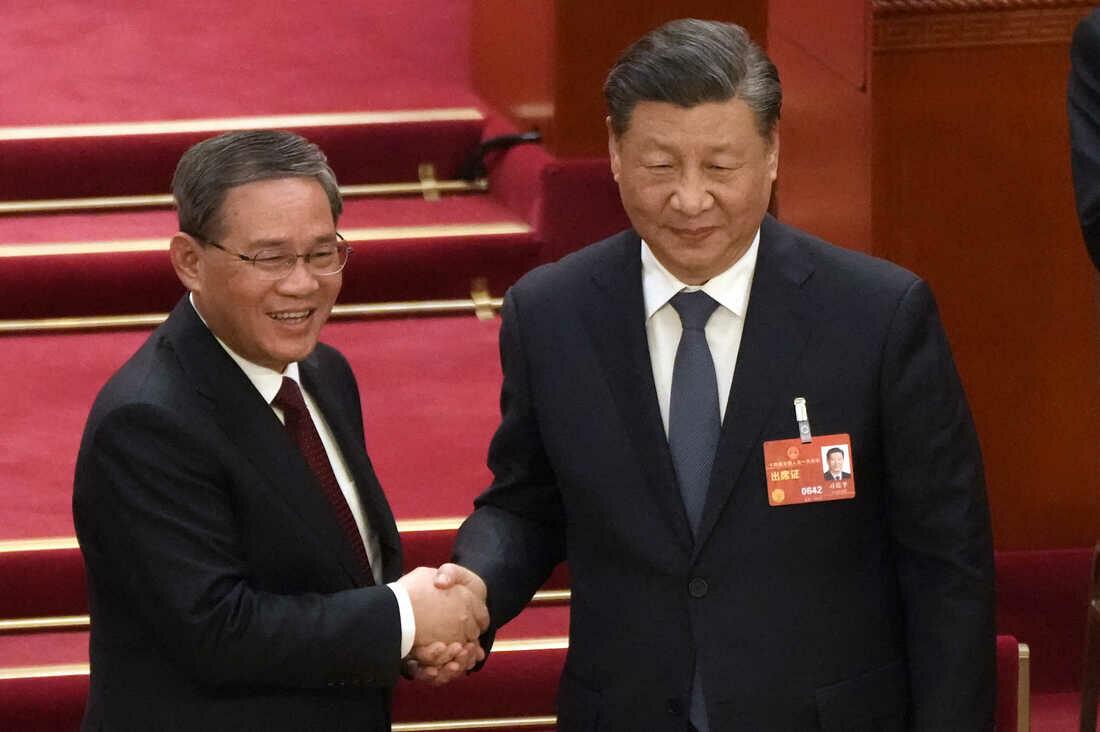
After President Joe Biden previously said he is “disappointed” his Chinese counterpart Xi Jinping is skipping the G20 summit in India which is kicking off in New Delhi this weekend, the White House has said Biden doesn’t plan to meet the official representing China in Xi’s stead, Chinese Premier Li Qiang.

President Biden departed for the G20 from Washington on Thursday evening, after which national security adviser Jake Sullivan told reporters in a briefing there’s no plan to engage China at the summit.

“We don’t have a plan for the president to engage with the Chinese premier at this time,” Sullivan said. He was responding to a specific question over whether recent allegations that Chinese spies were using aggressive tactics to gain access to US military bases would be raised with Beijing at the summit.

Left: Chinese Premier Li Qiang, via AP

As for China in response, foreign ministry spokeswoman Mao Ning had no comment or new information, and didn’t say whether the Chinese premier would seek a meeting, but it appears unlikely given Sullivan’s fresh comments.

Of course, Russia’s President Putin is also skipping the summit, with the Kremlin announcing Thursday he doesn’t even plan a virtual address to the heads of the world’s leading economies.

Given the ongoing Ukraine war, if Putin were to address to the G20, one might expect a somewhat juvenile and anti-diplomatic stunt to take place among Western leaders, such as staging a group walkout of the venue at the moment Putin spoke. This has happened in other forums, also when Russian Foreign Minister Sergei Lavrov speaks. It seems the Kremlin is avoiding this scenario altogether and doesn’t see a benefit in a G20 speech.

At a moment of very strained ties between between Beijing and Delhi, given the border clash situation which has been on edge since deadly troop encounters going back to 2020, headlines in the West have been emphasizing that Biden has an ‘opening’ to tighten US-India ties.

According to an Axios summary of what can be expected from Biden at the summit (assuming he stays awake):

  • Biden plans to use the G20 to push for a lending program for developing countries, White House officials said — a move to counter China’s massive Belt and Road Initiative, which has seen billions of dollars in infrastructure projects for developing countries over the past decade.
  • And the Biden administration yesterday released the text of a new Indo-Pacific supply chain agreement with a group of 14 countries that does not include China.
  • Revealing the full text of the agreement the week of both the G20 and ASEAN summits highlights the administration’s effort to demonstrate the U.S. can still pull together a bloc of countries to achieve multilateral goals.

Biden is flying to Vietnam after the G20 to meet with Vietnamese General Secretary Nguyen Phu Trong in Hanoi, where they are expected to unveil plans of deepened economic cooperation.

Tyler Durden
Fri, 09/08/2023 – 12:45

“Outrageously Wrong” – Turley Trounces Harvard Prof Over 14th Amendment “Nonsense” Comments

0
“Outrageously Wrong” – Turley Trounces Harvard Prof Over 14th Amendment “Nonsense” Comments

Authored by Jonathan Turley,

Below is my column in the New York Post in response to the attack this week by Harvard Professor Laurence Tribe. I am honestly saddened by the ad hominem attacks that have become common place with many academics like Tribe. There was a time when legal disagreements could be passionate but not personal. The use of personal insults and vulgar trash talking were avoided in our profession.

Now even law deans have called Supreme Court justices “hacks” to the delight of their followers. I have always said that there are good-faith arguments on both sides of the 14th Amendment theory despite my strong disagreement with the theory. The public would benefit from that debate based on precedent rather than personalities.

Here is the column:

This week, CNN’s “Erin Burnett OutFront” offered what has become a staple of liberal cable news: Harvard law professor Laurence Tribe assuring Democrats that they are justified in an unconstitutional effort while attacking opposing views as “nonsense.”

I was singled out on this occasion for Tribe’s latest personal attack because I voiced a legal opinion different from his own.

Being attacked by Tribe as a “hack” is not as much of a distinction as one might expect.

Indeed, it is relatively tame in comparison to Tribe’s past vulgar and juvenile assaults on others.

Tribe has attacked figures like Mitch McConnell as “McTurtle” and “flagrant d**khead.”

He attacked former Attorney General Bill Barr’s religion and thrills his followers by referring to Trump as a “Dick” or “dickhead in chief.”

Tribe often shows little patience for the niceties of constitutional law or tradition.

He has supported the call for packing the Supreme Court as long overdue.

He has also supported an array of debunked conspiracy theories like denouncing Barr as guilty of the “monstrous” act of shooting protesters in Lafayette Park with rubber bullets to make way for a photo op — a claim found to be utterly untrue.

Some of Tribe’s conspiracy theories are quickly disproven – like his sensational claims of an anti-Trump figure being killed in Russia.

Nevertheless, Tribe remains the “break the glass” academic for Democratic leaders when political expedience requires a patina of constitutional legitimacy.

I have long disagreed with Tribe over his strikingly convenient interpretations of the Constitution.

We crossed swords decades ago during the impeachment of Bill Clinton, when Tribe argued that it was not an impeachable offense for Clinton to lie under oath.

Even though a federal court and even Democrats admitted that Clinton committed the crime of perjury, Tribe assured Democrats that it fell entirely outside of the constitutional standard of a high crime and misdemeanor.

However, Tribe would later say that Trump’s call to Ukraine was clearly and undeniably impeachable.

Indeed, Tribe insisted that Trump could be charged with a long list of criminal charges that no prosecutor ever pursued — including treason.

Tribe even declared Trump guilty of the attempted murder of Vice President Mike Pence on January 6, 2021.

Even though no prosecutor has ever suggested such a charge, Tribe assured CNN that the crime was already established “without any doubt, beyond a reasonable doubt, beyond any doubt.”

That is the key to Tribe’s appeal: the absence of doubt.

Every constitutional road seems to inevitably lead to where Democrats want to go — from court packing to unilateral executive action.

Take student loan forgiveness.

Even former Speaker Nancy Pelosi acknowledged that the effort to wipe out hundreds of millions of dollars of student loans would be clearly unconstitutional.

However, Tribe assured President Biden that it was entirely legal.

It was later found unconstitutional by the Supreme Court.

Tribe was also there to support Biden — when no other legal expert was — on the national eviction moratorium.

The problem, Biden admitted, was his own lawyers told him that it would be flagrantly unconstitutional.

That is when then-Speaker Nancy Pelosi gave Biden the familiar advice: Just call Tribe.

Biden then cited Tribe as assuring him that he had the authority to act alone.

It was, of course, then quickly found to be unconstitutional.

Even Democratic laws that were treated as laughable were found lawful by Tribe.

For example, the “Resistance” in California passed a clearly unconstitutional law that would have barred presidential candidates from appearing on the state ballots without disclosing tax records.

Tribe heralded the law as clearly constitutional and lambasted law professors stating the obvious that it would be struck down.

It was not just struck down by the California Supreme Court but struck down unanimously.

Likewise, California Governor Gavin Newsom pushed for the passage of an anti-gun rights law that was used to mock the holding of the Supreme Court’s abortion ruling in Dobbs.

Yet Tribe declared the effort as inspired and attacked those of us who stated that it was a political stunt that would be found legally invalid.

It was quickly enjoined by a court as unconstitutional.

In an age of rage, the most irate reigns supreme.

And there is no one who brings greater righteous anger than Laurence Tribe.

That is evident in arguably the most dangerous theory now being pushed by Tribe — and the source of his latest attack on me.

Democrats are pushing a new interpretation of the 14th Amendment that would allow state officials to bar Trump from the ballots — preventing citizens from voting for the candidate now tied with Joe Biden for 2024 election.

This is all being argued by Tribe and others as “protecting democracy,” by blocking a democratic vote.

Democrats have claimed that the 14th Amendment prevents Trump from running because he supported an “insurrection or rebellion.”

They have argued that this long dormant clause can be used to block not just Trump but 120 Republicans in Congress from running for office.

I have long rejected this theory as contrary to the text and history of the 14th Amendment.

Even figures attacked (wrongly) by Trump, such as Georgia Secretary of State Brad Raffensperger, have denounced this theory as dangerous and wrong.

Tribe was set off in his latest CNN interview after I noted that this theory lacks any limiting principle.

Advocates are suggesting that courts could then start banning candidates by interpreting riots as insurrections.

After I noted that the amendment was ratified after an actual rebellion where hundreds of thousands died, Tribe declared such comparisons “nonsense.”

He asked “how many have to die before we enforce this? There were several who died at the Capitol during the insurrection.”

My comment was not to do a head count, but to note that (since Tribe believes that there is no need for a congressional vote) one would at least expect a charge of rebellion or insurrection by Trump.

Yet Trump was not even been charged with incitement.

Not even Special Counsel Jack Smith has charged him with incitement in his two indictments.

The 14th Amendment theory is the perfect vehicle for the age of rage and Tribe, again, has supplied the perfect rage-filled analysis to support it.

The merits matter little in these times.

You can be wrong so long as you are righteously and outrageously wrong.

Tyler Durden
Fri, 09/08/2023 – 12:25

Used Vehicle Prices May Have Bottomed For The Year; Could UAW Strike Reignite Inflation?

0
Used Vehicle Prices May Have Bottomed For The Year; Could UAW Strike Reignite Inflation?

Auto research firm Cox Automotive – the owner of the closely followed Manheim price index – published new data for August that shows wholesale used-vehicle prices marginally increased on a monthly basis for the first time since March. 

The Manheim Used Vehicle Value Index stood at 212.2 in August, up 0.2% from July. The index is down 7.7% from a year ago. These prices usually filter into the retail side of the market with a slight lag. 

“August brought a stop to wholesale price declines, though it was only a small reversal of the larger magnitude declines so far this spring and early summer,” Chris Frey, senior manager of Economic and Industry Insights for Cox Automotive, wrote in a press release. 

Frey said, “Historically speaking, the monthly figure aligns with the 0.3% average we’ve seen since 1997. Sure, there were swings in August during the financial crisis, the COVID reopening period of 2020, and the 2022 doldrums; but this year, the performance looks more ordinary. Like last month’s note, the current Manheim Index level of 212.2 is barely above that of the 212.1 measure seen in August 2021.” 

“Used market conditions have been quite consistent for a few months and are not likely to change much, even with the larger push toward balance; sales are slightly stronger than expected, inventory remains tight, and prices are holding at levels around 6% below last year at the same time. These factors are expected to prevent any substantial decline in wholesale prices through year-end,” he noted. 

Given what Frey has described, the wholesale used vehicle prices may have bottomed for the remainder of the year. 

First monthly increase since April.

And year-over-year declines appear to have stabilized in the first eight months of the year. 

Cox also showed that used-vehicle retail sales in August were up 5% versus July, and the year-over-year comparison with 2022 improved marginally. The average used car price was around $27,000, slightly lower versus July but still at historical highs. Consumers are still buying even with used car interest rates at levels not seen since the Dot Com bust. 

Suppose the United Auto Workers were to strike against the “Big Three” US automakers – General Motors, Ford, and Stellantis (Chrysler) – due to labor contract disputes. Could that be the catalyst to reignite used car prices?

Tyler Durden
Fri, 09/08/2023 – 12:05

‘Call Of Duty’ Video Game Using AI To Monitor What Players Say, Censor ‘Toxic Speech’

0
‘Call Of Duty’ Video Game Using AI To Monitor What Players Say, Censor ‘Toxic Speech’

Authored by Tom Ozimek via The Epoch Times,

Call of Duty, a shooter video game published by Activision, has started using artificial intelligence to monitor what players say during online matches in order to flag and crack down on “toxic speech” more effectively as online gaming looks poised to become the newest frontier of censorship.

Activision said recently on its blog that Call of Duty is doubling down on its fight against “hate speech” and other types of “toxic and disruptive behavior” among players in online chatrooms by enlisting the help of AI to identify and police player conduct.

“Call of Duty’s new voice chat moderation system utilizes ToxMod, the AI-Powered voice chat moderation technology from Modulate, to identify in real-time and enforce against toxic speech—including hate speech, discriminatory language, harassment and more,” the company said in the post.

The speech policing algorithms, which online players have no ability to turn off, will monitor and record what they say in order to identify speech that the company deems unfit for its virtual game spaces.

Strict penalties await for violators of Activision’s online speech rules, which bar derogatory comments based on race, sexual orientation, or “gender identity or expression.”

Punishment for rule-breakers ranges from temporary suspensions and account renaming to permanent bans and stat resets.

“Any user who is found to use aggressive, offensive, derogatory, or culturally charged language is subject to penalty,” the company warns in its Call of Duty Security and Enforcement Policy.

“Cyber-bullying and other forms of harassment are considered extreme offenses and will result in the harshest penalty,” it added.

AI-Powered Censorship

Around 60 million people—mostly men—play Call of Duty every month, according to activeplayer.io, and a common part of the multiplayer online gaming experience is banter.

But Activision has been keen to keep that banter within guardrails, as stipulated in its Code of Conduct.

“We do not tolerate bullying or harassment, including derogatory comments based on race, gender identity or expression, sexual orientation, age, culture, faith, mental or physical abilities, or country of origin,” the rules stipulate.

“Communication with others, whether using text or voice chat, must be free of offensive or harmful language. Hate speech and discriminatory language is offensive and unacceptable, as is harassment and threatening another player,” the Code of Conduct further states.

Brandon “Dashy” Otell of OpTic Texas during the Call of Duty League Pro-Am Classic in Columbus, Ohio on May 5, 2022. (Joe Brady/Getty Images)

A beta version of the speech policing algorithm has already begun in North America in Call of Duty: Modern Warfare II and Call of Duty: Warzone.

A full version of the AI-powered speech enforcer will be rolled out worldwide along with the upcoming release of Call of Duty: Modern Warfare III on Nov. 10, the company said.

The launch of Modern Warfare II last year saw the introduction of an overhauled in-game reporting system that provided more ways to report offensive behavior and gave new tools to Activision’s moderation team to “combat toxicity,” the company said in an earlier post.

The upgraded system allowed moderation teams to respond to reported violations of its Code of Conduct by, for example, restricting player features or muting them globally from all in-game voice chat features.

Since the introduction of its enhanced speech policing features last year, Activision says it has (as of Aug. 30) restricted voice and/or text chat to over 1 million accounts.

Data from the company indicates that around 20 percent of players did not re-offend after getting hit with a first warning.

Activision’s move to use AI to turbo-boost its crackdown on “toxic speech” comes amid a growing appetite in corporate America to suppress expression deemed too offensive and out of sync with the norms of the day.

That, in turn, comes as recent polling shows a growing trend in the share of Americans who favor government restrictions on false information online.

At least 55 percent of Americans in 2023 think that the U.S. government “should take steps to restrict false information online, even if it limits freedom of information,” according to a July 20 Pew Research Center survey.

“Fifty-five percent is a majority and is a milestone that shouldn’t be ignored,” James Gorrie, author of “The China Crisis,” wrote in a recent op-ed in The Epoch Times.

“If more than half of adults can’t think for themselves and prefer censorship to free speech, it seems apparent that the reeducation of America over the past several decades is nearly complete,” he added.

In 2021, the share of adults who said the government should censor fake news, even at the cost of freedom of expression, was 48 percent. And in 2018, that share was just 39 percent, suggesting that support for censorship has risen steadily in recent years.

Tyler Durden
Fri, 09/08/2023 – 11:45

Things Are Moving Faster Than Most People Realize

0
Things Are Moving Faster Than Most People Realize

By Michael Every of Rabobank

Irish job in a China shop

The iPhone ‘ban’ by China story took on a new dimension yesterday. Several news agencies confirmed an earlier report from the Wall Street Journal that Beijing looks to expand its ban of the use of iPhones in sensitive departments of government to include government-backed or controlled agencies and state companies. Considering that there are a whole lot of those (especially the latter), it is no surprise that this had a material impact on not just on Apple shares, which have lost more than 6% in the past two days, but also on the broader tech indices. The S&P technology index declined nearly 2%, where the S&P500 was down 0.3%.

Given that said company is not just a key vendor of phones in China but also a big employer, it would also strengthen the view that ‘national security trumps economics’ nowadays. If this is China’s – belated – answer to the blacklisting of Huawei by the Trump administration in 2019, it certainly doesn’t spell much good for the international relation between China and the US. Not that we had ever believed that recent initiatives to re-start a dialogue were likely to be successful, but these developments will arguably nullify any gains made in recent months. As we pointed out in yesterday’s Global Daily, the logical conclusions are that the US will likely increase trade sanctions further. And so, more decoupling and (potentially) less growth and more inflation.

In fact, things may be moving faster than most people realize. For, barely a week after the introduction of a new phone by China’s Huawei containing a chip with 7nm technology (significantly below the threshold of 14nm that the US government has said it is willing to allow on national security grounds), US lawmakers have now said that China’s top chipmaker, SMIC may have violated sanctions by supplying components to Huawei. This recent dynamic also raises questions on “what’s next”.

Does the car sector qualify for a closer scrutiny on national security grounds? You may think that sounds silly, but aren’t modern (EV) cars – some of which look more like coming straight out of Star Trek – nothing more than ‘mobile phones with an engine built around it’? And this thinking is not just theoretical. In June already Reuters reported that Tesla cars were prohibited from entering a Chinese coastal district because of a “secretive annual summer party leadership conclave”. And wouldn’t such thinking come in handy for European/German policy makers, who increasingly fear they are losing the race with China on EV’s? For Germany in particular, with cars accounting for 16% of goods exports, this would have grave consequences. Although the German government recently, and a bit surprisingly, ditched its earlier announced plan to provide significant energy subsidies for its ailing industry, when push comes to shove we would deem it quite unlikely that the German government is willing to “throw its car sector under the bus“!

Of course, things never move in straight lines and this also holds for geopolitics. For one, there is also a bright spot on the horizon as the United Kingdom has re-joined the European Union’s Horizon science research program. This represents a further thawing of UK-EU relations following Brexit, coming on the heels of the Windsor Framework that Prime Minister Sunak negotiated with Brussels in February. The EU had refused to discuss Horizon membership until tensions over trade rules governing Northern Ireland were settled. While this does not mean that similar deals with the bloc are imminent, it raises hopes that pragmatism continues to prevail between the two former partners. A key issue ahead is the looming post-Brexit deadline on electric vehicle trade.

You bet that Europe is eagerly hoping for a completely different deal to be struck as well, although it can’t do much other than waiting.

Although it appeared just two weeks ago that an ‘in principle’ endorsement by Offshore Alliance members of an agreement with Woodside Energy had nipped the risk of disruptive strikes in Australia’s gas (distribution) sector in the bud, workers at Chevron have held out so far. They have now started their long-awaited partial strikes at the Gordon and Wheatstone facilities, together good for some 7% of global LNG supply according to Bloomberg.

Europe doesn’t buy a lot of Australian gas (which is largely aimed at the Asian market), but liquid gas is fungible, and global demand and supply conditions are such that these developments do have a material impact on European gas prices. The latter have been increasingly volatile off late – the ‘curse of interesting times’ as our Energy analyst Joe DeLaura would put it. Having hit a ‘low’ of around EUR25/MWh over the summer months, Dutch 1m TTF forward prices spiked to over EUR40/MWh in mid-August, to retreat again to around EUR30 in recent weeks. However, the recent developments in Australia have helped push prices up to EUR35 again.

We have been arguing for quite some time that although Europe has made progress in cutting back on its gas consumption (according to our calculations, there has been a structural weather-adjusted reduction of between 15 to 20% in the Eurozone, depending on the exact comparison date) and is well ahead of schedule in filling up storage capacity, the Australian strike(s) only underscores Europe’s vulnerabilities. More storage capacity -and harder to achieve- structural gas saving is required to tackle those remaining vulnerabilities in this area.

Speaking of… how can central banks make policies – which often are all about tens of basis points – when even the economic statistics move more than that simply because of revisions? Case in point are the latest Eurozone GDP growth data from Eurostat, which were released yesterday. The headline figure for Q2, which was accompanied by a first estimate of spending components data, was revised down from +0.3 to +0.1 %q/q. In basis points it was c. 15bp. That’s half a rate hike! A key explanation for the revision was a sharp cutback in the Irish GDP numbers. Initially these had shown a 3.3% q/q gain, but the latest data show a much more modest 0.5% increase.

As my colleague Stefan Koopman points out in this short and sweet publication, yesterday was no exception. The Irish data have been a key source of volatility in the Eurozone data, sometimes even obscuring the underlying trend. Ireland’s rise as a European hub for multinational companies in sectors like medical equipment, pharmaceuticals, ICT, and aircraft leasing has greatly impacted its GDP statistics. While part of this reflects real economic activity, the sharp increase in Irish GDP growth stems from assets being relocated to Ireland for tax purposes. The Irish data have been derided as “leprechaun economics” due to this distortion. However, we argue Ireland still warrants attention as it skews Eurozone economic data and narratives in non-trivial ways. The Eurozone’s GDP rebound after the pandemic, for example, is being inflated by global profits of multinationals, instead of reflecting real domestic growth. Similarly, looking at Eurozone industrial output, stripping Ireland out of the figures leads to an entirely different image: production volumes are down 4.4% on January 2019 instead of being up 0.8% as per the official statistics, a figure that, at least, better fits recent gloomy survey data.

Policy makers may not always be able to distinguish or correct for these disturbances. But in this case we believe it does support our view, as we explain here, that the ECB will hit the pause button in its next meeting as the growth outlook is deteriorating and overtightening is becoming a real possibility. But with inflation still high, the odds of another hike are more than just a tail risk

Tyler Durden
Fri, 09/08/2023 – 10:40

Tesla China Deliveries Up 30.9% Month Over Month

0
Tesla China Deliveries Up 30.9% Month Over Month

It was slow going for Tesla in China last month, with some questioning whether or not saturation in the market was slowing the company’s growth.

But in August, the EV company saw a return to growth as it slashed prices on vehicles even further and Beijing enticed citizens to go EV shopping with tax breaks. 

For the month of August, Tesla sold 64,694 vehicles and exported 14,465 vehicles, according to data from China’s Passenger Car Association. This marks month over month delivery gains of 30.9%, according to Bloomberg. 

Meanwhile, for the month of August, passenger vehicle sales were up 2.5% year over year to 1.92 million units, China’s Passenger Car Association said in a release out early Friday morning. Sales for the month were up 8.6%, Bloomberg calculated. 

It marked the first year over year gain since May 2023, Reuters noted. China’s auto marker is also seeing a tailwind from lower rates on existing mortgages and lower rates for first time home buyers, CPCA Secretary General Cui Dongshu noted. 

Recall we just noted last month that Tesla had cut the price of its Model S Plaid in China by 19%. 

We also noted that Canadian VC and self-labeled “SPAC Jesus” Chamath Palihapitiya was out over Labor Day weekend praising the speed and aggressiveness of Tesla’s price cuts, which seem to be working. 

“Some companies cut prices, but most keep prices flat or increase them,” he added. “Some companies improve products quickly. But no one has actually given you more for less on such a big ticket purchase so frequently.”

Tesla’s recent price cuts have been a topic of discussion since January because, so far, they have been effective in spurring demand and putting pressure on legacy automakers. Tesla continues to make aggressive cuts, as we wrote about just days ago

Tesla cut prices on its Model S Plaid vehicle in China most recently, to 828,900 yuan from 1.03m yuan, a cut of about 19%. Bloomberg reported last week that Tesla was also cutting the price of its Model S to 698,900 yuan from 808,900 yuan, its Model X to 738,900 yuan from 898,900 yuan and its Model X Plaid to 838,900 yuan from 1.06m yuan.

These cuts followed additional price cuts in China that took place only about two weeks ago. Recall we reported on August 16 that Tesla’s Model S price was being cut 6.7% to 754,900 yuan ($103,477) from 808,900 yuan prior and the company’s Model X was priced 6.9% lower at 836,900 yuan, down from 898,900, according to Reuters

Earlier in August, news broke that Tesla was adding new, lower-range iterations of its Model S and Model X that would be priced $10,000 lower than previous base prices, Yahoo reported. The standard range Model S will start at $78,490 and will offer 320 miles of range and the standard range Model X will now be priced $88,490 and will have a range of 269 miles per charge, the report says. 

Tyler Durden
Fri, 09/08/2023 – 10:20

US Intel Official: Media Misleading Americans About Ukraine’s Battlefield Success

0
US Intel Official: Media Misleading Americans About Ukraine’s Battlefield Success

Authored by Kyle Anzalone via AntiWar.com,

In an interview with renowned reporter Seymour Hersh, a US intelligence official scolded the media for misleading the American public about Ukraine’s battlefield failures during the Spring counteroffensive. The unnamed official additionally told Hersh he believes that Russian President Vladimir Putin ordered the assassination of PMC Wagner chief Yevgeny Prigozhin to deescalate tensions with NATO.

Responding to reports in recent weeks that Ukrainian forces were gaining momentum and recapturing territory, the official remarked, “Where are the reporters getting this stuff?” he asked. “There are stories talking about drunk Russian commanders while the Ukrainians are penetrating the three lines of Russian defense and will be able to work back to Mariupol.”

He continued, “The goal of Russia’s first line of defense was not to stop the Ukrainian offense, but to slow it down so if there was a Ukrainian advance, Russian commanders could bring in reserves to fortify the line.” The official added, “There is no evidence that Ukrainian forces have gotten past the first line. The American press is doing anything but honest reporting on the failure thus far of the offense.”

Secretary of State Antony Blinken delivered a similarly optimistic message during his trip to Kyiv on Wednesday. “In the ongoing counteroffensive, progress has accelerated in the past few weeks. This new assistance will help sustain it and build further momentum,” he said at a press conference.

The official says that message is being delivered from military intelligence to the White House, while the CIA has drawn other conclusions. “This kind of reporting from the military intelligence community is going to the White House. There are other views,” he said, referring to the CIA. The official explained those views do not reach President Joe Biden.

For over three months, Kyiv has ordered its forces to advance on entrench Russian defensive lines in southern Ukraine. Russian minefields caused Ukraine to lose a significant portion of its Western-trained soldiers and equipment in the opening weeks of the offensive. The massive push by Ukraine resulted in nearly no territorial gains.

Still, Washington has pushed Kyiv to continue the counteroffensive. The White House acknowledges that for Ukraine to have a possibility of success, Kyiv will have to be willing to sustain high casualties.

The official told Hersh no matter how committed Kyiv is to the war effort, President Zelensky’s goals are unattainable“Zelensky will never get his land back,” he said.

The official also spoke about the assassination of Prigozhin last month. He believes that Putin ordered the killing because the mercenary boss had begun to provoke NATO members. “By early August, there were reports of border tensions as the remnant of the Wagner Group made a series of intrusions into the airspace of Poland, and troublesome threats at the borders of Lithuania, Latvia, Estonia, and Finland,” Hersh writes, “For Putin, triggering complaints from NATO countries was an unforgivable breach. ‘That was it,’ a knowledgeable US intelligence official told me.”

Tyler Durden
Fri, 09/08/2023 – 10:00