75.7 F
Chicago
Monday, August 17, 2026
Home Blog Page 3652

Lukashenko Confirms Russian Tactical Nukes Already Being Transferred To Belarus

Lukashenko Confirms Russian Tactical Nukes Already Being Transferred To Belarus

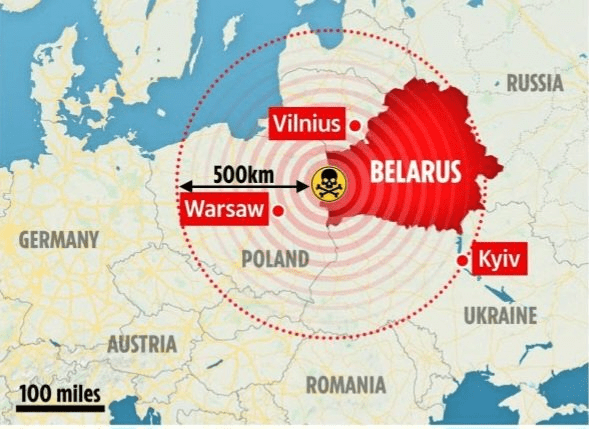
Despite urgent warnings from US and Western allies, Moscow is moving forward with plans to station tactical nuclear weapons in neighboring Belarus. The two longtime allies which form what they call a ‘union state’ signed a deal Thursday to formalize deployment of Russian nukes on Belarusian soil. All of this comes dangerously as Ukraine’s cross-border sabotage attacks on Russian territory have clearly escalated. 

Alarmingly for Ukraine and its NATO backers, Belarus’ president Alexander Lukashenko said soon after the deal was signed that the transfer of non-strategic nuclear weapons from Russia to Belarus is already underway.

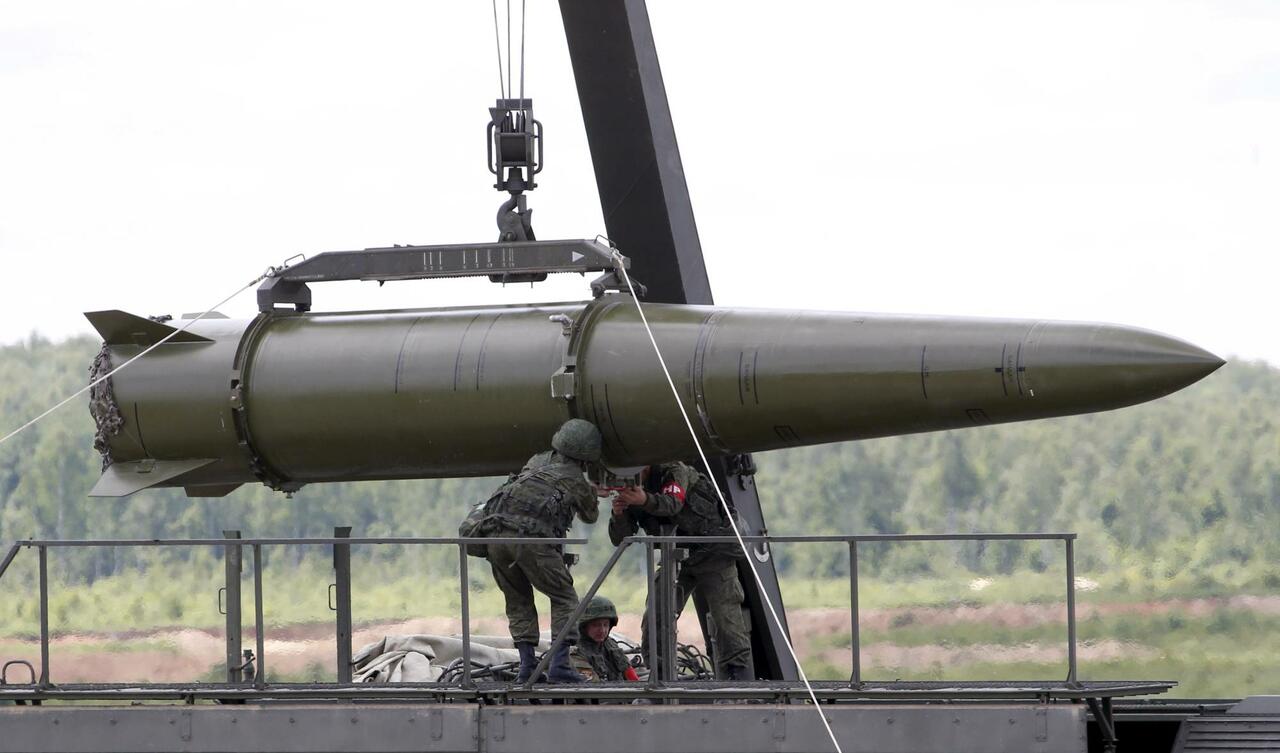
Iskander tactical missile system

And Belarusian Defense Minister Viktor Khrenin said in Minsk alongside Russian counterpart, Sergei Shoigu: “Deployment of nonstrategic nuclear weapons is an effective response to the aggressive policy of countries unfriendly to us,” according to regional media.

Additionally Shoigu stated that “In the context of an extremely sharp escalation of threats on the western borders of Russia and Belarus, a decision was made to take countermeasures in the military-nuclear sphere.”

Starting months ago international reports said that Russian tactical nukes would soon be in Belarus, but there were conflicting reports over whether it had actually happened yet. 

Additionally, as AP highlights, “Also unclear is how many nuclear weapons would be kept in Belarus. The U.S. government believes Russia has about 2,000 tactical nuclear weapons, which include bombs that can be carried by aircraft, warheads for short-range missiles and artillery rounds.”

All of this was put in motion starting in late March, when Russian President Vladimir Putin first announced that Minsk requested the presence of Russian tactical nukes. According to TASS at the time, “As the Russian leader indicated, the construction of storage facilities for tactical nuclear weapons will be completed in Belarus by July 1.”

“Moscow has already provided Minsk with Iskander tactical missile systems capable of carrying nuclear weapons and has helped Minsk to re-equip its military aircraft to carry specialized weapons,” TASS noted in its prior reporting. “As well, Belarusian missile crews and pilots have undergone training in Russia.”

NATO has called the move “dangerous and irresponsible” – while EU foreign policy chief Joseph Borrell previously said, “Belarus hosting Russian nuclear weapons would mean an irresponsible escalation & threat to European security. Belarus can still stop it, it is their choice. The EU stands ready to respond with further sanctions.” Currently the EU is preparing an 11th round of anti-Russia sanctions. 

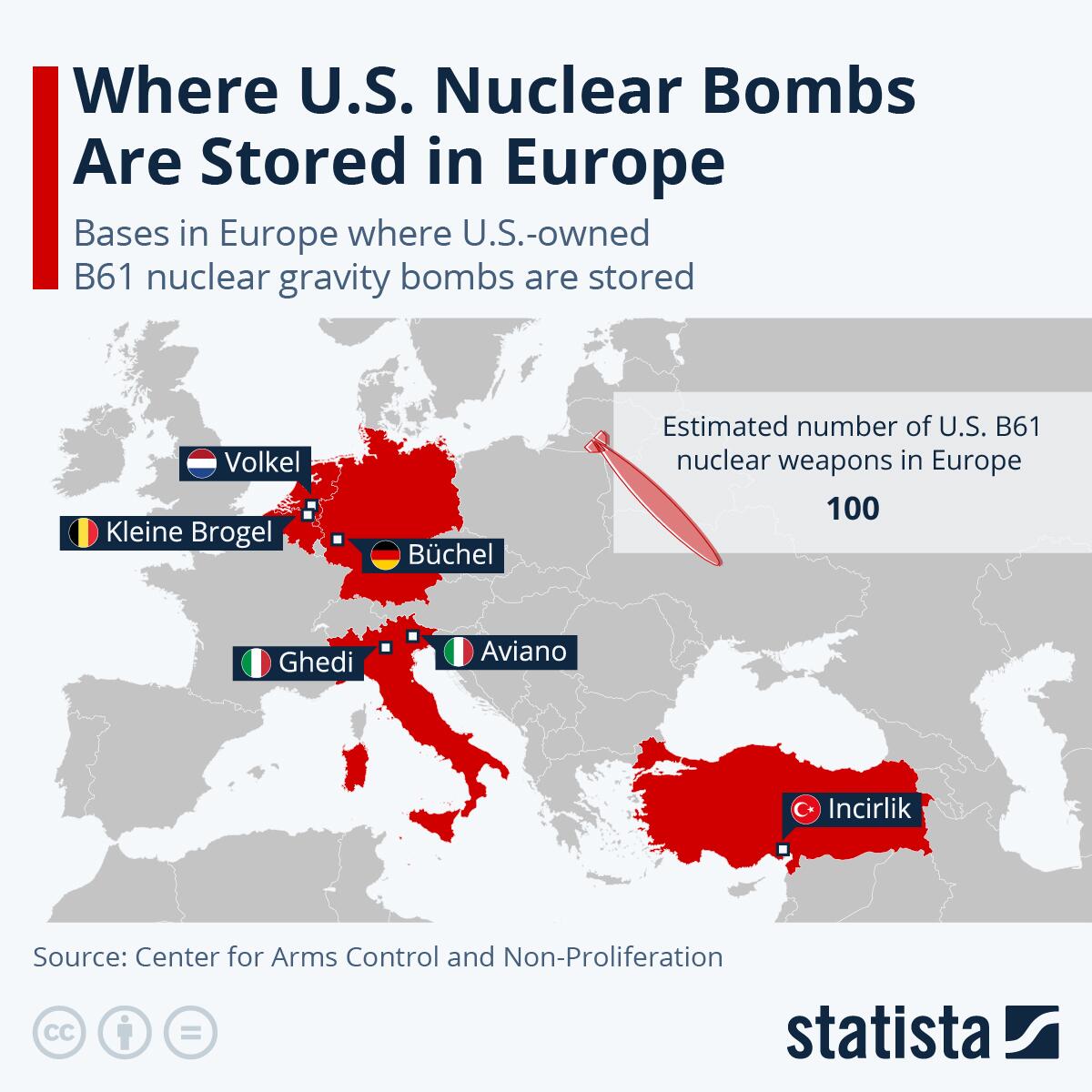
But it must be recalled that the Unites States stations tactical nuclear weapons in places like Turkey as well some NATO locations in Europe. Turkey is merely across the Black Sea from Russia. This NATO ‘nuclear sharing’ program has been a reality for decades.

Russian Defense Minister Sergey Shoigu additionally explained on Thursday that NATO is using the Ukraine crisis to build up its military infrastructure there:

“NATO is using the Ukrainian crisis as a pretext for building up its groups. Another stage of the alliance’s expansion has been launched. Military infrastructure is being modernized in Eastern and Central Europe, strike weapons are being deployed, and the scale and intensity of joint exercises are increasing,” Shoigu said at a meeting of the Collective Security Treaty Organization (CSTO) Council of Defense Ministers.

He also highlighted “the growing aggressive rhetoric and joint ‘nuclear missions’ by NATO countries in Eastern Europe for practicing the use of nuclear weapons delivery systems, as well as the upgrading of the components of the US global missile defense system.”

This seems an ‘answer’ to the Western allies in terms of the rationale for proceeding with tactical nukes in Belarus.

But for some important context…

You will find more infographics at Statista

Tyler Durden
Fri, 05/26/2023 – 02:45

Thanks To Sanctions, The US Is Losing Its Grip On The Middle East

Thanks To Sanctions, The US Is Losing Its Grip On The Middle East

Authored by Ryan McMaken via The Mises Institute,

Last Friday, members of the Arab League welcomed the Syrian regime back to the organization. Representatives from several Arab member states shook Syrian leader Assad’s hand and gave him, a “warm” reception according to several news outlets. Syria was suspended from the league in 2011, but on May 7 in Cairo the league agreed to reinstate the Assad regime. 

This represents a reversal from years of isolation placed on the regime, and a break with US policy which remains staunchly opposed to Assad. Indeed, the League’s rapprochement with Assad should be seen as a repudiation of US policy, and especially as a sign of how Washington’s influence among Leage members—the most powerful of which are Saudi Arabia and Egypt—has waned.

Moreover, this is just the latest bad news for Washington’s influence in the region coming mere weeks after Iran and Saudi Arabia reestablished diplomatic relations.

In both cases, we find regimes that Washington had sought to isolate and sanction, but both states have instead been expanding their relations with other states in the region with the help of China. Meanwhile, both Beijing and Riyadh have increased their ties with Russia. These development help illustrate how growing US attempt to impose—or threaten to impose—hard line sanctions against a growing number of regimes has only accelerated a global movement away from the US dollar and away from Washington’s orbit. 

Saudi Arabia Increasing Ties with Iran and Syria

In March of this year, Saudi Arabia and Iran announced a resumption of relations following a deal brokered by China. The Saudi regime—a longtime Washington ally—had apparently not told the Biden administration of the meetings with Iran and China. Shortly after the agreement was announced, the administration dispatched CIA Director William Burns to Saudi Arabia where he reportedly “expressed frustration with the Saudis,” telling “Saudi Crown Prince Mohammed bin Salman that the U.S. has felt blindsided by Riyadh’s rapprochement with Iran and Syria.”

Although the White House now claims to be supportive of the new agreement between Riyadh and Tehran, this support is really just an admission that there’s not much Washington can do about it. After all, for decades, US policy has been to isolate Tehran and in recent years, Washington has imposed harsh sanctions, including Donald Trump’s “maximum pressure campaign” designed to cripple Iran even more. The Biden administration took no significant steps to reverse the Trump position. The Saudi regime’s newfound openness to Iran is thus contrary to US policy, and it is not plausible that Washington is in any way pleased with the change. 

From Washington’s perspective, the situation got even worse this month when the Arab League readmitted Syria, also apparently without consulting Washington. Since 2011, the US has imposed draconian sanctions on Syrian in a manner similar to Iran. Syria’s newfound reintegration into the Arab League is thus also contrary to the US’s ongoing efforts to isolate the Assad regime which the US has repeatedly claimed must by subjected to “regime change.” 

Growing Ties with Russia

New overtures by the Saudis toward both Syria and Iran also run afoul of Washington because both Iran and Syria are important allies of Moscow. With the US now inflicting harsh sanctions on the Russian regime, anything that helps Damascus and Tehran has the potential to help Moscow as well. 

Both the Saudis and the Chinese have shown growing efforts to forge ties directly with the Russian regime as well. At a Chinese-Russian summit in February 2022, both regimes stated they plan to forge even closer ties. This has apparently not changed even after a year of heightened hostilities from the US and NATO aimed at Moscow. In fact, it is likely that Russia-China relations are closer than they’ve ever been in the post-Soviet era. This has clearly been a problem for Washington as China continues to provide an important market for Russian exports in the face of US sanctions. Both states have also made efforts to move away from the US dollar and settle international trade in other currencies. 

This might all be dismissed as the scheming of foreign powers that were never reliable “partners” or allies of the US in the first place. But Saudi Arabia is another matter, and the Saudis are apparently willing to play nice with the Russians, Chinese, and other members of the latest supposed “Axis of Evil.” 

The Saudi regime has grown closer to Moscow in the wake of US sanctions against Russia. For example, “Saudi Arabia and the UAE, traditional Middle Eastern allies of the United States, are not shying away from importing, storing, trading, or re-exporting Russian fuels despite American efforts to persuade them to join a crackdown on Russian attempts to evade the Western sanctions on its oil.”

In other words, US efforts to get the Arab world to isolate Russia are failing, and Russian ties with the Middle East are actually improving

This can be seen in the fact that the Organization of the Petroleum Exporting Countries (OPEC)—which is dominated by its largest producer, Saudi Arabia—has shown no interest in helping the US in its sanctions war against Russia. Instead, OPEC has cut production levels to raise oil prices, which benefits Moscow. The US has opposed these cuts, and now some anti-Russia factions in the US are exploring ways to punish OPEC for its lack of enthusiasm in cooperating with US efforts against Russia. 

At this point, a trend has clearly emerged: as the US further attempts to tighten its geopolitical grip on the global economy through economic sanctions, fewer and fewer states worldwide appear interested in playing along. 

Indeed, the spread of US sanctions provides good reason for other regimes to increase efforts to forge close ties with other regimes as insurance against becoming the victims of US policy. After all, the US has been quite free and easy with threatening “uncooperative” countries with so-called secondary sanctions as a punishment for doing business with states like Syria and Russia. The US has been explicit in this and in February, as CNN reported at the time, “the United States is ramping up efforts to choke off Russia’s economy and it has set its sight on the Middle East. . . . A top US Treasury official arrived in the United Arab Emirates (UAE) on Monday to warn the regional business hub that helping Moscow evade sanctions wouldn’t be without consequences.” China had already been “warned” in a similar fashion. 

Yet, it appears that the US’s ongoing sanctions war against a growing percentage of the world population is having the opposite of its intended effect. The US threatens to sanction Saudi Arabia and China, and in return, both countries become even more willing to seek cooperation with some of the regimes Washington has attacked the most.

While Washington pursued a divide-and-conquer strategy throughout the Middle East, Beijing brokers deals to increase regional stability. While the US ratchets up efforts to isolate its many enemies, the Chinese, the Saudis, the Arab League, and OPEC all shrug and look to increasing international communication and trade.  The Washington foreign policy establishment shows few signs that it is even noticing. The US regimes foreign policy “tool box” continues to be centered on sanctions, violence, and making demands on both its allies and its professed enemies. The rest of the world is moving on, however, and Washington may be among the last to accept the new reality.

Tyler Durden
Fri, 05/26/2023 – 02:00

Rein In The FBI: Put An End To Their Gestapo Tactics

Rein In The FBI: Put An End To Their Gestapo Tactics

Authored by John and Nisha Whitehead via The Rutherford Institute,

One of the creeping hands of totalitarianism running through the democracy is the Federal Bureau of Investigation… Because why does the FBI do all this? To scare the hell out of people… They work for the establishment and the corporations and the politicos to keep things as they are. And they want to frighten and chill the people who are trying to change things.”

– Howard Zinn, historian

Power corrupts. We know this.

In fact, we know this from experience learned the hard way at the hands of our own government.

So why is anyone surprised to learn that the FBI, one of the most power-hungry and corrupt agencies within the police state’s vast complex of power-hungry and corrupt agencies, misused a massive government surveillance database more than 300,000 times in order to target American citizens?

This is how the government operates, after all.

First, they seek out extraordinary powers acquired in the wake of some national crisis—in this case, warrantless surveillance powers intended to help the government spy on foreign targets suspected of engaging in terrorism—and then they use those powers against the American people.

According to the Foreign Intelligence Surveillance Court, the FBI repeatedly misused Section 702 of the Foreign Intelligence Surveillance Act in order to spy on the communications of two vastly disparate groups of Americans: those involved in the George Floyd protests and those who may have taken part in the Jan. 6, 2021, protests at the Capitol.

This is par for the course for the FBI, whose modus operandi has historically been to “expose, disrupt, misdirect, discredit, or otherwise neutralize” perceived threats to the government’s power.

Indeed, the FBI has a long history of persecuting, prosecuting and generally harassing activists, politicians, and cultural figures.

Back in the 1950s and ‘60s, the FBI’s targets were civil rights activists, those suspected of having Communist ties, and anti-war activists. In more recent decades, the FBI has expanded its reach to target so-called domestic extremists, environmental activists, and those who oppose the police state.

In 2019, President Trump promised to give the FBI “whatever they need” to investigate and disrupt hate crimes and domestic terrorism, without any apparent thought for the Constitution’s prohibitions on such overreach.

That misguided pledge sheds a curious light on the FBI’s ongoing spree of SWAT team raids, surveillance, disinformation campaigns, fear-mongering, paranoia, and strong-arm tactics meted out to dissidents on both the right and the left.

Yet while these overreaching, heavy-handed lessons in how to rule by force have become standard operating procedure for a government that communicates with its citizenry primarily through the language of brutality, intimidation and fear, none of this is new.

Indeed, the FBI’s love affair with totalitarianism can be traced back to the Nazi police state.

As historian Robert Gellately recounts, the Nazi police state was so admired for its efficiency and order by the world powers of the day that in the decades after World War II, the FBI, along with other government agencies, aggressively recruited at least a thousand Nazis, including some of Hitler’s highest henchmen.

Since then, U.S. government agencies—the FBI, CIA and the military—have fully embraced many of the Nazi’s well-honed policing tactics, and used them repeatedly against American citizens.

With every passing day, the United States government borrows yet another leaf from Nazi Germany’s playbook: Secret police. Secret courts. Secret government agencies. Surveillance. Censorship. Intimidation. Harassment. Torture. Brutality. Widespread corruption. Entrapment. Indoctrination. Indefinite detention.

These are not tactics used by constitutional republics, where the rule of law and the rights of the citizenry reign supreme. Rather, they are the hallmarks of authoritarian regimes, where secret police control the populace through intimidation, fear and official lawlessness on the part of government agents.

Consider the extent to which the FBI’s far-reaching powers to surveil, detain, interrogate, investigate, prosecute, punish, police and generally act as a law unto themselves resemble those of their Nazi cousins, the Gestapo.

Just like the Gestapo, the FBI has vast resources, vast investigatory powers, and vast discretion to determine who is an enemy of the state.

Much like the Gestapo spied on mail and phone calls, FBI agents have carte blanche access to the citizenry’s most personal information.

Much like the Gestapo’s sophisticated surveillance programs, the FBI’s spying capabilities can delve into Americans’ most intimate details (and allow local police to do so, as well).

Much like the Gestapo’s ability to profile based on race and religion, and its assumption of guilt by association, the FBI’s approach to pre-crime allows it to profile Americans based on a broad range of characteristics including race and religion.

Much like the Gestapo’s power to render anyone an enemy of the state, the FBI has the power to label anyone a domestic terrorist.

Much like the Gestapo infiltrated communities in order to spy on the German citizenry, the FBI routinely infiltrates political and religious groups, as well as businesses.

Just as the Gestapo united and militarized Germany’s police forces into a national police force, America’s police forces have largely been federalized and turned into a national police force.

Just as the Gestapo carried out entrapment operations, the FBI has become a master in the art of entrapment.

Just as the Gestapo’s secret files on political leaders were used to intimidate and coerce, the FBI’s attempts to target and spy on anyone suspected of “anti-government” sentiment have been similarly abused.

The Gestapo became the terror of the Third Reich by creating a sophisticated surveillance and law enforcement system that relied for its success on the cooperation of the military, the police, the intelligence community, neighborhood watchdogs, government workers for the post office and railroads, ordinary civil servants, and a nation of snitches inclined to report “rumors, deviant behavior, or even just loose talk.”

Likewise, as countless documents make clear, the FBI has had no qualms about using its extensive powers in order to blackmail politicians, spy on celebrities and high-ranking government officials, and intimidate and attempt to discredit dissidents of all stripes.

In fact, borrowing heavily from the Gestapo, between 1956 and 1971, the FBI conducted an intensive domestic intelligence program, termed COINTELPRO, intended to neutralize domestic political dissidents. As Congressman Steve Cohen explains, “COINTELPRO was set up to surveil and disrupt groups and movements that the FBI found threatening… many groups, including anti-war, student, and environmental activists, and the New Left were harassed, infiltrated, falsely accused of criminal activity          .”

Sound familiar? The more things change, the more they stay the same.

Those targeted by the FBI under COINTELPRO for its intimidation, surveillance and smear campaigns included: Martin Luther King Jr., Malcom X, the Black Panther Party, Billie Holiday, Emma Goldman, Aretha Franklin, Charlie Chaplin, Ernest Hemingway, Felix Frankfurter, John Lennon, and hundreds more.

The Church Committee, the Senate task force charged with investigating COINTELPRO abuses in 1975, denounced the government’s abuses:

“Too many people have been spied upon by too many Government agencies and too much information has been collected. The Government has often undertaken the secret surveillance of citizens on the basis of their political beliefs, even when those beliefs posed no threat of violence or illegal acts on behalf of a hostile foreign power.”

The report continued:

“Groups and individuals have been harassed and disrupted because of their political views and their lifestyles. Investigations have been based upon vague standards whose breadth made excessive collection inevitable. Unsavory and vicious tactics have been employed—including anonymous attempts to break up marriages, disrupt meetings, ostracize persons from their professions, and provoke target groups into rivalries that might result in deaths. Intelligence agencies have served the political and personal objectives of presidents and other high officials.”

Whether 50 years ago or in the present day, the treatment being doled out by the government’s lethal enforcers has remained consistent, no matter the threat.

The FBI’s laundry list of crimes against the American people includes surveillance, disinformation, blackmail, entrapment, intimidation tactics, harassment and indoctrination, governmental overreach, abuse, misconduct, trespassing, enabling criminal activity, and damaging private property, and that’s just based on what we know.

Whether the FBI is planting undercover agents in churches, synagogues and mosques; issuing fake emergency letters to gain access to Americans’ phone records; using intimidation tactics to silence Americans who are critical of the government; recruiting high school students to spy on and report fellow students who show signs of being future terrorists; or persuading impressionable individuals to plot acts of terror and then entrapping them, the overall impression of the nation’s secret police force is that of a well-dressed thug, flexing its muscles and doing the boss’ dirty work of ensuring compliance, keeping tabs on potential dissidents, and punishing those who dare to challenge the status quo.

As I make clear in my book Battlefield America: The War on the American People and in its fictional counterpart The Erik Blair Diaries, it’s time to rein in the Federal Bureau of Intimidation’s war on political freedom.


Tyler Durden
Thu, 05/25/2023 – 23:40

Antibiotic-Resistant Bugs Will Kill As Many As Cancer By 2050; UN Report

Antibiotic-Resistant Bugs Will Kill As Many As Cancer By 2050; UN Report

Deaths from drug-resistant infections are set to skyrocket by 2050, according to the UN 2023 report ‘Bracing for Superbugs: Strengthening environmental action in the One Health response to antimicrobial resistance.’

Unless drastic action is taken to tackle the problem, it could also lead to a GDP shortfall of $3.4 trillion annually in the next decade and push 24 more people into extreme poverty.

As Statista’s Anna Fleck reports, according to recent estimates, in 2019, 1.27 million deaths were directly attributed to drug-resistant infections globally, while 4.95 million deaths were linked with bacterial AMR. That’s now well above the death counts of major killers HIV/AIDS and malaria, which were estimated to have claimed the lives of 860,000 and 640,000, respectively, that year. As the following chart shows, antibiotic-resistant infections could kill as many as 10 million people in just three decades – on par with the 2020 death toll from cancer.

Infographic: Deaths From Drug-Resistant Infections Set To Skyrocket | Statista

You will find more infographics at Statista

Although the risks of AMR will impact people worldwide, Low-Income Countries (LICs) and Lower-Middle-Income Countries (LMICs) are expected to see the highest death tolls. By region, Asia is predicted to see the highest number of AMR-related deaths per 10,000 population in 2050 (4,730,000), followed by Africa (4,150,000), Latin America (392,000), Europe (390,000), North America (317,000) and Oceania (22,000).

According to the report, AMR also exacerbates inequalities within societies and so groups including women, children, migrants, refugees, people employed in sectors such as agriculture or healthcare, as well as those living in poverty will be particularly vulnerable to drug-resistant infections.

Tyler Durden
Thu, 05/25/2023 – 23:20

Legislation To Block Biden’s ATF Rule Stalls As Millions Set To Become Felons Overnight 

Legislation To Block Biden’s ATF Rule Stalls As Millions Set To Become Felons Overnight 

Submitted by Gun Owners of America,

Most Americans are unaware that a new rule from President Biden’s ATF is less than one week away from turning millions of fellow citizens into felons overnight. 

The new rule targets firearms that utilize a brace, a device originally designed to aid disabled veterans in shooting guns without assistance. These braces were approved for sale and use by ATF themselves. 

An estimated 40 million of these firearms are owned by law-abiding citizens. Those citizens, unless aware of the ATF’s rule change, will become felons on June 1st – unless the House votes on H. J. Res. 44 to overturn the ban using the Congressional Review Act. 

This process allows both chambers of Congress to pass a resolution of disapproval to nullify the regulation, and a vote in the Senate would not be subject to filibuster rules. 

The Republican-controlled House has already cleared the resolution through committee. Currently, there are 189 cosponsors of the bill. But for some reason, it is not scheduled a vote before Congress goes into recess or the rule goes into effect. 

This vote is extremely important because it would force members of the Senate, with vulnerable Democrats in gun-friendly states, to go on the record while answering this question: will you vote to allow this administration to turn many of your constituents into felons overnight? 

Even though the CRA likely would be vetoed by the President, getting these members of Congress on record holds them accountable to their constituents. It would look ridiculous if they voted no on an issue like this which affects such a large swath of the population, but then turned around and preached about being “pro-gun.” 

Ben from GOA explains why the ATF’s ‘free’ tax stamp for your braced firearms isn’t exactly free… 

This is where we need your help. 

You can call your elected officials at (202) 224-3121.

Tell them to demand that your representative tell Speaker McCarthy to schedule a vote for this important issue that impacts millions of Americans. 

And if they aren’t already, let them know to support S.J. RES. 20 if they’re in the Senate & H.J. RES. 20 if they’re in the House of Representatives 

*    *    *

We’ll hold the line for you in Washington. We are No Compromise. Join the Fight Now.

Tyler Durden
Thu, 05/25/2023 – 23:00

Iowa Poll: Trump Holds 3-to-1 Lead Over DeSantis

Iowa Poll: Trump Holds 3-to-1 Lead Over DeSantis

Authored by Jake Bevan via RealClear Wire,

An abortive rally and an expanding field of challengers hasn’t hurt Donald Trump’s standing in Iowa, according to a new poll from Emerson College. In results released Thursday morning, 62% of Republican voters indicated they would choose Trump as the party’s nominee, giving the former president a 3-to-1 margin over Florida Gov. Ron DeSantis, who clocked in at 20%. Mike Pence and Nikki Haley are tied for third with 5%. 

DeSantis, who formally declared his run Wednesday during a Twitter livestream with Elon Musk, has long been considered the most significant challenger to Trump for the GOP nomination, but the gap between the two has been expanding. Although the governor made a pair of widely covered visits to Iowa earlier this month, any corresponding boost in the polls has yet to materialize. The Emerson survey places him about on par with the current RCP national average

Nonetheless, the DeSantis campaign may have exposed a fault line within the GOP’s base. The new poll found that although Trump was preferred by Republican voters across the board, he was especially favored by those under the age of 35 (75%) and without a college degree (70%). DeSantis is much closer among Republicans with a postgraduate degree. 

The poll found that either candidate would beat President Biden handily in Iowa if the election were held today. A rematch between Trump and Biden shows a 49%-38% Trump lead in the Hawkeye State, with 10% voting third party and 6% undecided. DeSantis leads Biden 45%-38%. 

Despite this — and despite a meager 35% job approval rating in the state — Iowa Democrats remain united behind Biden. Emerson found 69% of them ready to support his reelection in 2024. Environmentalist Robert F. Kennedy Jr. comes in a distant second at 11%. 

The survey also showed that the top concern among Iowans is the economy, with 31% of all voters citing it as the most important issue facing their state. This was followed by education (15%), “threats to democracy” (15%), immigration (10%), abortion access (9%), and health care (8%).

Election integrity continues to be an especially divisive issue. Although the majority of those polled stated that Joe Biden’s 2020 victory was legitimate, 46% of Iowa voters — including 43% of independents — said it was not.  There was, predictably, a split along party lines: 91% of Democrats believe the election results to be sound, and 78% of Republicans do not. 

Iowans are also anxious for their state’s caucus to retain its first-in-the-nation status, a roughly 50-year-old tradition that has cemented Iowa as a cornerstone of the American political landscape and transformed the sparsely populated, rural state into a kind of presidential power broker. Its status has been threatened this year following a move by Democrats to swap Iowa with South Carolina in their primary lineup. 

About three-fourths of voters found it “very” (40%) or “somewhat” (34%) important that Iowa keep its perch as first in the nation. Republicans were particularly animated by the issue, with 86% saying it was important. 

Voters in Iowa are also divided, though less informed, when it comes to the looming prospect of America’s first-ever default on its national debt. Half of them (49%) are against raising the debt ceiling, compared to 36% in favor, with 16% unsure. 

The one area where Iowans from both parties unequivocally agreed?  The need for televised presidential debates. A whopping 92% of all caucus voters found that participation in debates was important prior to making a decision. Trump has cited his poll numbers as proof that he need not debate with any of his party’s numerous upstart candidates. Iowans do not agree. 

Emerson’s poll was conducted May 19-23 among 1,064 registered voters. The margin of error is roughly 2.9 percentage points.

Tyler Durden
Thu, 05/25/2023 – 22:20

Who Made The Most US Unicorn Acquisitions Since 1997?

Who Made The Most US Unicorn Acquisitions Since 1997?

The elusive unicorn is no longer a myth in the U.S. startup world, with over a thousand private startups reaching a $1 billion valuation in the last 25 years.

While some of these startups eventually go public and go on to become household names, it’s also common for founders to exit through mergers and acquisitions (M&A), by selling their startup to another organization. In fact, over half of the 1,110 unicorns in the U.S. have made some sort of an exit—either through an IPO, a direct listing, a SPAC or an acquisition—since 1997.

Ilya Strebulaev, professor of finance and private equity at the Stanford Graduate School of Business, brings us this visualization featuring the companies that acquired the most unicorns over the last 25 years.

Strebulaev’s database lists 137 private and public companies along with PE firms who’ve acquired at least one unicorn since 1997, totaling 177 acquisitions.

The Biggest U.S. Unicorn Acquirers

In total, 27 companies have acquired two or more unicorns, accounting for nearly 38% of all acquisitions. 110 companies have acquired just one unicorn.

Company/ PE Group Acquired
Meta 5
Cisco 4
Alphabet 4
Amazon 3
Nortel Networks 3
Bristol-Myers Squibb 3
Johnson & Johnson 3
Merck & Co. 3
AT&T 3
Recruit Holdings 2
IBM 2
Microsoft 2
Thoma Bravo 2
Headspace Health 2
Allergan 2
Qualcomm 2
Rakuten 2
Adobe Systems 2
Eli Lilly 2
Vista Equity 2
Dell 2
Uber 2
Oracle 2
Nestle 2
Lucent Technologies 2
Broadcom Corporation 2
GlaxoSmithKline 2
BlackBerry 2
Searchlight Capital Partners 1
Singtel 1
Vmware 1
Internet Capital Group 1
Hellman & Friedman 1
AppLovin 1
Ciena Corporation 1
Redback Networks 1
Aether Systems 1
Fresenius Medical Care 1
Electronic Arts 1
Genentech 1
Inktomi 1
VistaJet 1
Ariba 1
Keurig Dr Pepper 1
Fullscreen 1
Sycamore Networks 1
Novartis 1
TP ICAP 1
eBay 1
DoveBid 1
McKesson 1
IG Group 1
Empower Retirement 1
Dentsply Sirona 1
Novo Nordisk 1
Centocor 1
Bausch Health 1
Dainippon Sumitomo Pharma 1
Medtronic 1
Mubadala Investment Company 1
Cint Group 1
Qualtrics 1
Rocket Companies 1
Saudi Arabia’s PIF 1
Prosus 1
Cigna 1
One Medical 1
Exact Sciences 1
Teladoc Health 1
Ericsson 1
SoFi 1
PayPal Holdings 1
Bayer 1
Monsanto 1
AMD 1
Aurora 1
Marvell International 1
Bill.com 1
ADC 1
Dealertrack 1
Cox Enterprises 1
L’Oreal 1
AstraZeneca 1
Workday 1
Iron Mountain 1
Splunk 1
Stonepeak 1
American Express 1
OfferUp 1
VMware 1
Ontario Teachers’ Pension Plan 1
Groupon 1
Allstate Corporation 1
LinkedIn 1
SAP 1
Mindbody 1
Mallinckrodt 1
Walmart 1
GMT Communications 1
Brightstar Capital 1
Enterprise Holdings 1
Healtheon Corporation 1
Apple 1
PetSmart 1
Epiphany 1
Rice Energy 1
Unilever 1
SBA Communications 1
Bridgepoint Advisers 1
Aurea 1
Vector Capital 1
FireEye 1
Littlejohn & Co 1
Alexion 1
SoftBank Investment Advisers 1
Francisco Partners 1
Betfair Group 1
Shift Technologies 1
Hudson’s Bay 1
Illumina 1
Hewlett Packard Enterprise 1
AbbVie 1
Salesforce 1
Hanergy 1
Teleflex 1
Twilio 1
Okta 1
Celgene 1
NantCell 1
VMware & EMC Corp 1
Intuit 1
Yahoo! 1
Netmarble Games 1
F5 Networks 1
Roche 1
Centerbridge Partners 1
Total 177

Meta, the parent company of Facebook, leads the pack with the most unicorn acquisitions in the U.S., purchasing five unicorns since its founding in 2008, including: Kustomer, WhatsApp, Instagram, CTRL-Labs, and Oculus VR.

Notably, WhatsApp—which closed at a purchase price of $19 billion—was Meta’s most expensive acquisition yet, over nine times their next most expensive purchase, Oculus VR.

Meanwhile, Alphabet (now the parent company of Google) and Cisco are tied in second place with four U.S. unicorn acquisitions each.

  • Alphabet: YouTube, Actifio, Nest Labs, Looker Data Sciences
  • Cisco: Cerent, Duo Security, AppDynamics, Jasper

Unlike its Big Tech peers, Apple has only made the one U.S. unicorn acquisition: navigation company HopStop that helped bring public transit features to Apple Maps.

Meanwhile, 56% of acquirers received venture capital funding of their own when they were private companies. This includes pack leaders like Meta, Cisco, Alphabet, and Amazon.

Are Unicorn Acquisitions Slowing Down?

Unicorn acquisitions are driven by two factors: the rate at which new unicorns are minted, and the climate for M&A transactions more broadly.

To begin with, the minting of new unicorns is largely influenced by the venture funding environment. Funding opportunities increase when interest rates go down, which makes riskier, venture-scale ideas more enticing. During the last decade of persistently low interest rates up until 2022, unicorns flourished more than ever.

Meanwhile, as tech companies like Apple, Microsoft, Alphabet, and Meta began seeing outsized profits in the 2010s, venture investors and their LPs looked to get in on the ground floor of tech startups that could emulate their success, often paying premium valuations for the chance. Simultaneously, big tech looked to acquire unicorns themselves, both to augment their business lines and to squash potential competitors.

However, the era of “easy money” may have come to an end, and privately-held startups have seen valuations drop in recent years. This means that for the next little while—at least until monetary policy stops tightening—unicorns could become a rarer sight.

Unicorn acquisitions may also see a similar fate. Persistent inflation and the government anti-trust push are just some of the other factors that have led to VC-backed startup acquisitions falling to their lowest quarterly levels in a decade. The more expensive the valuation, the harder to find a buyer, which means that some unicorns may even lose their $1 billion tag even when they do get acquired.

Tyler Durden
Thu, 05/25/2023 – 22:00

Dangerous Global Shift From Dollar Driven By CCP And US Policy, Experts Say

Dangerous Global Shift From Dollar Driven By CCP And US Policy, Experts Say

Authored by Alex Newman via The Epoch Times (emphasis ours),

The trend away from the U.S. dollar in global trade and finance is accelerating rapidly as inflation persists, government debt levels explode, and the Chinese Communist Party (CCP) roams the planet negotiating deals in other currencies.

A Chinese bank employee counts US dollar bills at a bank counter in Nantong in China’s eastern Jiangsu province on Aug. 6, 2019. (STR/AFP via Getty Images)

The economic and political implications of the dollar’s possible loss of its prized status as global reserve currency are hard to overstate, according to experts.

In fact, such a development—if and when it occurs—could prove catastrophic to U.S. consumers as their spending power evaporates, economists are warning amid debt-ceiling negotiations that have sent tremors around the world.

Numerous analysts who spoke with The Epoch Times warned that the CCP and other U.S. adversaries were actively advancing the global effort to undermine the dollar.

However, current and former U.S. lawmakers and policymakers also placed much of the blame on the Biden administration, U.S. government spending, and the Federal Reserve’s monetary policies.

The dollar is clearly at risk from foreign enemies who wish to challenge American power and domestic fools who believe the American credit card has no limits on spending,” explained Kevin Freeman, host of the Economic War Room and an authority on economic warfare.

In comments to The Epoch Times, Freeman, who has briefed top U.S. military officials and policymakers, pointed to CCP strongman Xi Jinping and Russia’s Vladimir Putin as foreign adversaries seeking to undermine the dollar.

The Saudis and numerous powers across Africa and Latin America have joined the “anti-dollar cabal” in recent months, he added.

But the U.S. government deserves some of the blame for the developments, he said.

“Sadly, we are making it easy for them with massive debt increases, an erratic foreign policy, and Washington’s arrogance that ignores the threat,” said Freeman, who also serves as a senior fellow at the Center for Security Policy.

Multiple members of Congress who spoke with The Epoch Times echoed the concerns about the Biden administration’s role in the accelerating shift away from the dollar.

Rep. Paul Gosar (R-Ariz.) pointed to the president himself. “Joe Biden’s war mongering, runaway inflation, and irresponsible spending sprees have threatened our currency’s value,” he said.

A broad range of experts who spoke with The Epoch Times were divided on when or even if the U.S. dollar might lose its status as global reserve currency, and what that could mean for the U.S. economy and the American people.

While many are warning of calamity, some even said there may be a “silver lining” to the U.S. dollar losing its global position.

But regardless of when or how the saga plays out, the significance of the trends surrounding the U.S. dollar and its role in the world will be profound and highly disruptive at the very least, experts said.

De-dollarization

Thanks to the unchallengeable supremacy of the United States in the aftermath of World War II and the dollar’s nominal backing by gold at the time, and later its endorsement by oil exporters as the “petro-dollar,” the American currency has reigned supreme among currencies for over 70 years.

The dollar still benefits from what is known as the “network effect” as well as the fact that U.S. capital markets are the deepest and most liquid in the world, experts told The Epoch Times.

But if current trends away from the dollar and political instability continue, analysts say the American currency’s coveted status as the global reserve could be shaken or even lost for good. In fact, the process is already underway, some experts warned.

The dollar’s share of global reserves just two decades ago was at about 75 percent, according to experts and analysts. Today, estimates suggest it is under 50 percent and shrinking fast.

International Monetary Fund (IMF) Managing Director Kristalina Georgieva (L) talks with BlackRock Chair and CEO Laurence D. Fink during a session at the World Economic Forum (WEF) annual meeting in Davos, on Jan. 23, 2020. (Fabrice Coffrini/AFP via Getty Images)

Speaking at the 2023 Milken Institute Global Conference, International Monetary Fund (IMF) chief Kristalina Georgieva highlighted the trend.

“There has been a gradual shift away from the dollar,” she said, adding that the euro, the British pound, and the CCP’s yuan were all gaining ground.

While Georgieva said she did not anticipate an imminent rise of a viable alternative as “we may migrate to central bank digital currencies massively,” that does not mean it will not come eventually.

Non-Western central banks are also buying gold in record quantities, and analysts expect that demand to remain strong.

We think this trend of central bank buying is likely to continue amid heightened geopolitical risks and elevated inflation,” Swiss bank UBS said in a note.

“In fact, the US decision to freeze Russian foreign exchange reserves in the aftermath of the war in Ukraine may have led to a long-term impact on the behavior of central banks.”

Even traditional U.S. allies have been conducting deals in non-dollar currencies. In late March, for example, the French government completed its first cross-border liquified natural gas deal in Chinese yuan.

Russian President Vladimir Putin speaks with Chinese President Xi Jinping before an extended-format meeting of heads of the Shanghai Cooperation Organization summit (SCO) member states in Samarkand, Uzbekistan on Sept. 16, 2022. (Sputnik/Sergey Bobylev/Pool via Reuters)

Also in March, authorities in Brazil—an economic powerhouse that historically has had close relations with the United States—also inked a deal with the CCP to trade in domestic currencies rather than the dollar.

The trends are accelerating. According to a recent note by prominent currency analyst Stephen Jen at Eurizon SLJ, the dollar lost market share in 2022 at 10 times the pace as during the previous 20 years—a trend he says most analysts have missed.

The speed at which this is happening is dramatic, too. “Adjusting for these price changes, the dollar, we calculate, has lost some 11 percent of its market share since 2016 and double that amount since 2008,” added Jen, who previously worked at Morgan Stanley.

Much of the recent acceleration has to do with U.S. policy on Ukraine. “This erosion in the USD’s reserve currency status has accelerated precipitously since the start of the war in Ukraine,” noted Jen, pointing to “exceptional actions” against Russia that “startled” large reserve-holding countries.

“What we witnessed in 2022 was sort of a ‘defund-the-global-police’ moment, whereby many reserve managers in the world disagreed with the conduct of both Russia and the US.”

CCP Agenda

Calls for a new global monetary system and reserve currency are not new, though. Even a decade ago, the CCP was promoting the idea through its propaganda machine.

“What may also be included as a key part of an effective reform is the introduction of a new international reserve currency that is to be created to replace the dominant U.S. dollar, so that the international community could permanently stay away from the spillover of the intensifying domestic political turmoil in the United States,” Liu Chang wrote in an opinion piece for Xinhua, a CCP propaganda and intelligence-gathering operation.

Analysts said the Xinhua editorial was undoubtedly approved by senior CCP officials and clearly reflected Beijing’s views.

One benefit of such a policy would be to “encourage Washington to play a much more constructive role in addressing global affairs,” the CCP piece continued, calling for a “de-Americanized” so-called “new world order.”

It was hardly the first time the CCP touted the idea. In a 2009 report by People’s Bank of China chief Zhou Xiaochuan dubbed “Reform the International Monetary System,” the CCP called for an “international reserve currency that is disconnected from individual nations and is able to remain stable in the long run.” The proposed global currency could be issued by the IMF, he said.

In other words, almost 15 years ago, the highest echelons of power in Beijing were plotting a global currency to replace the dollar as the world reserve.

When asked about the idea at a Council on Foreign Relations event, then-U.S. Treasury Secretary Timothy Geithner shocked observers. “We’re actually quite open to that,” he said, causing the dollar to plunge.

Many of the same policymakers from the Obama administration in 2009 who were supportive of the idea remain in positions of influence in the Biden administration today.

And as The Epoch Times reported in 2021 amid the CCP virus crisis, the IMF has been moving in that direction with its special drawing rights, a sort of proto-global currency issued by the global financial institution.

Read more here…

Tyler Durden
Thu, 05/25/2023 – 21:40

Alabama Lawmakers Advance ‘What Is A Woman’ Bill Defining Male, Female Sex

Alabama Lawmakers Advance ‘What Is A Woman’ Bill Defining Male, Female Sex

Authored by Katabella Roberts via The Epoch Times (emphasis ours),

The Alabama State Capitol stands in Montgomery, Ala., on May 15, 2019. (Julie Bennett/Getty Images)

Alabama lawmakers advanced legislation on May 24 that seeks to define an individual’s sex based on their reproductive systems under state law.

HB405 (pdf), known as the “What is a Woman” Act, was introduced by Republican state Rep. Susan DuBose.

The House Health Committee voted along party lines to approve the bill, which now heads to the House floor for a vote.

Under the legislation, a “female” is defined as an individual whose biological reproductive system is designed to produce ova, and a “male” is defined as an individual whose biological reproductive system is designed to fertilize the ova of a female.

The legislation also defines “woman” and “girl” as human females, while the terms “man” and “boy” refer to human males.

Elsewhere, the term “mother” is defined as a parent that is of the female sex under state law, while the term “father” is defined as a parent that is of the male sex.

“When it comes to sex, ‘equal’ does not mean ‘same’ or ‘identical,’” the legislation states. “When it comes to sex, ‘separate’ is not inherently unequal.”

The legislation includes an exception in the case of individuals who are born with a medically verifiable diagnosis of a “disorder or difference in sex development,” and such individuals will be provided legal protections and accommodations afforded under the federal Americans with Disabilities Act, according to the measure.

Bill Protects Women, Lawmakers say

“Notwithstanding any state law to the contrary, there are legitimate reasons to distinguish between the sexes with respect to athletics, prisons or other detention facilities, domestic violence shelters, rape crisis centers, locker rooms, bathrooms, and other areas where biology, safety, or privacy are implicated,” the measure states.

Policies and laws that distinguish between the sexes are subject to intermediate constitutional scrutiny, which forbids unfair discrimination against similarly-situated males and females but allows the law to distinguish between the sexes where such distinctions are substantially related to important governmental objectives,” it adds.

The measure would also require any state department, school district, or public school to include an individual’s biological sex in all reporting of health, crime, economic, or other data.

DuBose has argued that the bill is needed to prevent violence from occurring in “women’s spaces,” telling AL.com that such incidents are occurring in places “throughout our nation” that are open to transgender women, who are biological males.

The Republican lawmaker stressed that the bill “is in no way trying to deny their existence, or their rights or their relevance or their importance,” referring to transgender women, adding that she believes the legislation will “affect a few women that are in these very specific situations,” and not the majority of people.

Read more here…

Tyler Durden
Thu, 05/25/2023 – 21:20

NYC Mayor Eric Adams Asks To Suspend ‘Right To Shelter’ Rule, Citing Illegal Immigrant Influx

NYC Mayor Eric Adams Asks To Suspend ‘Right To Shelter’ Rule, Citing Illegal Immigrant Influx

Authored by Ryan Morgan via The Epoch Times (emphasis ours),

Democrat New York City Mayor Eric Adams is arguing in court for the suspension of the city’s “Right to Shelter” requirement, citing the ongoing influx of illegal immigrants and asylum seekers in the city.

Mayor Eric Adams speaks during a press conference near the site of a parking garage collapse in New York on April 18, 2023. (Michael M. Santiago/Getty Images)

Following a 1984 court decision known as the “Callahan consent decree,” New York City has had to provide shelter for virtually all homeless people who apply. Adams has been seeking a suspension or modification of this “Right to Shelter” rule and on Tuesday his office formally requested (pdf) that a New York City judge pause the shelter rule.

The Adams administration has been feeling a strain on its shelter capacity as a result of a prolonged influx of illegal immigrants and asylum seekers. The Mayor’s office has estimated more than 65,000 illegal immigrants and asylum have arrived in New York City since last year and more than 44,000 continue to use city shelters. In total, New York City is currently supporting 93,000 individuals in its shelter program; a number that “far exceeds the City’s previous highest-ever-recorded population of 61,000 individuals.”

Adams is seeking to modify the shelter rule by adding a provision that states: “The obligations to provide shelter to both homeless adults and to adult families shall be stayed when the City of New York acting through the New York City Department of Homeless Services (‘DHS’) lacks the resources and capacity to establish and maintain sufficient shelter sites, staffing, and security to provide safe and appropriate shelter.”

Adams defended his calls to suspend the “Right to Shelter” requirements in a Tuesday press statement.

We are in no way seeking to end the right to shelter. Today’s action will allow us to get clarity from the court and preserve the right to shelter for the tens of thousands in our care—both previously unhoused individuals and asylum seekers,” Adams said. “Given that we’re unable to provide care for an unlimited number of people and are already overextended, it is in the best interest of everyone, including those seeking to come to the United States, to be upfront that New York City cannot single-handedly provide care to everyone crossing our border.”

Illegal Immigrant Bussing Straining NYC Shelters

In his petition to the court to suspend the shelter rule, the Adams administration noted much of the strain on the city’s shelter system is a result of other states deliberately bussing illegal border crossers to New York City.

The main driver of this increase was an influx of asylum-seekers arriving here from the southern border of the United States, in large part orchestrated by out-of-State actors seeking to score political points by exporting the responsibility and attendant fiscal burdens of caring for this population out of their state and, by political calculation, to the City of New York,” the court petition states.

Last year, Republican Texas Gov. Greg Abbott began bussing people who illegally crossed the U.S. southern border into Texas over to other states. Abbott’s bussing strategy has primarily targeted so-called “sanctuary cities,” which do not cooperate with federal immigration authorities that might arrest or deport illegal immigrants. New York City is one such “sanctuary city.”

Read more here…

Tyler Durden
Thu, 05/25/2023 – 21:00