56.4 F
Chicago
Tuesday, March 10, 2026
Home Blog Page 3812

US Space Plane Orbits Earth For 900 Consecutive Days With Mysterious Payloads

0
US Space Plane Orbits Earth For 900 Consecutive Days With Mysterious Payloads

U.S. Space Force’s robotic X-37B space plane keeps extending its flight-duration record, orbiting around the Earth for 900 days, according to Space.com

The reusable space plane designed and built by Boeing is flying its sixth mission, known as Orbital Test Vehicle-6 or OTV-6, which was initially launched from Cape Canaveral Space Force Station in Florida on May 17, 2020. It remains unclear when the top-secret mission will end. 

On Jul. 7, Boeing Space tweeted the X-37 “has set another endurance record — as it has on every mission since it first launched in 2010.” 

Many of OTV-6’s experiments and activities are classified. But some experimental payloads have been made public, such as the U.S. Naval Research Laboratory’s Photovoltaic Radio-frequency Antenna Module, a small device that converts solar power into radio frequency microwave energy. 

Space.com expands more on the non-classified experiments and technologies being tested:

“Technologies being tested in the X-37B program include advanced guidance, navigation and control, thermal protection systems, avionics, high temperature structures and seals, conformal reusable insulation, lightweight electromechanical flight systems, advanced propulsion systems, advanced materials and autonomous orbital flight, re-entry and landing.”

The X-37B is similar to the retired space shuttle, although the space plane is a fraction of the size, coming in at 29 feet in length and 9.5 feet high, with a wingspan of 15 feet. 

Boeing boasts the X-37B as “one of the world’s newest and most advanced re-entry spacecraft.” It can operate anywhere from 150 to 500 miles in altitudes and de-orbit with landing capabilities. 

“While there are rumors or theories that the X-37B might be a testbed for orbital weapons or could be used to capture adversary satellites, experts doubt these claims, arguing that the plane is far too small and not maneuverable enough to be used for these roles,” Space.com said. 

It’s anybody’s guess when the top-secret space plane will return to Earth. Here’s a list of the previous flights:

Meanwhile, Space Force detected last week that China’s secretive reusable spaceplane released a mystery object in orbit. 

Tyler Durden
Sat, 11/05/2022 – 20:00

Crickets… Illinois Professor Publishes Racist Attacks Against Herschel Walker With No Outcry From Faculty Or Media

0
Crickets… Illinois Professor Publishes Racist Attacks Against Herschel Walker With No Outcry From Faculty Or Media

Authored by Jonathan Turley,

Professor Sundiata Cha-Jua, a prominent history and African-American studies professor at the University of Illinois Urbana-Champaign, is under fire after using racist slurs to describe Georgia Republican Senate candidate Herschel Walker. While the racist attack has drawn criticism on conservative sites, there has been no opposing statement or protest at the university. The media has also been largely quiet. The contrast to past controversies involving conservative faculty members again raises the concern over a double standard applied by colleges and universities as well as the media. Thus far, the response to the use of racist slurs or tropes against Republicans has been the familiar sound of crickets.

Cha-Jua wrote in The News-Gazette Walker is “incompetent, subliterate and coonish.”

Recently, Walker was subjected to a racist attack on MSNBC by regular guest (and writer for Above the Law and the Nation) Elie Mystal. MSNBC never apologized to Walker or affirmed its opposition to such racist commentary.

The column was an attack on Black Republicans who Cha-Jua refers to as “MAGA Black White supremacists.”

The column seems to follow a pattern among Democratic politicians in attacking Black and Hispanic voters who are shifting over to the GOP. President Biden was ridiculed for declaring “If you have a problem figuring out whether you’re for me or Trump, then you ain’t black.”

Likewise, minority members have been opposed by minority caucuses or campaign funds controlled by Democrats. For example, Republican Jennifer-Ruth Green has attracted national attention in a surprisingly competitive race against an incumbent Democratic Rep. Frank Mrvan. The race has Democrats so worried that the Congressional Black Caucus took the controversial step of backing her white opponent despite a stated purpose of being “a non-partisan body made up of African American members of Congress” committed to achieving “access to Black Americans and other marginalized communities.”GOP Rep. Mayra Flores was barred from the Congressional Hispanic Caucus.The media has also shown the same open hostility or bias. Notably, the Huffington Post recently wrote a column celebrating the surge of Muslim Americans in the midterms as a candidates but omitted the Muslim American running to be the next senator from Pennsylvania (arguably the highest of these races): Dr. Mehmet Oz.  The column titled “American Muslims In The Midterms Aren’t Long-Shot Candidates Anymore,” simply does not include the Republican among the notable Muslims seeking public office.

In his highly offensive column, Chu-Jua compares a Black Republican candidate Terence Stuber to a slave serving white masters: “And like the incompetent, subliterate and coonish Herschel Walker, Stuber reiterates ‘massa’ Trump’s talking points.” Stuber is running for Champaign County Clerk.

The lack of any protest or statement at the university is another example of how such controversies are handled when they involve faculty on the left as opposed to right. There are relatively few conservative or Republican faculty at most universities today, but the response to any such controversial statements is often immediate and overwhelming.

I have defended faculty who have made similarly disturbing comments “detonating white people,” abolish white peopledenouncing policecalling for Republicans to suffer,  strangling police officerscelebrating the death of conservativescalling for the killing of Trump supporters, supporting the murder of conservative protesters and other outrageous statements. I also defended the free speech rights of University of Rhode Island professor Erik Loomis, who defended the murder of a conservative protester and said that he saw “nothing wrong” with such acts of violence. (Loomis was later made Director of Graduate Studies of History at Rhode Island).

Even when faculty engage in hateful acts on campus, however, there is a notable difference in how universities respond depending on the viewpoint. At the University of California campus, professors actually rallied around a professor who physically assaulted pro-life advocates and tore down their display.

When these controversies arose, faculty rallied behind the free speech rights of the professors. That support was far more muted or absent when conservative faculty have found themselves at the center of controversies. The recent suspension of Ilya Shapiro is a good example. Other faculty have had to go to court to defend their free speech rights. One professor was suspended for being seen at a controversial protest.

I would defend Cha-Jua’s right to speak despite his offensive rhetoric in any effort to fire him. Yet, such language should be condemned. A professor used openly racist slurs to attack African Americans running for office and the silence from the university and the faculty at Illinois is perfectly deafening. The contrast in these cases is glaring and chilling. The professors and pundits who have written hair-triggered columns or tweets are notably silent when the racist attack is directed against Black Republicans or conservatives.

The response explains the sense of fear and intimidation for some faculty in speaking out on campuses. There is a general view that a conservative or dissenting faculty member will be given little quarter or protection in any controversy. Given the relatively small number of openly conservative  or Republican professors left on many faculties, the chilling effect is perfectly glacial.

Tyler Durden
Sat, 11/05/2022 – 19:30

Xi’s Eviction Of Hu From Communist Congress Supports Reform Agenda

0
Xi’s Eviction Of Hu From Communist Congress Supports Reform Agenda

Last month’s Chinese Communist Party’s National Congress brought a moment of high visual drama, when former president Hu Jintao was suddenly escorted by ushers from the carefully-scripted proceedings, as current President Xi Jinping looked on.

State media said 79-year-old Hu was “not feeling well,” but a close analysis of the video by The New York Times seems to indicate that, as he was being removed, other officials were trying to prevent him from seeing a document that listed the new members of the powerful Central Committee, which was about to be announced. 

While Hu dominated headlines, he wasn’t the only official to nudged away from the center of power: Hu Jintao’s protege, 59-year-old Hu Chunhua, was demoted from the Politburo Standing Committee. He’d long been considered as a potential future Chinese leader. 

The standing committee is now dominated by Xi loyalists, leaving China-watchers debating over what it portends for the future of Chinese governance and foreign policy — and tensions over Taiwan.

Some have interpreted it to mean Xi is angling for perpetual leadership of the country. However, Nikkei Asia‘s Ken Moriyasu, is skeptical: “China is not North Korea. It is hard for a politician like Xi, with little to show in terms of achievements, to stay atop the country for so long.”

Moriyasu likewise doubts that Xi’s maneuvering portends an invasion of Taiwan. Rather, he think Xi has some unpopular policies in mind, and wants a team around him that will see those policies through the controversies that accompany them. 

“That’s a reform cabinet in disguise. It’s a common prosperity cabinet,” Lauren Johnston, associate professor of the China Studies Centre at the University of Sydney, tells Moriyasu.  

Common prosperity is a term Xi uses to encapsulate a policy agenda focused on reducing income inequality, writes Moriyasu: 

At an August 2021 meeting of the party’s committee for financial and economic affairs, Xi spoke of raising the pay of low-income groups, promoting fairness, making regional development more balanced and stressing people-centered growth

Any governmental emphasis on ending income inequality carries an implicit threat to reduce higher incomes, either via taxation or outright caps. Xi’s rhetoric implies he’d like to use both avenues. He’s promised to “reasonably regulate excessively high incomes and encourage high-income people and enterprises to return more to society.” 

“Xi wants young, hardworking people to be able to get somewhere as the middle class, getting a job, buying a home. If 85% of a youth’s wages is going to rent,” Johnston says, “it’s not sustainable.”

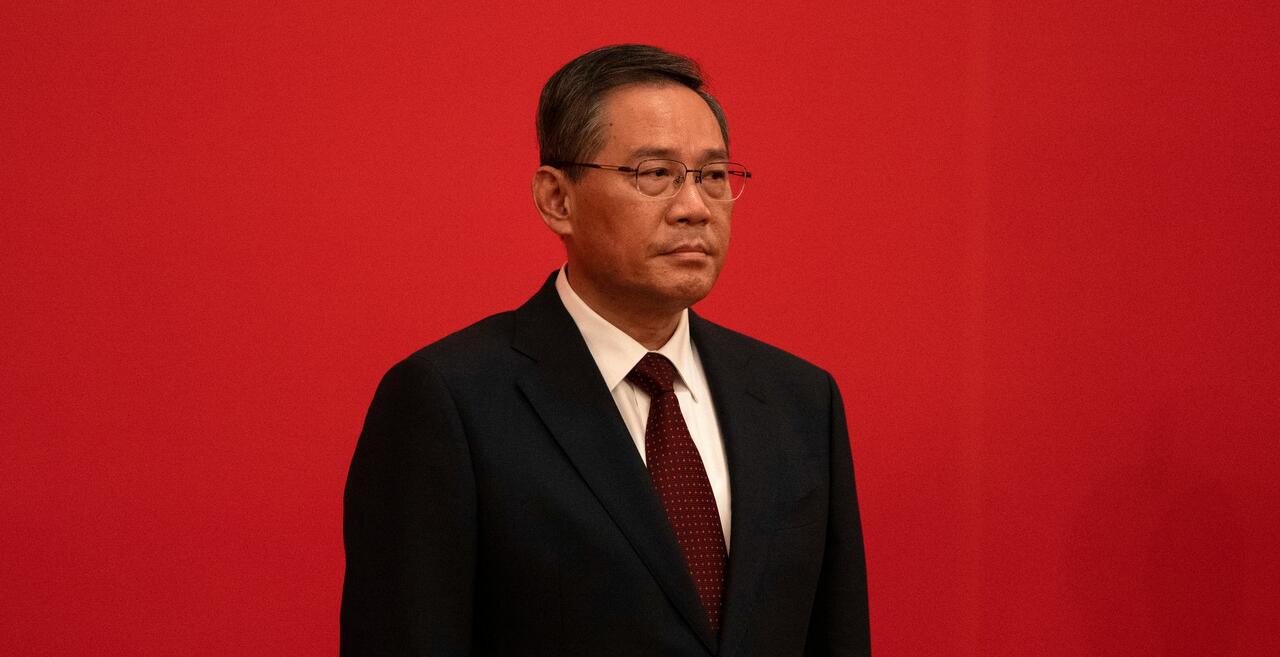
President Xi’s right-hand man, Li Qiang (Kevin Frayer/Getty Images via WSJ)

Li Qiang has emerged as Xi’s number-two. He’d previously demonstrated his loyalty to Xi by strictly carrying out Xi’s draconian zero-Covid policies as party chief of Shanghai. “Li Qiang showed himself willing to take on the rich elites in China’s richest city,” says Johnston.

The same resilience will be essential when Xi goes after “excessively high incomes.” Worries over such an agenda have already taken a toll on Shanghai stocks. 

Between the Biden administration’s assault on China’s semiconductor market to high youth unemployment, real estate woes and the lingering effects of zero-Covid policies on the Chinese economy, the five years between now and the next Chinese Communist Congress will be challenging for Xi, according to Zhu Jianrong, a professor at Toyo Gakuen University in Tokyo.

“Xi now has his back against the wall. He got his team and will now have to deliver,” says Zhu. Otherwise, a fourth term as party chair will be unlikely. 

Zhu says a war over Taiwan doesn’t make sense in the context of Xi’s broader agenda: 

“The unification of Taiwan and the effort to build a modern socialist country contradict each other. The goal is to win without fighting. China will prioritize catching up with the U.S. in overall national power while avoiding a full-front conflict until then at all costs. It’s a new version of Deng Xiaoping’s ‘biding time’ strategy.”

Tyler Durden
Sat, 11/05/2022 – 19:00

Beating Back The Jungle Of Red Tape

0
Beating Back The Jungle Of Red Tape

Authored by Ron Shultis via RealClear Wire,

Besides “tax increase,” few terms rile up Americans more than “red tape.” Like a vine or weed that spreads out of control, red tape conjures up visions of a fast- and ever-growing jungle of rigid, excessive, and bureaucratic regulations that bring action grinding to a halt. And these regulations have consequences: The average regulatory cost for a new business in its first year is more than $83,000. Here in Tennessee, it would take an individual spending 40 hours a week eleven weeks to read all of Tennessee’s 114,000-plus regulations, totaling more than eight million words. These regulations ensnare businesses and individuals and deprive us of our freedoms and future prosperity. State leaders must implement broad regulatory reform to ensure no Tennessean suffers from backbreaking regulations and better unleash the state’s economy. 

A regulatory reform agenda will include many layers of improvements. First, make it easier to “count” the number and cost of current regulations. Fortunately, a recently passed law will require all bureaucracies to report by the end of 2023 and every eight years afterwards a list of every regulation on the books. 

From there, state lawmakers should seek to “cap” either the total number or cost of regulations. In Wisconsin, the legislature can require an independent economist to calculate the cost of proposed regulations on businesses and another review after the fact to confirm estimates to cap the impact of regulations on the economy. Ideally, the cap is lower than the current total, forcing leaders to “cut” those that are too onerous or outdated. For the best example of how reducing regulatory burdens can unleash our economy, look to our neighbors in the north: After a poor economic decade in the 1990s, the Canadian province of British Columbia decided to try something drastic. Starting in 2001, for every new proposed regulation, bureaucracies had to repeal at least one regulation — with the goal of reducing regulatory requirements by one-third within three years. The province exceeded that goal, cutting regulations by roughly half. The result was that the province’s economy transformed from lagging Canada’s as a whole to its fastest growing province since 2002.

After adopting a “count, cap, and cut” approach, state policymakers should provide tools to create more regulatory flexibility. Currently few options exist for those just seeking clarity if their business is subject to certain regulations. If an innovative small business wants some guidance on whether regulations apply to them or not, they often must hire legal counsel and go before an administrative law judge, an intimidating process for most. To solve this problem, regulators should be empowered to issue no-action letters (NALs). NALs allow an agency to state that it will not punish a business owner or person if they engage in some action. Without a similar tool, regulators often can only punish a new company who can then appeal to begin the process of working with them. When all you have is a hammer, everything looks like a nail. NALs provide additional tools to regulators to provide the clarity and flexibility people need, especially businesses in a highly innovative world.

Finally, to prevent regulations from ever growing out of hand again, the burden to prove the necessity of new regulations should be on the government. Currently, the burden typically falls on Tennesseans in court to prove a regulation is unduly onerous. If the government is going to impose costs on Tennesseans, it should be on them to prove that the regulation is necessary to protect the public. 

Reforming regulations does make news headlines like tax cuts or recruiting new businesses with taxpayer money. However, if Tennessee lawmakers wish to engage in broad regulatory reform, they will be rewarded. The example of British Columbia shows that while regulatory reform is unlikely to grab headlines, it can transform economies in just a few short years. A holistic regulatory reform agenda will include many layers but with a three-tiered approach, first “counting, capping, and cutting” then providing more flexibility, and then finally shifting the burden of proving new regulations to where it belongs our state’s leaders can beat back the jungle of red tape and unleash prosperity for Tennesseans like never before.

Tyler Durden
Sat, 11/05/2022 – 18:30

Why Are Fact-Checkers Ignoring False Statements On School Closures?

0
Why Are Fact-Checkers Ignoring False Statements On School Closures?

Authored by Chandler Lasch via RealClearPolitics.com,

With each new report on the effects of pandemic-era school closures on American children, the story only seems to get worse…

In September, the Associated Press reported that, according to a study from the National Center for Education Statistics (NCES), “Math and reading scores for America’s 9-year-olds fell dramatically during the first two years of the pandemic … Reading scores saw their largest decrease in 30 years, while math scores had their first decrease in the history of the testing regimen behind the study.”

On October 24, data from the National Assessment of Educational Progress (NAEP), often called the “nation’s report card,” shed more light on the abysmal declines. According to the AP, “Across the country, math scores saw their largest decreases ever. Reading scores dropped to 1992 levels. Nearly four in 10 eighth graders failed to grasp basic math concepts. Not a single state saw a notable improvement in their average test scores, with some simply treading water at best.”

“It is a serious wakeup call for us all,” Peggy Carr of the NCES told AP reporter Collin Binkley.

“In NAEP, when we experience a 1- or 2-point decline, we’re talking about it as a significant impact on a student’s achievement. In math, we experienced an 8-point decline—historic for this assessment.”

As Derek Thompson of The Atlantic noted, several studies have tied falling test scores to school closures, including a 2022 paper published by the National Center for Analysis of Longitudinal Data in Education Research. The authors concluded: “It seems that the shifts to remote or hybrid instruction during 2020-21 had profound consequences for student achievement. In districts that went remote, achievement growth was lower for all subgroups, but especially for students attending high-poverty schools. In areas that remained in person, there were still modest losses in achievement, but there was no widening of gaps between high and low-poverty schools in math (and less widening in reading.)”

In addition, the effects of school closures on students extend beyond falling test scores and lost learning. They include social isolation, loss of motivationadverse mental health symptoms, and a lack of resources for students with disabilities, not to mention the high economic costs and other burdens placed on parents.

With all this data comes the need to analyze school-closure policies and, for those responsible, to answer criticism. But as some officials have issued misleading and false statements about their roles in the pandemic response, a question arises: Where are the fact-checkers?

After the September report from the NCES, a reporter asked White House Press Secretary Karine Jean-Pierre, “What is the administration going to do about this severe learning loss, and does the administration shoulder any blame for not pushing schools to reopen sooner?”

Jean-Pierre blamed Republicans for the slow reopening of schools.

“[Reopening schools] was the work of this president and that was the work of Democrats in spite of Republicans not voting for the American Rescue Plan, [of] which $130 billion went to school[s] to have the ventilation, to be able to have the tutoring and the teachers, and be able to hire more teachers,” she said.

“And that was because of the work this administration did.”

But it was Democrats, not Republicans, who led the charge to keep schools closed.

Did any major fact-checkers set the record straight and correct Jean-Pierre’s false statement?

No.

Neither SnopesFactCheck.org, the Washington PostUSA Today, nor Politifact saw fit to address this topic. (PolitiFact has examined only two statements from Jean-Pierre since she was appointed press secretary in May, arguably part of a larger pattern of ignoring her claims.)

Jean-Pierre is not the only one trying to shift blame about school closures. In an ABC interview, Dr. Anthony Fauci recently claimed, “I ask anybody to go back over the number of times that I’ve said ‘we’ve got to do everything we can to keep the schools open.’ No one plays that clip. They always come back and say, ‘Fauci was responsible for closing schools.’ I had nothing to do [with that].”

Fauci, who plans to step down later this year from his role as director of the National Institute of Allergy and Infectious Diseases, should not be held responsible for every decision made to stop in-person learning across the country. But to say that he played no role is a stretch.

Like many other officials, Fauci changed his opinions on school re-openings over the course of the pandemic. At times he advocated for a return to in-person schooling; at other points he claimed that, while reopening schools was ideal, “what is paramount is the safety and the welfare of the children and of their teachers,” and that schools could safely reopen only when “you have a very, very low level of infection.”

His advocacy for school closures during his tenure as head of the NAID is evidence enough that he played some role in keeping schools locked down. But mainstream fact-checkers once again failed to acknowledge his false assertion.

With all the false and misleading claims being made about school closures, fact-checkers have ample opportunity to set things straight. As recently as October 25, Michigan Gov. Gretchen Whitmer severely understated the amount of time that students in her state were out of school. In a debate against Republican challenger Tudor Dixon, Whitmer stated, “Mrs. Dixon says that I kept students out longer than any other state. That’s just not true … Kids were out for three months.”

According to Bridge Michigan, Whitmer later clarified that she was referring to “closures that were the direct result of her or her health department’s orders.” While she shouldn’t be held liable for decisions made at the local level that kept some school districts remote into 2022, she nevertheless misstated the extent to which schools were closed. Fact-checking outlets avoided addressing Whitmer’s dubious assertions, as well as Fauci’s and those of other prominent figures who try to minimize the impact of school closures or their roles in them.

At times, opinion writers took to task those responsible for school-closure falsehoods when fact-checkers at those same outlets declined to do so. For example, Marc A. Thiessen wrote an op-ed titled “What Fauci got wrong is still costing America’s children,” and Ingrid Jacques criticized American Federation of Teachers President Randi Weingarten’s attempts to distance herself from her own union’s pro-closure policies.

With the midterms just around the corner, it’s important for parents and other voters to understand who played a role in the pandemic decisions that affected students. And when it came time to provide context and clarity on this issue, fact-checkers shirked their duty.

Tyler Durden
Sat, 11/05/2022 – 17:30

Dove Vs. Hawk: The Financial Conditions Index

0
Dove Vs. Hawk: The Financial Conditions Index

What do financial conditions indicate about the economy? What effects do they have on growth?

From S&P 500 Index returns to the Cboe Volatility Index (VIX) to a range of credit conditions, the Chicago Fed’s Financial Conditions Index looks at whether financial activity is tighter than the historical average—or more accommodative.

As Visual Capitalist’s Dorothy Neufeld details below, this Markets in a Minute chart from New York Life Investments compares financial conditions in 2022 to the last 40 years as interest rates rise at the fastest rate in decades.

How Is the Financial Conditions Index Measured?

First, the Chicago Fed’s Financial Conditions Index takes 105 weighted average indicators of financial activity and organizes them into three main categories.

Together, the sum of these indicators provide an update on the state of U.S. financial markets.


For example, low equity market volatility is associated with lower risk and better financial conditions.

Credit market factors, such as mortgage spreads and corporate bond yield spreads, indicate the credit conditions of the economy. Credit spreads are the difference in bond yields (returns) of two different debt securities with the same maturity, but with different credit quality.

In this way, a narrower credit spread often indicates better financial conditions, while a wider credit spread indicates worse conditions. Credit spreads apply to any debt instrument like mortgages or corporate bonds.

Asset prices, as seen in the S&P 500 Index, are part of the leverage category which measures the state of U.S. debt and equity markets. When the index is declining, it can be associated with tighter conditions.

Dove vs. Hawk

Another way to look at the state of financial conditions is through a ‘dovish’ or ‘hawkish’ lens.

When conditions are more accommodative, they can be seen as more dovish. This is when monetary policy favors lower interest rates to boost economic growth and employment.

Hawkish conditions, on the other hand, are characterized by tighter monetary policy. This is seen in higher interest rates to control inflation, but typically at the expense of economic growth, spending, and employment.

The Best of Times & the Worst of Times

When have the best and worst financial conditions taken place in recent history?

Following the recession of 1990, interest rates fell after periods of unprecedented highs in the 1980s. This eased the debt burdens for corporations and households, creating some of the most favorable financial conditions in the last several decades.

Despite the early 1990s being characterized with the most accommodative conditions, the period was marked by slow economic and employment growth.

Interestingly, it was not until the second half of the decade that growth accelerated, amid low inflation and unemployment. Broadly speaking, an increase in private-sector spending and employment helped drive this growth.

By contrast, the early 1980s saw the worst financial conditions by far. Interest rates hit historic highs to rein in inflation, and financial conditions were strained.

Historically, tighter financial conditions have been linked to falling asset values and increasing risk premiums. This is the additional return an investor can expect to receive for holding a riskier asset compared to the return from a risk-free asset like a government bond.

During these conditions, economic activity can slow and the net worth of households and nonfinancial companies could decline amid tightened credit conditions.

A Closer Look: 2022 In Context

Against the backdrop of six interest rate hikes and declining equity market performance in 2022, financial markets are facing challenging conditions.

Given these factors, are conditions more hawkish or accommodative?

Compared to historical averages, financial markets still fall on the dovish side. Although conditions have slowly become less accommodative from their recent peak in mid-2021, they remain closer to neutral from a long-term perspective.

Still, corporate bond spreads, key indicators in the Financial Conditions Index, could widen if interest rates and default concerns continue to rise. Higher yields, in tandem with strain on other financial indicators like the VIX and S&P 500 returns, could tilt conditions to become more hawkish looking ahead.

Tyler Durden
Sat, 11/05/2022 – 17:00

Luongo: The Oil Nationalization Two-Step

0
Luongo: The Oil Nationalization Two-Step

Authored by Tom Luongo via Gold, Goats, n’ Guns blog,

Blood rack, barbed wire
Politicians’ funeral pyre
Innocents raped with napalm fire
Twenty-first century schizoid man

King Crimson, “21st Century Schizoid Man”

You’ve all heard me rant about the “Straussian Two-Step,” which is nothing more than a retread of the Hegelian Dialectic.  

Here’s the formal definition:

An interpretive method, originally used to relate specific entities or events to the absolute idea, in which some assertible proposition (thesis ) is necessarily opposed by an equally assertible and apparently contradictory proposition (antithesis ), the mutual contradiction being reconciled on a higher level of truth by a third proposition (synthesis ).

In modern politics it’s used to create a false reality by asserting something that is partially true (at best) or a truth that you yourself as a person in power created.

In today’s case it’s a manufactured energy crisis across the West.

In order to see the Straussian Two-Step however you have to work backwards. This process is not an a priori deduction or an exhaustive fit of investigative journalism.

Rather it is an inductive conclusion based on awareness of the motivations of those in power and seeing how they lead a mass of people to a pre-ordained conclusion. In other words, schizo-posting.

Thesis

So, say your goal is to legitimize the state takeover, or advance another step forward the state takeover, of an industry.  Let’s use oil and gas for today’s lesson.

The first thing you do is manufacture a crisis that will disrupt the supply of the product you want to takeover. In this case, it started with COVID-19, which disrupted far more than just the energy sector.

More than 2 million barrels per day of refining capacity was lost world wide thanks to COVID-19. Given the current hostility to new refineres (more on this later), those barrels are not coming back.

Don’t forget, that for a “Straussian Two-Step” this big you will have to brainwash and/or gaslight two entire generations into hating themselves for being rich, wasteful, spoiled, alive or worse, just plain white.

So, they are already primed to hate all the things at play here — capitalism, Big Oil, Banks, Old White Guys (rich or poor) — and enrage your useful idiots by pushing their already tenuous hold on reality to the literal breaking point.

“I can’t even….” isn’t the most common phrase uttered on Tik-Tok for nothing.

That’s the Thesis part.

So, when the crisis hits thanks to natural gas disruption you forbid buying of from a particular country…

— Hello, Vlad? We’re in a helluva pickle, would you mind invading Ukraine…? Nyet…? Well, we’ll see about that….

— MISSING PAGES FROM THE RETURN OF DR. STRANGELOVE WORKING SCRIPT.

… you demonize not only Vlad but the industry itself for price gouging and preying on the widdle guy during a war.

There’s a word for this… chutzpah.

Antithesis

Predictably, you then allow your fake political opponents …

[enter Cocaine Mitch from Stage Right]

to produce the opposite argument. In this case, the counter is obviously we need free markets to produce oil and gas. The refiners are just responding to the market.

That fake opposition, of course, also blames Vlad for this crisis to ensure the market’s champion looks not only patriotic but also suitably bought and paid for by Big Oil, Old White Guys, etc.

Both sides of this argument have now been framed 90 degrees away from the real source of the problem, government intrusion into the flow of oil and gas to your homes.

This is a crisis that if left solved to human ingenuity and, yes, the studious application of greed, would be over in a matter of weeks as refineries shut down during COVID would come back online, supply chains reorganized etc.

While the crisis phase would be over quickly, the long term investment cycle set off in refining would take longer to structurally immunize the industry against future supply shocks to accomplish.

And if you’re daft enough to believe government has any of that investment path mapped out on their whiteboards in their noble service to humanity, I can’t even…

If I could buy stock in psychoanalysis right now I’d be long AF.

Prices may not return to normal for years but the market, without intervention by rapacious morons both in government and running them from behind the curtain, would eventually grind the arbitrage out of the fuel industry nearly entirely.

Guess who wins there folks? That’s right you. But, again, you hate yourself for being, well, yourself.

Once the crisis is here and the rhetorical groundwork laid after months of repeating these lies about the cause of the crisis — PUTLER DID IT — it’s easy to move the conversation to where you really want it to go.

Remember the goal. Destroy free markets, nationalize oil and gas.

This means also preparing the next move to get rid of another aspect of the free market while zeroing in on the current crisis. In this theoretical case, we’re looking at the massive diesel crack spreads of refineries, fueling the perpetual motion machine of Marxism’s inherent envy.

Moreover, this situation exploded on the eve of a crucial election to put into the mouths of the crisis actors we call colloquially, “Members of Congress.”

Synthesis

Their solution? Put windfall profit taxes on refiners who are taking advantage of the vulnerable and needy common man. They are evil ‘price gougers’ by accepting the bids from the market for the fruits of their labors which occurred precisely because of artificially inducing a shock to the system.

In the case of diesel fuel in the US this is clearly a manufactured crisis.  COVID took a lot of refineries in the Northeast (PADD-1) offline.  And given the hostility of the Biden administration and environmentalists to the oil industry as a whole, as I alluded to earlier, those refineries are not coming back online anytime soon.

Don’t take my word for it, take it from the ones who own the refineries.

“Building a refinery is a multi-billion dollar investment. It may take a decade. We haven’t had a refinery built in the United States since the 1970s. My personal view is that there will never be another refinery built in the United States.”

According to Wirth, oil and gas companies would have to weigh the benefits of committing capital ten years out that will need decades to offer a return to shareholders “in a policy environment where governments around the world are saying ‘we don’t want these products to be used in the future’”.

Why would they? If it were your money would you begin the insane process to build an oil refinery in the US today even with crack spreads at $70+ per barrel? Of course not. By the time you filed the first Environmental Impact Assessment application form the spreads could be back to $20 because it’s politically advantageous for the “Straussian Two-Steppers” to take the pressure off for a few months.

Government is keeping the market in a supply/demand mismatch on purpose. That’s the only conclusion you can draw. Because if “Biden” wanted to solve this problem he wouldn’t be draining the SPR, he’d be rolling back regulations on refining oil or offering some of that ‘infrastructure money’ to help the industry rebuild post-COVID.

No matter how committed you are to saving the planet from Climate Change civilization is directly downstream of energy production.

If he wanted lower gas prices he wouldn’t be trying to expand subsidies to poor people, pandering for their votes, he’d be going to the negotiating table with Putler and working out a mutually unappetizing solution to everyone’s interests in Ukraine.

High Bid Wins the Prize

Diesel fuel demand is mostly inelastic, since it’s simply necessary for our daily life. Any supply disruption will cause massive price spikes because people will fall all over themselves bidding up the price of available supply to get what they can.

This is the one thing morons leftists can’t wrap their head around. Producers aren’t withholding supply and ‘raising prices’ in an open market economy. That’s propaganda. The reality is that consumers bid up the price for everything in demand or withhold those bids when the cost/benefit isn’t in their favor.

There is no need to control this. The things under supply shock will flow to those who have the means to bid for them and producers get the signal there is money to be made increasing supply. It is this give and take that always alleviates shortages, unless they are not allowed to do so because ‘rules.’

As the late, great Gary North told us over and over again, “Everything’s for sale, high bid wins.” If you have anyone to blame for higher diesel crack spreads you need only look in a mirror. Because we could have spare refining capacity by now if it weren’t cost prohibitive, even at these prices, to bring the idle plants back on line.

Remember, everything’s for sale and high bid wins. Everyone does the cost/benefit analysis.

This is the dynamic at play when I use the term cost-push inflation.  A supply shortage pushes the bids for basic goods up out of necessity and pouring money into the system through government handouts only accelerates this effect.  

Low cost or free dollars flow to the things people need the most and that is the main source of our inflation today.

So, when you see the headlines full of scaremongering like the US only has 20 days of diesel fuel left, this undergirds the bids for limited supply.  The futures markets are stripped of their power to coordinate supply over time and producers are stuck being demonized by low quality agitprop from the likes of AOC and Lizzie Slapaho.

Nationalization: The Next Two-Step

Windfall profit taxes are already on the way in Germany, 90% of all profits taxed away to the state. Energy production, when that bill passes, will be nationalized in Germany. The end of rational energy pricing will be gone.

Germany will become another energy subsidizing hellscape like we see all over the world.

The choice in front of German energy companies now is Uniper’s fate, nationalization through bailout, or remain ‘private’ but on a government-mandated cost-plus business model the profits from which will never outcompete the depreciation curve.

Today here in the US the Democrats are pushing for outright nationalization of all oil and gas production. That was the goal all along, the thesis. The fake antithesis is the “Drill baby, Drill,” crowd on Capitol Hill, crying crocodile tears over the loss of the Keystone XL pipeline for more than a decade.

The synthesis this time around will be finally getting through their long-sought after billionaire’s tax in the form of a windfall tax starting with evil Big Oil. Even if they don’t get it, it’s not like they don’t have other things on their to-do lists to get it done.

They are starting here again because they know no one will seriously consider outright nationalization (the next synthesis) unless there’s a war with Russia…

*  *  *

Join my Patreon if you aren’t schizo

Tyler Durden
Sat, 11/05/2022 – 16:30

Is Big Tech Funding Literal Migrant “Roadmaps” To Enter The US From Central America?

0
Is Big Tech Funding Literal Migrant “Roadmaps” To Enter The US From Central America?

The medical aid nonprofit Doctors Without Borders is providing and distributing maps for migrants that show routes through Central America to reach the United States, according to a new report by the Daily Caller.

And the kicker? The organization providing the maps is funded by “a number of prominent tech companies”. 

Called “shelters for people on the move” in Spanish, the map lists clinics and aid areas along routes to the U.S. 

It shows paths that start in Guatemala that lead to the U.S.-Mexico border and lists clinics and shelters along the Mexican border that migrants can stop at during their trip. These clinics and shelters are across the border from major U.S. cities like El Paso, Texas and San Diego, California, the report says. 

Meanwhile, Doctors Without Borders has gotten sizeable donations from companies like Google and Amazon, the report notes. It has also received millions in donations from the foundations of billionaires like Elon Musk and Michael Bloomberg.

Doctors Without Borders spokeswoman Jessica Brown told The Daily Caller: “As a medical humanitarian organization providing medical and mental health care to people on this migration route, MSF [Médecins Sans Frontières] prints and distributes these maps to ensure that people know where to find shelter and humanitarian assistance and how to access mental health services along the migration route.”

Federation for American Immigration Reform (FAIR) Director of Government Relations and Communications RJ Hauman concluded: “The fact that an international medical NGO with billions in the bank is making literal roadmaps to guide migrants from Central America to our southern border is not only an affront to its core mission, but a globalist attack on our sovereignty.”

Tyler Durden
Sat, 11/05/2022 – 16:00

Rickards: A Bodyguard Of Lies

0
Rickards: A Bodyguard Of Lies

Authored by James Rickards via DailyReckoning.com,

The all-important midterm elections are just one week away. I’ve said a lot about them, and will have more to say about them in the days to come.

But today, I want to talk about something even more important: truth vs. official lies. More specifically, I want to talk about truth and propaganda.

It’s said that truth is the first casualty of war. And Churchill once said that in wartime, truth is so precious that it needs to be surrounded by a bodyguard of lies.

That’s why propaganda plays such a large role in modern warfare.

The fact is wars are conducted in part through lies and propaganda. For example, in the early days of World War I, the British cut the undersea communications cables that ran from Germany to the U.S.

The British wanted to control the flow of information and issue what we call today “misinformation.” And so they created inflammatory accounts of German atrocities to sway public opinion, like German soldiers skewering Belgian babies on bayonets.

While there will always be individual acts of atrocity in wartime, these reports were largely propaganda.

Here in the U.S. itself, President Wilson had special police forces who arrested anyone reporting negative news on the progress of the war. Sound familiar?

It’s like the social media companies today canceling or censoring anyone who reports that the vaccines don’t work or masks don’t work. The media call it “misinformation” (even though it’s scientifically valid) and move on.

The same is true with the war in Ukraine. The propaganda machine kicked into overdrive early on.

Bodyguard of Lies

The CIA and MI6 leaked a steady stream of anti-Russian lies to prop up morale. These lies were reprinted in warmonger media outlets like The Washington Post, The New York Times and NBC News.

That means it’s almost impossible for U.S. citizens to get the real story through mainstream media outlets. Still, there is some honest reporting going in if you know where to find it.

You just have to filter the sources and find those with good pipelines of information (including inside the government) who do not have a hidden agenda and are willing to speak the truth.

It’s not necessary to rely on Russian sources (the Russians are certainly not above propaganda, although they’re generally more truthful than the U.S. media, believe it or not). There are excellent analyses to be found among Swiss sources, German experts who are not in favor of the war and some on-the-ground reporting from the front lines on specialist websites.

Get Ready for the Russian Counteroffensive

Some of the best sources are found among retired U.S. military officers who are experts on warfare, still have good contacts inside the military and intelligence communities, and who consider the war in Ukraine to be highly detrimental to U.S. national security and the economy.

One top commentator who fits this description is Colonel (Ret.) Douglas Macgregor, who wrote a recent commentary about the war. Macgregor points out that Russia is preparing for a full-scale counterattack to roll-back recent Ukrainian gains near the Donbas and Kherson.

The Russians have been consolidating their positions: resupplying, mobilizing troops, and preparing for winter warfare at which they excel. It’s just a matter of waiting for the ground to freeze so trucks and armor can maneuver without getting bogged down.

The attack could come as early as November or December at the latest. Yet, that is not Macgregor’s main concern.

Is the 101st Airborne Division Being Used as Bait?

His fear is that the U.S. will double down in the face of this attack and deploy U.S. troops to the battle. The Pentagon recently deployed units of the 101st Airborne Division to Romania, just miles from its border with Ukraine.

Airborne forces are generally light infantry that lack the firepower of, say, armored units or mechanized infantry.

But if these forces did get directly involved in the fighting, heavier reinforcements would be on the way. From there, it could be a short step to nuclear war with Russia.

To some, that might sound unrealistic or even paranoid. They’ll say it’s just scare-mongering. But this is a legitimate possibility, and there’s a real chance of it happening. The fact is, we’ve been on the path of escalation with Russia since 2008 and the tempo of escalation has accelerated since the war began in February.

All experts on nuclear warfighting agree that if a nuclear war begins, it will be the result of escalation to the point that one side feels it is cornered and has no choice but to use nukes. That point is getting closer by the day.

Macgregor calls on Congress to stop the White House, but he’s not optimistic that’ll happen.

Nuclear War? It’s Not the End of the World

The possibility of nuclear war between the U.S. and Russia is a shocking development after thirty years, during which nuclear weapons and nuclear war between superpowers were almost forgotten.

What is as disconcerting is the fact that the discussion of nuclear war is casual, almost flippant, and carries none of the seriousness with which the topic was formerly addressed. It also carries no comprehension of the existential consequences and sheer horror that the use of nuclear weapons entails.

It’s almost as if the warmongers in and around the White House were playing a game of chicken without realizing the other driver had no intention of changing course.

Now the U.S. elites have started psychological operations (psyops) aimed at Putin with nuclear weapons as the bait. They claim that Putin has threatened to use tactical weapons in Ukraine and possibly other parts of Eastern and Central Europe.

That’s a lie; Putin never said that.

When asked, both Putin and Prime Minister Dmitri Medvedev said that if attacked, Russia would defend itself by all means necessary, including the possible use of nuclear weapons. That’s not news. That has been Russian or Soviet policy since the early 1950s. It has also been U.S. policy since then. Neither side has ever renounced the first use of nuclear weapons.

Putin’s expected answer to a question posed has been turned into a threat he never made. This is U.S. and UK propaganda at its worst (and most dangerous). This lie about Putin’s intentions quickly morphed into another psyop about a “false flag” operation.

That’s when you stage an attack disguised to look like an attack by your enemy in order to justify your own “retaliation,” which you were planning all along. Recently, the narrative that Putin would use nukes or conduct a false flag operation morphed into a related narrative that Putin would use a “dirty bomb.”

He Said, He Said

In effect, Putin would detonate a dirty bomb and then blame the Ukrainians and Americans. A dirty bomb is not a nuclear weapon, but it does employ radioactive material wrapped around conventional explosives. When detonated, the radioactive material is dispersed and can poison or kill any people or livestock in the area.

Not to be outdone, the Russians countered by saying the U.S. or Ukraine would conduct the false flag by detonating a dirty bomb and then blaming the Russians as an excuse to escalate Western involvement in Ukraine.

At this point, we have both sides warning the other side will conduct a false flag with a dirty bomb in order to justify their own pre-planned escalation. If a dirty bomb does go off, each side will blame the other and the truth will be a casualty of war.

Meanwhile, a senior Russian foreign ministry official has warned that U.S. satellites, which have been providing critical targeting information to Ukraine’s armed forces, may be “legitimate” targets of Russian forces.

How would the U.S. respond if Russia starts taking out its satellites? We may soon find out.

Is Your Portfolio Ready for Nukes?

By the way, I’m not apologizing for Putin or defending his invasion of Ukraine. I’m just looking at the current situation and objectively analyzing where things could go next, based upon the facts.

And I’m not making a specific prediction; I’m just giving you a warning because the media doesn’t seem to want to.

It might seem like an inappropriate question given the potential for widespread death and destruction, but is your portfolio ready for nukes?

In a nuclear confrontation, stocks and bonds could become worthless as exchanges are closed around the world. At best, they will retain some value as illiquid private equity tokens.

The best assets in this catastrophic scenario are land, gold, silver, food, water, and heat for your home.

Nothing else will matter much.

Tyler Durden
Sat, 11/05/2022 – 15:30

Joy Reid Says Voters Didn’t Know About Inflation Until Republican Politicians “Taught Them” The Word

0
Joy Reid Says Voters Didn’t Know About Inflation Until Republican Politicians “Taught Them” The Word

MSNBC’s Joy Reid has been a veritable gold mine of bad takes, ignorant comments and authoritarian arguments over the past few years. 

This includes her consistent demand that people without covid vaccines be denied medical care, that they be punished with fines, as well as her baseless assertions that hurricanes are a product of “global warming.” 

Her latest comments might be her most bizarre yet, with a mind boggling claim that American voters were essentially oblivious to the issue of inflation until conservative political candidates started talking about it.

This narrative appears to be an extension of a common gas-lighting strategy among Democrats; a way to dismiss the problems Americans most care about in 2022 as overblown. Reid’s suggestion insinuates that the public was comfortably oblivious to the inflationary/stagflationary crisis and could have stayed that way had it not been for those meddling Republicans and their refusal to use the “common tongue” on the campaign trail.  In other words, she thinks the average voter is stupid.

Reid argues that the only people that use the word “inflation” are “journalists and economists” and that it is not a part of the normal lexicon of discussion.  One might point out to Reid, since she seems incapable of grasping simple logic, that Americans have not faced a true inflationary threat since the 1970’s, over 40 years ago.  So, it’s not surprising that inflation was not a term used around every dinner table in the country until today as the threat returns with a vengeance. 

It should be noted that Joy Reid has covered the inflation crisis on her own show on a number of occasions, which means she also may have contributed to the wider usage of the terminology, not just conservatives.  Here’s Reid hitting the inflation issue over 8 months ago:

The leftist pundit’s take on the situation is definitely uneducated, as she tries to blame companies as the culprits behind inflation as if they are raising prices artificially.  She ignores the fact that prices also spiked in commodities and raw materials, energy, labor and shipping, which means goods cost much more for producers to manufacture.  It is bottom line inflation that causes the prime bulk of price increases on store shelves, not businesses trying to squeeze extra profits out of consumers. 

Beyond that, Reid seems to think it’s perfectly acceptable for leftists to put their own spin on the inflation problem as a way to push their political agenda forward, but it’s not okay for conservatives to ring the warning bell because now Democrats are tied inexorably to our country’s economic decline.   It’s the legendary MSNBC double standard all over again.  

The fact that a majority of Americans are aware of inflation dangers and are talking about them is a good thing.  It shows that the public is paying attention and they are seeking solutions.  Reid’s position is an elitist one, asserting that the general public should remain in the dark, and that such issues should only be entertained among small circles of “professionals” who will let the rest of us know what we should think and when we should think it.         

Tyler Durden
Sat, 11/05/2022 – 15:00