54.1 F
Chicago
Monday, April 27, 2026
Home Blog Page 66

Explosives Found Near Key Serbia-Hungary Pipeline Transporting Russian Gas

Explosives Found Near Key Serbia-Hungary Pipeline Transporting Russian Gas

Serbian President Aleksandar Vucic informed Hungarian Prime Minister Viktor Orban by phone on Sunday that explosives were discovered near a key pipeline carrying Russian gas from Serbia to Hungary.

“Our units found high-powered explosives and detonators,” Vucic wrote on Instagram after briefing Orban on the military and police investigations.

via EPA

During a site visit on Sunday, Vucic told journalists the explosives were located in the autonomous Vojvodina province in northern Serbia, near the Hungarian border. The device was reportedly found near the main pipeline transporting Russian gas from the TurkStream network to Serbia and Hungary.

Reacting to the development, Hungarian Prime Minister Viktor Orban convened a defense council meeting Sunday afternoon to consider options to safeguard Hungary’s energy security and sovereignty.

Orban stated, “Serbian authorities have discovered a powerful explosive device and the means to detonate it at a critical gas infrastructure facility connecting Serbia and Hungary. An investigation is underway. I have convened an emergency meeting of the defense council this afternoon.”

One European media outlet describes:

There were no details provided on who may have placed the explosives near the gas pipeline, and why. Instead, Vučić said there were “certain traces” which he was unwilling to elaborate on.

The latest news comes at a time when the integrity of gas pipeline infrastructure has been in the headlines. The Soviet-era Druzhba pipeline, a separate pipeline that carries Russian oil to Hungary and Slovakia, has been the cause of a dispute between Hungary and Ukraine.

Budapest has lately been pointing the finger directly at the Zelensky government, accusing Ukrainian operatives of seeking to ‘sabotage’ Russian energy piped into Europe.

Late last month Orban made clear that Hungary will block all EU summit decisions in Ukraine’s favor until oil Russian flows resume via the Druzhba pipeline.

via Bruegel

“We would like to get the oil, which is ours, from the Ukrainians, which is now blocked by the Ukrainians, I did not support any kind of decision here, which is in favor of Ukraine … [as long as] the Hungarians are not able to get the oil which belong to us,” Orbán stated at the time.

Obran has already blocked a proposed €90 billion ($103 billion) loan for Ukraine as well as efforts to slap new sanctions on Moscow, despite the pleadings, pressure, and interventions from other EU leaders.

Tyler Durden
Mon, 04/06/2026 – 11:40

US Satellite Firm ‘Indefinitely Withholds’ Iran War Images Per Government Request

US Satellite Firm ‘Indefinitely Withholds’ Iran War Images Per Government Request

Authored by Alan Mosley via AntiWar.com,

Planet Labs says it will “indefinitely withhold” satellite visuals of Iran and the wider Middle East war zone after a request from the US government and the Trump administration. In an email to customers, the firm said it is shifting to a “managed distribution” model, releasing imagery only case-by-case for “urgent, mission-critical requirements,” or when release is deemed “in the public interest.” Planet also said it will withhold imagery dating back to March 9, and it expects the policy to remain in effect until the conflict ends.

On March 6, Planet Labs announced a mandatory 96-hour delay on new imagery collected over the Gulf states, arguing that near-real-time pictures could be exploited to “endanger allied, NATO, and civilian personnel.” That measure later expanded into a 14-day delay, described by Planet as an extension of the earlier hold. By March 30, Al Jazeera’s Digital Investigations unit was reporting that independent verification had become harder as commercial providers restricted satellite imagery.

A satellite image shows Iran’s Law Enforcement Command (FARAJA) in Tehran, Iran, March 3, 2026, amid the US-Israeli conflict with Iran. 2026 Planet Labs PBC/Handout via REUTERS

Satellite imagery matters because, unlike press briefings, it can corroborate damage, assess patterns of targeting, and check narratives that would otherwise be accepted on authority.

Reporting by the Global Investigative Journalism Network describes how open-source teams used satellite imagery and videos to probe contested incidents during this war, quoting Bellingcat’s head of research warning that a “two-week delay” slows verification and reduces the certainty investigators can reach while events are still developing. It also quotes the Defense Secretary saying, “Open source is not the place to determine what did or did not happen.”

Despite the insinuation that open source investigative journalism is less credible, even mainstream news organizations utilize such tools in their reporting. For example, Reuters has also used satellite imagery in its war coverage, including sharing said imagery and post-strike visuals with a munitions researcher in reporting on the strike on a girls’ school in Minab which killed over 170 people, mostly children. While later reporting added that the strike may have involved outdated targeting intelligence, it is worth noting that the president claimed “without evidence” that Iran was responsible.

One can concede that operational security is real and still recognize that “trust us” is an unsafe substitute for public evidence. In mid-March, the White House claimed Iran’s ballistic-missile capacity was “functionally destroyed,” with “complete and total aerial dominance,” while reporting in the same period described continued missile incidents and interceptions. But the Trump administration’s claim of total control over Iranian airspace seems dubious when countered with reports of military losses, such as the downing of multiple aircraft just since the start of April.

The blackout of satellite imagery from the region is not a story about one firm’s products or customer service. It is a reminder that foreign intervention tends to produce domestic control, often without the drama of a formal censorship order. The same state that wages war can narrow the evidence available to judge that war. The predictable result is that the public is pushed to take the word of the administration’s spokesmen at face value, without timely means to verify or falsify their claims.

Tyler Durden
Mon, 04/06/2026 – 09:30

Trump Admin Appeals Order Halting White House Ballroom Construction, Citing Security Concerns

Trump Admin Appeals Order Halting White House Ballroom Construction, Citing Security Concerns

Authored by Ryan Morgan via The Epoch Times,

The Trump administration on April 3 appealed a judge’s order to halt construction on a new White House ballroom, elevating security concerns associated with the project.

On March 31, U.S. District Judge Richard Leon issued an order declaring the president lacked the authority to order the $400 million addition on the presidential residence.

Leon’s ruling came as a win for the National Trust for Historic Preservation in the United States, a congressionally chartered nonprofit for the preservation of U.S. monuments and historic sites, which has challenged the White House renovation.

The U.S. National Park Service filed an emergency motion before the U.S. Court of Appeals for the District of Columbia Circuit on April 3, arguing that halting the construction in progress exposes a construction site with highly sensitive security features.

Beyond simply building an expanded facility to host guests, the National Park Service said the ongoing construction includes the installation of new protective features to withstand attacks from high-powered rifles, drones, missiles, and other unspecified “emerging national-security technologies and threats.”

Supporting the National Park Service in the case, U.S. Secret Service Deputy Director Matthew Quinn described the open construction site as a “managed safety hazard” that creates added challenges for the president’s security detail. The National Park Service argued the project should be finished quickly, writing, “Time is of the essence!”

In his ruling enjoining the construction project, Leon said that as president, Trump is the steward of the White House, but not an owner who can do with the residence as he chooses. The district judge wrote that the true authority over federal property rests with Congress, not the president.

In its appeal, however, the National Park Service argued that presidential authority covers security-related renovations at the residence.

“The district court took the erroneous, sweeping view that Congress did not authorize the ballroom construction at the White House—yet correctly allows construction ‘necessary to ensure the safety and security of the White House and its grounds, including the ballroom construction site, and provide for the personal safety of the President and his staff,’” the National Park Service wrote.

Leon acknowledged security issues in his March 31 order to halt the construction.

In a separate order, the district judge said construction could not proceed on the development of the ballroom, but left room for the Trump administration to proceed with construction actions “strictly necessary to ensure the safety and security of the White House and its grounds, including the ballroom construction site, and provide for the personal safety of the President and his staff.”

Leon’s order calls for a halt to the ballroom construction by April 14.

The district judge’s order of injunction was issued in the same week that the National Capital Planning Commission approved plans for the ballroom construction project.

The commission voted 8–1 in favor of the project, while two commissioners voted present, and another abstained from voting.

Tyler Durden
Mon, 04/06/2026 – 09:10

“We Must Be Clear-Eyed”: Harris Calls To Oppose New SCOTUS Nominees “Before They Happen”

“We Must Be Clear-Eyed”: Harris Calls To Oppose New SCOTUS Nominees “Before They Happen”

Authored by Jonathan Turley,

Former Vice President Kamala Harris is rallying Democratic donors to oppose  “additional justices” that might be nominated by President Donald Trump “before they happen.”

Harris is heralding the fundraising by Josh Orton, president of the dark-money group “Demand Justice” (made infamous for its campaign to get Justice Stephen Breyer to resign). Demand Justice has pushed a radical agenda, including court packing.

In a post on X, Harris highlighted a New York Times article on the “liberal organization” “preparing a multimillion–dollar effort to oppose potential Trump Supreme Court appointees before they happen.”

Orton announced that “the project would cost $3 million to start and $15 million more if vacancies occurred.” The group expressly cited the possibility of Justices Clarence Thomas (77) and Samuel Alito (76) retiring.

Harris called upon people to contribute, posting that :

“We must be clear eyed about what is at stake with the Supreme Court right now. We cannot allow Donald Trump to hand pick one, if not two, additional justices. The nation’s highest court must be stopped from becoming even more beholden to him.”

Harris reportedly supports court packing and could use radical groups like Demand Justice to push through an expansion of the Court to produce an immediate liberal majority if Democrats take power.

Harris is right about one thing.

This is an clear-eyed, remorseless strategy on the left to remove an obstacle to an equally radical agenda.

Years ago, Harvard professor Michael Klarman laid out a radical agenda to change the system to guarantee Republicans “will never win another election.” However, he warned that “the Supreme Court could strike down everything I just described.” Therefore, the court must be packed in advance to allow these changes to occur.

Likewise, Democratic strategist James Carville explained how this process of how the pack-to-power plan would work:

“I’m going to tell you what’s going to happen. A Democrat is going to be elected in 2028. You know that. I know that. The Democratic president is going to announce a special transition advisory committee on the reform of the Supreme Court. They’re going to recommend that the number of Supreme Court justices go from nine to 13. That’s going to happen, people.”

The rhetoric for this renewed push for court packing and war chests on the left remains entirely unconnected to the actual record of conservatives on the Court, who have been repeatedly attacked by President Trump for voting against major cases by the Administration. From the tariffs decision to the expected birthright citizenship ruling, the conservative justices have routinely voted against the Administration.

Moreover, the vast majority of opinions on the Court remain unanimous or nearly unanimous. The ideological split on the Court is only present in relatively few cases each term. While those cases admittedly have significant impacts, this is not a rigidly or robotically divided court in most cases. Indeed, liberal justices have pushed back on the left calling for court packing or describing the Court as conservative or ideological.

Yet, Harris continues to rally donors and voters with claims of an “activist” court.

What is most striking about the “clear-eyed” leadership of Harris is that her model for a new justice appears to be the only Biden nominee, Justice Ketanji Brown Jackson. Both conservative and liberal justices have publicly criticized Jackson in past opinions. Jackson has lashed out at her colleagues while adopting analysis that would effectively gut areas like First Amendment jurisprudence.

Many of us have found Jackson’s opinions to be unnerving and unhinged. However, liberal groups and Harris would like to replicate her approach to jurisprudence — suggesting not only a packed court but one populated by unrestrained jurists.

For her part, Justice Jackson shocked many by effectively endorsing Harris in her presidential run. Jackson publicly praised her nomination on ABC’s The View as “historic” and something that “gives a lot of people hope.”

With the millions being raised and radical groups positioning themselves for a court-packing push, there are many who see a second Harris nomination as a cause for “hope.”

For the rest of us, it is not just “clear-eyed” but unblinking dread at what could await this country if this strategy succeeds in the coming years.

Jonathan Turley is a law professor and the best-selling author of “Rage and the Republic: The Unfinished Story of the American Revolution.”

Tyler Durden
Mon, 04/06/2026 – 08:35

Futures Rise, Oil Drops On Report Of Ceasefire Push

Futures Rise, Oil Drops On Report Of Ceasefire Push

US stock futures rose, but were off session highs (and lows) and crude oil dipped as the bipolar market focused its attention on a report of a push to secure a potential ceasefire in the war in Iran, following a reversal in those exact same hopes late last week. As of 8:00am ET S&P 500 futures added 0.1% in light trading after the Easter holiday, reversing an earlier loss of as much as 0.8%, but also off session highs. Nasdaq futures tose 0.4% with all Mag 7 stocks higher mostly higher. Several markets in Europe and Asia were still closed. WTI crude was traded near $110 a barrel, just off session lows, after it opened just shy of a post-wary high of $115. The dollar weakened. Ten-year Treasury yields held near 4.34%. Focus this week (outside of Iran): FOMC minutes on Wednesday, PCE Thursday, and CPI Friday. LEVI reports Tuesday night and DAL Weds morning. On the calendar for today: US ISM Services @ 10am (est 54.9, last 56.1), Trump to speak at news conference @ 1pm. 

In premarket trading, Mag 7 stocks are mostly higher (Tesla +1.4%, Meta +1.2%, Alphabet +0.9%, Microsoft +0.8%, Amazon +0.5%, Nvidia +0.5%, Apple +0.1%)

  • Boot Barn (BOOT) gains 2.2% as Jefferies raised its recommendation on the apparel company to buy from hold as recent selloff presents an attractive re-entry point on the stock.
  • Carvana (CVNA) falls 1.7% as BofA Global Research downgrades the online used-car retailer to neutral from buy citing recent macro and industry developments.
  • Rocket Cos. (RKT) is up 2.3% after Barclays raised the recommendation to overweight from equal-weight following a recent share decline.
  • Twilio (TWLO) gains 3.1% as Jefferies upgrades to buy from hold citing greater conviction in the role the firm will play in the voice AI tech stack.
  • Tyson Foods (TSN) gains 1.8% as as Piper Sandler upgrades to overweight from neutral citing potential near-term catalysts in beef and chicken.

In corporate news, Nvidia partner Hon Hai reported a 30% rise in quarterly sales, roughly inline with consensus estimates, a sign of sustained AI demand. OpenAI’s COO is shifting into a new role to lead special projects and report directly to CEO Sam Altman. Novo Nordisk CEO sees huge upside to weight-loss market and drugmakers should focus on widening access, according to an interview with the FT. Paramount is in talks to secure signed equity commitments of close to $24 billion from three sovereign-wealth funds to back its takeover of Warner Bros, according to the WSJ. 

Weekend news centered on Trump’s aggressive threat/deadline to Iran tomorrow which doesn’t indicate a quick path to de-escalation, although the president said he would destroy Iran’s power plants and bridges if no deal to re-open the Strait of Hormuz by 8pm tomorrow.  That was followed by an Axios report that the US/Iran/regional mediators are discussing terms for a possible 45-day ceasefire, however a spokesperson for Iran’s Foreign Ministry said “no rational person” would agree to the proposal. Additionally, there are reports that 15 ships have passed through the Strait of Hormuz the past 24 hours with Iran’s permission which is helping sentiment.

Otherwise, Israel said it killed IRGC’s intelligence chief and Trump will hold a press-conference today at 1pm EST.  

“This mix of coercion and negotiation leaves the market without a stable reference,” said Sergio Avila, senior market analyst at IG Group in Madrid. “The rebound makes tactical sense, but it doesn’t yet signal a solid improvement in the macroeconomic and financial outlook.”

Traders have been seizing on any headlines that may affect sentiment as the Iran war stokes inflation concern. Also helping bolster market sentiment were signs that a few ships have crossed the Strait of Hormuz.  Last week, a French container ship and a Japanese-owned tanker were confirmed have made the transits. As well, two tankers carrying liquefied natural gas from Qatar appear to be attempting to exit the Persian Gulf via the Strait of Hormuz, with the move being closely monitored as a successful transit would mark the first exports to buyers outside of the region since the war started.

Morgan Stanley strategist Michael Wilson thinks US stocks are bottoming out, recommends adding exposure to cyclical and quality growth where earnings remain strong, valuation compressed and sentiment is negative. 

On Friday, the BLS reported that nonfarm payrolls added 178K jobs in March, and substantially higher than consensus of 65k. The hot print reduces urgency for Fed cuts and Anna Wong expects payrolls to pick up steam through June, reflecting increased leisure and hospitality hiring as the US hosts the soccer World Cup, and a cyclical rebound in the freight sector.

In private credit, investors see a crisis as a contained, but credible, tail risk rather than an imminent shock, according to the latest Markets Pulse survey. CLOs and loan indexes are flagging software credit losses, raising the risk of ugly surprises in first-quarter finance sector earnings starting next week. 

In politics, Trump asked Congress to enact a $2.2 trillion budget for discretionary programs, seeking a massive increase in defense spending, while also renewing his push for steep cuts to domestic agencies. 

Meanwhile Trump, in renewing his threats to target Iran’s civilian infrastructure, told Axios that he would be “blowing up everything over there” if Iran doesn’t make a deal. Trump said he plans a news conference at 1 p.m. local time on Monday and posted about a Tuesday 8 p.m. deadline, without offering details.

Looking ahead to economic data this week, traders likely focus on CPI for March release on Friday, with a 1% increase expected – the sharpest one-month advance since 2022 — after the Iran war pushed gas prices at the pump up by about $1 per gallon.

European markets closed for Easter Monday holiday. Asia Trading: Stocks in Asia gained as investors pinned their hopes on de-escalation in the Middle East conflict after a report said Iranian mediators made a last-minute push for a 45-day ceasefire. The MSCI Asia Pacific Index gained as much as 0.8%, with Korean chip stocks Samsung and SK Hynix leading the advance. Japan’s TOPIX rose 0.9%, setting it on course for the highest close in more than two weeks. China, Hong Kong and Taiwan markets closed

In FX, the Bloomberg Dollar Spot Index slips 0.2% as the euro and the pound hit fresh session highs. Risk-sensitive currencies strengthened, and the Swedish krona led G-10 gains, following an Axios report saying that US, Iran and a group of regional mediators are discussing the terms for a potential 45-day ceasefire that could lead to a permanent end to the war. Ranges were tight on aggregate.  We’re “seeing risk FX rally” on the headlines, said Charu Chanana, a strategist at Saxo Capital Markets in Singapore. Still, “markets may be running ahead of diplomacy again,” she said.

In rates, treasuries hold small losses as US trading resumes after Friday’s selloff, with most European markets still on holiday. US yields were within 2bp of their closing levels on Friday, when strong March jobs data during abbreviated session caused further erosion in the market-implied chances of a Fed rate cut this year or next year. 

In commodities, WTI crude price isn’t dramatically changed from Friday’s close, but oil remains in focus. OPEC+ warned on Sunday that damage to Middle East energy assets will have a prolonged impact on oil supply even after the Iran war ends, as it approved a symbolic increase in output quotas for next month. Developments in the US war on Iran remain in focus after US President Trump pushed to April 7 the deadline he’d set for April 6 to reopen the Strait of Hormuz or face destruction of its power plants. Oil benchmarks declined, however, after several tankers have traversed the strait since Friday. Gold was roughly unchanged from Thursday close, trading in the upper $4600s.

Focus this week (outside of Iran): FOMC minutes on Wednesday, PCE Thursday, and CPI Friday. LEVI reports Tuesday night and DAL Weds morning. On the calendar for today: US ISM Services @ 10am (est 54.9, last 56.1), Trump to speak at news conference @ 1pm. 

Market Snapshot

  • S&P 500 mini +0.1%,
  • Nasdaq 100 mini +0.4%,
  • Russell 2000 mini +0.5%
  • 10-year Treasury yield +2 basis points at 4.36%
  • VIX +0.6 points at 24.47
  • Bloomberg Dollar Index -0.2% at 1213.26
  • euro +0.3% at $1.1557
  • WTI crude -1.8% at $109.51/barrel

Top Overnight News

  • With a U.S. deadline approaching, the United States and Iran received the framework of a plan to end their five week-old conflict, though Tehran rejected any immediate move to reopen the Strait of Hormuz. President Donald Trump has threatened to rain “hell” on Tehran if it did not make a deal by ‌the end of Tuesday that would allow traffic to start moving again through the vital route for global energy supplies. RTRS
  • Trump issued increasingly aggressive threats to destroy Iran’s power plants starting Tuesday as Tehran said “no rational person” would agree to end hostilities without guarantees. The US, Iran and regional mediators are discussing terms for a possible 45-day ceasefire. Trump will hold a press conference at 1 p.m. ET, following the weekend rescue of a second US airman. BBG
  • Iran has cleared the way for Iraqi ships to pass through the Strait of Hormuz, declaring it a “brotherly country” that is exempt from restrictions that have left Western vessels stuck in the Persian Gulf since the U.S. and Israel launched their war more than a month ago. The restrictions are imposed only on “enemy countries.” WSJ
  • White House said due to popular demand from the press, President Trump’s news conference on Monday will now take place in the White House briefing room at 13:00EDT. News conference is to address the rescue of US airman in Iran.
  • Saudi Arabia raised the price of its main oil grade to Asia to a record high premium of $19.50 as the war upends the market. BBG
  • India said it’s buying crude from Iran, a rare public recognition of purchases it had largely abandoned as a result of US sanctions. BBG
  • OPEC+ warned that damage to Middle East energy assets will have a prolonged impact even after the war ends, as it approved a symbolic increase in output quotas for next month. BBG
  • Chinese bonds may be reaching an historic turning point, with yields climbing from record low levels as deflationary pressures ease and expectations for monetary loosening recede. BBG
  • Israel on Monday said it killed the IRGC’s intelligence chief, and vowed to “hunt down” Tehran’s leaders “one by one.” AP
  • Trump’s regulators are rewriting some of the policies that can trigger debanking, a move that risks making it harder for firms to expel problematic customers or those suspected of criminal activity. BBG

Weekend Updates

  • US President Trump posted on Saturday that time is running out, and there are ‘48 hours before all Hell will reign down on them, citing the previous ten-day deadline for Iran to make a deal or open up the Strait of Hormuz. Trump also posted that “Tuesday will be Power Plant Day, and Bridge Day, all wrapped up in one, in Iran. There will be nothing like it!!!”. Furthermore, he reiterated his threat for Iran to open the Strait or they will be living in hell, and posted “Tuesday, 8:00 P.M. Eastern Time!”
  • US President Trump threatened to destroy all of Iran’s power plants if the country’s leaders don’t agree to reopen the Strait of Hormuz by Tuesday evening, while he responded, “I will let you know pretty soon” when asked about when he thinks the war will end, according to a WSJ interview.
  • US President Trump told Fox News that he believes he can get a deal with Iran by Monday and said Iran is negotiating now, but also stated that he ideally will take Iranian oil if Iran is unwilling to make an agreement.
  • US President Trump claimed in an interview with Axios that the US is “in deep negotiations” with Iran and that a deal can be reached before his deadline expires on Tuesday. However, he added that if they don’t make a deal, he is blowing up everything over there.
  • US President Trump said in a brief phone interview with The Hill that he is not ruling out ground troops in Iran if Tehran does not make a deal and said “If they were smart, they would make a deal”.
  • US rescued the second crew member from a downed F-15 in Iran. In relevant news, US President Trump told NBC News on Friday that the downing of the US jet won’t affect Iran talks.
  • US has deployed most of its JASSM-ER long-range stealth cruise missiles for the Iran war.
  • US is doubling to USD 40bln its commitment to provide reinsurance guarantees to ships that travel through the Strait of Hormuz.
  • US, Iran and a group of regional mediators are discussing the terms for a potential 45-day ceasefire that could lead to a permanent end to the war, according to four US, Israeli and regional sources with knowledge of the talks, cited by Axios.
  • Israeli defence official said they are making preparations for strikes on Iran’s energy facilities and awaiting the go-ahead from the US, while the strikes would likely come in the week ahead.
  • Iran’s parliament speaker Ghalibaf said the whole region is going to burn because US President Trump insists on following Israeli PM Netanyahu’s commands.
  • Iran’s Foreign Ministry spokesperson said Iran will reciprocate attacks on its infrastructure and will target similar infrastructure owned by the US or related to it.
  • IRGC warned on Friday that if US President Trump’s threats to target Iran’s infrastructure are carried out, the armed forces of Iran will target all Israeli and American assets and those of the host countries with even greater and more crushing force, according to IRNA.
  • IRGC said the Strait of Hormuz will never return to normal for the US and Israel, while it added the IRGC Navy is preparing operations for a new order in the Persian Gulf. It was also reported that the IRGC said they hit an Israeli ship in the channel of the UAE’s Jebel Ali port.
  • Iran was reported on Friday to have rejected a US proposal for a 48-hour ceasefire, while the proposal was made on Wednesday through another country.
  • Iran and Oman are in active talks to manage and potentially reopen maritime traffic through the Strait of Hormuz, while officials met on Saturday to discuss practical options, according to the Omani Ministry of Foreign Affairs cited by ABC News.
  • Iran’s military said Iraqi ships can travel through the Strait of Hormuz, with Iraq exempt from shipping restrictions. It was also reported that Iran approved the passage of ships carrying essential goods to Iranian ports through the Strait of Hormuz, while a Petronas-chartered tanker loaded with Iraqi crude passed through Hormuz. Furthermore, 15 ships had passed through Hormuz in 24 hours with permission from Iran, according to Fars News Agency on Sunday evening.
  • IAEA Chief Grossi said Iran possesses a substantial stockpile of highly enriched uranium, nearing military grade, with the majority located at Isfahan and some at Natanz, while he added it is sufficient for the production of a few warheads.
  • Israeli army said it conducted a wave of strikes targeting infrastructure belonging to the Iranian regime in Tehran, while Iran announced explosions in Tehran and Qom. Iranian media also reported an explosion in Shiraz early Monday morning and dozens of successive explosions in the city of Karaj. Furthermore, strikes caused a temporary gas outage in the Sharif neighbourhood and hit a gas station near Sharif University in Tehran.
  • Iran fired multiple waves of missiles towards Israel, while air raid sirens sounded in 186 locations in Tel Aviv, the coastal plain, and southern Negev after detecting missiles allegedly originating from Iran, according to reports from Sky News Arabia.
  • Missile and drone warning sirens were active in the UAE, with defence systems activated and explosions were reported at US-linked facilities in Abu Dhabi.
  • Kuwait’s government announced that two power and water desalination plants were struck by Iranian drones, resulting in significant damage and two power generation units out of service. It was also reported that Kuwait Petroleum Corp’s headquarters caught on fire following an unmanned drone strike.
  • Bahrain urged the UN to pass a resolution to reopen the Strait of Hormuz by force, according to WSJ.
  • China’s Foreign Minister Wang Yi said China is ready to cooperate with Russia to ease Middle East tensions.
  • India’s Foreign Minister had a teleconference on the ongoing conflict in the Middle East with Qatar’s PM and Foreign Minister.

Iran War

  • Pakistan Army Chief held separate called with US VP Vance, Envoy Witkoff and Iran’s Araghchi, according to a source. Proposal for final agreement includes Iran foregoing nuclear weapons, receiving relief from sanctions and release of frozen assets. If agreed, plan will lead to immediate ceasefire, reopening of Strait of Hormuz, with a final agreement in 15-20 days. Plan to end hostilities in Middle East needs to be agreed on Monday.
  • Senior Iran official confirmed receipt of Pakistan’s proposal; is being reviewed; said Tehran will not accept deadlines or pressure to make a decision.
  • Iranian Foreign Ministry spokesperson said the 15-point plan proposed by the US is extremely ambitious, unreasonable and illogical; Iran has wrote down a set of demands based on its own interests and considerations.
  • Israel Defence Minister Katz said it will continue to hit Iran infrastructure as long as Iran keeps firing.
  • Iranian armed forces spokesperson confirms Iran struck US new camp on Kuwait’s Bubyan Island, according to a statement.
  • Two sources tell the Jerusalem Post the mediators Egypt and Pakistan are trying a last-minute ceasefire deal where Hormuz will be open and talks will start on a full deal between US and Iran.
  • Iran and US presented with draft proposal that includes 45-day ceasefire, Strait of Hormuz opening, two officials tell AP.
  • Iranian Foreign Minister said if the US goes ahead with threats to attack Iran’s infrastructure, then it will undoubtedly be met with a decisive and all-round response from the armed forces of Iran, SNN reported.
  • Iranian Deputy Minister of Foreign Affairs said “[US] should stop these threats – the effects of which will not be limited to Iran.”, Tasnim reported. Based on Article 51 of the UN Charter, Iran will give a decisive, immediate and regretful response to any imminent aggression or threat.
  • Spokesperson for Iran’s Ministry of Foreign Affairs says Iran’s response to the mediators has been compiled and we will inform you whenever necessary, IRNA reports
  • The Iranian regime believes it can continue the fighting and end the war on better terms, according to an Arab diplomat involved in the contacts between Iran and the US, cited by Kann News.
  • Sirens sound in Be’er Sheva and large parts of southern Israel following an Iranian missile launch.
  • Pakistan and Egypt are facilitating communications between Iran and the US, with Trump envoys Witkoff and Kushner in Iran negotiations, according to a source cited by CNN.

A more detailed look at global markets courtesy of Newsquawk

APAC stocks were higher despite the recent threats by US President Trump, as the region also digested last Friday’s better-than-expected US jobs data, while there was some encouragement after more ships sailed through the Strait of Hormuz and Iran exempted Iraq from shipping restrictions. Furthermore, Trump also said he believes they can get a deal before his deadline, and Axios reported that mediators are making a last-ditch effort for a potential 45-day ceasefire. However, conditions remain extremely thin owing to mass holiday closures on Monday for Easter and the Ching Ming Festival. Nikkei 225 shrugged off initial geopolitical headwinds and tested the 54,000 level, where it met some resistance, while news that two Japan-linked vessels passed through Hormuz provided encouragement. KOSPI was led higher by early tech strength with Samsung Electronics rallying ahead of tomorrow’s preliminary Q1 results, with the Co. expected to post a six-fold increase in operating profit to a record KRW 40.5tln due to an AI-driven surge in memory chip demand.a

Top Asian News

  • Japanese Economy Minister Kiuchi reiterates that a weak yen has both positive and negative impact.

European bourses are closed for the Easter Holiday.

Top European News

  • Bank of Italy updates economic outlook released on 3rd April: CPI forecasts raised across the board. Growth: Cuts 2026 GDP growth forecast to 0.5% (prev. 0.6%), cuts 2027 GDP growth forecast to 0.5% (prev. 0.2%) and maintains 2028 GDP growth forecast at 0.8%. Inflation: Raises 2026 CPI to 2.6% (prev. 1.4%), raises 2027 CPI to 1.8% (prev. 1.6%) and raises 2028 CPI to 1.9% (prev. 1.6%).
  • Europe and China are launching a joint space mission to study how Earth’s magnetic field protects against harmful solar radiation.
  • EU warns capitals against turning energy crunch into fiscal crisis and urges governments to avoid excessive support to offset surging energy prices, according to FT.

FX

  • DXY traded either side of Friday’s narrow range and has fallen back below the 100.00 handle as hopes of a ceasefire gain traction. First reporting came from Axios over the weekend, in which sources said the US, Iran and a group of regional mediators are discussing the terms for a potential 45-day ceasefire that could lead to a permanent end to the war.
  • More recently, Reuters cited the Pakistan Army Chief stating that an immediate ceasefire, with the reopening of Hormuz, is on the table if a final agreement is reached on Iran foregoing nuclear weapons, receiving relief from sanctions and releasing frozen assets. However, an end to hostilities needs to be agreed on by Monday.
  • EUR and GBP both strengthened against the greenback, with EUR/USD trading at the top end of a 1.1505-1.1569 range while GBP/USD extends above 1.3250.
  • JPY is underperforming, only posting modest gains against the USD. Multiple BoJ branch managers stated the uncertainty over the Middle East conflict. The Osaka official stated that earlier rate hikes have yet to have a substantial impact on overall business activity. On wage talks, the official highlighted that no firms have indicated that the conflict has hindered wage increases.

Central Banks

  • ECB’s Stournaras says an appropriate monetary policy response in Eurozone will depend on the size and nature of the energy shock.
  • BoE is reportedly divided on how to address energy-induced inflation and divisions are likely to reopen later this month over how aggressive it needs to be in tackling the impact of the Iran war, according to FT.
  • Citigroup pushes back its Fed rate cut timeline in which it now sees Fed cutting rates in September, October, and December vs prev. forecast for cuts in June, July, and September.
  • BoJ Nagoya branch manager said some firms in the region are worried about FX volatility, uncertainty over Middle East conflict could hurt the economy.
  • BoJ Osaka officials report that earlier rate hikes have yet to have a substantial impact on corporate financing or overall business activity. Smaller firms’ wage talks may be affected by the Middle East conflict but no firms have indicated the conflict has hindered wage increases.
  • BoJ quarterly regional economic report leaves assessment of all 9 regions unchanged.

Fixed Income

  • USTs trades in a tight 110.20-110.26 range, in a session in which its European peers are closed for Easter Monday. Slight upticks were seen amid the downside in crude prices, which also resulted in DXY weakness, but it remains contained. On the data front, ISM Services PMI is expected later, with the headline figure expected at 55 from 56.1 prior. US President Trump is also expected to hold a press conference at 18:00 BST/13:00 EDT.

Commodities

  • Crude futures gapped higher on the open and surged higher, with WTI May’26 and Brent Jun’26 topping at USD 115.48/bbl and USD 111.89/bbl, respectively. The upside came following a Truth post by President Trump threatening Iran that time is running out, and there are ‘48 hours before all Hell will reign down on them. Trump also posted that “Tuesday will be Power Plant Day, and Bridge Day, all wrapped up in one, in Iran. There will be nothing like it!!!”. Despite the threats, he also told Fox News that he can get a deal with Iran by Monday and that Iran is negotiating now. The upside was then completely pared back throughout the APAC session following an Axios report citing sources with knowledge of the talks, that the US, Iran and a group of regional mediators are discussing the terms for a potential 45-day ceasefire that could lead to a permanent end to the war.
  • On the ceasefire front, hopes have risen following a Reuters report highlighting comments by the Pakistan Army Chief stating that an immediate ceasefire, with the reopening of Hormuz, is on the table if a final agreement is reached on Iran foregoing nuclear weapons, receiving relief from sanctions and releasing frozen assets. However, an end to hostilities needs to be agreed on by Monday. Furthermore, a senior Iranian official confirmed the receipt of Pakistan’s proposal and that it is being reviewed. Crude futures now trade with losses, with Brent Jun’26 briefly slipping below USD 108/bbl.
  • Elsewhere, OPEC+ eight members agreed to raise quotas by 206k bpd for May, although the increase is seen to be symbolic and will predominantly exist on paper as key members are unable to boost output due to the Iran war. Elsewhere, Saudi Arabia sets May Arab Light crude oil OSP to Asia at USD 19.50/bbl premium vs Oman/Dubai average (vs Bloomberg exp. of ~USD 40/bbl); a record premium.
  • Spot gold continues to find support at the 100-SMA as USD weakness lifts the precious metal above USD 4,700/oz and holds above USD 4,600/oz, which has acted as a significant inflection point in recent trading sessions.
  • Copper futures return from the 3-day closure with mild gains, with CME Copper oscillating in a USD 5.59-5.69/t range, as the risk tone improves on hopes of a Middle East ceasefire. LME is still out of action until Tuesday.
  • Russian oil product exports from Black Sea port of Tuapse planned at 794k tons in April (vs 755k in March), according to traders.
  • Saudi Arabia set May Arab Light crude oil OSP to Asia at USD 19.50/bbl premium vs Oman/Dubai average (vs Bloomberg exp. of ~USD 40/bbl); a record premium, Bloomberg reported.
  • Two tankers carrying LNG from Qatar appear to be heading towards the Strait of Hormuz, Bloomberg reported citing tracking data.
  • Japan’s Chief Cabinet Secretary Kihara said aware two Japan-linked vessels passed through Hormuz.

US Event Calendar

  • 10:00 am: United States Mar ISM Services Index, est. 54.9, prior 56.1


Tyler Durden
Mon, 04/06/2026 – 08:29

Hormuz Sees 15 Ships Transit In 24 Hours As Two Tankers With Qatari LNG Make Sudden U-Turn

Hormuz Sees 15 Ships Transit In 24 Hours As Two Tankers With Qatari LNG Make Sudden U-Turn

President Trump on Sunday warned Tehran to “Open the Strait” and make a deal by the end of Tuesday, or the U.S. military would “blow everything up” and “take over the oil.” Meanwhile, Iran rejected Trump’s ultimatum to reopen the Hormuz chokepoint, saying it would only reopen the critical waterway once damage from the war is compensated.

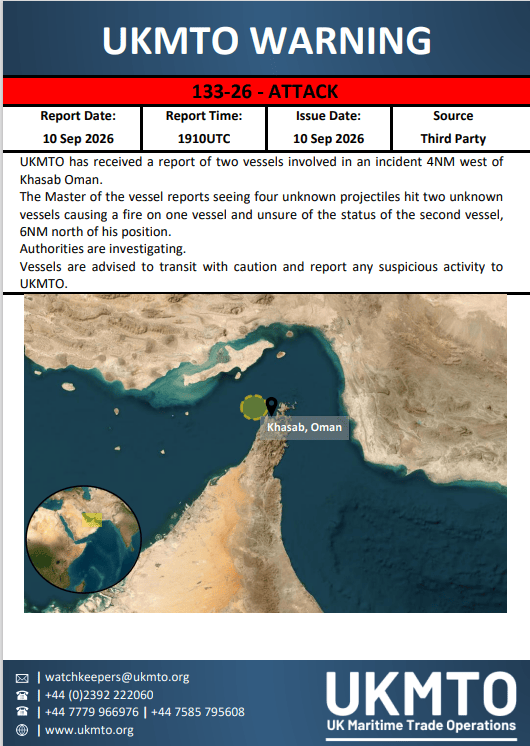
There was some good news overnight after Iran’s semi-official Fars News Agency reported that 15 vessels had passed through the Hormuz chokepoint over the last 24 hours. Still, that remains only a tiny fraction of pre-conflict tanker traffic.

Separately, the Islamic Revolutionary Guard Corps Navy warned that the waterway will “never return to its previous condition,” particularly for the U.S. and Israeli-linked vessels, and added that it is completing preparations to enforce a new security order across the Persian Gulf.

The question some military analysts are likely asking about the IRGCN’s statement is: with what naval fleet? Still, the IRGCN’s asymmetric warfare around Hormuz can be enforced with suicide drones, naval mines, and missiles.

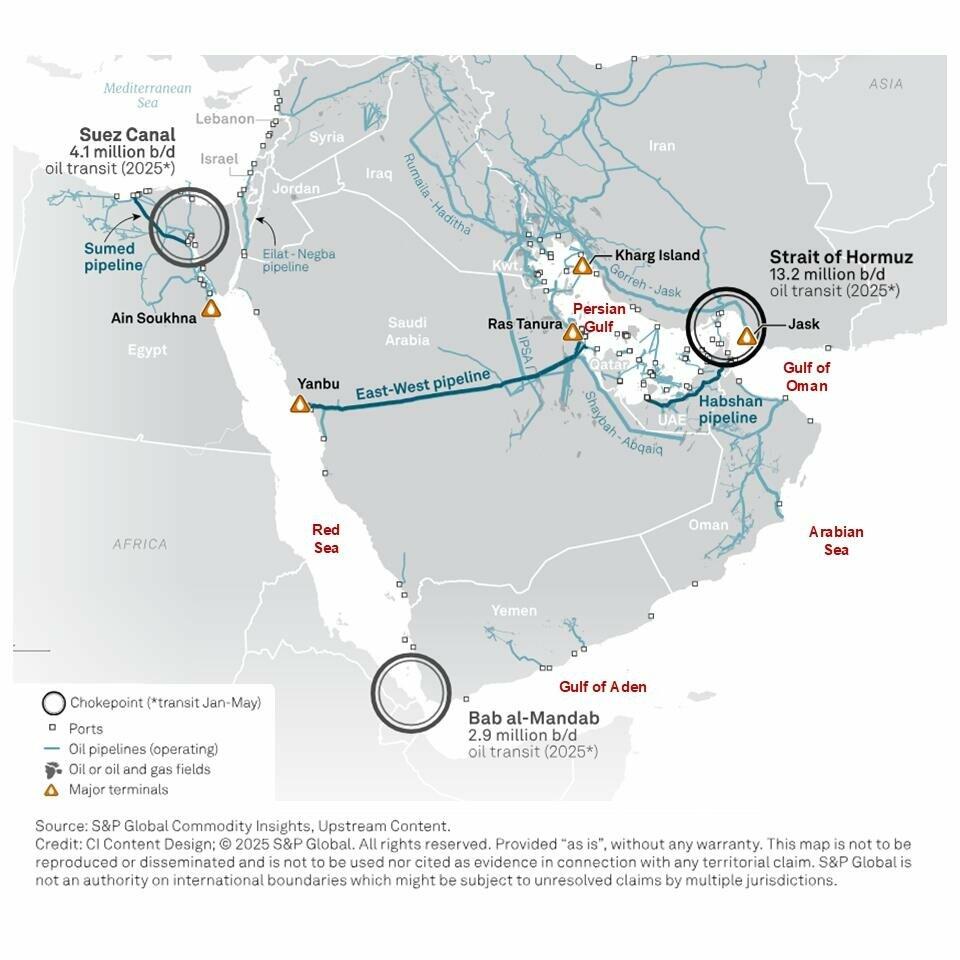
Map: Tanker Tarffic Hormuz 

In a separate report, Bloomberg’s Stephen Stapczynski tracked two LNG tankers, Al Daayen and Rasheeda, loaded in Qatar that appeared to be traversing part of the Hormuz waterway.

However, Stapczynski noted early Monday that the two tankers appeared to “pause [their] attempt to exit Hormuz.” There was no indication why both tankers abruptly turned around.

“The ships have now slowed and pulled back slightly after earlier heading eastward toward the Hormuz opening. It isn’t immediately clear at this stage if the tankers will abandon the journey,” he said.

The two LNG tankers are being closely watched by Wall Street analysts because a successful transit would mark the first LNG exports to buyers outside the Gulf region since the conflict broke out in late February. Any successful passage would be a breakthrough for Qatar, which supplied nearly 20% of global LNG last year, even though its Ras Laffan export plant has been shut for over a month after IRGC drone and missile attacks. Reviving Qatar’s pre-conflict LNG export flows could take $20 billion and years to fix. 

Goldman analyst Yulia Zhestkova Grigsby showed clients last week that energy flows from the Gulf remained muted (read the full report).

Also on Sunday, Axios reported that Iran and regional intermediaries are quietly exploring a 45-day ceasefire as part of a two-phase deal to end the conflict.

Tyler Durden
Mon, 04/06/2026 – 08:20

US, Iran, Mediators In Ceasefire Talks Before Promised Catastrophic Escalation: Axios

US, Iran, Mediators In Ceasefire Talks Before Promised Catastrophic Escalation: Axios

With a potential globally-catastrophic escalation looming on Tuesday, Middle East mediators are communicating with Iran and the United States about a proposed 45-day ceasefire, Axios reported Sunday evening. The ceasefire is being positioned as the first of a two-phased deal, with the second phase being a negotiated, permanent end to the war that Israel and the United States started with a surprise attack on Feb. 28 amid ongoing negotiations. 

The slim ray of hope comes after President Trump issued a profane, Easter Sunday threat to make life miserable for 90 million Iranians whom he just weeks ago promised to liberate:  “Tuesday will be Power Plant Day, and Bridge Day, all wrapped up in one, in Iran. There will be nothing like it!!! Open the Fuckin’ Strait, you crazy bastards, or you’ll be living in Hell.”    

In addition to vitriol, Trump’s social media posts also brought an extension of what had been a 10-day deadline for Iran to open the Strait of Hormuz — a deadline that was initially set to expire on Monday evening. Now Trump says Iran has until 8pm on Tuesday. In the interim, Trump has scheduled a 1pm news conference on Monday. The described it as a press conference “with the military,” suggesting it may be focused on celebrating US Special Forces’ retrieval of a downed US Air Force weapons officer over the weekend. Held in the Oval Office, it may be open to only a small subset of the White House press corps. 

The combination of the ever-so-slightly encouraging Axios report and the Trump presser could make for the latest of many market whipsaws since the war started. Trump told Axios that there are “deep negotiations” ongoing with a “good chance” of success. On the other hand, he was quick to add that “if they don’t make a deal, I am blowing up everything over there.” Trump’s threats to lay waste to Iran’s civilian infrastructure has elicited Iranian promises to retaliate in kind across the Persian Gulf. In a video issued Sunday, Iran threatened “complete and utter annihilation” of OpenAI’s $30 billion Stargate data center in Dubai. 

While the precise nature of the negotiations is unclear, Axios reported that Pakistani, Egyptian and Turkish mediators are at the center of the conversations, and that there have been “text messages sent” between Trump’s envoy Steve Witkoff and Iranian Foreign Minister Abbas Araghchi. Significantly, the outlets’ sources said mediators couldn’t foresee a full re-opening of the Strait of Hormuz until a final deal is inked

  • The mediators want to see whether Iran could take partial step on [nuclear enrichment and Strait of Hormuz navigation] in the first phase of the deal. They are also working on steps the Trump administration could take to give Iran guarantees that the ceasefire will not be temporary and that the war will not resume.
  • The Iranian officials made clear to the mediators they don’t want to be caught in a Gaza or Lebanon situation where there is a ceasefire on paper, but that the U.S. and Israel can attack again whenever they want to.  — Axios

Going into these latest conversations, the gap between US and Iranian demands was enormous. Among other things, Trump is demanding that Iran weaken the ballistic missile program it now used twice to retaliate against US-Israeli aggression, and to cease any nuclear enrichment, even though Iran is otherwise privileged to do so as a signatory to the nuclear Non-Proliferation Treaty (a status Israel lacks). Iran has demanded reparations for the damage caused by Israeli and US attacks, the closure of US bases in the region, the lifting of all sanctions, and a hard-wired guarantee against more rounds of intermittent US-Israeli attacks. Regarding the latter demand, some have envisioned passage of a US law that would cut off aid to Israel if it attacks Iran again. 

Beyond the potential for escalation via attacks on civilian infrastructure, there’s also the potential for a US commitment of ground forces. Trump may feel emboldened about proposed operations to seize Kharg Island and/or strait-adjacent territory following the dramatic weekend rescue of a downed F-15E crew member — which itself brought the first known deployment of soldiers on Iranian soil. (We should note that there’s a growing number of veterans and other people — pointing to factors like the involvement of C-130 cargo craft and the location of their makeshift airfield — theorizing that the rescue was actually a failed attempt to capture Iran’s cache of 60%-enriched uranium.)

Meanwhile, there’s little to indicate that Israeli Prime Minister Benjamin Netanyahu is interested in deescalation.

Tyler Durden
Mon, 04/06/2026 – 06:55

‘New Iranian Terror Group’ Claims Responsibility For Attacks Across Europe

‘New Iranian Terror Group’ Claims Responsibility For Attacks Across Europe

A group that did not exist online or anywhere else before March 9, 2026, has suddenly claimed responsibility for a string of low-tech arson and attempted bombings at synagogues and US banks across Belgium, the Netherlands, France, and the UK.

Police in Paris at the scene of the thwarted attack on the offices of Bank of America © Nathan Laine/Bloomberg

Mainstream outlets like FT and counter-terrorism analysts are rushing to label Harakat Ashab al-Yamin al-Islamia (HAYI, or “Ashab al-Yamin”) as an Iranian intelligence “hybrid warfare” front. But a closer look raises serious red flags: the group’s amateurish execution, suspiciously perfect timing amid the U.S.-Israeli war on Iran, and a pattern that seems tailor-made to stoke the antisemitism narrative and justify further crackdowns on Tehran and its proxies.

The first claim surfaced on March 9 via Telegram channels tied to Iraqi pro-Iranian militias. Two days later, HAYI took credit for firebombing a synagogue in Liège, Belgium. Subsequent claims included attacks on a Rotterdam synagogue (March 13), a Jewish school in Amsterdam (March 14), a site linked to Bank of New York Mellon in Amsterdam (March 16), Hatzola Jewish ambulances in London’s Golders Green (March 23), and a foiled plot outside Bank of America in Paris (March 28). An attempted synagogue strike in Heemstede, Netherlands, was also stopped on March 20. Some other claims, including an alleged Greece attack – appear to be outright disinformation.

European police have rounded up suspects aged 14-23. In the Netherlands, at least 10 arrests. France charged four, including minors. In the UK, three young men (two Brits aged 19–20 and a 17-year-old dual national) were charged with the London ambulance arson, with a fourth arrest. 

On arson attack on community ambulances in north London last month © Henry Nicholls/AFP/Getty Images

Orthodox Jewish communities in London and elsewhere have their own ambulances operated by Hatzola (also spelled Hatzolah or Hatzalah), a private volunteer-run, community-funded emergency medical service.

French prosecutors revealed one teen claimed he was recruited on Snapchat, offered €500–€1,000, and initially told the “bomb” was revenge on a cheating girlfriend – before being instructed to film it for the cause. Many suspects were released on bail.

The “group” that wasn’t there yesterday

Researchers at the International Centre for Counter-Terrorism (ICCT) note HAYI had “no known references, neither online nor offline” before March 9. Its statements contain linguistic quirks, misspellings, and inconsistencies. Claims were amplified almost immediately by channels linked to IRGC-aligned militias—yet the operation relies on disposable online recruits for pocket-change jobs. Julian Lanchès at ICCT called it unusual and suggested an Iranian intelligence project for deniability.

Doubts regarding the authenticity of HAYI are, however, not only raised by the appearance of its Telegram channel and the likely falsely claimed attack in Greece, but also by inconsistencies within the claim material itself. For example, the videos contain noticeable linguistic errors. Further, the Arabic inscription beneath the group’s logo, which closely resembles the flag of Hezbollah and other pro-Axis groups, except for featuring a Soviet SVD sniper rifle instead of the more typical AK-style imagery, includes multiple mistakes, including the misspelling of the word “Islamic.”

Skeptics aren’t buying it. The Grayzone’s Wyatt Reed highlighted glaring questions: Why aren’t these “Iranian” operatives hitting targets in countries most aggressively involved in the war on Iran? Why the focus on symbolic Jewish and U.S. bank sites with minimal actual damage and zero casualties? Why do some communiqués contain phrasing that reads like it was generated with odd Israeli terminology quirks (e.g., references to “the Land of Israel”)? And why were multiple suspects quickly released on bail while the “terror campaign” narrative rolls on?

MintPress News investigative piece by David Miller goes further, arguing HAYI looks like a fabricated “fake Iranian terror group invented precisely to accelerate efforts to proscribe the IRGC as a terrorist organization across Europe – long a goal of pro-Israel lobbying networks amid the Iran war.

Cui bono? The timing is impeccable

The wave of attacks kicked off right as U.S.-Israeli strikes on Iran intensified in late February 2026. Jewish communities were already on edge from post-October 7, 2023, tensions. UK groups like the Community Security Trust linked the London incident to rising antisemitism. Dutch officials openly probed “Iranian involvement.” U.S. banks in Paris told staff to work from home. All of it feeds a story that Iran is exporting chaos. 

Iran’s London embassy flatly denied involvement, calling the claims “unfounded” and reaffirming non-interference. But in the current climate, denials are dismissed as standard procedure.

Online discourse is split  – with some X posts and independent commentary (including from figures who faced backlash) have pointed to Mossad-style operations, citing historical precedents and the fact that the attacks generate maximum narrative value with minimum real risk. A UK mayor in Bath resigned after sharing posts suggesting the Hatzola ambulance arson was staged.

Even some mainstream analysts admit the group operates like a hastily assembled brand.

To analyse the activities of HAYI, we examined its digital footprint, including the first public mentions of the attacks online and the initial dissemination of the corresponding claim videos. This analysis was conducted using the OSINT tools XNetwork and TGStat, which were queried using Arabic-language keywords. In addition, an AI-based detection tool was employed, which indicated that all claim videos were likely genuine recordings. 

There are no known references, neither online nor offline, to HAYI prior to 9 March, when a post of the group was circulated in a Telegram channel seemingly affiliated with the Iraqi pro-Iranian militia Liwa Zulfiqar. In this post, HAYI announced “the start of its military operations against US and Israeli interests around the world,” although it made no reference to the attack against the synagogue in Liège that occurred on the same day. This would suggest that HAYI is a new group, established for the purpose of this bombing campaign. -Julian Lanchès, ICCT

Recruitment teens via Snapchat and Telegram for one-off gigs isn’t exactly what hardened jihadists do – is it?

Hybrid warfare… or hybrid narrative?

Pro-Iran voices and anti-war skeptics argue this fits a familiar playbook: manufacture or exaggerate a threat, amplify it through friendly think-tanks (some with clear ideological alignments), then use the panic to justify expanded surveillance, sanctions, military posture, and silencing dissent on Gaza or Iran policy. The low-body-count, property-only focus maximizes fear without crossing into “existential terror” that might backfire.

Whether HAYI is a sloppy Iranian cutout using disposable locals, a pure astroturf job, or something more orchestrated to serve specific agendas remains under investigation. Meanwhile the story has already succeeded in sowing anxiety, polarizing communities, and providing fresh ammunition for those pushing Europe deeper into the Iran conflict.

Tyler Durden
Mon, 04/06/2026 – 06:15

Europe’s Looming Jet Fuel Crisis: Hormuz, Policy Failure, And A Self-Inflicted Supply Shock

Europe’s Looming Jet Fuel Crisis: Hormuz, Policy Failure, And A Self-Inflicted Supply Shock

Submitted by Thomas Kolbe

Politics has established a new routine. Right at 12 noon, prices at German gas stations now rise day after day.

The government’s pricing decree, a hastily assembled mechanism, acts like an accelerant in an already dramatically strained fuel supply situation. Anyone with rudimentary economic understanding already knew that this form of price regulation would amount to political posturing with fatal consequences.

The market is reacting as expected. Gas station operators anticipate general price increases and indirectly coordinate their pricing behavior. If everyone is only allowed to raise prices once per day, that shot will be fired deliberately — better too high than too low. After that, it becomes a waiting game, observing how competitors react. If the next move can only be a price reduction, the risk can be solved in simple game-theoretical terms: prices are simply kept high as long as competitors do not move.

This creates a cartel-like situation that avoids the risk of rapid price cuts and the resulting loss of individual margins.

Market dynamics thus turn into generalized tactical hesitation. At the same time, political leadership is marked by a striking lack of direction in the face of real scarcity and a rapidly worsening supply situation. Hormuz is exposing the limits of political emergency measures.

The measures taken so far by the German government to curb rising prices are classic political camouflage — a well-rehearsed play for the public. The fundamental question of how to deal with energy imports is not being seriously addressed. Europe must import 60 percent of its energy to meet demand. And the stubborn stance toward Russia, Europe’s most important supplier of energy and raw materials, will likely prove to be the most fatal mistake of European policy — quite an achievement, given that it is already riddled with misjudgments and ideologically driven, erratic decisions.

It is also significant that Brussels’ CO₂ regime has severely damaged Europe’s refining capacity. Europe no longer has the infrastructure required to rapidly activate refining capacity in an emergency and close the widening gap in oil and gas supply, regardless of where new raw materials might be sourced.

EU policy is knowingly and deliberately escalating the current situation. This finding applies in particular to jet fuel imports. Europe’s aviation sector imports around 40 percent of its jet fuel from the Persian Gulf, making the current situation effectively unsolvable.

Since the beginning of the war, the price of jet fuel has roughly doubled, from $800 to $1,800 per ton.

The fact that the United States is taking its time to bring the Strait of Hormuz under military control is putting enormous pressure on European airlines. Scandinavian carrier SAS has already canceled 1,000 flights in April. Lufthansa is also considering grounding parts of its fleet.

Airlines that have hedged their fuel purchases may be able to cushion price increases somewhat — Lufthansa among them — but this does nothing to address the physical shortage of available jet fuel. Europe is on the verge of a massive jet fuel shortfall.

On April 9, the last tanker carrying jet fuel from the Persian Gulf will reach Rotterdam; existing reserves are likely to sustain European flight operations for three to four weeks. What happens afterward remains completely uncertain.

Given the destruction of refining capacity and related infrastructure in the name of the Green Deal, European policymakers find their hands effectively tied. The Hormuz crisis is likely to erupt with full force. If there is no rapid resolution to the Iran conflict, a loss of 40% of available jet fuel simply cannot be compensated.

Brussels could activate one of its favorite instruments and, by means of an EU emergency regulation — similar to the early days of the Ukraine conflict — enforce rationing measures for private jets and long-haul flights. The immediate release of idle commercial refining reserves, particularly in the major port regions of Rotterdam, Antwerp, and Amsterdam, would also be an option. Purchasing expensive jet fuel in North America with heavy subsidies might provide a short-term alternative to prevent a collapse in air traffic.

No matter how the acute fuel shortage in Europe develops in the coming weeks: the damage has already been done. The structural damage caused by European policy in its obsessive fight against CO₂ is now becoming visible in its full dramatic depth. Refining capacity cannot be restored overnight, and the world is now engaged in an intensified competition for the remaining circulating fuel supplies.

That prices will continue to rise for the time being is inevitable; the campaign of degrowth ideologues against individual mobility, air travel, and combustion engines is experiencing an unexpected moment of triumph. 

For civilization as a whole, this is a catastrophe — for individuals who have made themselves comfortable in the subsidized world of idle ideologues, it is indeed a victory. Yet it is unmistakably a Pyrrhic victory.

* * * 

About the author: Thomas Kolbe is a German graduate economist. For over 25 years, he has worked as a journalist and media producer for clients from various industries and business associations. As a publicist, he focuses on economic processes and observes geopolitical events from the perspective of the capital markets. His publications follow a philosophy that focuses on the individual and their right to self-determination

Tyler Durden
Mon, 04/06/2026 – 05:30

NATO Was A Big Loser In The Iran War

NATO Was A Big Loser In The Iran War

Authored by Victor Davis Hanson via The Epoch Times (emphasis ours),

NATO members are not legally required to join any member’s military operations that are not formally sanctioned by the alliance or not aimed at protecting the homelands of the membership.

But they often do just that.

President Donald Trump speaks from the Cross Hall of the White House in Washington on April 1, 2026. Alex Brandon/Pool/Getty Images

Some NATO members joined the Americans in Afghanistan and Iraq on the theory that, in the post-9/11 environment, the Taliban and Saddam Hussein were dangers to all Western security.

They followed the precedent set by America’s 1999 intervention in the distant Balkans, leading a three-month NATO campaign to dismantle Slobodan Milošević’s often bloody ambitions of a Greater Serbia. The United States also joined the 2011 U.N.-approved, and French- and British-inspired, NATO “coalition of the willing” bombing campaign in Libya.

That effort proved a seven-month misadventure—especially since the targeted Libyan strongman Muammar Gaddafi had given up his nuclear weapons program and was desperately trying to cut a deal with the West.

When NATO members in the past have operated unilaterally to defend their own national interests, they have often called on the United States, as NATO’s strongest member, for overt help.

For nearly 40 years, the United States had offered logistical, intelligence, reconnaissance, refueling, and diplomatic support to the French in their unilateral and postcolonial efforts to protect Chad from Libya and, later, Islamists.

During the 1982 Falklands War, a solitary Britain faced enormous logistical challenges in steaming halfway around the world to eject Argentina from its windswept and sparse islands.

U.S. aid was critical to the effort.

So America stepped up to help with intelligence, reconnaissance, the supply of some two million gallons of much-needed gasoline, and crucial restocking of Britain’s depleted Tomahawk missiles.

The American tilt to Britain prompted anger from most Latin American nations of the shared Western hemisphere, as well as from many Hispanic American citizens at home.

No matter—President Ronald Reagan rightly saw the importance of solidarity with a NATO member and a long-time American ally. So he gave Britain a veritable blank check for American aid.

Currently, America has not asked NATO members to help bomb Iran—even though Europe, not the United States, was in range of Iranian ballistic missiles, and soon perhaps nuclear-tipped ones as well.

Europeans are far more vulnerable to Iranian-inspired Islamic terrorism. They are more reliant on foreign oil from the Middle East, some of it passing through the Strait of Hormuz.

All the United States had initially asked for was basing support in disarming a common Western enemy that, for nearly half a century, has slaughtered American diplomats and soldiers and tried to kill a U.S. president and secretary of state.

But most NATO members could not even offer tacit help. Some damned the U.S. effort as either illegal or unnecessary.

The American public watched the British waffle for days over permitting Americans to use their Diego Garcia base.

The Spanish banned American use of their NATO bases and airspace.

The Italians refused a request from American bombers to land and refuel at a Sicilian NATO base.

Many NATO heads of state rebuked the United States to their domestic audiences while, in typical two-faced fashion, publicly offering empty verbal support for the U.S. effort.

The NATO response to an Iranian missile aimed at fellow NATO member Turkey was anemic.

Even worse was the pathetic British reaction to another Iranian missile launch at a British base at Akrotiri, Cyprus.

Yet a successful American effort in neutering a theocratic Iran was clearly of benefit to Europe. So is preventing the international waters of the Strait of Hormuz from becoming a toll booth run by the Iranian mullahs.

Such passivity was in sharp contrast to the five-year-long Ukraine War on the borders of Europe.

Ukraine was not in NATO.

Ukrainian politicos and ambassadors had sometimes played an intrusive, partisan role in the 2016, 2020, and 2024 American presidential elections.

Nonetheless, there were urgent European requests for the United States to honor the spirit of NATO solidarity and to get across the Atlantic as quickly as possible to protect the territorial integrity of Europe.

Yet continental Europe is not intrinsically weak. The combined population of the European Union and European NATO members is around 450 million—a population more than 100 million greater than that of the United States.

These same European nations enjoy an aggregate annual GDP of more than $22 trillion, 10 times the size of the Russian economy.

European diffidence comes on top of the perennial American effort to harangue NATO members to honor their 2 percent of GDP defense commitments—especially in the case of deadbeat Spain and Canada, who for years welched on their pledges.

Trump’s harangues were not what was undermining NATO.

Instead, he ripped off a happy-face scab and exposed a festering wound of increasingly anti-American hypocrisy beneath.

If you wanted to wreck the alliance, there would be no better way than to follow the duplicitous examples of Western European NATO members.

Tyler Durden
Mon, 04/06/2026 – 04:00