It is not just America’s military bases in the Middle East which have been greatly reduced in terms of personnel or in some cases completely abandoned altogether due to the Iran war, but US Embassies in the region have also suffered forced downgrades of staff.
Iran’s retaliation on US locations and assets across the region was much bigger and more effective than US planners apparently expected, and this could have lasting impact on how US military and diplomatic deployments operate in the region.
In some cases, such as the US Embassy in Baghdad’s Green Zone, diplomatic compounds have been directly targeted by Iranian fire or that their proxies. And now, “The State Department is asking US embassies in the Middle East to create plans to continue operating with a small number of staff on the ground, sources told CNN, as the war with Iran shows no signs of resolution.”
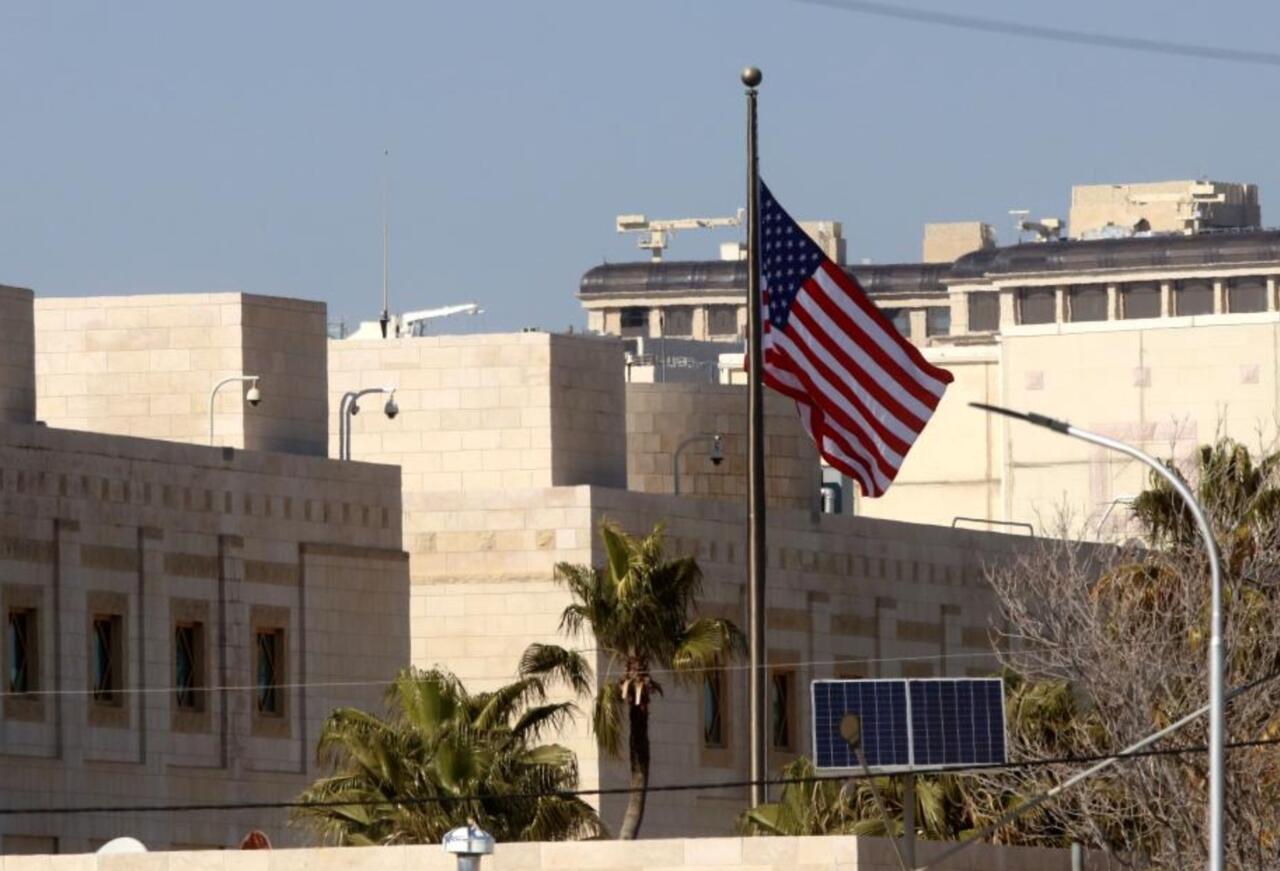
One aspect to the report which points to a likely permanent new arrangement is that embassy staff that had been relocated due to the war are now being offered reassignments.
CNN continues, “Additionally, personnel who have been displaced from their posts in the Middle East are increasingly being given the option to curtail their assignments, the sources said.
“The plans have not been finalized, the sources said, and it is unclear if they will be implemented at all of the embassies that are currently on reduced staffing,” the report adds.
Importantly, it concludes: “Still, the developments underscore that the State Department does not expect to return to normal staffing in the region soon amid the looming threat of a full-scale return to war.”
What’s more is that throughout the most intense phase of the war, the Iranians claimed to have targeted compounds and hotels where diplomats and even intelligence officials were being housed.
The fact that the US State Department remains worried enough to now be hatching plans for an at least semi-permanent drawdown from these locations suggest this Iranian targeting was effective to some extent. Currently, most of the US embassies across the region are shuttered for their normal operations. For example, the US Embassy in Jordan has ceased from normal operations for several months, stretching back to the very start of Operation Epic Fury, the bulk of its staff having long ago departed.
Recent NY Times reporting underscores that Iranian missiles are technologically advanced enough to punch through US regional anti-air defenses. This has especially been on display in Jordan:
During five intense days last month, Iran launched waves of drones and missiles at U.S. troops on three bases in Jordan, hoping to break through the formidable American air defenses.
Using advanced missiles that can suddenly change course, Iran pummeled the bases’ defensive systems, forcing the Americans to burn through scarce supplies of Patriot interceptors.
On the fifth day, the Iranians broke through.
Secretary of State Marco Rubio and other US officials have lately admitted that Iranian missiles have evaded America’s air defenses:
A missile struck prefabricated housing units at one of the bases on July 17, killing three U.S. soldiers and wounding more than 100. Pentagon officials later acknowledged that scores of other troops were injured and several aircraft damaged in attacks in Jordan that week.
“We shot down almost all the missiles,” Secretary of State Marco Rubio said when asked about the fatal attack. “One leaked through.”
The strikes reveal a deadly confluence of two important trends: First, Iran has become a more skilled adversary as the war has progressed, learning how to evade U.S. air defenses as it widened the battlefield to include most of the Middle East and enlisted allies like the Houthis in Yemen and militias in Iraq.
Second, the Pentagon’s supply of interceptors has quickly dwindled, with the weapons becoming more precious each day of the off-and-on conflict.
“The Iranian debasification campaign appears to be working.
The US force in the region is likely incapable of generating the same combat power in its air operations against Iran as it could when the war started, and things are trending ever further in a negative direction.…
— Alex Shams (@alexshams_) July 21, 2026
Interestingly, the NY Times concludes something that should have been glaringly obvious. It has even been predicted in Pentagon and US intelligence war-gaming exercises from years ago…
“The two trends drive home a point that has slowly emerged in the months since the war started, that a global superpower with a mighty military footprint can still be held at bay by a lesser adversary willing to wage asymmetric warfare to find any advantage it can,” The Times writes. Once also could have just looked at the ‘forever wars’ in Afghanistan and Iraq.
Tyler Durden
Thu, 08/13/2026 – 02:45