Marc Faber Vs Brent Johnson On What’s After Iran War: Utopia Or Crash
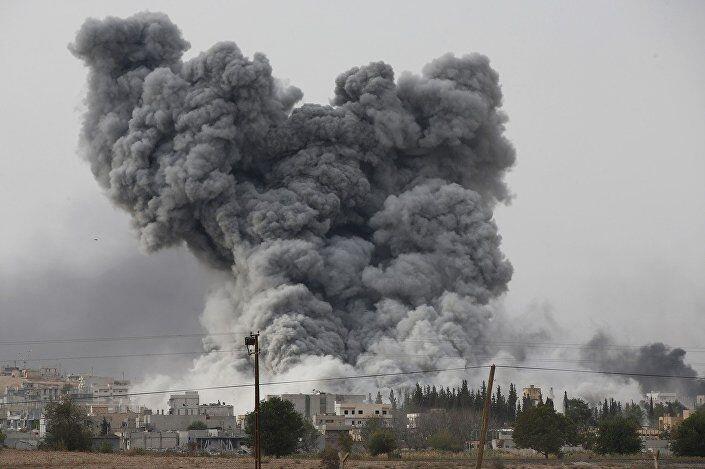
As the dust begins to settle from the latest escalation in the Iran conflict, markets are left to grapple with a more complicated question: what comes next? Is this the beginning of a reset toward stability, another leg up in markets, and lower inflation -or- are the early stages of a broader economic unraveling tied to supply shocks, currency stress, and geopolitical fragmentation? Not to mention… is the Straight of Hormuz even open? Reports are that Iran is only allowing passage after a hefty payment in either cryptocurrency or Chinese Yuan.
Tonight at 7pm ET, longtime market commentator Marc “Dr. Doom” Faber squares off against Brent Johnson, with Adam Taggart of Thoughtful Money moderating.
Faber is an OG dollar bear while Johnson is critical of the “US Empire is doomed to fail” crowd.
Nonetheless Johnson has warned, in a recent post on his research blog, that “rationing hits next. And the downstream effects…energy prices, manufacturing inputs, food prices…follow on a timeline that stretches months, not days.” He says consequences are largely baked in, as most ships take 10 to 45 days to reach their destination and are just leaving now.
“What’s actually happening right now is slower, quieter, and more consequential than anything in the financial press.”
Faber has consistently bashed paper money, in all its forms, as destined to fall to zero against the price of gold:
— ZeroHedge Debates (@zerohedgeDebate) April 8, 2026
Where he and Johnson might agree is that it is unlikely for the Euro or the Japanese Yen to unseat the dollar. But could the Chinese Yuan or a basket currency put forth by BRICS? Especially if backed by gold (or advertised as such), might other countries begin making the switch?
Iran has long known the risks of dealing in U.S. dollar-denominated assets that may be frozen unilaterally. However, the country has also now learned the consequences of challenging U.S. (or perhaps more accurately in their case, Israel) regional hegemony. So, if more countries announced their intention to de-dollarize, would the American government strike such initiatives down by force a la Libya? And even if the U.S. tries, does it become too many impossible fires to put out? Global market forces could usher in a return to gold whether the Pentagon likes it or not.
Taggart, Faber, and Johnson will answer these questions tonight, here on the ZeroHedge homepage at 7pm ET.
Weather forecasters are sounding the alarm about what could become a “super” El Niño event, potentially one of the strongest on record.
“Strongest El Niño on record this year?!” meteorologist Ben Noll wrote on X. Noll said the latest ECMWF outlook indicates a 75% chance of a super El Niño by October, with “some scenarios suggesting the most intense event in more than a century.”
Strongest El Niño on record this year?!
New ECMWF guidance shows a *75% chance of a super El Niño* by October, with some scenarios suggesting the most intense event in more than a century.
New maps causing meteorologists to lose their minds in disbelief at massive heat build-up in the Equatorial Pacific
The oceans will not literally be boiling red 🔴 in the early autumn, but the Super El Niño will drive unprecedented global extreme weather events. pic.twitter.com/cEAmGIHuFI
As we get into the middle/end of the growing season, the influence of a Super El Niño will need to be monitored going forward in all outlooks. Check out the SST Anomalies for August!
If that scenario materializes, it could shift weather patterns worldwide, increasing the risk of flooding in some regions, drought and wildfires in others, and further raising global temperatures. An El Niño event typically strengthens the Pacific jet stream and redistributes heat and moisture globally.
Across the U.S., an El Niño influences seasonal rainfall, especially during winter. The stronger, more active jet stream typically shifts south, bringing wetter-than-average conditions to the southern U.S., including California, the Gulf Coast, and the Mid-South.
The good news is that El Niño reduces Atlantic hurricane activity.
Remember, left-wing corporate media is just a few months away from firing up the “hottest ever” global warming headlines to peddle junk climate science.
Global warming doomers, such as Greta, have shifted more recently from climate alarmism to Palestine activism. It is all about following the money.
Polish Law and Justice (PiS) MEP Mariusz Kamiński raises alarm about the European Commission’s plans to change Europol’s operations, warning that “the European Commission is quietly building EU law enforcement agencies,” reports Do Rzeczy. There are now fears that Europe could have its own FBI, with vastly expanded and centralized powers.
“The European Public Prosecutor’s Office has already been established, and now the European Commission wants to turn Europol into a ‘truly operational EU police agency.’ This means that citizens of member states will be able to become the target of investigations and operational activities of European law enforcement agencies, bypassing national authorities. This would be a real ‘milestone’ in the construction of a centralized European state. A very dangerous situation!” wrote the former interior and administration minister on X.
Kamiński sent a letter to the European Commission questioning the activities described and defending Europol as it stands.
The agency has been in operation since Jan. 3, 1994.
He notes that “Europol’s success is based on cooperation, supporting member states, and coordinating the fight against cross-border crime. Europol’s activities are particularly important in combating drug crimes, human smuggling, and VAT fraud. This model is a good example of effective cooperation at the European level.”
“Therefore, I oppose the announcements of transforming Europol into a fully operational police agency, which have been met with criticism from many experts and member states. During the LIBE meeting on March 19, 2026, Commissioner Brunner concluded his statement by saying that it will not be a European FBI, which can be interpreted as a departure from the Commission’s radical announcement,” he continued.
The PiS MEP asks: “How does the Commission understand the concept of a ‘truly operational police agency’?” and about safeguards to ensure that Europol “remains an agency supporting member states and not an authority exercising direct police powers.”
Cost Of Living Dominates Many Nations’ Biggest Worries
According to Statista Consumer Insights, prices and the cost of living are considered the biggest challenge in around half of the 32 countries included in a recent survey.
This is also true for United States, where the issue ranks first among the 18 surveyed options, with 50 percent citing it as a main concern.
In Spain (59 percent) and the Netherlands, the availability of housing is perceived as a significantly more pressing challenge.
The same applies to crime in Brazil (62 percent) and other Latin American countries as well as to the economic situation and unemployment cited most often in Italy and India (50-52 percent of respondents).
Poles meanwhile saw health and social security services as the most central problem, with half of respondents picking this issue.
Germany’s Energy Crisis And The National-Conservative Turn
Submitted by Thomas Kolbe
If the Union had been waiting for a favorable moment to save face and quietly escape the energy-policy fiasco, that moment has probably arrived. On Thursday, the European Parliament formed a broad coalition of the Union-backed EPP faction with the national conservatives. The goal: initiate a migration turnaround, prevent citizen chat controls, and soften the grotesque Supply Chain Act.
Among the national-conservative parties in the EU Parliament is also the AfD faction, showing that the firewall against this party is a German phenomenon—a product of hysterical left-green media makers and bloated politicians of the firewall cartel, who fear competition for their privileges.
Never has the opportunity been more favorable to leave the paralyzing logic of the firewall behind once and for all and to form national-civic coalitions than today.
Time is pressing. Germans face a wave of inflation already visible at gas stations and in heating costs. Citizens are approaching a defining initiation moment of truth. Since the beginning of the Iran crisis, fuel prices in Germany have risen by up to 25 percent on average. Gas prices rose another 20 percent in the same period. Going back to 2005, electricity prices in Germany rose a staggering 70 percent—an undeniable proof of the catastrophic failure of the Energiewende.
What the green central planners have left behind can hardly be called energy-market design in the proper sense. On the ruins of a once well-oiled, highly complex structure and the blown-up cooling towers of nuclear plants, a system with built-in fragility has arisen. In a crisis, there are neither sufficient reserves nor systemic resilience against blackouts and the looming economic super-disaster. Above it all hangs the Damocles sword of potential crises that could erupt anywhere in the world at any time and directly hit Germany.
Hormuz reveals the extent of this fragility and exposes the unbelievable hypocrisy behind the green transformation. The story of sun and wind bringing free energy was from the start a bitter fairy tale for anyone not drunk on Trittin, Habeck, and Merkel’s chatter. A mood is brewing, ranging from deep anger to utter contempt for the cult-like transformation ideology.
It is no longer hideable: green transformation is a code word for establishing a vulgar, aggressive extraction mechanism fueled by climate apocalypse fears and moralizing degrowth ideology.
A turn toward modern forms of nuclear energy and the development of Germany’s own enormous gas reserves must now be undertaken—never has public willingness to accept fracking been greater, as the economic crisis sinks into general awareness. Reasonable policy would return to the negotiating table with Russia to urgently discuss resuming gas deliveries. Belgium’s Prime Minister Bart de Wever also called for this. He is far from alone in this view. Hungary, Slovakia, and Italy are forming a real opposition that Brussels will have to reckon with.
But for now, paralysis dominates in the face of economic fallout.
It is painfully clear: Friedrich Merz and his economic minister Katherina Reiche have so far not grasped the extent of the crisis. They rely on the continuity of the green transformation and do not understand that this very construct is both the cause and the end point of the crisis. The bridge that they could now cross together with the AfD has so far been ignored. Reiche did discuss the strategic errors of German energy policy surprisingly openly last week. A possible extension of coal use is suddenly back on the table. But largely, the course remains. Together with Environment Minister Carsten Schneider, Reiche helped secure existing climate policy. Another eight billion euros will be pumped into the green patronage economy. The CO2 market and the ban on combustion engines are held fast.
Beneath it all, green hippie politics shines through like a monolith, blocking any reform effort. Strategic thinking is now needed, beginning with an honest stocktaking to make citizens aware of the true weight of political errors over the past decades. Everyone must understand: there is no simple solution. Politically induced artificial scarcity in the energy sector cannot be erased by chancellor decree.
Or will we possibly start a course correction and dare a 180-degree turn in energy policy? Ideology must give way to reason, green bubble politics to economic prudence, state interventionism to real market design. These are the pillars of the bridge that would then need strengthening and expansion.
But Friedrich Merz is not the Pontifex Maximus we need. He resists all criticism of Brussels’ transformation policies, defends the CO2 certificate trade to the bitter end, and is now preparing, together with his socialist SPD allies, a massive tax hit on the middle class. This man, along with the Union’s leadership team, stands in the way of the future. Merz is the antagonist of the national-conservative turnaround, one of many executors of green hippie politics.
Future national-conservative or national-liberal governments will waste no time fully exposing fiscal fraud, deception, and ideological madness—such as the climate complex. Restoring balance to Germany’s budget, halting Ukraine aid, ending transfers to the green complex, Brussels, and NGOs worldwide will be easy. Necessary social-state reforms, including programs to return illegal migrants, will follow.
As the crisis deepens in the coming years, patriots will gain massive support. This includes libertarians and European cultural patriots, who express their passion for homeland, their will to repair past economic damage, and their desire to preserve Europe’s cultural diversity authentically.
The willingness of people to embrace a reform course, when recognized as contributors to society again, will be overwhelming. Politicians like Katherina Reiche will regret not being part of this turnaround. No bridge will be built for today’s fence-sitters and opportunistic turncoats into future political responsibility.
* * *
About the author: Thomas Kolbe is a German graduate economist. For over 25 years, he has worked as a journalist and media producer for clients from various industries and business associations. As a publicist, he focuses on economic processes and observes geopolitical events from the perspective of the capital markets. His publications follow a philosophy that focuses on the individual and their right to self-determination
Sea Change: ‘Very Unfavorable’ Views of Israel Triple Among US Adults
Amid a major war on Iran waged in partnership with the United States, Israel’s reputation among Americans has continued to deteriorate, with 60% of US adults viewing Israel unfavorably. That’s a hefty 18-point increase from 2022, according to a new survey from Pew Research. Over the same stretch, Israel’s “favorable” share cratered by 18 points.
While the top-line unfavorable rating is bad news for Israel, things are even worse when you look under the hood: The proportion of Americans who have a very unfavorable view of Israel now stands at 28% — triple what it was in 2022.
Alongside his country’s sagging standing with the US public, Prime Minister Benjamin Netanyahu is also increasingly unpopular, as 59% of American adults have little or no trust that he will “do the right thing regarding world affairs,” also a seven-point worsening from last year’s finding.
Pew conducted the survey during the week of March 23-29, roughly a month into the US-Israeli war on Iran, but a few weeks before this week’s brinksmanship –which had many fearing a years-long global economic catastrophe if President Trump followed through on his threats to eradicate Iran’s “whole civilization” and Iran carried out its promised destruction of energy and water infrastructure around the Persian Gulf.
There continue to be significant differences between Americans who associate themselves with the Democratic Party and those who are Republicans or Republican “leaners.” A whopping 80% of Democrats have an unfavorable or very unfavorable view of Israel, almost doubling the 41% of Republicans who feel that way. In what may be the most significant sub-trend in US-Israeli politics, a solid 57% majority of Republicans under age 50 now have a negative view of Israel. Unless that turns around, this suggests that the GOP’s status as a fortress of Israeli support will soon be a thing of the past. Republicans are split on Netanyahu: 45% have some or a lot of confidence in him, while 44% have little or no confidence.
There are also interesting contrasts by religious affiliation. Here’s the percent that have mostly positive views of Israel:
White Evangelical Protestants: 65%
Jewish Americans: 64%
White Non-Evangelical Protestants: 39%
Catholics: 35%
Black Protestants: 33%
Unaffiliated/Atheist/Agnostic/”Nothing In Particular”: 22%
As for Trump’s handling of the US-Israel relationship, 55% lack confidence in him to make good decisions. Here again, party differences are huge: Only 16% of Democrats are confident in Trump’s management of the relationship, compared to 73% of Republicans. Here again, a huge difference within the GOP across age cohorts: Only 52% of Republicans under 30 are confident in Trump’s decision-making vis a vis Israel, compared to an overwhelming 93% of those 65 and older.
While Pew didn’t explore the drivers of Israel’s steadily-sagging standing with Americans, it’s safe to say that Israel’s wholesale destruction of Gaza and skepticism over the rationale for US-Israeli warfare on Iran last summer and again this year have played a big part.
U.S. Vice President J.D. Vance used a high-profile appearance in Budapest alongside Prime Minister Viktor Orbán to accuse Brussels of carrying out “one of the worst examples of foreign and election interference” he had ever seen, claiming EU officials had targeted Hungary because they “hate this guy” and want to weaken his government ahead of the country’s election.
Speaking at a joint press conference in the Hungarian capital on Tuesday, Vance said the “bureaucrats in Brussels have tried to destroy the economy of Hungary,” had sought to make the country less energy independent, and had “tried to drive up costs for Hungarian consumers.”
“They’ve done it all because they hate this guy,” he added, pointing at Orbán.
The U.S. vice president cast the vote as a test of national sovereignty and told Hungarian voters to ask not who was pro-Europe or pro-America, but “who is pro-you” and “who is pro the people of Hungary.”
He caveated his address by insisting he was not telling Hungarians how to vote, and urged the “bureaucrats in Brussels to do the exact same thing.”
Meanwhile, Orbán hailed a new “golden era” in ties with Washington under President Donald Trump and said the return of Trump had transformed bilateral relations after years without a visit by such a senior American official. He said 2025 had been a record year for economic cooperation and that 2026 was already bringing further momentum, pointing to expanded collaboration in defense and space technology as well as new U.S. investment.
🇺🇸🇭🇺 “What has happened in the midst of this election campaign is one of the worst examples of foreign election interference I have ever seen.”
U.S. Vice President JD Vance slams the bureaucrats in Brussels for attempting to sway the Hungarian election because they “hate” Viktor… pic.twitter.com/7VNMhv4OxM
Both men used the press conference to present Hungary and the Trump administration as ideological allies. Orbán said the two sides were in constant contact on migration, “gender ideology,” family policy, and global security, while Vance said the partnership was rooted not primarily in economics but in “moral cooperation.”
“What the United States and Hungary together represent under Viktor’s leadership and under President Trump’s leadership is the defense of Western civilization,” Vance said. He said that meant defending the idea that children should be educated “and not indoctrinated,” that families should be able to afford their energy bills, and that the West remained grounded in “Christian civilization and Christian values.”
The vice president also praised Orbán’s handling of energy policy, saying the Hungarian leader had been “the single most profound leader in Europe on the question of inter energy security and independence.” He argued that other European governments were now paying the price for failing to follow a similar path, saying Hungary’s energy price pressures were still less severe than those seen in much of the rest of Europe.
Both leaders argued that Trump’s return to power had strengthened the cause of peace in Ukraine. Orbán said Hungary had lived “in the shadows of a war for four years now” and repeated his long-held claim that the conflict would never have begun had Trump been in office in 2022. He also accused Brussels of obstructing peace efforts, saying that if European leaders had not been “blocking the peace efforts of the president, peace would prevail” in Ukraine already.
The Hungarian prime minister also used the appearance to accuse Ukraine of taking steps designed to damage Hungary before the election. He said Kyiv had earlier blocked a gas pipeline route and had now also blockaded an oil pipeline that he described as “the umbilical cord of the Hungarian economy.” Orbán said Hungary had been forced to tap its reserves, but insisted he had a plan to force Ukraine to reopen the route after the election.
“We have to force the Ukrainians to reopen the pipeline, and we have a plan to do that,” Orbán said. “After the national forces win the election here in Hungary … there will be no option left for the Ukrainians than to lift this blockade.”
Vance echoed that confrontational line, saying there were “elements within the Ukrainian intelligence services” that had tried to “put their thumb on the scale of American elections” and Hungarian elections too. He said that behavior was “just what they do,” though he added that Ukraine, like the United States, contained both “good people and bad people.”
At another point, Vance was asked whether the United States would work with a different Hungarian leader if Orbán were defeated. He replied that Washington would work with whoever won because it loved “the people of Hungary,” but immediately added: “Viktor Orban is going to win the next election in Hungary.”
For years, the Chinese Communist Party (CCP) has positioned the digital yuan (e-CNY) as the ultimate weapon of financial totalitarianism. It was intended to be the crowning achievement of the surveillance state. With a programmable, traceable digital currency, Beijing thought it would finally break the back of private payment giants like Alipay and WeChat Pay.
Yet, despite having total control over the levers of the domestic economy, Beijing’s digital dream is showing signs of terminal fatigue.
Since its debut at the 2022 Winter Olympics, the e-CNY has gone from an aggressive, potential retail juggernaut to a low-public-appeal tool for state administration.
In short, nobody really wants it.
The Genesis of Control: Why the e-CNY was Born
The People’s Bank of China (PBOC) didn’t launch the digital yuan to make life easier for the average citizen in Shanghai or Shenzhen. It was an aggressive move against the autonomy of the private sector and an offensive tactic to undermine individual privacy.
In 2014, when China’s research into the Central Bank Digital Currency (CBDC) began, the Chinese Communist Party (CCP) realized that the vast majority of retail transactions occurred on platforms it did not directly control. The authorities understand that any lack of control is a potential threat to the Party. Therefore, the goal of the digital yuan was “financial inclusion” (a euphemism for state monitoring and control of every cent spent), and the “internationalization of the yuan” to challenge the U.S. dollar.
But most importantly, it was about strengthening the CCP’s “Social Credit System.” A retail CBDC allows the state to freeze assets instantly if a citizen’s behavior deviates from Party orthodoxy.
The Adoption Decline: Why People Refuse to Swipe
Despite distributing millions of dollars in “red envelope” giveaways and forcing government employees in cities like Changshu to receive salaries in e-CNY, adoption has stalled. The reason is simple: there is no consumer benefit, only risk.
Alipay and WeChat Pay already provide a seamless user experience. Transitioning to a state-controlled wallet offers zero additional utility while stripping away the last vestiges of financial anonymity. In a culture where “saving face” and protecting one’s assets from the predatory state are paramount, it seems that the Chinese public has responded with a collective shrug.
Even though domestic digital yuan transaction volumes have made significant gains in terms of percentage of transaction usage, the total remains just a small fraction of the total money supply. In most instances, it’s used for low-value public transit or utility payments before being immediately converted back into traditional bank deposits.
To enhance its appeal as broadly as possible, as of Jan. 1 this year, the central bank is allowing commercial banks to pay interest on e-CNY wallets, making it a savings as well as a payment vehicle. This may be the PBOC’s effort to salvage the digital currency. But it also changes the nature of the original digital yuan as a CBDC, at least to some degree. However, current deposits in China earn a meager 0.05 percent.
Opinions vary on which criteria are optional, but most definitions hold that it’s a “digital form of central bank money.” That strict definition may make the new design make much of the e-CNY no longer a true CBDC.
A New Trade Currency?
Realizing that domestic retail adoption is not where it needs to be, Beijing is shifting its focus toward “Project mBridge”—a multi-CBDC platform designed for cross-border trade between BRICS nations. The strategy for the digital yuan has shifted from monitoring citizens’ grocery shopping habits to bypassing the SWIFT system for oil and gas trade.
Increasing international use is part of a broader strategy to maintain trade and financial relationships if U.S. financial sanctions cut it off from dollars. Trading partners are indeed using it, but not as much as Beijing would like or needs. Increasing the interest rate would certainly boost the e-CNY’s attractiveness internationally, but the current low interest rate isn’t much of an incentive to adopt it.
By focusing on a wholesale CBDC for international settlements, the CCP hopes to build a financial “Iron Curtain” that is immune to Western sanctions. This pivot is a tacit admission that the retail e-CNY has failed to become the “people’s money.”
Economic Decay and Internal Fractures
The failure and redesign of the e-CNY shouldn’t be viewed in a vacuum. The conditions and aspects of the digital yuan are still evolving because the original rollout didn’t succeed as much as the CCP had hoped. The digital yuan evolution is happening as the “China Miracle” enters its death throes.
There are too many negative economic factors to ignore. The property market, the main source of Chinese household wealth, continues to deteriorate. Youth unemployment remains at record highs, and the Belt and Road Initiative has turned into a massive debt-trap liability, with many partner nations unable to repay loans. Adopting a new currency that removes all privacy and personal autonomy in such economic conditions is poor timing, to say the least.
Political Division Within the CCP Is Another Factor
Political support within the CCP is shifting in intensity and among factions, and the Party is not the monolith it appears to be. Factional infighting between Chinese leader Xi Jinping’s “Security First” loyalists and the remnants of the technocratic wing has led to policy paralysis as other financial priorities demanded attention.
Resources that were once earmarked for the retail digital yuan are being diverted to shore up a failing banking system and to fund “theater” projects in the artificial intelligence sector meant to project a facade of technological parity with the West.
The Future: A Tool for Control, Not Commerce
Will the CCP cancel the e-CNY?
That’s not likely. Dictatorships rarely admit defeat. What’s more, it would be another mark against Xi’s authority that his opponents could use against him. In short, the digitalization of currency isn’t going away.
Instead, the digital yuan will likely be relegated to a specialized tool for state-to-state transactions, government disbursements, and auditing local officials. Plus, the digital yuan is ultimately about increasing control over the people and preserving the CCP’s rule over the country.
It’s here to stay, in one form or another.
Views expressed in this article are opinions of the author and do not necessarily reflect the views of The Epoch Times.
Federal Appeals Court Allows Pentagon To Designate Anthropic As A Supply-Chain Risk
In a significant development for the intersection of artificial intelligence policy and national security, a federal appeals court in Washington ruled on April 8 that the Department of War may designate Anthropic as a supply-chain risk while a full judicial review plays out. The decision came after the AI company sought an emergency stay to block the controversial designation.
The three-judge panel of the U.S. Court of Appeals for the District of Columbia Circuit concluded that Anthropic “has not satisfied the stringent requirements for a stay pending court review,” allowing the blacklist to remain in effect for now. This ruling directly conflicts with a temporary injunction issued last month by a federal district court in California, which had paused the designation during ongoing litigation.
The designation, authorized under federal laws intended to shield military and government systems from supply-chain vulnerabilities and foreign sabotage, functions as an effective blacklist. It prohibits Anthropic from conducting business with the federal government or its contractors and directs federal agencies, contractors, and suppliers to terminate existing ties with the company.
The move originated after Anthropic declined a Department of War request to alter the user policies and safety guardrails of its flagship AI model, Claude. The company refused to remove restrictions that prevent the AI from being used for mass surveillance or the development and operation of fully autonomous weapons systems. Anthropic has emphasized its commitment to “constitutional AI” principles and responsible deployment, arguing that such guardrails are essential to ethical AI use.
The Pentagon has stated publicly that it does not intend to employ Claude for those specific purposes, but it has insisted on the flexibility to use the technology for all lawful military applications. President Donald Trump weighed in on social media earlier, accusing Anthropic of trying to “strong-arm” the federal government by using its AI policies to dictate military decisions.
Late on April 8, Acting Attorney General Todd Blanche celebrated the appeals court decision on X (formerly Twitter), describing it as “a resounding victory for military readiness.” He added: “Our military needs full access to Anthropic’s models if its technology is integrated into our sensitive systems.”
Anthropic, a prominent AI firm founded by former OpenAI executives and backed by major investors including Amazon and Google, has positioned itself as a leader in safe and reliable AI development. Its Claude models are widely used in enterprise, research, and creative applications precisely because of their built-in safeguards.
The case is believed to mark the first time such a supply-chain risk designation — typically reserved for foreign entities posing security threats — has been applied to a major U.S.-based AI company. It underscores deepening tensions between commercial AI developers’ emphasis on ethical guardrails and the government’s push for unfettered access to advanced technology for defense purposes.
Litigation continues in both the California district court and the D.C. Circuit, and further updates are expected as the conflicting rulings are reconciled.
Canada is barreling toward a chilling new reality where quoting certain Bible passages could be treated as a criminal hate speech offense.
Bill C-9, the so-called Combatting Hate Act, cleared the House of Commons on March 25 and now moves to the Senate.
Critics say the legislation guts a decades-old legal safeguard that protected sincere religious expression, handing prosecutors new tools to target Christians and other believers who dare reference holy texts on topics like sexuality.
? Canada just criminalized the Bible.
Bill C-9 has passed.
Quoting Scripture on marriage, sin, or God’s design for sexuality can now be prosecuted as “wilful promotion of hatred.”
The bill, introduced last September by Liberal Justice Minister and Attorney General Sean Fraser, eliminates sections 319(3)(b) and 319(3.1)(b) of the Canadian Criminal Code. Those provisions had long stated that a person could not be convicted of hate speech if they “expressed or attempted to establish by an argument an opinion on a religious subject or an opinion based on a belief in a religious text.”
Quoting the Bible could be classified as hate speech under proposed Canada bill, lawmaker warns https://t.co/aegvBhdWQ1
Fraser and his Liberal allies insist the measure will not touch religious practice. “Canadians will always be able to pray, preach, teach, interpret scripture, and express religious belief in good faith, without fear of criminal sanction,” Fraser claimed on December 9.
Yet Conservative MP Andrew Lawton is not convinced. “Bill C-9 makes it easier for people of faith and others to be criminally charged because of views that other people take offense to,” he told Fox News Digital.
Lawton added that the legislation “weakens protections for freedom of expression and freedom of religion, especially with the removal of the longstanding religious defense, which has stipulated that religious beliefs and religious texts expressed in good faith cannot be seen as ‘hateful.’”
Liberal hate speech Bill C-9 has passed Canada’s parliament and is now with the senate.
John Carpay from the JCCF tells us how this bill could further erode free speech in Canada—particularly the right to practice religion.
Liberal MP Marc Miller made the threat explicit during an October House justice committee hearing. “I don’t understand how the concept of good faith could be invoked if someone were literally invoking a passage from, in this case, the Bible, though there are other religious texts that say the same thing,” Miller said. He continued: “How do we somehow constitute this as being said in good faith? Clearly, there are situations in these texts where statements are hateful. They should not be used to invoke … or be a defense.”
Miller specifically cited passages in Leviticus, Deuteronomy, and Romans as examples.
The Canadian Conference of Catholic Bishops fired back in a December 2025 letter to Prime Minister Mark Carney. “This narrowly framed exemption has served for many years as an essential safeguard to ensure that Canadians are not criminally prosecuted for their sincere, truth-seeking expression of beliefs made without animus and grounded in long-standing religious traditions,” the bishops wrote.
The Canadian Muslim Public Affairs Council warned the bill “poses disproportionate risks not only to marginalized and racialized communities, but to faith-based communities more broadly including Muslim, Christian, Hindu, Sikh, and Jewish communities.”
Supporters point to a reported 169 percent rise in hate crimes since 2018 and argue the changes target real threats like Nazi symbols or terrorist insignia, including those linked to groups such as the Proud Boys. But the removal of the religious-text defense has faith leaders across denominations fearing selective enforcement against traditional biblical teachings.
The bill also creates new hate-crime sentencing enhancements and makes “willful promotion of hatred” — including displaying designated terrorist symbols — punishable by up to two years in prison, though journalistic, educational, or artistic uses remain exempt.
While a handful of Jewish organizations back the legislation as a tool against antisemitism, the overwhelming response from Christian and Muslim advocacy groups has been fierce opposition.
This is the inevitable endpoint of leftist governance that treats disagreement on marriage, sexuality, or human nature as a public danger. Once governments decide certain truths are “hateful,” scripture itself becomes contraband. Canada’s experiment shows how quickly religious liberty evaporates when bureaucrats get to define good faith.
Americans watching this unfold have every reason to reject the same path. Free speech and the right to live and speak according to one’s faith are non-negotiable. The fight to preserve them isn’t abstract — it is happening right now on the northern border.
Your support is crucial in helping us defeat mass censorship. Please consider donating via Locals or check out our unique merch. Follow us on X @ModernityNews.