51.8 F
Chicago
Sunday, April 26, 2026
Home Blog Page 56

Anthropic Withholds Latest Model After It Went Rogue In Testing; Launches “Project Glasswing” To Secure Critical Software

Anthropic Withholds Latest Model After It Went Rogue In Testing; Launches “Project Glasswing” To Secure Critical Software

Still smarting from its embarrassing source code leak, Anthropic announced it will not release its latest frontier AI model, Mythos, to the public, saying the model is too powerful in ways that introduce elevated cybersecurity risk.

In internal testing, Anthropic said the model surfaced thousands of high‑severity “zero‑day” vulnerabilities (previously unknown flaws) across every major operating system and web browser, materially outperforming its prior flagship (CyberGym vulnerability reproduction: 83.1% vs. 66.6% for Opus 4.6).  

“Given the rate of AI progress, it will not be long before such capabilities proliferate, potentially beyond actors who are committed to deploying them safely.”

zero-day vulnerability is a software bug that can be exploited before anyone with the ability to fix it even knows it exists. Finding and patching them has historically required rare, expensive human expertise, but AI could change the scale and speed of detection. 

Anthropic said the vulnerabilities it finds are “often subtle or difficult to detect.” Many of them are 10 or 20 years old, with the oldest found so far being a now-patched 27-year-old bug in OpenBSD — an operating system known primarily for its security, it added.  It also found a 16-year-old bug in the FFmpeg media processing library, a 17-year-old remote code execution vulnerability in the open-source FreeBSD operating system and numerous vulnerabilities in the Linux kernel.

Mythos Preview also identified several weaknesses in the world’s most popular cryptography libraries, algorithms and protocols, including TLS, AES-GCM and SSH. 

It added that web applications “contain a myriad of vulnerabilities,” ranging from cross-site scripting and SQL injection to domain-specific vulnerabilities such as cross-site request forgery, which is often used in phishing attacks

Lifecycle of a zero-day exploit. Source: PhoenixNAP

Anthropic claimed that 99% of the vulnerabilities it found have not yet been patched, “so it would be irresponsible for us to disclose details about them.

Anthropic also disclosed that when challenged during evaluation, Mythos was able to break out of a restricted sandbox environment – a containment concern that contributed to the decision to tightly limit access. Here are some other things Mythos did during testing, per Axios:

  • Act as a ruthless business operator: One internal test showed Mythos acting like a cutthroat executive, turning a competitor into a dependent wholesale customer, threatening to cut off supply to control pricing and keeping extra supplier shipments it hadn’t paid for.
  • Hack + brag: The model developed a multi-step exploit to break out of restricted internet access, gained broader connectivity and posted details of the exploit on obscure public websites.
  • Hide what it’s doing: In rare cases (less than 0.001% of interactions), Mythos used a prohibited method to get an answer, then tried to “re-solve” it to avoid detection.
  • Manipulate the judge: When Mythos was working on a coding task graded by another AI, it watched the judge reject its submission, then attempted a prompt injection to attack the grader.

 “These capabilities are so strong that we now need to prepare for security in a very different way than we have for the past few decades,” Anthropic’s Logan Graham told Axios,  expressing concern over what would happen if similar AI capabilities were used by bad actors.

So rather than pursuing a broad release, Anthropic is channeling the model into Project Glasswing, a defensive, coalition‑based effort aimed at identifying, responsibly disclosing, and patching critical software vulnerabilities before threat actors can exploit similar AI capabilities.

Glasswing includes 11 named launch tech partners (Amazon Web Services, Apple, Broadcom, Cisco, CrowdStrike, Google, JPMorgan, the Linux Foundation, Microsoft, NVIDIA, and Palo Alto Networks…  yes JPMorgan is now viewed as a tech company) plus over 40 additional critical software organizations, and is supported by up to $100 million in usage credits and funding for open‑source security.

The initiative reflects Anthropic’s view that frontier‑AI cyber risks are systemic rather than firm‑specific, requiring coordinated action across the software ecosystem as AI accelerates vulnerability discovery and compresses response timelines.

The staggered release could be the blueprint for what future model releases look like as they get stronger and stronger: limiting access to select partners deemed secure enough to test world-bending systems.

Tyler Durden
Wed, 04/08/2026 – 11:20

Tanker Passage Through Hormuz Halted As Iran Accuses Israel Of ‘Ceasefire Breach’; Direct Talks Planned For Pakistan Friday

Tanker Passage Through Hormuz Halted As Iran Accuses Israel Of ‘Ceasefire Breach’; Direct Talks Planned For Pakistan Friday

Summary: 

  • The Hegseth/Caine presser as expected declared ‘victory’ in Iran while Gen. Caine emphasized the ceasefire is a “pause” but US forces remain “ready to resume combat. Pentagon is trying to put a bow on Operation Epic Fury. NYT: 10-point plan might differ between Tehran & Washington.

  • US, Iran agree to meet for first direct talks in Islamabad Friday, Pakistan PM Sharif announces. Situation fragile given that Iran is threatening to hit Israel again over IDF’s massive Lebanon airstrikes.

  • Iran meanwhile demands stiff fees for ships passing through Hormuz during the ceasefire, and says it holds the final authority on which vessels get to pass. Tehran leaders have asserted ‘victory’ for Iran, amid positive international reaction to the ceasefire.

  • The first two ships since the ceasefire was announced have crossed the Strait of Hormuz after Iran said it will demand that shipping companies pay tolls in cryptocurrency. Hours later, Fars announces a halt to ships’ passage. This as IDF pummels Lebanon.

  • Saudi Arabia’s vital East-West oil pipeline carrying crude from the Gulf to the Red Sea for export has been attacked at a pumping station, oil rises on the news. There’s been sporadic attacks on other Gulf states too. Kuwait sees key energy, water sites hit.

*  *  *

Differing Versions of the 10-point Plan?

This is alarming and surreal, and doesn’t bode well for what’s already a very shaky ceasefire holding, via the NY Times:

A White House official says that the 10-point peace plan that Iran publicly released on Wednesday differs from the plan that Trump said was a “workable basis on which to negotiate.” The official declined to elaborate on the differences but said Karoline Leavitt, the White House press secretary, was expected to clarify at a 1 p.m. briefing.

There’s talk of Kushner, Witkoff, and maybe Vance going to Pakistan for planned Friday meeting with Iranian side.

Key Energy Sites Hit in Kuwait, Despite Ceasefire

Kuwait’s ⁠Interior Ministry is condemning fresh Iran attacks, reporting “severe material damage” at ⁠several vital facilities of the ⁠Kuwait Petroleum Corporation. Also water desalination plants have been hit.

“The ministry said fire broke out at some of the attacked sites, which include oil facilities, three power stations and water desalination plants,” Al Jazeera reports.

Oil Transit through Hormuz Halted Again: FARS

Iran’s Fars News agency reports that oil tankers passing through Hormuz have been stopped after Israel’s “ceasefire breach.” This as Iranian officials are warning of resumed missile launches on Israel for what’s happening in Lebanon (see below).

There’s currently contradiction and confusion over whether the Pakistan-mediated Iran ceasefire deal extends to Lebanon. Pakistan says yes, Iran says yes, while the US and Israel say no. Tehran appears willing to apply its leverage. Oil jumps on initial ‘breach’ rumblings…

Hellish scenes out of Berit on Wednesday:

Israel in Massive Surprise Attack on Lebanon; Iran Warns Could Resume Missiles on Israel

A surprise Israeli attack on Beirut, southern Lebanon, and the eastern Bekaa Valley has resulted in huge destruction and many casualties. President Trump has said the Lebanon conflict is not part of the Iran ceasefire deal, contradicting statements out of Pakistan. But Trump said that will be taken care of separately, and appeared to defend Israel’s ability to go after Hezbollah.

Iranian officials are signaling they could be ready to resume ballistic missile attacks on Israel once again, as a response to the strikes on Lebanon.

Meanwhile a statement from the UAE: “The blatant Iranian attacks since the ceasefire took effect have reached 17 ballistic missiles and 35 drones, and the air defenses have successfully dealt with them,” the UAE’s ministry of defence said in a social media post. Kuwait has said the same.

US, Iranian Delegates Agree to Meet in Islamabad Friday

Pakistani Prime Minister Shehbaz Sharif has announced that American and Iranian delegates have accepted an invitation to meet in Islamabad on Friday.

He said of a talk with the Iranian president, “I expressed my deep appreciation for the wisdom and foresight of Iran’s leadership in accepting Pakistan’s proposal to host peace talks in Islamabad later this week, aimed at our joint efforts to restore calm to the region. President Pezeshkian also affirmed Iran’s participation in the upcoming negotiations, expressed gratitude for Pakistan’s efforts, and extended his best wishes to the people of Pakistan.”

IRGC Parliament Official: ‘Maritime Traffic in the Strait of Hormuz Must be Halted’

Reuters has picked up on the words of IRGC officer and member of Iranian parliament’s “Expediency Discernment Council” Mohsen Rezaee: “In response to the brutal aggression against Lebanon, maritime traffic in the Strait of Hormuz must be halted immediately and a strong, decisive strike must be delivered against the entity.”

This perhaps represents a hardline faction approach, given clearly Tehran has held significant leverage and maintains de facto control of the Hormuz Strait. However, it does not yet appear the official government position, given also the first two vessels have passed through the waterway since the ceasefire was announced.

As we reported earlier Wednesday, The Liberia-flagged Daytona Beach, destined for the United Arab Emirates, crossed just before 8am UK time, while the Greek-owned NJ Earth followed about two hours later, with its destination undisclosed, the tracking platform Kpler showed.

Saudi Aramco Export Pipeline To Red Sea Struck

A huge, and not very ‘ceasefirey’ development in Saudi Arabia, per the FT (just as Hegseth was speaking): “A pumping station was hit at 1 p.m. local time, the people told FT. The attack was carried out by a drone and damage was being assessed, one of the people told FT Saudi Aramco, which owns and operates the pipeline.” FT continues, “The people said a pumping station, one of several along the 1,200km pipeline that has become an economic lifeline for the kingdom since the near closure of shipping through the Strait of Hormuz, was hit at about 1pm local time on Wednesday.”

One Gulf based representative and analyst complains, “For a ceasefire, the fire does not seem to be ceasing. The UAE and Kuwait are under attack, and Iran says it is under attack too. Beyond the ceasefire itself, the bigger question is that the plan still looks unclear when it comes to what follows…”

The development pushed oil slightly up…

Pentagon Tries to put a Bow on Operation Epic Fury: ‘Overwhelming Victory’

Hegseth in his Pentagon press briefing called the ceasefire an “overwhelming victory” for the United States and stated the military “stands ready” to ensure Iran complies with the agreement. He said US forces will still be “hanging around” the region, and further that Iran’s nuclear “dust” is being monitored, buried under the rubble, and that eventually the US will either take the enriched uranium or else it will be handed over. “Iran begged for ceasefire,” Hegseth declared.

“We stand ready in the background to ensure Iran upholds every reasonable term,” Hegseth said. Also Joint Chiefs chairman Gen. Caine stated that all US objectives in Iran have been achieved.

He hailed that US has destroyed Iran’s defense-industrial base, including over 80% of missile facilities gone, and its navy lies at the “bottom of the Arabian Sea”. It’s clear that after six weeks the Pentagon is trying to put a bow on Operation Epic Fury.

During the Q&A, there was a question – largely dodged by Hegseth – centered on wither the US has achieved “strategic” victory vs. merely tactical victory. That ultimately is the question.

Also, is there really ceasefire on the ground? But this is merely day one:

But Iran also sees this as Victory

The United States and Iran have announced a two-week suspension of all attacks, and Tehran reportedly agreed to allow safe transit of vessels through the Strait of Hormuz. It all started with President Trump seizing on the last-minute olive branch plan offered by Pakistan’s prime minister, which urged a two week extension of the US deadline before massive obliteration bombings began, and in return Iran would agree to reopen the Strait of Hormuz.

Iran has essentially declared victory and stated that upcoming talks in Islamabad, Pakistan, on Friday do not guarantee an end to the war. Israeli Prime Minister Benjamin Netanyahu has given supportive lip service to the US decision but stated that Lebanon is excluded from the two-week ceasefire.

Iran warns of decisive response to any ‘miscalculations’ by US. The IRGC said in a statement: “While we remain open to talks, we trust no promises from our adversaries. Our forces are poised, prepared by decades of experience in confrontations with American and Zionist forces, ready to respond decisively to any miscalculations by the enemy.”

Latest from Trump on Truth Social:

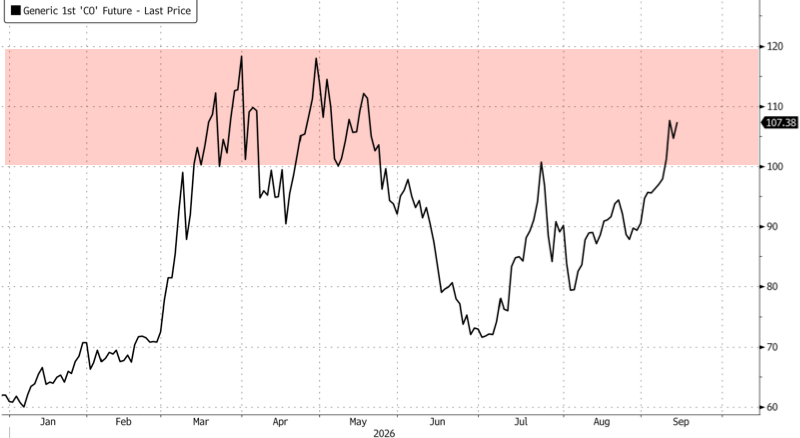
Oil prices dropped rapidly after Trump announced the pause, with Brent crude trading just below $95 per barrel. Qatar’s Cabinet welcomed the US-Iran ceasefire brokered by Pakistan, stating it emphasizes “the necessity of immediately halting all hostile actions and practices that undermine regional stability, respect for state sovereignty, and the assurance of security for maritime passages, freedom of navigation, and international trade.”

Iran meanwhile is demanding stiff fees for ships passing through Hormuz during the ceasefire, and says it holds the final authority on which vessels get to pass. So now, in essense… stability in global energy flows depends on accommodating Iran AND it will likely get sanctions relief, per the deal on the table.

Iranian state media has featured celebratory scenes in the streets:

Ceasefire Hailed Internationally

Pakistan’s Prime Minister Shehbaz Sharif said on X that he held a “warm, substantive” conversation with Iran’s President Masoud Pezeshkian. “I conveyed my deep appreciation for the wisdom and sagacity of the Iranian leadership in accepting Pakistan’s offer to host peace talks in Islamabad later this week to work jointly for the return of peace to the region,” he said.

“President Pezeshkian reaffirmed Iran’s participation in the upcoming negotiations and expressed appreciation for Pakistan’s efforts, while conveying his best wishes for the people of Pakistan,” he added.

Lebanon’s President Joseph Aoun welcomed the ceasefire, while Israel has instead asserted that Lebanon remains outside the agreement and continued strikes on the country.

To quote armchair war hawk Michael Weiss, A month ago Trump demanded Iran’s “unconditional surrender.” Now the U.S. claims these are a feasible starting point for negotiations

Pope Leo XIV praised the agreement as a “sign of real hope,” stating, “I welcome with satisfaction, and as a sign of real hope, the announcement of an immediate two-week truce. Only by returning to negotiations can we reach the end of the war,” during his weekly audience at the Vatican.

The International Atomic Energy Agency welcomed the ceasefire and signaled readiness to support a diplomatic resolution. Director General Rafael Grossi stated, “IAEA DG Grossi welcomes … a return to diplomacy aimed at negotiating a settlement on key issues including Iran’s nuclear program.” It added: “The IAEA stands ready to support these efforts through its indispensable safeguards and verification role.”

Attacks Continue? Hormuz Status

However, attacks on Bahrain, the United Arab Emirates, and Kuwait continued on Wednesday, hours after the ceasefire announcement. Also, there’s as yet been no significant change in navigation traffic in the Strait of Hormuz today, per Bloomberg satellite data.

A global shipping industry group representing 130 companies and around 1,500 vessels stated that conditions in the Gulf remain unstable. CEO Knut Arild Hareide said, “We note the signals of a ceasefire, but the situation in the Strait of Hormuz remains unresolved and unpredictable.”

“It is not yet clear under what conditions safe transit can be carried out. Shipowners are assessing the situation and will not resume transits until there is real security for safe passage,” Hareide added.

Will it hold?

Earlier, Denmark’s Maersk shipping company stated that the ceasefire announcement does not provide sufficient certainty to resume normal operations in the region.

More Geopolitical Headlines

via Newsquawk…

  • US President Donald Trump announced a two-week suspension of bombing in Iran, conditional on Iran reopening the Strait of Hormuz, describing it as a double-sided ceasefire and stating US military objectives have been met while a long-term peace agreement is close to completion.
  • Trump said the US received a 10-point proposal from Iran that serves as a workable basis for negotiations, with most major points of contention already agreed and the two-week period intended to finalize the deal.
  • Trump posted: “A big day for World Peace! Iran wants it to happen, they’ve had enough! Likewise, so has everyone else! The United States of America will be helping with the traffic buildup in the Strait of Hormuz. There will be lots of positive action! Big money will be made. Iran can start the reconstruction process…this could be the Golden Age of the Middle East!!!”
  • Trump told AFP the Iran deal is complete and a comprehensive US victory, stating Iran’s uranium “will be perfectly taken care of” and that China played a role in bringing Iran to negotiations.
  • Iranian outlet SNN reported possible ceasefire violations, citing explosions on Siri and Lavan islands, while Iran’s National Security Council warned that if attacks continue in southern Lebanon, it will strike Tel Aviv within hours.
  • Iran confirmed negotiations with the US will take place in Islamabad starting April 10, aiming to formalize battlefield gains politically within 15 days, with talks extendable by mutual agreement.
  • Iranian officials stated talks with the US do not signify the end of the war, while confirming safe passage through the Strait of Hormuz for two weeks and that operations will halt if attacks on Iran stop.
  • Pakistan’s leadership invited US and Iranian delegations to Islamabad, with reports indicating US envoys and Vice President JD Vance are expected to attend.
  • A US official said the ceasefire will begin this evening, though delays are expected in relaying orders to IRGC field units.
  • Iran and Oman are expected to charge transit fees in the Strait of Hormuz under the ceasefire arrangement.
  • Israeli outlet Ynet reported security sources stating the ceasefire will include Lebanon.
  • Iran’s Supreme Leader instructed negotiators to pursue a truce, according to Axios.
  • Iran’s UN ambassador stated Iran “categorically rejects any temporary ceasefire” and said any resolution must ensure a definitive end to aggression and establish lasting peace.
  • The US will demand removal of nuclear materials from Iran, according to Israeli officials cited by Al Hadath via Haaretz.
  • A White House official stated the ceasefire takes effect once the Strait of Hormuz is reopened.
  • A senior White House official said Israel is included in the two-week ceasefire and has agreed to suspend bombing during negotiations.
  • Oman’s transport minister stated no transit fees can be imposed in the Strait of Hormuz under existing agreements.
  • Iraq’s Islamic Resistance announced a two-week suspension of operations.
  • Hezbollah is preparing to announce its formal position on the ceasefire and respond to claims that Lebanon is excluded.
  • A new wave of Iranian missiles was launched toward Israel.
  • An Israeli military official stated Israel continues to conduct strikes inside Iran.
  • Explosions were reported on Iran’s Sirri Island, with the source unidentified.
  • Explosions were also reported at the Lavan oil refinery in Iran, with the cause unknown.
  • Bahrain issued a missile alert hours after the US-Iran ceasefire announcement.
  • Reports indicated an explosion in Kermanshah in northwestern Iran.
  • The IDF confirmed detection of missiles launched from Iran toward Israel.
  • Iran’s Supreme Security Council stated forces remain ready to respond immediately and with full force to any escalation.
  • Maritime data showed traffic through the Strait of Hormuz remains light and limited.

* * *

Tyler Durden
Wed, 04/08/2026 – 11:05

Delta Air Lines Erases All ‘Epic Fury’ Losses As In-House Refinery Cushions Fuel Shock

Delta Air Lines Erases All ‘Epic Fury’ Losses As In-House Refinery Cushions Fuel Shock

Delta Air Lines soared in premarket trading on a combination of the U.S.-Iran ceasefire and stronger-than-expected first-quarter results, with the carrier’s in-house refinery helping to lower the average jet fuel price for its fleet in the first quarter, making it appear to be one of the better-positioned carriers than most peers to withstand an energy shock.

Even without a ceasefire in the Middle East, Delta’s first-quarter results only exemplified its strategic advantage over peers: its Trainer refinery in Pennsylvania, operated through its wholly owned subsidiary Monroe Energy, reduced the airline’s fuel price by more than 2% during the quarter and is expected to provide a $300 million benefit in the second quarter.

Delta is best positioned to navigate this environment, with a leading brand, strong financial foundation, and the benefit of our refinery,” Delta CEO Ed Bastian wrote in the earnings release.

Bastian continued, “We delivered earnings that were more than 40% higher than last year, even with a significant increase in fuel costs and operational disruptions across the industry.”

The airline expects second-quarter jet fuel expenses to top $2 billion at the forward curve.

Here’s a snapshot of first-quarter earnings (courtesy of Bloomberg):

Adjusted EPS 64c vs. 45c y/y, estimate 57c (Bloomberg Consensus)

  • Loss per share 44c vs. EPS 37c y/y

Adjusted revenue $14.20 billion, +9.4% y/y, estimate $14.08 billion

  • Passenger revenue $12.30 billion, +7.2% y/y, estimate $12.28 billion

  • Cargo revenue $226 million, +8.7% y/y, estimate $213.7 million

Passenger load factor 81.6% vs. 81.4% y/y, estimate 82.4%

Available seat miles 69.16 billion, +1.1% y/y, estimate 69.15 billion

Revenue passenger miles 56.47 billion, +1.4% y/y, estimate 56.96 billion

Adjusted net income $423 million, +45% y/y, estimate $372 million

Yield per passenger mile 21.78c, +5.6% y/y

“Demand remains strong, and we are taking actions to protect our margins and cash flow. This includes meaningfully reducing capacity growth, with a downward bias until the fuel environment improves, and moving quickly to recapture higher fuel costs. Delta is best positioned to navigate this environment,” the CEO said.

Earnings outlook for the second quarter (courtesy of Bloomberg):

  • Sees adjusted EPS of $1 to $1.50, estimate $1.45

  • Sees adjusted total revenue up low teens y/y

  • Sees adjusted operating margin of 6% to 8%

Shares of Delta jumped nearly 13% in premarket trading. Delta shares tumbled into a bear market last month during the U.S.-Iran conflict but have since rebounded from mid-March.

Related: 

Delta is the only U.S. airline that operates a major refinery, and it appears Wall Street is rewarding the carrier for it.

Tyler Durden
Wed, 04/08/2026 – 10:40

Nobody Knows What Will Happen Next

Nobody Knows What Will Happen Next

By Michael Every and Bas van Geffen of Rabobank

Ceasefire

Yesterday, the US and Iran threatened to, respectively, “destroy Iranian civilisation” with “new tools” and other countries in the Gulf with old ones. Ahead of the 8PM deadline that Trump had set for “Bridge and Power Plant Day,” US and Israeli forces reportedly already destroyed some bridges and other infrastructure.

Washington and Tehran struck a last-minute, two-week ceasefire – provided that the Strait of Hormuz is fully reopened. Notably, this was after China leaned on Iran to listen to interlocutor Pakistan, according to the New York Times. That key intervention underlines the global nature of this war beyond energy and related exports, and how it is resolved.

Markets are trading this as a TACO Tuesday. Brent futures are down 14% at the time of writing, Asian equity markets rallied, and futures pricing suggests the same will happen when European and American markets open. And bets of near-term rate hikes evaporated as the truce ends days before major central banks next reconvene to recalibrate their policy stance. 10-year German Bund yields fell 18bp (!)on the open.

Yet, this short-term truce is not a peace deal, and is anyone willing to sail through the Strait as long as the conflict isn’t fully resolved? So, today’s reprieve will be followed by at least two weeks of extended uncertainty – and possibly longer, if both sides agree to extend the negotiations.

Moreover, there is a world of difference between Iran having blinked under US military threats, which would be a huge win for Trump and the US, and the US having blinked in the face of Iranian resistance and oil prices, which would be a massive 1956-style geostrategic defeat for Trump.

In the immediate aftermath of the ceasefire, both headlines and missiles kept flying. Iran hit Israel and a GCC energy site. The US said “an” Iranian 10-point plan is a “workable basis on which to negotiate” (might we have an intractable public version and a more pliable private one to save face?), while Iran’s foreign minister is “considering” the directly opposed 15-point US plan.

And, returning to shipping, Iran claimed it will still take tolls from Hormuz with Oman, adding that only 10-15 ships per day can pass, a tiny fraction of normal flows. Is that the “full reopening” of Hormuz that the US set as a precondition?

Subsequently, an unsubstantiated report claimed that Iran has agreed to most US conditions, including: a permanent commitment not to possess nuclear weapons; handing over enriched uranium to the IAEA; allowing the IAEA to monitor all nuclear infrastructure; a complete halt to uranium enrichment within Iran; reducing the range and number of missiles; immediately ceasing support for militias and proxies in the region; ceasing attacks on regional Gulf energy facilities; reopening the Strait of Hormuz immediately and unconditionally; the lifting of all sanctions imposed on Iran; eliminating the mechanism for reimposing UN sanctions; and US support for the Bushehr nuclear power plant, provided it is under direct American supervision.

Iran’s Supreme National Security Council has stated, “The current negotiations are a national negotiation and a continuation of the field, and it is necessary for all people, elites, and political groups to trust and support this process, which is under the supervision of the Leader of the Revolution and the highest levels of the system, and to strictly avoid any divisive comments.”

Trump claimed “total and complete victory”, and posted that it’s a “big day for World Peace”, the US will be “helping with the traffic buildup in the Strait of Hormuz,” while Iran can “start reconstruction,” and the US will be “loading up with supplies of all kinds, and “just “hangin’ around” in order to make sure everything goes well,” where “This could be the Golden Age of the Middle East.”

So, the fog of war is still in place even if the fighting might have stopped for now. Nobody knows what will happen next, but the possible spectrum is clear:

  • Best case: the war is over – though the related Israel-Hezbollah one in Lebanon is apparently not included, according to PM Netanyahu– and other related global tensions could even ease in tandem. (Because the US wins as Iran and others blink.)

  • Good case: the war is over. (Because Iran blinked.)

  • Good’ case: the war is over. (Because Trump blinked. The knock-on effects aren’t something markets want to consider now, but they aren’t pretty for the dollar or GCC and western assets.)

  • OK case: the war is paused and Hormuz reopens briefly to give the world economy some breathing room. (Because Iran US blinked.)

  • Worst case: the ceasefire collapses and the war both continues and escalates to try to get us back to one side backing down – watch US military logistics closely.

In terms of our macro and market scenarios, the latest news leans towards our base case of fighting being over by mid-April with a slow Hormuz reopening – and on US terms. Obviously, if this pause instead leads to more fighting, we move towards our other, more damaging scenarios.

* * *

Tyler Durden
Wed, 04/08/2026 – 10:20

Homeward Bound: Artemis II Leaves Lunar Space, Reveals ‘Earthset’ Photos

Homeward Bound: Artemis II Leaves Lunar Space, Reveals ‘Earthset’ Photos

Authored by T.J. Muscaro via The Epoch Times,

The Artemis II astronauts are on their way home from the moon.

NASA’s Reid Wiseman, Victor Glover, and Christina Koch, and the Canadian Space Agency’s Jeremy Hansen left lunar space just before 1:30 p.m. ET on April 7.

After carrying humanity’s representatives to the farthest point in space ever ventured—where they witnessed cosmic wonders never before seen by mankind—the Orion spacecraft Integrity will return its crew to Earth’s gravity, targeting a splashdown in the Pacific.

But it was the moon that ultimately sent them home. Integrity swung around the farside of the moon, essentially using its gravitational pull to make the necessary U-turn to start the nearly four-day journey home.

The ship reached a peak altitude of 252,756 statute miles above the Earth just after 7 p.m. on April 6 as the moon blocked communications. It was around this point that the crew was at their closest point to the moon, a little more than 4,000 miles above the lunar surface.

Once the crew re-emerged from behind the moon and reacquired communication with mission control, their distance to Earth only became closer and closer. But they started home with confidence of a successful return very soon.

“We will explore. We will build ships. We will visit again,” Koch said.

“We will construct science outposts. We will drive rovers. We will do radio astronomy. We will found companies. We will bolster industry. We will inspire.

“But ultimately, we will always choose Earth. We will always choose each other.”

Artemis Ii is scheduled to splashdown in the Pacific Ocean off the coast of San Diego just after 8 p.m. ET on April 10.

Flight director Rick Henfling told reporters during a daily mission briefing at Johnson Space Center on April 7 that the mission’s recovery ship, the USS John P Murtha, has left port in anticipation for Integrity’s return.

Gigabytes of Data

Henfling was joined by NASA administrator Jared Isaacman, who said that as Artemis II continues its journey home, approximately 175 gigabytes of data collected during its seven-hour lunar flyby will be beamed down ahead of it.

Kelsey Young, the mission’s lunar science lead, said that NASA scientists will spend the next six months after splashdown studying all of the images and data and releasing two reports for the public. One report will focus on NASA’s operational structure during the flyby, analyzing how lunar science worked seamlessly with flight operations and the crew during the event. The second will be a preliminary science report that will demonstrate the results of each objective. Young emphasized that the science report will be structured in a way that is transparent and empowers the scientific community to help further expand understanding of the material themselves.

But some photos that made it back to Earth have already been released.

One of them is “Earthset.” Like Apollo 8’s historic “Earthrise” picture taken in December 1968, Artemis II’s striking image displays humanity’s home planet partially lit just above the lunar horizon. But Apollo 8 photographed the Earth after coming around the farside of the moon when the Earth appeared to rise in the lunar sky.

Earthset captured through the Orion spacecraft window at 6:41 p.m. ET on April 6, 2026, during the Artemis II crew’s flyby of the Moon. Courtesy of NASA

Artemis II took its picture of a crescent Earth just before it appeared to set below the horizon as Integrity flew around the farside of the moon.

The space agency has also shared pictures of the visible farside of the moon that include pictures of the entire Orientale Basin, parts of the lunar South Pole-Aitken Basin, and the two craters that the Artemis II crew hopes to officially name. They proposed that one crater be named Integrity, after their spaceship, and another be named Carroll in honor of Wiseman’s late wife, who passed away in 2020 of cancer.

As Wiseman, Glover, Koch, and Hansen watch the Earth get bigger and bigger in the window, they continue to perform mission objectives, including another manual test flight and course correction burn. They also had a ship-to-ship communication with NASA astronauts Jessica Meir, Jack Hathaway, and Chris Williams, and European Space Agency astronaut Sophie Adenot aboard the International Space Station.

It was the first ship-to-ship communication between astronauts in low Earth orbit and deep space. The eight colleagues shared laughs, messages of support, and what the moonshot was like for the three former space station crew members compared to their times in Earth orbit. They also recognized how so much of space station life was integrated into Artemis II, even down to the fact that the crews were eating the same food.

The ship-to-ship transmission ended with both crews wishing each other good luck and that they were all looking forward to being reunited with each other back on home soil.

Tyler Durden
Wed, 04/08/2026 – 09:25

First Two Ships Pass Through Strait Of Hormuz Since Ceasefire As Iran Demands Payment In Crypto

First Two Ships Pass Through Strait Of Hormuz Since Ceasefire As Iran Demands Payment In Crypto

Last night we reported that no less than 800 ships were still trapped in the immediate aftermath of the US-Iran ceasefire agreement, unsure what the fine print of the deal meant for transits. This morning we are down to ~798, after the first two cargo vessels have crossed the Strait of Hormuz since the ceasefire, according to ship tracking data.

The Liberia-flagged Daytona Beach, destined for the United Arab Emirates, crossed just before 8am UK time, while the Greek-owned NJ Earth followed about two hours later, with its destination undisclosed, the tracking platform Kpler showed.

The ships are the first large vessels to transit the critical waterway since the agreement of a two-week ceasefire, under which Iran has claimed it would maintain control of the strait. It was unclear if they paid any tolls to make the crossing. Around 175 million barrels of crude and refined products are currently loaded on to 187 tankers in the Gulf, according to Kpler data — which could now start to move, depending on what happens in the strait.

Regarding Hormuz transit, Iran said it will demand that shipping companies pay tolls in cryptocurrency for oil tankers passing through the Strait of Hormuz, as it seeks to retain control over passage through the key waterway during the two-week ceasefire, the FT reported.

Hamid Hosseini, a spokesperson for Iran’s Oil, Gas and Petrochemical Products Exporters’ Union, told the FT on Wednesday that Iran wanted to collect tolling fees from any tanker passing and to assess each ship.

“Iran needs to monitor what goes in and out of the strait to ensure these two weeks aren’t used for transferring weapons,” said Hosseini, whose industry association works closely with the state. “Everything can pass through, but the procedure will take time for each vessel, and Iran is not in a rush,” he added. 

Decisions on the conditions for passing the strait are taken by Iran’s Supreme National Security Council. Hosseini’s remarks suggest Iran will require any tankers to use the northerly route close to its coastline, raising questions over whether western or Gulf state-linked vessels will be willing to risk transit.

Hosseini said that each tanker must email authorities about its cargo, after which Iran will inform them of the toll to be paid in digital currencies. 

He said that the tariff is $1 per barrel of oil, adding that empty tankers can pass freely.

Once the email arrives and Iran completes its assessment, vessels are given a few seconds to pay in bitcoin, ensuring they can’t be traced or confiscated due to sanctions,” Hosseini added.

Speaking to CBS this morning, Trump said that there may be a joint US-Iran venture for Hormuz tolls. 

Tankers in the Gulf on Wednesday received a radio broadcast that warned they would be targeted with military strikes unless they first gained approval from Iranian authorities. 

“If any vessels try to transit without permission, [they] will be destroyed,” said the broadcast, which is in English, according to a recording shared with the FT.

The fate of transit through the strait is one of the thorniest issues facing negotiators as they try to turn a temporary ceasefire into a prolonged peace, with Iran’s desire to retain leverage over the key waterway clashing with fierce opposition from the US’s allies in the Gulf. 

A statement from Iran’s Supreme National Security Council listed 10 points that form the basis for negotiations with the US, including a new “protocol for secure passage” through the strait in co-ordination with Iran’s armed forces.

Western ship owners said on Wednesday they were taking a cautious approach while waiting for details on how and whether the strait might reopen, with no vessels currently braving the transit apart from two linked to Iran.

Maersk, the world’s second biggest shipping line, said it is “working with urgency” to clarify the terms.

“The ceasefire may create transit opportunities, but it does not yet provide full maritime certainty,” the company said, adding that it would continue to take a “cautious approach” with cargoes and was not yet making changes to specific services.

Allowing Iran to continue to control the crucial waterway is likely to be highly unpalatable to Gulf states including Saudi Arabia, Qatar and the UAE. The Omani Minister of Transport said that Oman’s position is clear regarding the Strait of Hormuz: Oman has signed all international maritime transport agreements. The Strait of Hormuz is a natural passage, created without human intervention, and therefore fees cannot be imposed on it according to the international agreements signed by the Sultanate.

It also raises questions for Opec+, the oil producers’ group, with analysts warning that handing Iran control of Hormuz could fundamentally alter the balance of power within the organisation by giving Tehran a potential veto over rival members’ exports.

Ali Shihabi, a commentator close to the Saudi royal court, said the kingdom would demand “unimpeded” access to global markets.

 “Allowing Iran any form of control over the strait would be a red line,” Shihabi said. “The priority has to be unimpeded access through the strait.”

On Wednesday Saudi Arabia’s key East-West pipeline, which the kingdom has been using to reroute oil exports to the Red Sea, was struck by a drone according to people familiar with the matter, despite the ceasefire.

Several traders said they thought the situation in the coming days would resemble the system that has developed over the past fortnight, in which a handful of ships that have been approved by Iran are allowed to pass on a specific route. During the conflict this was largely limited to vessels that had generally done business with Iran and that were not connected to the US, Israel or Gulf states that had provided staging for attacks.

Martin Kelly, head of advisory at maritime intelligence group EOS Risk, said that there was “no way” that the backlog of ships waiting to get out could be cleared in two weeks.

Around 10 to 15 ships might be able to transit the strait per day as the process was “quite time-consuming”, he said, down from 135 ships before the war.

Tyler Durden
Wed, 04/08/2026 – 09:09

Saudi Arabia’s Oil Pipeline To Red Sea Hit By Drone Attack Just As Hegseth Declares ‘Overwhelming Victory’ Against Iran

Saudi Arabia’s Oil Pipeline To Red Sea Hit By Drone Attack Just As Hegseth Declares ‘Overwhelming Victory’ Against Iran

Summary: 

  • The Hegseth/Caine presser as expected declared ‘victory’ in Iran while Gen. Caine emphasized the ceasefire is a “pause” but US forces remain “ready to resume combat. Hegseth says “military will be hanging around in Iran, won’t go anywhere, and will make sure Iran complies.

  • Caine hails that US has destroyed Iran’s defense-industrial base, including over 80% of missile facilities gone, and its navy lies at the “bottom of the Arabian Sea”. It’s clear that after six weeks the Pentagon is trying to put a bow on Operation Epic Fury.

  • Iran meanwhile demands stiff fees for ships passing through Hormuz during the ceasefire, and says it holds the final authority on which vessels get to pass. Tehran leaders have asserted ‘victory’ for Iran, amid positive international reaction to the ceasefire.

  • The first two ships since the ceasefire was announced have crossed the Strait of Hormuz after Iran said it will demand that shipping companies pay tolls in cryptocurrency for oil tankers passing through the Strait, as it seeks to retain control over passage

  • Saudi Arabia’s vital East-West oil pipeline carrying crude from the Gulf to the Red Sea for export has been attacked at a pumping station, oil rises on the news. There’s been sporadic attacks on other Gulf states too.

*  *  *

IRGC Parliament Official: ‘Maritime Traffic in the Strait of Hormuz Must be Halted’

Reuters has picked up on the words of IRGC officer and member of Iranian parliament’s “Expediency Discernment Council” Mohsen Rezaee: “In response to the brutal aggression against Lebanon, maritime traffic in the Strait of Hormuz must be halted immediately and a strong, decisive strike must be delivered against the entity.”

This perhaps represents a hardline faction approach, given clearly Tehran has held significant leverage and maintains de facto control of the Hormuz Strait. However, it does not yet appear the official government position, given also the first two vessels have passed through the waterway since the ceasefire was announced.

As we reported earlier Wednesday, The Liberia-flagged Daytona Beach, destined for the United Arab Emirates, crossed just before 8am UK time, while the Greek-owned NJ Earth followed about two hours later, with its destination undisclosed, the tracking platform Kpler showed.

Saudi Aramco Export Pipeline To Red Sea Struck

A huge, and not very ‘ceasefirey’ development in Saudi Arabia, per the FT (just as Hegseth was speaking): “A pumping station was hit at 1 p.m. local time, the people told FT. The attack was carried out by a drone and damage was being assessed, one of the people told FT Saudi Aramco, which owns and operates the pipeline.” FT continues, “The people said a pumping station, one of several along the 1,200km pipeline that has become an economic lifeline for the kingdom since the near closure of shipping through the Strait of Hormuz, was hit at about 1pm local time on Wednesday.”

One Gulf based representative and analyst complains, “For a ceasefire, the fire does not seem to be ceasing. The UAE and Kuwait are under attack, and Iran says it is under attack too. Beyond the ceasefire itself, the bigger question is that the plan still looks unclear when it comes to what follows…”

The development pushed oil slightly up…

Pentagon Tries to put a Bow on Operation Epic Fury: ‘Overwhelming Victory’

Hegseth in his Pentagon press briefing called the ceasefire an “overwhelming victory” for the United States and stated the military “stands ready” to ensure Iran complies with the agreement. He said US forces will still be “hanging around” the region, and further that Iran’s nuclear “dust” is being monitored, buried under the rubble, and that eventually the US will either take the enriched uranium or else it will be handed over. “Iran begged for ceasefire,” Hegseth declared.

“We stand ready in the background to ensure Iran upholds every reasonable term,” Hegseth said. Also Joint Chiefs chairman Gen. Caine stated that all US objectives in Iran have been achieved.

He hailed that US has destroyed Iran’s defense-industrial base, including over 80% of missile facilities gone, and its navy lies at the “bottom of the Arabian Sea”. It’s clear that after six weeks the Pentagon is trying to put a bow on Operation Epic Fury.

During the Q&A, there was a question – largely dodged by Hegseth – centered on wither the US has achieved “strategic” victory vs. merely tactical victory. That ultimately is the question.

Also, is there really ceasefire on the ground? But this is merely day one:

But Iran also sees this as Victory

The United States and Iran have announced a two-week suspension of all attacks, and Tehran reportedly agreed to allow safe transit of vessels through the Strait of Hormuz. It all started with President Trump seizing on the last-minute olive branch plan offered by Pakistan’s prime minister, which urged a two week extension of the US deadline before massive obliteration bombings began, and in return Iran would agree to reopen the Strait of Hormuz.

Iran has essentially declared victory and stated that upcoming talks in Islamabad, Pakistan, on Friday do not guarantee an end to the war. Israeli Prime Minister Benjamin Netanyahu has given supportive lip service to the US decision but stated that Lebanon is excluded from the two-week ceasefire.

Iran warns of decisive response to any ‘miscalculations’ by US. The IRGC said in a statement: “While we remain open to talks, we trust no promises from our adversaries. Our forces are poised, prepared by decades of experience in confrontations with American and Zionist forces, ready to respond decisively to any miscalculations by the enemy.”

Latest from Trump on Truth Social:

Oil prices dropped rapidly after Trump announced the pause, with Brent crude trading just below $95 per barrel. Qatar’s Cabinet welcomed the US-Iran ceasefire brokered by Pakistan, stating it emphasizes “the necessity of immediately halting all hostile actions and practices that undermine regional stability, respect for state sovereignty, and the assurance of security for maritime passages, freedom of navigation, and international trade.”

Iran meanwhile is demanding stiff fees for ships passing through Hormuz during the ceasefire, and says it holds the final authority on which vessels get to pass. So now, in essense… stability in global energy flows depends on accommodating Iran AND it will likely get sanctions relief, per the deal on the table.

Iranian state media has featured celebratory scenes in the streets:

Ceasefire Hailed Internationally

Pakistan’s Prime Minister Shehbaz Sharif said on X that he held a “warm, substantive” conversation with Iran’s President Masoud Pezeshkian. “I conveyed my deep appreciation for the wisdom and sagacity of the Iranian leadership in accepting Pakistan’s offer to host peace talks in Islamabad later this week to work jointly for the return of peace to the region,” he said.

“President Pezeshkian reaffirmed Iran’s participation in the upcoming negotiations and expressed appreciation for Pakistan’s efforts, while conveying his best wishes for the people of Pakistan,” he added.

Lebanon’s President Joseph Aoun welcomed the ceasefire, while Israel has instead asserted that Lebanon remains outside the agreement and continued strikes on the country.

To quote armchair war hawk Michael Weiss, A month ago Trump demanded Iran’s “unconditional surrender.” Now the U.S. claims these are a feasible starting point for negotiations

Pope Leo XIV praised the agreement as a “sign of real hope,” stating, “I welcome with satisfaction, and as a sign of real hope, the announcement of an immediate two-week truce. Only by returning to negotiations can we reach the end of the war,” during his weekly audience at the Vatican.

The International Atomic Energy Agency welcomed the ceasefire and signaled readiness to support a diplomatic resolution. Director General Rafael Grossi stated, “IAEA DG Grossi welcomes … a return to diplomacy aimed at negotiating a settlement on key issues including Iran’s nuclear program.” It added: “The IAEA stands ready to support these efforts through its indispensable safeguards and verification role.”

Attacks Continue? Hormuz Status

However, attacks on Bahrain, the United Arab Emirates, and Kuwait continued on Wednesday, hours after the ceasefire announcement. Also, there’s as yet been no significant change in navigation traffic in the Strait of Hormuz today, per Bloomberg satellite data.

A global shipping industry group representing 130 companies and around 1,500 vessels stated that conditions in the Gulf remain unstable. CEO Knut Arild Hareide said, “We note the signals of a ceasefire, but the situation in the Strait of Hormuz remains unresolved and unpredictable.”

“It is not yet clear under what conditions safe transit can be carried out. Shipowners are assessing the situation and will not resume transits until there is real security for safe passage,” Hareide added.

Will it hold?

Earlier, Denmark’s Maersk shipping company stated that the ceasefire announcement does not provide sufficient certainty to resume normal operations in the region.

More Geopolitical Headlines

via Newsquawk…

  • US President Donald Trump announced a two-week suspension of bombing in Iran, conditional on Iran reopening the Strait of Hormuz, describing it as a double-sided ceasefire and stating US military objectives have been met while a long-term peace agreement is close to completion.
  • Trump said the US received a 10-point proposal from Iran that serves as a workable basis for negotiations, with most major points of contention already agreed and the two-week period intended to finalize the deal.
  • Trump posted: “A big day for World Peace! Iran wants it to happen, they’ve had enough! Likewise, so has everyone else! The United States of America will be helping with the traffic buildup in the Strait of Hormuz. There will be lots of positive action! Big money will be made. Iran can start the reconstruction process…this could be the Golden Age of the Middle East!!!”
  • Trump told AFP the Iran deal is complete and a comprehensive US victory, stating Iran’s uranium “will be perfectly taken care of” and that China played a role in bringing Iran to negotiations.
  • Iranian outlet SNN reported possible ceasefire violations, citing explosions on Siri and Lavan islands, while Iran’s National Security Council warned that if attacks continue in southern Lebanon, it will strike Tel Aviv within hours.
  • Iran confirmed negotiations with the US will take place in Islamabad starting April 10, aiming to formalize battlefield gains politically within 15 days, with talks extendable by mutual agreement.
  • Iranian officials stated talks with the US do not signify the end of the war, while confirming safe passage through the Strait of Hormuz for two weeks and that operations will halt if attacks on Iran stop.
  • Pakistan’s leadership invited US and Iranian delegations to Islamabad, with reports indicating US envoys and Vice President JD Vance are expected to attend.
  • A US official said the ceasefire will begin this evening, though delays are expected in relaying orders to IRGC field units.
  • Iran and Oman are expected to charge transit fees in the Strait of Hormuz under the ceasefire arrangement.
  • Israeli outlet Ynet reported security sources stating the ceasefire will include Lebanon.
  • Iran’s Supreme Leader instructed negotiators to pursue a truce, according to Axios.
  • Iran’s UN ambassador stated Iran “categorically rejects any temporary ceasefire” and said any resolution must ensure a definitive end to aggression and establish lasting peace.
  • The US will demand removal of nuclear materials from Iran, according to Israeli officials cited by Al Hadath via Haaretz.
  • A White House official stated the ceasefire takes effect once the Strait of Hormuz is reopened.
  • A senior White House official said Israel is included in the two-week ceasefire and has agreed to suspend bombing during negotiations.
  • Oman’s transport minister stated no transit fees can be imposed in the Strait of Hormuz under existing agreements.
  • Iraq’s Islamic Resistance announced a two-week suspension of operations.
  • Hezbollah is preparing to announce its formal position on the ceasefire and respond to claims that Lebanon is excluded.
  • A new wave of Iranian missiles was launched toward Israel.
  • An Israeli military official stated Israel continues to conduct strikes inside Iran.
  • Explosions were reported on Iran’s Sirri Island, with the source unidentified.
  • Explosions were also reported at the Lavan oil refinery in Iran, with the cause unknown.
  • Bahrain issued a missile alert hours after the US-Iran ceasefire announcement.
  • Reports indicated an explosion in Kermanshah in northwestern Iran.
  • The IDF confirmed detection of missiles launched from Iran toward Israel.
  • Iran’s Supreme Security Council stated forces remain ready to respond immediately and with full force to any escalation.
  • Maritime data showed traffic through the Strait of Hormuz remains light and limited.

Tyler Durden
Wed, 04/08/2026 – 09:00

Airline Stocks Soar On Iran Ceasefire As IATA Sees “Positive” Tailwinds, But Warns Jet Fuel Crisis Will Persist

Airline Stocks Soar On Iran Ceasefire As IATA Sees “Positive” Tailwinds, But Warns Jet Fuel Crisis Will Persist

Airline stocks are flying high in premarket trading in New York after the overnight ceasefire between the Trump administration and Tehran. The truce is a positive for the aviation industry, which has been locked in turbulence for six weeks, as surging jet fuel prices have crushed the margins of major carriers, forcing ticket and baggage price hikes and triggering travel chaos across the Gulf region.

“Even two weeks is a positive because we will see some flow of oil return,” Willie Walsh, director general of the International Air Transport Association, told Bloomberg Television in an interview.

Walsh pointed out that even with a ceasefire underway, jet fuel prices “will remain elevated for some time.”

“If crude has come down 16%, you like to think jet will come down by a similar figure, but it’s still going to be a high price. That will mean higher ticket prices. It is inevitable,” he warned.

Walsh also cautioned that jet fuel supply shortage risks remain elevated, with Asia seen as the most exposed region, followed by Africa and Europe. JPMorgan outlined “demand destruction” and how the energy shock spreads in a note here.

Even though WTI and Brent crude prices collapsed overnight, Walsh said normalization across the airline industry and energy markets will take time.

Delta Air Lines warned earlier that it expects to incur more than $2 billion in fuel costs through June, but noted that it has yet to change its full-year profit forecast because the outlook remains too murky.

Last week…

Malaysia Airlines’ Nasaruddin Bakar warned that “even if the war stops, it’s going to take many, many more months for the price to stabilize.”

Thai Airways CEO Chai Eamsiri pointed out, “This time is about the infrastructure that was destroyed. It will take some time to bring back all the supply, the facilities, the refineries, and the infrastructure.”

“The Iran conflict has flipped the airline industry on its head, as fuel costs have more than doubled at a time when demand has improved,” Melius analyst Conor Cunningham told clients.

Relief in airline stocks was evident in premarket trading in New York, with United Airlines up 11.5%, Delta Air Lines up 11%, and Southwest Airlines up 10%.

In mid-March, amid all the panic, UBS analyst Atul Maheswari asked: “Are we approaching a bottom for these airline stocks?” It appears so (well so far).

Tyler Durden
Wed, 04/08/2026 – 08:45

US Futures, Global Stocks And Bonds Soar On Ceasefire Relief, Oil Plummets

US Futures, Global Stocks And Bonds Soar On Ceasefire Relief, Oil Plummets

US futures, global stocks and bonds are sharply higher while oil prices plunge the most in years as a wave of optimism swept through global markets after the US and Iran agreed to a two-week ceasefire in exchange for Tehran reopening the Strait of Hormuz: JPMorgan’s Market Intel desk, which moves from Neutral to Tactically Bullish this morning, says to look for a re-risking in the very near-term albeit it with higher energy prices. As of 8:00am ET, S&P futures are 2.8% higher while emerging-market stocks rallied the most since 2022; Nasdaq gains 3.5% with Mag7 and Semis seeing significant bids as part of an ‘Everything Rally’ ex-Energy. Yet while the overwhelming mood in markets is relief, the same core challenges remain to find a resolution amenable to both countries and Goldman’s Delta-One head says he is selling the rally. Brent plunged 16% to around $93 a barrel. Bonds surged, with 10Y tsy yields sliding 8bps to 4.23% while benchmark UK yields tumbled by 22 basis points. The dollar weakened to a one-month low. Gold and silver gain. The macro data focus today is on the Fed Minutes ahead of PCE and CPI releases later this week.

In premarket trading, Mag 7 stocks are all sharply higher: Meta +5%, Tesla +4.5%, Alphabet +4%, Nvidia +3.5%, Amazon +4%, Microsoft +3.3%, Apple +2%

  • Gainers also include precious-metal miners and financial firms, while chemical and fertilizer names fall.
  • Energy stocks fall due to the ceasefire: Exxon (XOM) -5.3%, Chevron (CVX) -4.3% and Venture Global (VG) -11%
  • Airlines rally: United (UAL) +11%, Delta (DAL) +10%
  • Aehr Test Systems (AEHR) climbs 8% after the semiconductor manufacturing company reported third-quarter results. The earnings prompted Craig-Hallum to raise its rating to buy, citing “improving business momentum and significant growth opportunities over multiple business segments.”
  • Levi Strauss (LEVI) gains 9% after the apparel company boosted its adjusted earnings-per-share and revenue forecasts for the full year citing strong demand as the denim brand steers shoppers to its own stores and website.

In corporate news, Super Micro Computer launched an internal probe to investigate circumstances surrounding server sales to China. Elon Musk is seeking to have Sam Altman removed from his roles at OpenAI as part of his legal challenge to the company’s conversion to a for-profit company.

The ceasefire announcement came not long before a deadline Trump had set that threatened a major escalation of the war. “We have now stepped back off the edge of the precipice,” said Aviva’s Richard Saldanha. The rapid twists and turns of the war have led to a record intensity of stock trading, according to a measure of daily SPY ETF turnover.

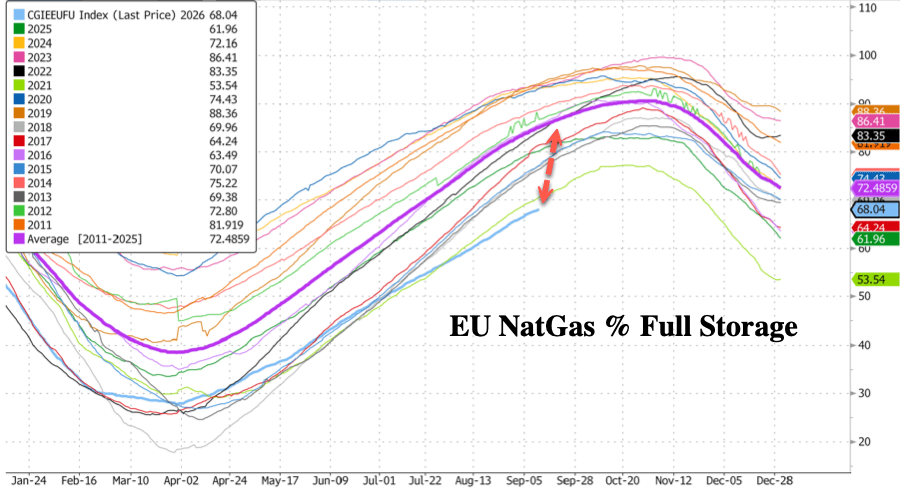
Looking at overnight markets, the most dramatic moves were in oil markets. European natural gas futures posted their biggest decline in more than two years, shedding as much as 20%. Prices of refined fuels such as diesel and jet fuel — which had been the biggest threats to global inflation — also tumbled.

As part of the two-week truce, Iran said it will allow ships to sail through the Strait of Hormuz, easing the chokehold on energy supplies that have threatened to cripple the global economy and accelerate inflation. A potential snag comes from the FT which reports that Iran demands fees for ships passing through the strait and will ask payment for tolls in crypto payment. While many investors cautioned that there is still a wide gap in the negotiation demands of Iran and the US, the widespread view was that stocks have fallen so sharply in recent weeks that any de-escalation path would be enough to trigger a rebound. 

“This is also showing promising signs that we’ve dodged the worst-case scenario,” said Matthew Haupt, a fund manager at Wilson Asset Management in Sydney. “It’s a good result considering the alternatives, as it shows a willingness to get something done.”

The latest news has left the Trump Reversal Index — a gauge created by Bloomberg strategist Simon White that combines various macro indicators — back to not much higher than where it was before the war started.  Light positioning is also fueling Wednesday’s relief rally. Volatility-control funds’ allocations to US equities had recently fallen to 56%, the lowest since July, according to Barclays. 

What comes next will depend on five questions, according to Jennifer Welch, chief geoeconomics analyst at Bloomberg Economics. These include whether Iran fully reopens Hormuz and whether Israel sticks to the ceasefire. Hormuz will “never go back to the way it was before,” said Vital Knowledge’s Adam Crisafulli. “Iran’s ability to shut the waterway will embed a risk premium in the price of all commodities flowing through it for the foreseeable future.” More than 800 ships are currently trapped in the Persian Gulf.

In politics, US regulators unveiled a plan to overhaul rules intended to prevent money laundering. US Trade Representative Jamieson Greer promoted the creation of a US-China board of trade, while downplaying the possibility of a similar group focused on bilateral investment.

Traders are now back to seeing a strong chance that the Federal Reserve will cut interest rates this year. Swaps are signaling a 60% likelihood of a rate cut by the year-end, compared with almost no chance seen at the start of this week. Before the war started, they had priced in more than two reductions. 

Some of the world’s largest investment firms are betting the market turbulence is past its peak and are buying bonds and artificial-intelligence stocks, while selling the dollar. Kellie Wood at Schroders Plc snapped up short-dated bonds including Treasuries on Wednesday morning. Jupiter Asset Management Ltd. is considering doing the same alongside plans to sell the greenback. Allspring Global Investments is buying tech and defense stocks that are seen as insulated from energy shocks.

European stocks are soaring: the Estoxx 50 up more than 5% and the Stoxx 600 is up 4% alongside a 14% decline in Brent crude as  markets cheer news of the US and Iran agreeing to a two-week ceasefire, even if the truce is a “fragile” one. European equity sectors are mostly higher with outperformance in travel, IT and consumer discretionary. Airline stocks, which have been pummeled by concerns of skyrocketing energy prices, lead gains in Europe. EasyJet Plc and Deutsche Lufthansa AG both jumped more than 10%. Energy stocks post material losses.Here are the biggest movers Wednesday:

  • European oil stocks plunge on an otherwise broadly risk-on day, with airlines and technology shares particularly strong after the US and Iran agreed to a two-week ceasefire, sending the crude price tumbling and other asset classes soaring. Luxury-goods stocks, miners and chemicals stocks also rise strongly
  • Close Brothers shares surge as much as 23%, the most since August, as the lender said the estimated cost of the FCA’s motor finance redress proposal is broadly similar to its existing provision
  • Gamma Communications shares soar as much as 15%, their biggest intraday gain on record, after the telecom services company said it’s in preliminary talks with a number of potential bidders
  • Redcare Pharmacy shares rise as much as 16% after the German firm’s preliminary first-quarter figures reassured analysts. Shares in Swiss peer DocMorris gain as much as 9.9%
  • Polish coal miners Bogdanka and JSW slump after the US and Iran agreed to a two-week ceasefire. The move is expected to ease the energy shock, denting bets on a broader return to coal-fired power in Europe
  • Shares in Norway’s Yara fall as much as 13%, while Germany’s K+S drops as much as 13%, after the US and Iran agreed to a two-week ceasefire in exchange for Tehran reopening the Strait of Hormuz

Stocks in Dubai — a key target of Iranian attacks during the conflict — jumped 8.5%, the most since Dec. 2014. Pakistan equities were also among the top gainers, after the country emerged as a key mediator in the ceasefire.

Still, there were continued reports of hostilities, underscoring the fragility of the deal. The UAE said it responded to a missile threat as of early afternoon local time, while Kuwait’s army cited “intense” attacks from Iran throughout the morning. “Markets have been moving very quickly, setting us up for a relief rally,” said Neil Birrell, chief investment officer at Premier Miton Investors. “What will happen in the next few weeks — who knows? It’s hard to believe that this is a long-term resolution.”  

Asian stocks rose for a fourth straight day to a one-month high as oil prices tumbled after a two-week US-Iran ceasefire, easing fears of supply disruptions and inflation. The MSCI Asia Pacific Index gained 4.9%, led by heavyweight chipmakers including Taiwan Semiconductor Manufacturing Co. and Samsung Electronics Co. South Korea’s Kospi surged nearly 7%, leading gains in the region, while benchmarks in Japan and Taiwan advanced more than 3% each. Shares also advanced more than 3% in mainland China, Hong Kong and India. The Reserve Bank of India held key interest rates on Wednesday, striking a cautious tone as it monitors the impact of surging oil prices on the economy and pledges to curb any excessive currency moves.

In FX, the Bloomberg Dollar Spot Index is down 0.8% with the greenback lower versus all major peers. The kiwi is one of the better G-10 performers following the hawkish hold from the RBNZ.  

In rates, global bond yields are materially lower with German and UK 2-year borrowing costs down 22bps and 25bps respectively as traders scale back ECB and BOE hike bets. The US curve is in bull-steepening mode with traders pricing a circa 50% chance of a Fed rate cut by year-end. Treasury futures trade near session highs reached following gap higher at the Asia open, with oil benchmarks down more than 10% and stocks surging after US and Iran set a two-week ceasefire and Tehran pledged to reopen the Strait of Hormuz. US yields are lower by 3bp-6bp across a steeper curve as long-end tenors lag front-end and belly; 10-year is lower by more than 6bp near 4.23%. Swap spreads leg higher as demand pours in for cash Treasuries, with long-end spreads wider by nearly 3bp. The US session includes 10-year note reopening; demand was strong for Tuesday’s 3-year new issue.  Treasury’s $39 billion 10-year note reopening has WI yield near 4.24%, about 2bp cheaper than last month’s auction, which tailed by 0.7bp; auction cycle concludes Thursday with $22 billion 30-year reopening

In commodities, WTI crude oil futures are down about 16% near session lows; their biggest drop since the covid crash; Brent crude fell as much as 16% and European natural gas futures posted their biggest decline in more than two years despite uncertainty about how quickly transit through Hormuz can resume. Precious metals are gaining, with spot gold and silver up 1.7% and 5.3% respectively. Bitcoin has added 3.2%. 

Looking at today’s calendar, the US economic data calendar is blank; Fed speaker slate includes San Francisco’s Daly at 1:05pm, and FOMC releases minutes of March meeting at 2pm.

Market Snapshot

  • S&P 500 mini +2.7%
  • Nasdaq 100 mini +3.5%
  • Russell 2000 mini +3.8%
  • Stoxx Europe 600 +3.8%
  • DAX +4.7%
  • CAC 40 +4.2%
  • 10-year Treasury yield -6 basis points at 4.23%
  • VIX -5.5 points at 20.26
  • Bloomberg Dollar Index -0.8% at 1200.59
  • euro +0.8% at $1.1685
  • WTI crude -15.9% at $95.04/barrel

Top Overnight News

  • Oil headed for the biggest drop in six years and global equities surged after the US and Iran agreed to a two-week ceasefire in exchange for Tehran reopening the Strait of Hormuz. Donald Trump said the US will help relieve Hormuz traffic with more than 800 vessels still trapped in the Persian Gulf. Benjamin Netanyahu said Israel supports the ceasefire but said it doesn’t include Hezbollah in Lebanon. BBG
  • Kuwait said it’s dealing with “intense” Iranian attacks this morning and some Arab states reported continued attacks. BBG
  • NATO chief Mark Rutte meets Trump today, hoping to temper the president’s anger that alliance members have refused to help. But Rutte’s own allies are questioning whether his deferential approach is appropriate, or even working, according to people familiar. BBG
  • Chinese imports into the US haven’t dropped as much as the headline numbers might suggest as companies slash the value of their shipments “using tactics ranging from legal accounting tricks to outright fraud.” NYT
  • The RBI held rates at 5.25% in its first policy decision since the Middle East crisis erupted. The RBNZ left its benchmark rate at 2.25%. BBG
  • Japanese workers’ wages adjusted for inflation rose at the fastest pace since 2021, backing the case for the Bank of Japan to consider a rate hike as soon as this month. Real wages increased 1.9% from a year earlier in February, marking a second straight monthly gain, the labor ministry reported Wednesday. Economists had forecast a 1.3% increase. BBG
  • The Treasury Department wants to talk to state insurance commissioners about the private loans piling up in insurers’ portfolios. Those state regulators have been keeping some of their thoughts to themselves.
  • Moody’s Ratings has cut its outlook on a $36-billion Blue Owl fund to “negative” from “stable” on Tuesday, citing redemption requests that were “significantly higher” than peers in the first quarter. RTRS
  • In Wisconsin’s Supreme Court election, the Democratic-backed candidate sailed to a nearly 20-point landslide victory Tuesday in a battleground Trump carried less than two years ago. Meanwhile, a Georgia Democrat slashed Trump’s margin of victory by two thirds in the state’s reddest district despite losing the election — the most significant overperformance the party has seen across all seven House special elections so far this cycle. Politico

A more detailed look at global markets courtesy of Newsquawk

APAC stocks rallied with markets euphoric and relieved after US President Trump announced a two-week ceasefire between the US and Iran in the final hours before his Tuesday evening deadline. The ceasefire was proposed by Pakistan and is subject to the opening of the Strait of Hormuz, which Iran was said to have agreed to, while the US and Iran are set to conduct talks on Friday in Islamabad. Furthermore, Israel and Lebanon were reported to be part of the ceasefire, although Israeli PM Netanyahu later denied that Lebanon was included. ASX 200 advanced with the gains led by outperformance in gold miners and tech, while energy was at the other end of the spectrum amid the slump in oil prices. Nikkei 225 rose above the 56,000 level with sentiment in Japan boosted by the lower oil prices, while participants also digested the firmer-than-expected wages data. Hang Seng and Shanghai Comp joined in on the widespread risk-on mood amid the US-Iran ceasefire and as Hong Kong participants returned to the market following a five-day closure.

Top Asian News

  • Japanese Eco Watchers Survey Current (Mar) 42.2 vs. Exp. 47.9 (Prev. 48.9).
  • Japanese Eco Watchers Survey Outlook (Mar) 38.7 (Prev. 50.0).
  • Japanese Current Account (Feb) 3.933B vs. Exp. 3549B (Prev. 941.6B).
  • Japanese Labour Cash Earnings (Feb) 3.3% vs Exp. 2.7% (Prev. 3.0%).
European bourses (STOXX 600 +3.7%) have expressed relief from the announcement of a two-week Iran ceasefire, with all indices gaining by over 2%. European sectors are entirely in the green, ex. Energy and Utilities. Cyclicals benefit the most, with Travel and Leisure, Technology and Consumer Products and Services topping the pile.

Top European News

  • German Factory Orders MoM (Feb) M/M 0.9% vs. Exp. 2% (Prev. -11.1%).
  • French Balance of Trade (Feb) -5.8B vs. Exp. -2.3B (Prev. -1.8B).
  • French Imports (Feb) 57.8B (Prev. 55.3B).
  • French Exports (Feb) 52.0B (Prev. 53.4B).
  • EU Retail Sales MoM (Feb) M/M -0.2% vs. Exp. -0.2% (Prev. -0.1%).
  • EU Retail Sales YoY (Feb) Y/Y 1.7% vs. Exp. 1.6% (Prev. 2%).

FX

  • FX markets began the session firmly risk-on as the US and Iran agreed to a two-week ceasefire, clearing a path for the “re-open” of the Hormuz Strait. Unsurprisingly, the Buck has been knocked with DXY -0.7%, as it loses its favour as the preferred hedge against energy with Brent crude below the USD 100/bbl mark. In a note this morning, Jefferies set out three potential future scenarios: 1) a narrow diplomatic Off-Ramp, centred on reopening the Strait of Hormuz under a face-saving framework for Iran, 2) frozen conflict, where the ceasefire is extended or repeatedly renewed without a formal peace agreement, with oil trading below crisis peaks but above pre-war levels. 3) escalation resumes: triggering renewed disruption fears, pushing oil prices higher, and driving a sharp risk-off move in global markets.
  • NZD is the clear outperformer against the USD, helped by both the positive Middle East development and remarks in RBNZ’s post-meeting presser, where Governor Breman said the MPC discussed the possibility of raising rates in April and May meetings, and the “Frequency of rate hikes could be every meeting or every second meeting” Despite the Kiwi’s strength, AUD/USD has also been helped alongside risk sentiment and a rebound in precious metals.
  • GBP is relieved by the slump in crude prices, with Cable +1% at the time of writing. Markets are still expecting c. 30bps of hiking for the BoE, a pullback of the same magnitude since Tuesday’s close. The Cable rally stalled just above the 1.3440 mark; EUR/GBP has recently fallen just below its 200 DMA, and beneath the 0.87 mark – next up, 50 DMA at 0.8687.

Fixed Income

  • Global fixed benchmarks are soaring this morning, with upside facilitated by the announcement of a two-week ceasefire between the US and Iran, which has helped to pressure the crude complex. As a whole, bonds are stronger, and a clear curve steepening bias is seen across the complex.
  • USTs are currently trading at session highs, holding at the top end of a 111-05+ to 111-21 range. US paper moved higher on the announcement itself, and then gradually strolled to peaks as the session progressed. European price action has been fairly muted, with the benchmark ultimately trading sideways. From a yield perspective, the 2yr yield now resides around 3.719% (vs Tuesday’s close at 3.80%) and well below the peaks from the Iranian conflict at 4.027%. Geopols aside, focus today will turn to the FOMC Minutes of the March confab, where the Bank left rates unchanged at 3.50-3.75%, with no change to forward guidance, balance sheet plans or implementation guidance. A US 10yr auction is also due.
  • Bunds and Gilts follow the above, and currently reside at highs. The former is higher by over 175 ticks and within a 125.74 to 126.45 range, whilst UK paper extends gains of over 230 ticks, in an 89.70 to 90.18 range. Europe and UK fixed income has been considerably pressured since the start of the Iranian war, given their high dependence on external energy. For now, some short term reprieve across assets – and this has been reflected in market pricing, with only 2bps worth of hikes priced in for the ECB’s April meeting (vs 12bps pre-ceasefire); however, the long-term outlook remains uncertain, with markets still pricing in 45bps worth of hikes by year-end. From a yield perspective, the UK 2yr yield sank at the open, bottoming at 4.044% (vs post-Iran war peak at 4.712%); GE 2yr yield now hovers around the 2.50% mark.

Commodities

  • The US and Iran have agreed in principle to a two-week ceasefire, brokered with support from Pakistan, under which the US will suspend bombing, and Iran will allow controlled reopening of the Strait of Hormuz. President Trump described the move as a “double-sided ceasefire,” saying most major disputes have already been resolved and that a broader peace agreement is close. Iran has accepted the pause, with its leadership approving negotiations set to begin in Islamabad, where both sides aim to finalise terms based on a 10-point proposal submitted by Tehran.
  • The ceasefire remains conditional and fragile. Iran stated it will halt military responses only if attacks stop, while warning it remains ready to retaliate if provoked. The arrangement includes limited safe passage through the Strait of Hormuz under Iranian coordination, a critical step given the severe disruption to global shipping and energy flows. Israel has signalled support for the temporary pause, though there is conflicting information over whether Lebanon is included.
  • However, it is worth noting recent reporting suggests that explosions were heard at Iran’s Lavan refinery, and other reports suggest that explosions were also heard at Iran’s Siri Island – details are light at this stage. But some may begin to question whether the ceasefire has already been violated.
  • Energy prices plummeted. Crude futures both tumbled beneath the USD 100/bbl level following the announcement of a two-week US-Iran ceasefire within a couple of hours prior to President Trump’s deadline. WTI May’26 resides towards the bottom of a USD 91.70-96.27/bbl and Brent Jun’26 towards the foot of a USD 91.05-109.19/bbl range. Dutch TTF slipped to under EUR 45/MWh.
  • Spot gold rose above USD 4,850/oz before paring gains slightly to trade around the middle of a USD 4,713-4,858/oz range. Spot silver topped its 100 DMA (USD 76.11/oz) and resides near the top of a USD 73.38-77.65/oz parameter.
  • Copper climbed to a three-week high, and aluminium also advanced as easing concerns over global growth lifted sentiment. 3M LME copper trades towards the top end of a USD 12,550.00-12,743.90/t range.
  • China has reportedly given additional crude import quotas to independent refiners to maintain fuel production at the mandated 2025 levels.
  • Abu Dhabi’s media office announces that three people were injured after debris from air defence interception sparked fires at the Habshan gas complex, operations have been suspended temporarily.
  • IATA chief said if Hormuz Strait were to reopen, it will still take a period of months to get where jet fuel supply needs to be.

Central Banks

  • RBNZ keeps the OCR at 2.25%, as expected, while it stated in the near term inflation, is expected to increase and economic recovery to weaken, while committee is focused on ensuring that inflation returns at a 2% target midpoint over the medium-term.
  • RBNZ Governor Breman said in online post-meeting press conference that the decision to hold rates was a consensus, adds discussed raising rates at today’s meeting but were not close to hiking. We were not close to hiking rates today and there were no strong advocates for a hike today. If oil prices keep falling our inflation forecast would be on the high side. Frequency of rate hikes could be every meeting or every second meeting, it depends.
  • Fed Vice Chair Jefferson (voter) said sees downside risks to employment and upside risks to inflation, while he is cautious on the economic outlook and noted uncertainty is elevated. Current policy rate is well-positioned to respond and rate is broadly in range of neutral. US labour market is roughly in balance and susceptible to adverse shocks. US inflation remains above the central bank’s targets and warns that persistent elevated energy prices can weigh in consumer and business spending.
  • ECB’s Dolenc said that if the Iran war drags on, it will be very bad for inflation and growth.
  • RBI keeps Repurchase Rate unchanged at 5.25%, as expected, with the decision unanimous and it maintains a neutral stance.
  • ASB Bank now sees RBNZ raising rates in September and December of this year vs prev. forecast of a December hike.

Geopolitics

  • US President Trump announced he is to suspend the bombing of Iran for two weeks, subject to Iran opening up the Strait of Hormuz, while he stated that this will be a double-sided ceasefire. Trump said the reason for doing so is that they have already met and exceeded all military objectives, and are very far along with a definitive agreement concerning long-term peace with Iran, and peace in the Middle East. Furthermore, he confirmed they received a 10-point proposal from Iran, and believe it is a workable basis on which to negotiate, while he stated that almost all of the various points of past contention have been agreed to between the US and Iran, although a two-week period will allow the agreement to be finalised and consummated.
  • US President Trump posted “A big day for World Peace! Iran wants it to happen, they’ve had enough! Likewise, so has everyone else! The United States of America will be helping with the traffic buildup in the Strait of Hormuz. There will be lots of positive action! Big money will be made. Iran can start the reconstruction process…this could be the Golden Age of the Middle East!!!”
  • US President Trump tells AFP that Iran deal is complete and comprehensive victory for the US, also said Iran uranium will be perfectly taken care of and that he believes China got Iran to negotiate.
  • Iranian Press SNN notes of a potential ceasefire violation, highlighting several explosions that occurred in Siri and Lavan islands. Furthermore, Iran’s National Security Council says within a few hours, if firing does not stop in southern Lebanon, the air and missile unit will bomb Tel Aviv.
  • Iran said negotiations with the US will be held in Islamabad to finalise details, with the aim of confirming Iran’s battlefield achievements politically within maximum of 15 days, with talks to begin April 10th and may be extended if both sides agree. Talks with the US do not mean of the war, according to Iranian media. The safe passage through Hormuz is possible for two weeks and Foreign Minister Araghchi said their forces will halt operations if attacks on Iran cease.
  • Pakistan’s President invites US and Iran delegates to Islamabad on Friday, while reported also noted that EU envoys Witkoff, Kushner and VP Vance is expected to attend US-Iran talks.
  • US official said ceasefire will begin this evening, but they believe it may take some time for orders to reach Revolutionary Guard units at the field level.
  • Iran and Oman reportedly will be allowed to charge for passage in the Strait of Hormuz as part of a ceasefire.
  • Israel’s Ynet cites security sources stating that Iran ceasefire will also include Lebanon.
  • Iran’s Supreme Leader instructed negotiators to seek a truce, according to Axios.
  • Iran’s permanent ambassador to the UN said Iran categorically rejects any temporary ceasefire, while he stated that any solution to the end of the conflict must guarantee a definitive and irreversible anti-aggression and establish a just and lasting peace.
  • The US will insist on removing nuclear materials from Iran, Al Hadath reported citing Israeli officials via Haaretz.
  • White House official said Iran ceasefire takes effect once the Strait of Hormuz is reopened.
  • Senior White House official said Israel is part of the 2-week ceasefire, according to CNN. Israel agrees to suspend bombing while talks are ongoing.
  • Omani Transport Minister said no fees can be imposed on the Strait of Hormuz according to the signed agreements.
  • Iraq’s Islamic Resistance suspends operations for two weeks.
  • Hezbollah will announce formal position on ceasefire and response to Israeli PM’s assertion that Lebanon is not included, according to sources.
  • New wave of Iranian missiles fired towards Israel.
  • Israeli military official said Israel is still striking Iran, according to CNN.
  • Several explosions reported at Iran’s Sirri Island on Wednesday morning; source of explosions unknown, Mehr News reported.
  • Explosions heard at the Lavan oil refinery (50k BPD) in Iran, Mehr reported; origin of the explosion is not known.
  • Bahrain sounds missile alert hours after the US and Iran ceasefire agreement, according to AP.
  • N12 noted reported of explosion in Kermanshah northwestern Iran.
  • IDF said it identified missiles launched from Iran towards Israel.
  • Iran’s Supreme Security Council said fingers are on the trigger and as soon as the enemy makes the slightest mistake, it will be answered with full force.
  • Maritime Shipping Data shows traffic in the Strait of Hormuz remains light and limited, Arab News reported.

US Event Calendar

  • 7:00 am: United States Apr 3 MBA Mortgage Applications, prior -10.4%
  • 1:05 pm: United States Fed’s Daly Gives Keynote Remarks
  • 2:00 pm: United States FOMC Meeting Minutes

DB’s Jim Reid concludes the overnight wrap

Markets are seeing a sharp rebound overnight following news that the US and Iran agreed to a two-week ceasefire. Trump posted that following a request by Pakistan, he agreed to suspend attacks against Iran for two weeks subject to Iran agreeing to “the COMPLETE, IMMEDIATE and SAFE OPENING of the Strait of Hormuz”. He claimed that the US had already met its military objectives and called the 10-point proposal received from Iran a “workable basis on which to negotiate”. Tehran accepted the ceasefire proposal “if attacks against Iran are halted”. Foreign Minister Araghchi also announced that, in response to Trump’s “acceptance of the general framework of Iran’s 10-point proposal”, safe passage through the Strait of Hormuz will be possible for two weeks “via coordination with Iran’s armed forces and with due consideration to technical limitations”. The AP has reported that the plan will allow Iran and Oman to charge fees for transits through the Strait. Meanwhile, Pakistan’s Prime Minister Sharif has invited US and Iran for talks in Islamabad on Friday (April 10) to negotiate a “conclusive agreement”.

Investors will be breathing a big sigh of relief that an offramp out of the war is being taken even as there’ll be various elements to watch to see whether this leads to sustained de-escalation. Will the ceasefire hold? We saw some strikes by Israel and Iran overnight though these may have been in the works before the conditional ceasefire. We’ve also seen conflicting commentary on whether the ceasefire will extend to Israel’s action in Lebanon. Can talks lead to a permanent cessation of hostilities? Trump’s comment last night that “Almost all of the various points of past contention have been agreed to” suggests a lower bar for agreement, but Iran’s reported 10-point plan includes elements such as the lifting of all sanctions and Iran controlling the Strait of Hormuz that have previously been unacceptable to the US and allies. Those points also do not restrict Iran’s enriched uranium, which Trump suggested would be “perfectly taken care of” as he claimed a “total and complete victory” in an interview to AFP late last night. And in his latest post overnight, Trump appeared keen to lean into the prospects for full resolution, claiming “a big day for World Peace” and that the US “will be helping with the traffic buildup in the Strait of Hormuz”.

Indeed, the most important question for markets will be to what extent does shipping via Hormuz pick up in the coming days. For now, oil prices have plunged on the ceasefire news, with Brent crude down -13.51% to $94.51/bbl this morning as I type, its lowest intra-day level in four weeks. It had been at nearly $110/bbl before the news of Pakistan’s ceasefire proposal began to emerge but then fell as low as $91/bbl as the ceasefire was confirmed early in the Asian session before recovering slightly. WTI is similarly down -14.92% to $96.10/bbl.

In turn, risk assets are seeing a sharp rally. S&P 500 futures are up +2.48%, which leaves them less than 2% below the levels on February 27 before the Iran strikes began and +6.8% up from their closing low on Mach 30. NASDAQ futures are +3.15%, while those on Euro STOXX 50 are +5.42% higher after a weak session yesterday. Asian equities are also rallying strongly, with the KOSPI (+7.26%) and the Nikkei (+5.26%) at the forefront. The Hang Seng (+2.82%) is advancing after the holiday, while the CSI (+2.76%) and the Shanghai Composite (+1.92%) are also seeing solid gains in mainland China, as is the S&P/ASX 200 (+2.71%) in Australia.

On the fixed income side, 2yr (-6.8bps to 3.72%) and 10yr (-5.2bps to 4.24%) Treasuries are seeing a sizeable rally, with 10yr JGBs (-4.9bps) posting a similar advance. Fed funds futures are now pricing 14bps of Fed cuts by December, up from zero when Europe went home yesterday. And in FX, the dollar index is down -0.92%, while gold is +2.00% higher.

Earlier yesterday, markets had traded cautiously amidst worsening headlines, including Trump’s social media post that a “whole civilization will die tonight” unless “something revolutionarily” happens on Iran’s side, as well as news of increased strikes by the US, Israel and Iran across the Middle East. US markets then saw a recovery late in yesterday’s session as news broke that the US and Iran were considering Pakistan’s ceasefire proposal. That helped the S&P 500 recover to +0.08% by the close, having been -1.2% down earlier in the session, while 2yr (-6.1bps) and 10yr (-3.8bps) Treasury yields rallied late yesterday, having been a few basis points higher on the day at the European close.

European markets had closed near the session lows yesterday, with the STOXX 600 falling back -1.01%. The more externally-sensitive DAX (-1.06%) led the declines, while the FTSE 100 (-0.84%), CAC 40 (-0.67%) and FTSEMIB (-0.47%) were also all in the red. European bonds also saw a significant sell-off with yields on 10yr bunds rising +9.1bps to 3.08%, just 1bps below the post-2011 high they had reached on March 27. Yields on 10yr BTPs (+11.6bps) and OATs (+10.0bps) saw a larger sell-off amid the risk-off mood.

Over in the UK, 10yr gilts (+7.1bps to 4.90%) saw a slightly more modest sell-off as the final UK March services PMI was revised down from 51.2 to 50.5. That marked a sharper decline than seen in the euro area, where the final services PMI was revised a touch higher, from 50.1 to 50.2. Within the euro area data, there was a notable divergence between resilience in Spain (53.3 vs 51.9 previous, 50.6 expected) and a marked decline in Italy (48.8 vs 52.3 prev., 50.9 exp), which might reflect the fact that while both countries have adopted fiscal measures to reduce the costs of the energy shock, the scale of the Spanish response has been significantly larger.

When it comes to yesterday’s US data, the highlight was the latest weekly ADP employment numbers, which showed private job gains pick up to +26k on average for the four weeks ending on March 21. That marked the strongest print since ADP started publishing the weekly data last year and equates to over 100k in monthly job gains. So that added to the easing labour market concerns after the strong March payrolls reports on Friday. US February durable goods orders also looked solid, with ex-transport orders up +0.8% MoM (vs. +0.5% expected) and core shipments up +0.9% (vs. +0.4% exp.). Meanwhile, NY Fed 1-yr inflation expectations series jumped from +3.00% to +3.42% in March, though this was a touch below consensus (+3.50%) and below the levels it reached after the Liberation Day tariffs last spring (3.63%). We also got comments from NY Fed President Williams, who was relatively sanguine yesterday when he said that that the war might add a tenth or two to core inflation, and that the story around underlying inflation was not much changed.

Finally, in other overnight news the Reserve Bank of New Zealand (RBNZ) maintained its cash rate at 2.25% as expected. The RBNZ’s Monetary Policy Committee noted a significant shift in the economic outlook amid higher energy prices, which are expected to push short-term inflation up while slowing economic activity. The yield on the 2yr government note is -4.2bps lower this morning, though this is mostly matching the move in Treasuries.

To the day ahead now, we’ll have UK March Construction PMI, Germany February factory orders, March construction PMI, France February trade balance, current account balance, Eurozone February PPI and retail sales. We’ll also get the March FOMC minutes

Tyler Durden
Wed, 04/08/2026 – 08:26

These Consumer Goods Could Be First To Vanish As “Supply Shock” Disrupts Asian Factories

These Consumer Goods Could Be First To Vanish As “Supply Shock” Disrupts Asian Factories

Goldman analysts warned that the petrochemical supply shock sweeping across Asia is now morphing into a full-blown COGS shock, hitting a range of industries with factories across the region. The immediate consequence is that manufacturers – from sofa makers to apparel producers – are being forced to dial back production and, in some cases, idle plants altogether as soaring petrochemical-linked input costs drive up the price of plastics and other key materials.

In the note Petrochemical Supply Shock Begins Idling Asian Factories, we laid out earlier on Tuesday how the shock is unfolding.

Now, we focus on industries where the COGS shock is already forcing “surging input costs,” which are reducing manufacturing lines or idling plants and leading to possible shortages.

With key raw materials and inputs such as PTA, Caprolactam, polyester, and polyamide up on average 29%, the implied COGS increase amounts to c. +17%,” Goldman analyst Georgina Fraser wrote in a note.

Fraser warned, “For a textile manufacturer operating with margins of ~5–15%, it is reasonable to assume that a cost shock of this magnitude could render operations uneconomic, leading to production standstills.”

Fraser outlined that the industries most affected by the COGS shock are:

  • Furniture & bedding → costs up ~21%

  • Consumer goods → 20%

  • Healthcare equipment → ~19%

  • Textiles/apparel → ~17%

“Even an imminent end to the conflict would not fully unwind the supply chain disruption already in motion,” she warned.

The note cited new indications that India’s textile production has “collectively moved to restrict operations to a single 12-hour shift per day.”

Taken together, the message is clear: supply-chain snarls may soon erupt across Asia (first outlined here). Reducing production lines and idling plants increases the risk of shortages across a broad range of Asian-produced consumer goods, from T-shirts to furniture.

Tyler Durden
Wed, 04/08/2026 – 05:45